- English
- French
- German
- Portuguese
- Spanish
- Russian
- Japanese
- Korean
- Arabic
- Greek
- German
- Turkish
- Italian
- Danish
- Romanian
- Indonesian
- Czech
- Afrikaans
- Swedish
- Polish
- Basque
- Catalan
- Esperanto
- Hindi
- Lao
- Albanian
- Amharic
- Armenian
- Azerbaijani
- Belarusian
- Bengali
- Bosnian
- Bulgarian
- Cebuano
- Chichewa
- Corsican
- Croatian
- Dutch
- Estonian
- Filipino
- Finnish
- Frisian
- Galician
- Georgian
- Gujarati
- Haitian
- Hausa
- Hawaiian
- Hebrew
- Hmong
- Hungarian
- Icelandic
- Igbo
- Javanese
- Kannada
- Kazakh
- Khmer
- Kurdish
- Kyrgyz
- Latin
- Latvian
- Lithuanian
- Luxembou..
- Macedonian
- Malagasy
- Malay
- Malayalam
- Maltese
- Maori
- Marathi
- Mongolian
- Burmese
- Nepali
- Norwegian
- Pashto
- Persian
- Punjabi
- Serbian
- Sesotho
- Sinhala
- Slovak
- Slovenian
- Somali
- Samoan
- Scots Gaelic
- Shona
- Sindhi
- Sundanese
- Swahili
- Tajik
- Tamil
- Telugu
- Thai
- Ukrainian
- Urdu
- Uzbek
- Vietnamese
- Welsh
- Xhosa
- Yiddish
- Yoruba
- Zulu
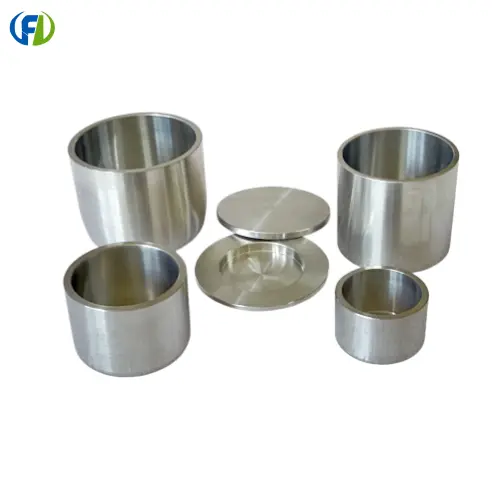
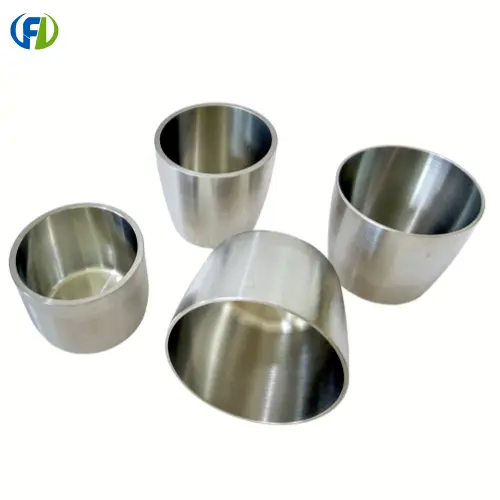
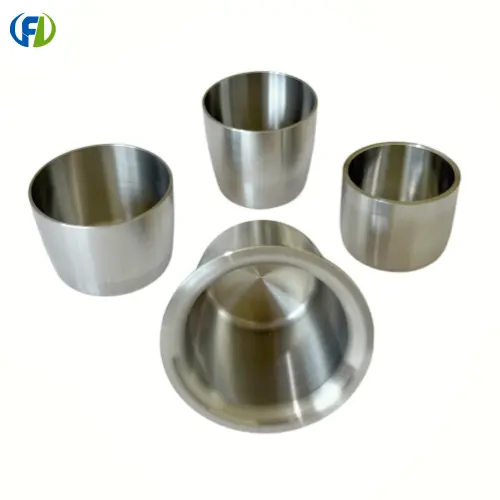
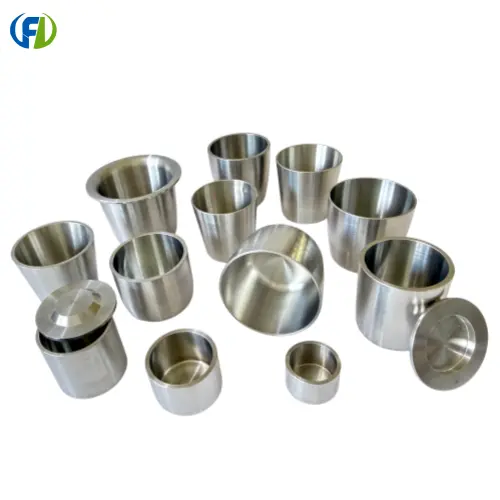
ASTM B550Zr-4 nuclear-grade zirconium crucible 30ml
Brand: FRL Metal
Name: Pure Zirconium Crucible
Grade: Zr-4/R6001
Density: 6.51g/cm³
Specifications: 10-50ml (Custom sizes available)
Standards: ASTM, DIN, EN
Production Process: Hot rolling, cold rolling, annealing
Surface Treatment: Pickling/Bright finish
Certification: ISO9001
Delivery Time: 5-7 days
Payment Method: Wire Transfer (T/T)
Packaging: Standard packaging
Baoji Freelong New Material Technology Development Co., Ltd. loated in Baoji City--China's Titanium Valley,we are mainly doing Zirconium,Titanium,Nickel,Niobium,Tantalum etc metal material and other alloy's produce,OEM and Sales.and also exporting the goods what we make. we have a lot of trustful clients and partner.and also we were authority by some firms.At present,we were build our relationship with Australia,Korea,German,US,UK,Malaysia,AZ,Middle East,Taiwan,Etc. Our company always take the quality and service as our responsibility,We always get close even match the quality what our customer wanted and as for quality,we never say no and no reason for quality failure.
I. Product Description:
Zirconium crucibles offer excellent resistance to high temperatures and highly corrosive chemicals, making them an ideal, cost-effective alternative to platinum crucibles for laboratories.
These crucibles are engineered for durability and high performance in fusion sample preparation processes. Made from high-purity zirconium, they exhibit exceptional corrosion and thermal shock resistance, helping to ensure consistent analytical results.
Grades: Zr702, Zr705, R60001, R60901
Capacity: 5–50 ml (custom fabrication based on drawings available)
Types: Low-form, flanged, straight-wall, tapered-wall, and cylindrical
Surface Finish: Bright/Polished
Wall Thickness: 1 mm, 2 mm, or customizable
Service Life: Crucibles with 2 mm wall thickness offer a longer service life than thin-walled versions and can be reused over 100 times.
• Highly resistant to most reagents
• Soluble in hydrofluoric acid
• Withstands temperatures up to 900°C
Low-form crucibles are made of zirconium alloy with a thickness of 0.89 mm. Oxidation begins upon prolonged exposure to air at temperatures above 550°C. Not recommended for use with fluoroboric acid or fluorosilicic acid. Suitable for high-temperature fusion using the reducing flame of a burner.
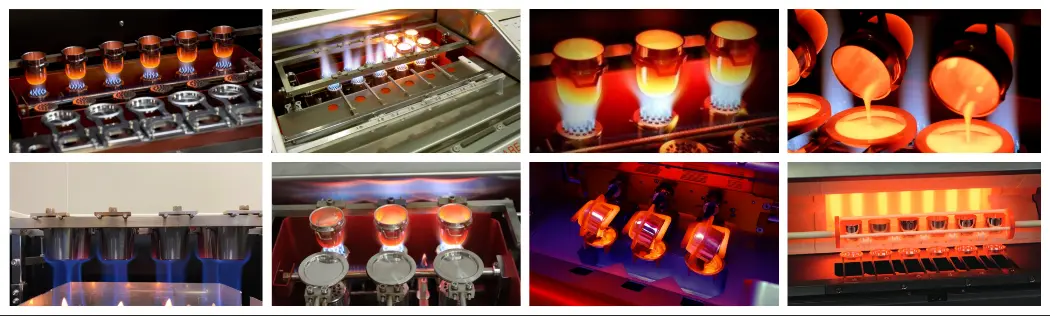
Product Showcase
 |
 |
 |
 |
Core Physicochemical Properties (Unique Advantages for Nuclear Operation)
1. Extremely Low Neutron Absorption Cross Section
Zirconium's thermal neutron capture cross section is far lower than that of titanium, molybdenum, stainless steel, and graphite. It does not absorb neutrons and inhibit nuclear reactions, making it the only high-temperature crucible substrate suitable for nuclear fuel and irradiation experiments.
2. Ultra-High Temperature Stability
Melting point 1852℃, long-term stable operating temperature ≤1700℃; low coefficient of linear expansion, strong thermal shock resistance, no cracking or deformation even after repeated temperature rises and falls.
3. Ultimate Chemical Inertness + Radiation Corrosion Resistance
Surface self-passivation The ZrO₂ protective film is resistant to concentrated nitric acid, strong alkalis, molten uranium oxide, rare earth molten salts, and radioactive waste liquids; it does not undergo solid-phase reactions with uranium, plutonium, rare earth, or zirconium alloy melts at high temperatures, preventing material contamination; only hydrofluoric acid systems cause slight corrosion.
4. Irradiation Stable, No Activation Impurities
The high-purity formula produces fewer activation products and has a shorter half-life after irradiation, facilitating post-processing of nuclear waste; it prevents carbon contamination from graphite crucibles and silicon impurity precipitation from alumina crucibles.
5. Mechanical and Processing Properties
Density 6.51 g/cm³, moderate weight for easy transport; forgeable, spin-formed, and precision CNC machined with a dimensional tolerance of ±0.1 mm; inner wall mirror polishing Ra≤0.2 μm; molten material does not stick to the wall, discharges completely, and is easy to clean.
Key Differences Between Nuclear-Grade Zircon Crucibles and Ordinary Industrial Zirconium Crucibles
| Comparison Items |
Nuclear-Grade Zirconium Crucibles vs |
Ordinary Industrial Zirconium Crucibles |
| Hafnium Content | <0.01% (deep separation of zirconium and hafnium) | 1–2%, no separation |
| Impurity Control | Neutral poisons such as B, Cd, and Gd: ppm level relaxed | No strict restrictions |
| Applicable Environments | Irradiation, uranium and plutonium nuclear fuel, isotope preparation | Chemical acids and alkalis, general metallurgical smelting |
| Irradiation Stability | Radiation resistant, low activation | Easily expands under irradiation, produces long-lived activated nuclides |
| Cleanliness Standards | Nuclear-grade dust-free polishing, no impurity processing | Ordinary machined surfaces |
II. Core Application Areas
(I) Nuclear Fuel Cycle (Largest Application Scenario)
(II) Isotope Production and Nuclear Research Laboratory
(III) Radioactive Waste Treatment
(IV) Specialized Nuclear Metallurgy (Extended Applications)
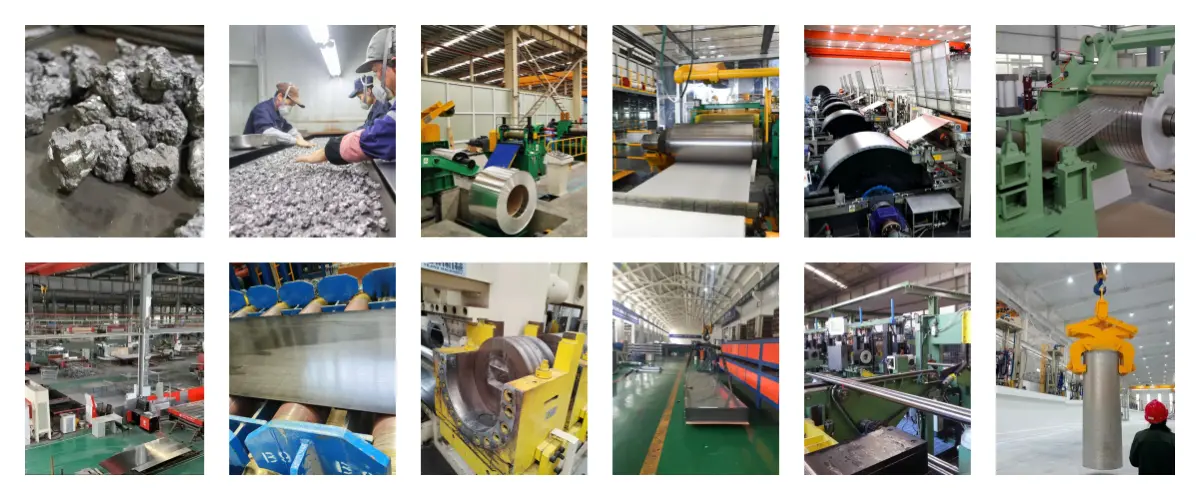
 |
Our Factory
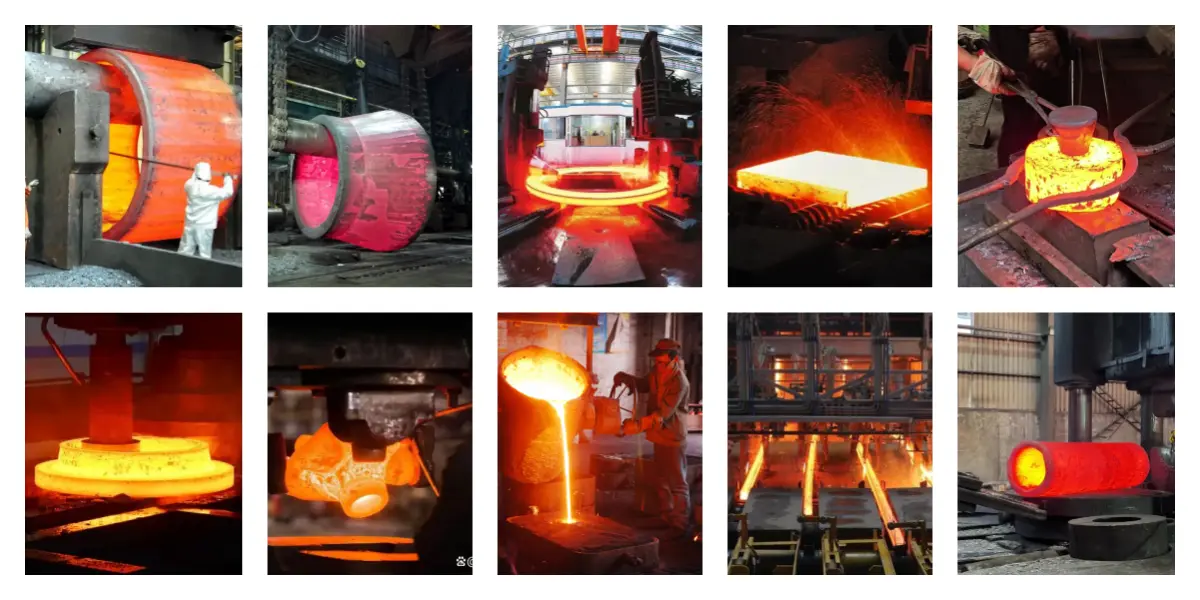
 |
Our Processing
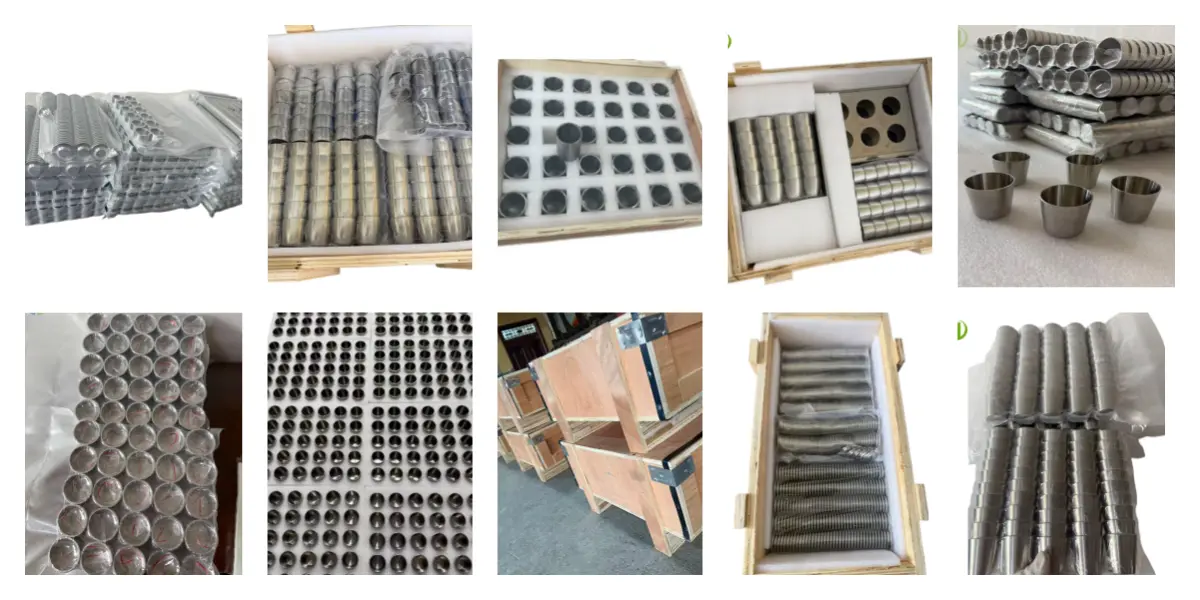
 |
Product Shipment
Plywood cases or other packaging suitable for truck, overseas, and air transport.
Details
① Layer 1: Wrapped in plastic bags.
② Layer 2: Shock-absorbing material to prevent damage.
③ Layer 3: Plywood cases, drums, or other suitable packaging.
④ Layer 4: Iron frames, packing straps, or waterproof film.
⑤ Markings: Destination, cargo description, order number, package number, net weight, country of origin, etc.
We work closely with air and sea freight forwarders—including FedEx, UPS, and DHL—to expedite delivery. No matter where you are located, we guarantee delivery at a speed that meets your satisfaction.
 |
Why Choose Us?
With over a decade of industry experience, Baoji Furuilong is your trusted partner for raw material processing. Backed by a team of expert technical consultants and skilled machinists, we specialize in the R&D and manufacturing of processed components across a wide range of materials. We are committed to excellence, ensuring the perfect delivery of your products.
Our Strengths:
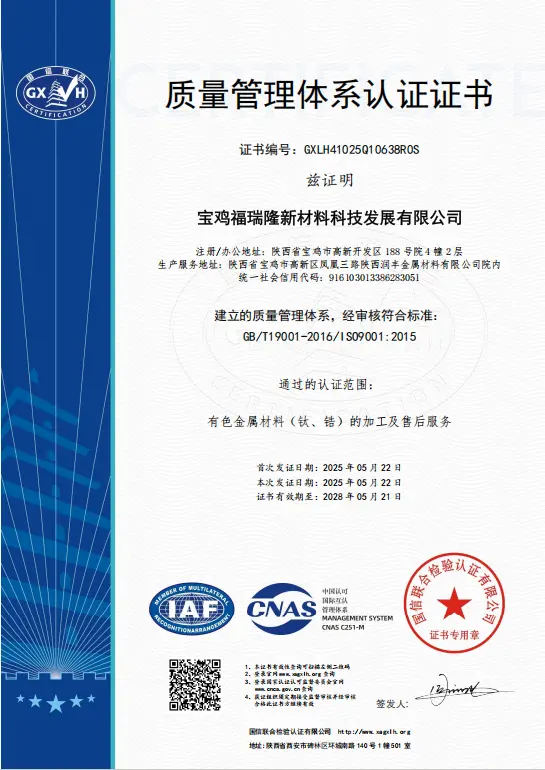
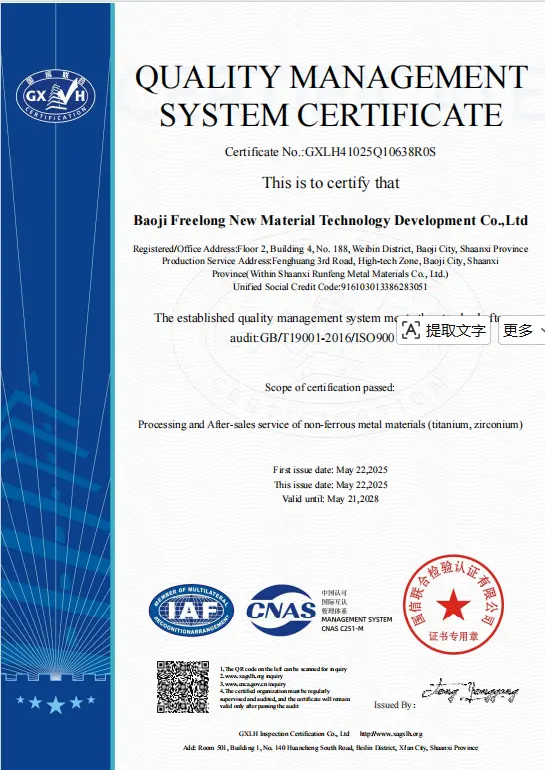
ISO9001-certified quality management system
Advanced CNC machining and heat treatment capabilities
Global reach spanning over 50 countries
Comprehensive professional support and consultation
Customized project management for specialized applications
Fast shipping and ample inventory
 |
 |
Contact Us
Our team is dedicated to serving you and hopes that every product you purchase will meet your expectations!
Email: lucky@bjfreelong.com
WhatsApp: +86 13335371763

Please contact us for detailed quotations and technical specifications. We look forward to becoming your trusted high-end titanium materials partner.
_1767861927717.png)
_1762418302089.webp)
_1745227752700.webp)
Learn about our latest products and discounts through SMS or email