- English
- French
- German
- Portuguese
- Spanish
- Russian
- Japanese
- Korean
- Arabic
- Greek
- German
- Turkish
- Italian
- Danish
- Romanian
- Indonesian
- Czech
- Afrikaans
- Swedish
- Polish
- Basque
- Catalan
- Esperanto
- Hindi
- Lao
- Albanian
- Amharic
- Armenian
- Azerbaijani
- Belarusian
- Bengali
- Bosnian
- Bulgarian
- Cebuano
- Chichewa
- Corsican
- Croatian
- Dutch
- Estonian
- Filipino
- Finnish
- Frisian
- Galician
- Georgian
- Gujarati
- Haitian
- Hausa
- Hawaiian
- Hebrew
- Hmong
- Hungarian
- Icelandic
- Igbo
- Javanese
- Kannada
- Kazakh
- Khmer
- Kurdish
- Kyrgyz
- Latin
- Latvian
- Lithuanian
- Luxembou..
- Macedonian
- Malagasy
- Malay
- Malayalam
- Maltese
- Maori
- Marathi
- Mongolian
- Burmese
- Nepali
- Norwegian
- Pashto
- Persian
- Punjabi
- Serbian
- Sesotho
- Sinhala
- Slovak
- Slovenian
- Somali
- Samoan
- Scots Gaelic
- Shona
- Sindhi
- Sundanese
- Swahili
- Tajik
- Tamil
- Telugu
- Thai
- Ukrainian
- Urdu
- Uzbek
- Vietnamese
- Welsh
- Xhosa
- Yiddish
- Yoruba
- Zulu
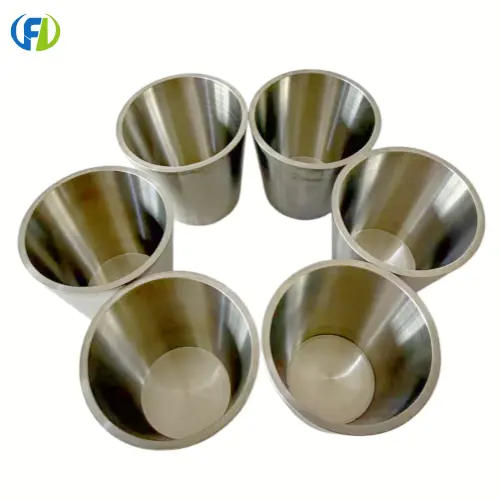
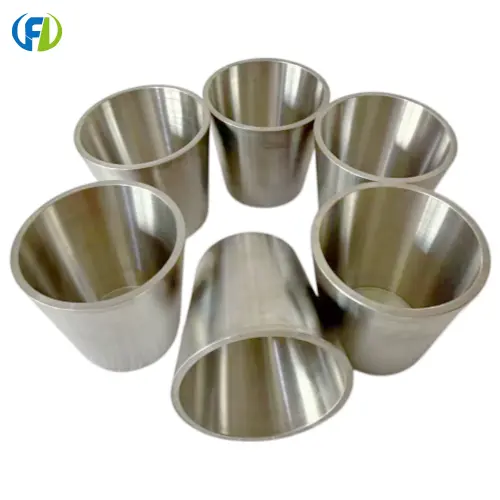
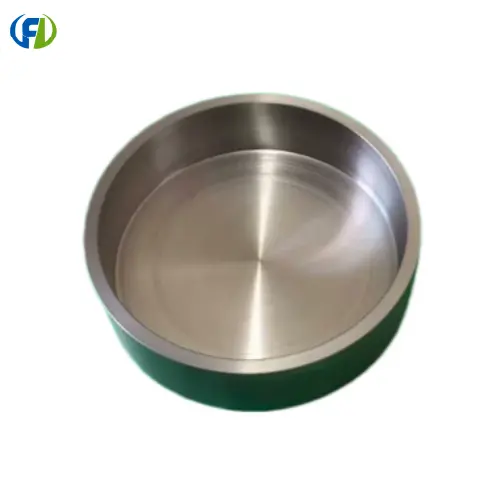
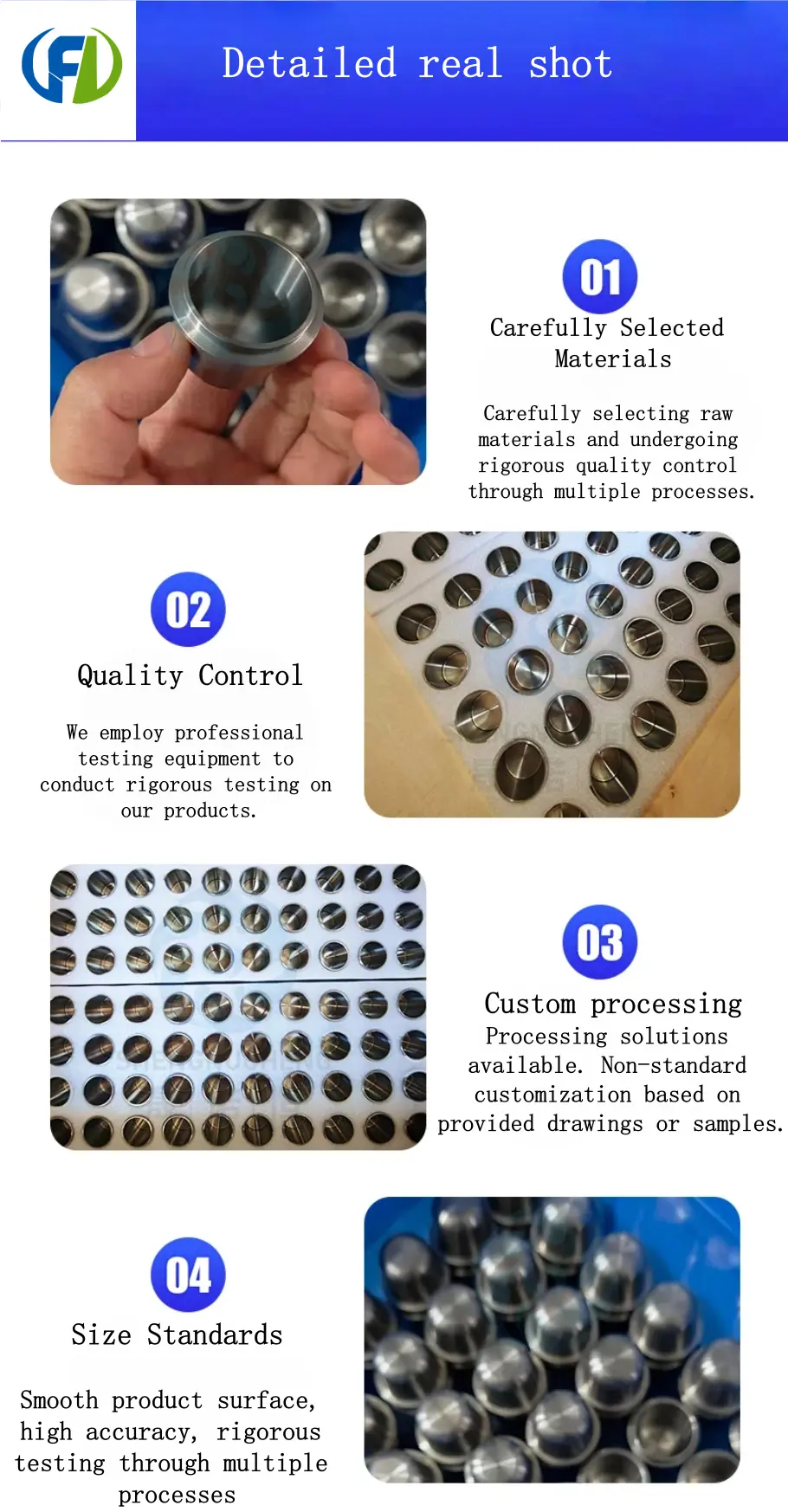
Zr-2.5Nb zirconium alloy crucible
Brand: FRL Metal
Name: Zirconium Alloy Crucible
Grade: R60705 / Zr-2.5Nb
Density: 6.51g/cm³
Specifications: 10-50ml (Custom sizes available)
Standards: ASTM, DIN, EN
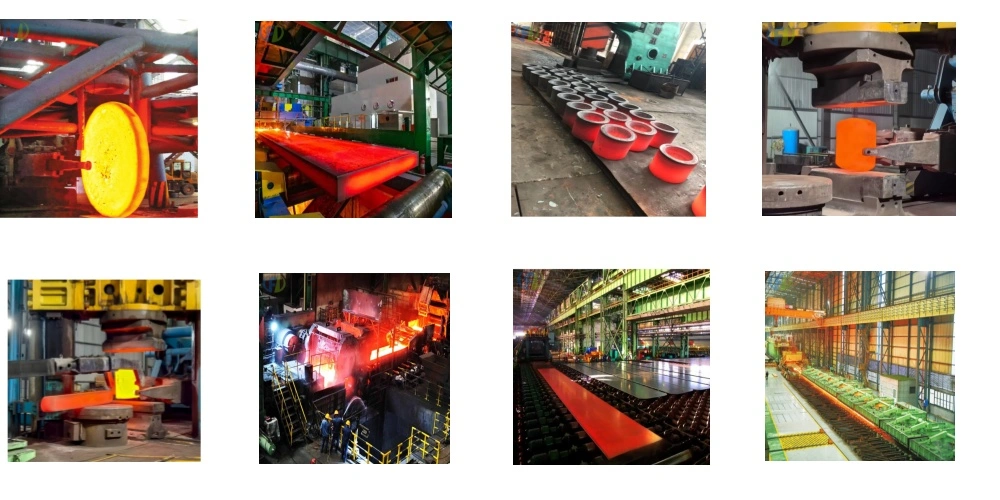
Production Process: Hot rolling, cold rolling, annealing
Surface Treatment: Pickling/Bright finish
Certification: ISO9001
Delivery Time: 5-7 days
Payment Method: Telegraphic Transfer (T/T)
Packaging: Standard packaging
Material Grade Standards
The Zr705 zirconium crucible base material is a zirconium-niobium alloy Zr-2.5Nb, conforming to the American standard UNS R60705, and implementing the standards ASTM B550 and GB/T 8769, which is different from pure zirconium Zr702. The alloy matrix contains 2.0% to 3.0% metallic niobium, with the balance being zirconium + hafnium (Hf≤4.5%), total impurities of Fe+Cr ≤0.2%, and oxygen content strictly controlled
1. Core Physical and Mechanical Properties (Core Advantages Compared to Pure Zirconium Zr702)
High Temperature Resistance: Melting point 1852℃, long-term stable operating temperature ≤1800℃, far superior to titanium and stainless steel crucibles; does not soften, deform, or leak at high temperatures.
High Strength and Toughness: Tensile strength ≥550MPa, approximately 45% higher than pure zirconium Zr702; strong resistance to high-temperature creep; impact and thermal shock resistant, suitable for thin-walled, large-size crucibles; lighter weight for the same volume, less prone to cracking; maintains good plasticity at both low and high temperatures; not easily fatigued or damaged by repeated temperature changes.
Extreme Corrosion Resistance: Forms a dense, self-healing ZrO₂ passivation film on the surface, resistant to boiling concentrated hydrochloric acid, dilute sulfuric acid, phosphoric acid, hydrofluoric acid, and various organic acids, strong alkalis, molten alkaline salts, and molten fluorides; almost no ion precipitation under high-temperature, highly corrosive conditions, does not contaminate materials.
Low Impurities, High Purity: Extremely low impurities prevent the introduction of impurities such as iron, nickel, and chromium during smelting/dissolving, significantly reducing costs compared to platinum crucibles; non-magnetic and does not adsorb precious metals or rare earth melts.
Basic Properties: Density 6.52 g/cm³, low coefficient of thermal expansion, uniform heat conduction, small internal temperature difference during heating, and uniform material heating.
2. Production Process and Specifications: Forming process: Spin forming, forging + machining, seamless welding; weld corrosion resistance consistent with the base material; mirror polished surface Ra0.2~3.2μm, free of sand holes and pores.
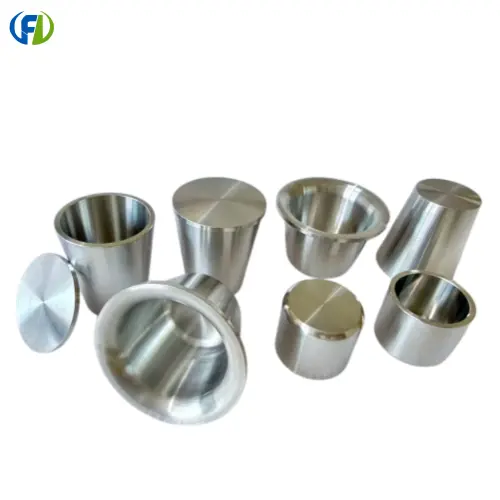
Standard Specifications: Laboratory miniature 5ml~500ml; Industrial large crucibles: diameter 10~700mm, height 25~900mm, wall thickness 3~30mm; customizable straight, conical, capped, spouted, and rectangular irregular-shaped crucibles are available.
Supply Condition: Annealed, eliminating processing stress and enhancing thermal stability.
 |
 |
 |
 |
Zr705 vs. Zr702 Crucible Selection Comparison
| Comparison Items |
Zr702 Pure Zirconium Crucible |
Zr705 Zirconium-Niobium Crucible |
| Strength | Low, easily deformed in large sizes | High, suitable for high temperature and pressure applications, large capacity |
| High Temperature Creep | Poor | Excellent, no deformation under long-term high temperatures |
| Erosion and Corrosion Resistance | Average Stronger | Stronger, preferred for molten salt and fluid erosion conditions |
| Applicable Scenarios | Small laboratory room temperature/medium temperature digestion | Industrial high temperature smelting, high pressure corrosion, large equipment |
II. Core Industry Application Scenarios
(I) High-Temperature Smelting of Rare/Precious Metals (Most Mainstream Application)
Precious Metal Smelting: Purification, remelting, and alloy preparation of gold, silver, palladium, platinum, rhodium, and iridium; does not wet or impurity with precious metals at high temperatures, resulting in high-purity finished products, replacing platinum crucibles and saving precious metal loss.
Refractory Rare Metal Smelting: Vacuum and induction smelting of titanium, zirconium, niobium, tantalum, tungsten, molybdenum, rare earth metals, and rare earth alloys; does not react with active metals at temperatures above 1600℃, with no carbon or iron contamination.
Sputtering Target Raw Material Smelting: Preparation of ingots for semiconductor and photovoltaic sputtering targets (zirconium, niobium, and titanium-based alloys), with strict control of melt impurities.
(II) Hydrometallurgy / Mineral Analysis / Chemical Digestion
Full element digestion of ores: Geological, mineral, and non-ferrous metal testing; high-temperature alkali fusion (sodium peroxide and sodium hydroxide fusion); resistant to high-temperature molten strong alkalis; digestion of zirconium, titanium, rare earth, and tungsten-molybdenum ores; no silicon or iron interference; compatible with ICP and atomic absorption detection.
Corrosive chemical material reactions: lining of boiling concentrated hydrochloric acid, phosphoric acid, and organic acid high-temperature reaction vessels/small reaction crucibles; high-temperature concentration and hydrolysis processes for lithium battery raw materials and rare earth extraction solutions.
Fluoride and chloride molten salt systems: molten salt electrolysis and fluoride salt purification; Zr705 has better resistance to molten salt erosion than pure zirconium, increasing service life by more than 30%.
(III) New Energy and Semiconductor Industry
Photovoltaic silicon material support: high-purity silicon and silicon-based alloy high-temperature purification containers to avoid metal impurities affecting battery conversion efficiency. Lithium-ion battery new material sintering/melting: High-temperature melting synthesis of ternary precursors, lithium salts, and high-purity oxides, resistant to high-temperature corrosion of lithium salts, with no heavy metal precipitation.
High-purity electronic chemical preparation: High-temperature distillation of ultra-high-purity acids and electronic-grade salts, crystallization crucibles, meeting the production requirements of 5N and 6N high-purity materials.
(IV) Nuclear industry-specific scenarios (Zr705 core advantage area)
Zr-2.5Nb is a mature nuclear alloy with excellent creep performance in high-pressure, high-temperature water environments: Crucibles for high-temperature corrosion testing of nuclear material samples, corrosion simulation containers related to heavy water reactors; Melting of nuclear-grade zirconium and hafnium alloy samples, high-temperature reaction containers simulating irradiation environments; High-temperature and high-pressure water corrosion testing, resistant to long-term immersion in high-temperature alkaline media (LiOH).
(V) Laboratories, pharmaceuticals, and special materials
High-temperature chemical experiments in universities/research institutes: High-temperature synthesis of extreme acids and bases, sintering of catalytic materials, high-temperature preparation of nanoparticles. High-purity pharmaceutical raw material purification: High-temperature concentration of organic acids and antibiotic intermediates, free from heavy metal contamination, meeting pharmaceutical purity standards.
Melting containers for calcination aids for ceramics and zirconium oxide powders, ensuring no solid-phase reaction with ceramic powders at high temperatures.
 |
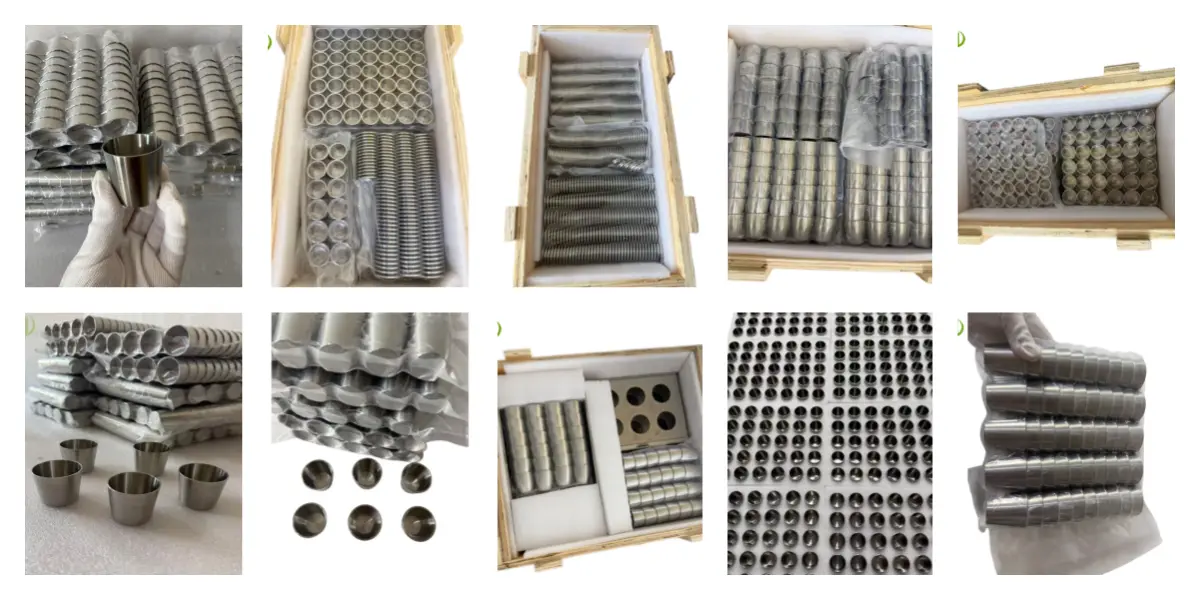
Packaging
Plywood cases or other packaging suitable for truck, overseas, and air transport.
Details
① Layer 1: Wrapped in plastic bags.
② Layer 2: Shock-absorbing material to prevent damage.
③ Layer 3: Plywood cases, drums, or other suitable packaging.
④ Layer 4: Iron frames, packing straps, or waterproof film.
⑤ Markings: Destination, cargo description, order number, package number, net weight, country of origin, etc.
We work closely with air and sea freight forwarders—including FedEx, UPS, and DHL—to expedite delivery. No matter where you are located, we guarantee delivery at a speed that meets your satisfaction.
 |
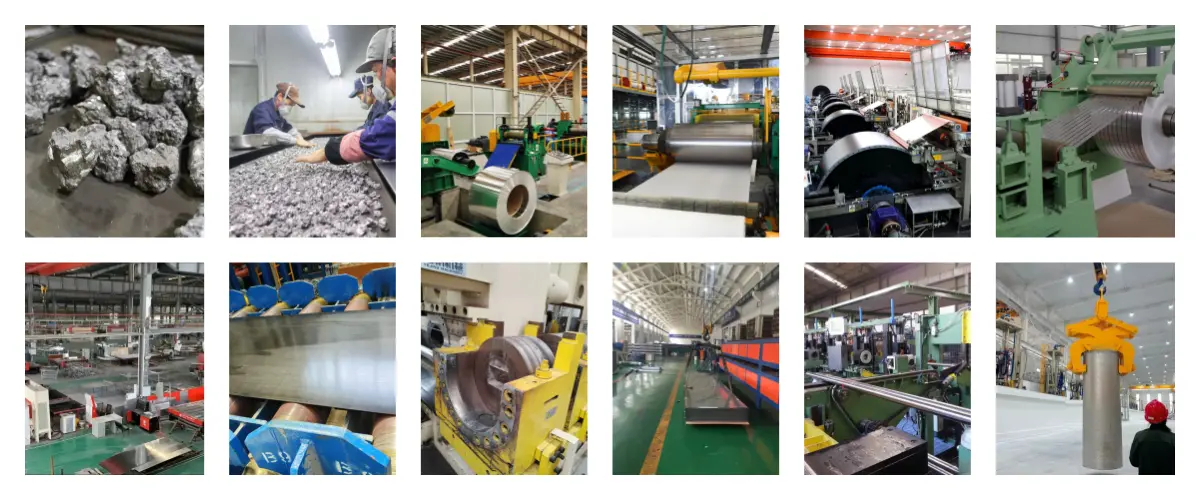
Our factory
 |
Our Processing
 |
Contact Us
Our team is dedicated to serving you and hopes that every product you purchase will meet your expectations!
Email: lucky@bjfreelong.com
WhatsApp: +86 13335371763

Please contact us for detailed quotations and technical specifications. We look forward to becoming your trusted high-end titanium materials partner.
_1745822857719.webp)
_1770273588734.png)
_1745545550912.webp)
Learn about our latest products and discounts through SMS or email