- English
- French
- German
- Portuguese
- Spanish
- Russian
- Japanese
- Korean
- Arabic
- Greek
- German
- Turkish
- Italian
- Danish
- Romanian
- Indonesian
- Czech
- Afrikaans
- Swedish
- Polish
- Basque
- Catalan
- Esperanto
- Hindi
- Lao
- Albanian
- Amharic
- Armenian
- Azerbaijani
- Belarusian
- Bengali
- Bosnian
- Bulgarian
- Cebuano
- Chichewa
- Corsican
- Croatian
- Dutch
- Estonian
- Filipino
- Finnish
- Frisian
- Galician
- Georgian
- Gujarati
- Haitian
- Hausa
- Hawaiian
- Hebrew
- Hmong
- Hungarian
- Icelandic
- Igbo
- Javanese
- Kannada
- Kazakh
- Khmer
- Kurdish
- Kyrgyz
- Latin
- Latvian
- Lithuanian
- Luxembou..
- Macedonian
- Malagasy
- Malay
- Malayalam
- Maltese
- Maori
- Marathi
- Mongolian
- Burmese
- Nepali
- Norwegian
- Pashto
- Persian
- Punjabi
- Serbian
- Sesotho
- Sinhala
- Slovak
- Slovenian
- Somali
- Samoan
- Scots Gaelic
- Shona
- Sindhi
- Sundanese
- Swahili
- Tajik
- Tamil
- Telugu
- Thai
- Ukrainian
- Urdu
- Uzbek
- Vietnamese
- Welsh
- Xhosa
- Yiddish
- Yoruba
- Zulu
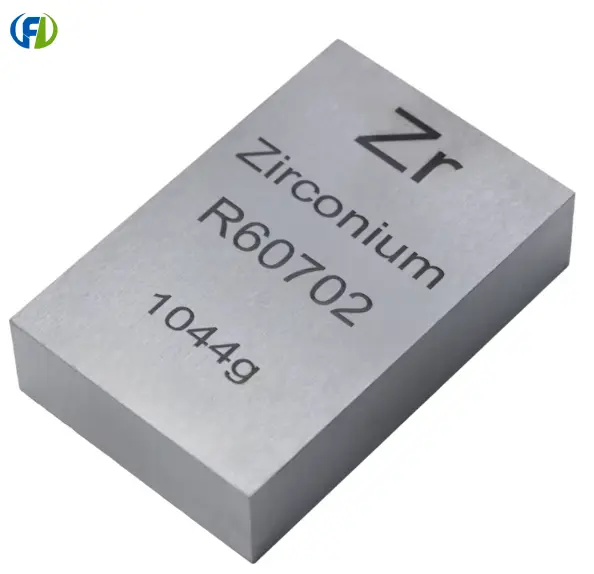
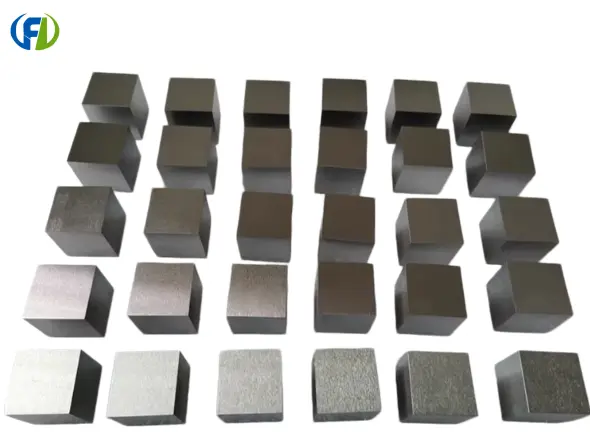
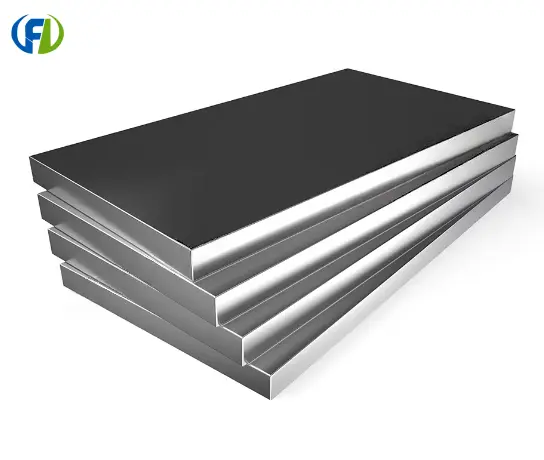
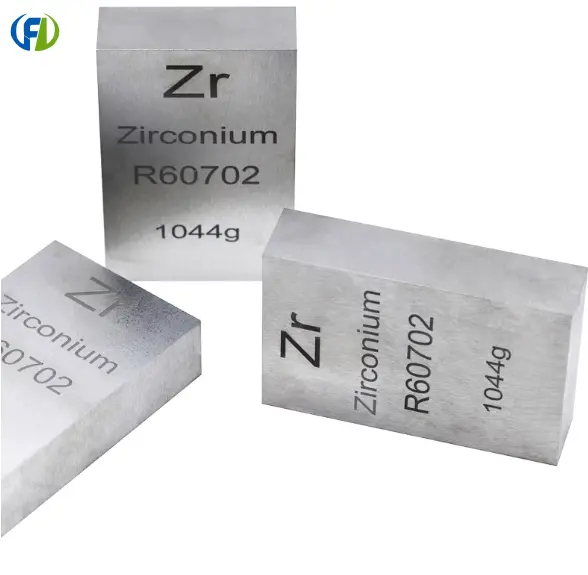
Zirconium plates for chemical use 0.5-60ml thickness
Brand: FRL Metal
Name: Zirconium Plate
Grade: Zr702, Zr705
Density: 6.51g/cm³
Thickness: 0.5–60mm
Size: Customized
Standards: ASTM, DIN, EN
Manufacturing Process: Hot Rolled, Cold Rolled
Surface Treatment: Pickled/Polished
Certification: ISO9001
Delivery Time: 5-7 days
Payment Method: Wire Transfer (T/T)
Packaging: Standard Packaging
I. Product Definition and Material Classification Zirconium plate is a plate-shaped metal material made from industrial pure zirconium or zirconium alloy through processes such as vacuum melting, forging, rolling, and heat treatment. It is typically 0.5–50 mm thick and can be over 2000 mm wide; thinner sheets are often referred to as zirconium sheets.
Mainstream Grades
Zr702 (R60702, industrial pure zirconium, Zr+Hf≥99.2%): Preferred for chemical and metallurgical applications.
Zr704 (R60704, containing Sn), Zr705 (Zr-2.5Nb, R60705): Nuclear industry specific, low hafnium (Hf<0.01%), radiation resistant, hydrogen embrittlement resistant.
Standards: ASTM B551 (industrial grade), ASTM B811 (nuclear grade), GB/T 26283
Core Raw Material: High-purity sponge zirconium, produced into uniform and dense zirconium ingots through vacuum arc melting (VAR), with inert gas protection throughout the process to prevent oxidation and absorb hydrogen.
II. Core Performance
Corrosion Resistance: Corrosion resistance far exceeds that of titanium and stainless steel in reducing acids such as concentrated hydrochloric acid, 70%+ sulfuric acid, and organic acids; forms a dense ZrO₂ passivation film on the surface; weakness: extremely sensitive to hydrofluoric acid (HF) and fluoride-containing media.
Physics and Mechanics: Melting point approximately 1852℃; room temperature tensile strength ≥380MPa, elongation ≥20%; excellent low-temperature toughness; low neutron absorption cross-section (a core advantage of nuclear-grade materials).
Additional Properties: Good biocompatibility, non-magnetic, radiation resistant, suitable for medical implants and nuclear devices.
III. Production Process
Vacuum Arc Melting (VAR): Multiple melting processes remove porosity and inclusions, homogenizing composition.
Forging: High-temperature forging breaks down the as-cast structure, refining grain size.
Hot Rolling/Cold Rolling: Controlling temperature and deformation, combined with intermediate vacuum annealing to eliminate work hardening; large sizes/irregular shapes can be assisted by cold isostatic pressing (CIP).
Vacuum Heat Treatment: Stress relief, stabilizing structure; nuclear grade requires strict oxygen and nitrogen control.
Finishing, Cutting, Non-destructive Testing (Ultrasonic, Penetrant), Surface Treatment, Vacuum Packaging
IV. Typical Application Areas
Chemical Industry: Reactors, heat exchangers, tank linings, pipes, valves, used in concentrated acid and highly corrosive environments.
Nuclear Industry: Reactor fuel cladding, pressure pipes, control rod assemblies, utilizing low neutron cross-sections and resistance to radiation-induced water corrosion.
Medical Devices: Orthopedic implants, dental implants, surgical instruments, biocompatible and corrosion-resistant.
Semiconductors/Photovoltaics: High-purity furnace components, crucible substrates, sputtering target supports, preventing metal contamination.
Aerospace, Hydrogen Energy: PEM Electrolytic cell corrosion-resistant components, satellite nuclear power plant cladding
V. Distinguishing between zirconia ceramic plates and metallic zirconium plates: Zirconia plates have good toughness, are weldable, and are resistant to thermal shock; zirconia ceramic plates have higher temperature resistance (2000℃+) but are more brittle. The two differ significantly in terms of manufacturing process, price, and applicable scenarios.
 |
 |
|
 |
Quality Control and Testing
Each product undergoes rigorous inspection before shipment:
Dimensional Inspection: Precise measurement of thickness, length, and width
Chemical Composition and Mechanical Property Analysis: Third-party testing reports
Surface Inspection: Visual and microscopic inspection for defects
Ultrasonic Testing: Detection of internal defects
Why Choose Us
Technology and Quality: Located in Baoji, China's Titanium Valley, we possess professional production technology and extensive experience in non-ferrous metal manufacturing.
Global Coverage: We provide consistently high-quality products to customers in Australia, South Korea, Germany, the USA, the UK, Malaysia, and the Middle East.
Quality Commitment: We never compromise on quality and are responsible for every product we manufacture.
Technical Support: We have professional personnel overseeing the entire process from raw materials to finished products!
Contact Us
Our team is dedicated to serving you and hopes that every product you purchase will meet your expectations!
Email: lucky@bjfreelong.com
WhatsApp: +86 13335371763

Please contact us for detailed quotations and technical specifications. We look forward to becoming your trusted high-end titanium materials partner.
_1770270581547.png)
_1745889390444.webp)
Learn about our latest products and discounts through SMS or email