- English
- French
- German
- Portuguese
- Spanish
- Russian
- Japanese
- Korean
- Arabic
- Greek
- German
- Turkish
- Italian
- Danish
- Romanian
- Indonesian
- Czech
- Afrikaans
- Swedish
- Polish
- Basque
- Catalan
- Esperanto
- Hindi
- Lao
- Albanian
- Amharic
- Armenian
- Azerbaijani
- Belarusian
- Bengali
- Bosnian
- Bulgarian
- Cebuano
- Chichewa
- Corsican
- Croatian
- Dutch
- Estonian
- Filipino
- Finnish
- Frisian
- Galician
- Georgian
- Gujarati
- Haitian
- Hausa
- Hawaiian
- Hebrew
- Hmong
- Hungarian
- Icelandic
- Igbo
- Javanese
- Kannada
- Kazakh
- Khmer
- Kurdish
- Kyrgyz
- Latin
- Latvian
- Lithuanian
- Luxembou..
- Macedonian
- Malagasy
- Malay
- Malayalam
- Maltese
- Maori
- Marathi
- Mongolian
- Burmese
- Nepali
- Norwegian
- Pashto
- Persian
- Punjabi
- Serbian
- Sesotho
- Sinhala
- Slovak
- Slovenian
- Somali
- Samoan
- Scots Gaelic
- Shona
- Sindhi
- Sundanese
- Swahili
- Tajik
- Tamil
- Telugu
- Thai
- Ukrainian
- Urdu
- Uzbek
- Vietnamese
- Welsh
- Xhosa
- Yiddish
- Yoruba
- Zulu
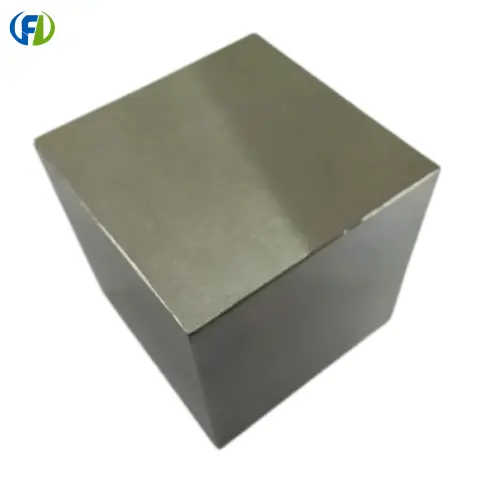
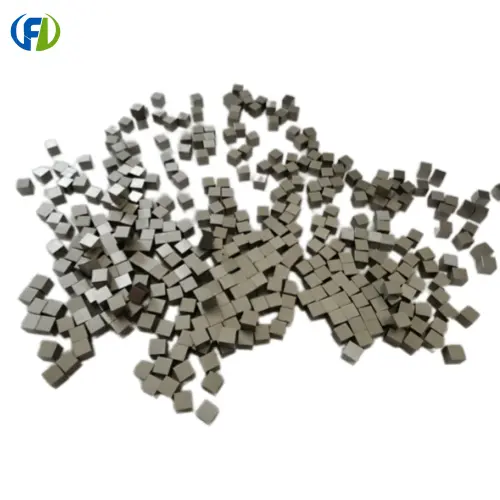
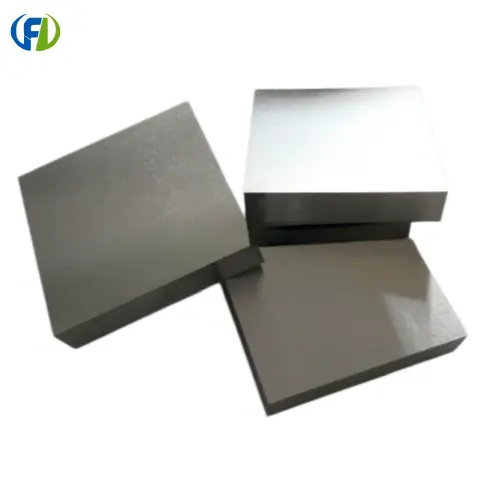
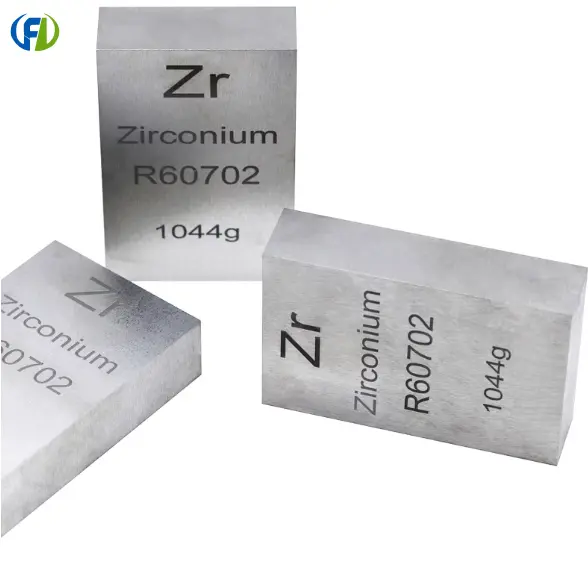
R60705 zirconium cubic parts for scientific research
Brand: FRL Metal
Name: 705 Zirconium Cubic
Grade: R60705
Density: 6.51g/cm³
Thickness: 50*50*50mm Size: Customizable according to drawings
Standards: ASTM, DIN, EN
Production Process: Hot rolling, cold rolling, annealing
Surface Treatment: Pickling/Bright finish
Certification: ISO9001
Delivery Time: 5-7 days
Payment Method: Wire Transfer (T/T)
Packaging: Standard packaging
Zirconium alloy blocks are high-performance metallic materials formed by adding alloying elements such as tin, niobium, iron, and chromium to metallic zirconium as the matrix. Their core advantages are extremely low thermal neutron absorption cross section, excellent corrosion resistance, good mechanical properties and biocompatibility. They are key strategic materials in nuclear industry, chemical industry, medical and other fields.
I. Product Introduction
1. Core Components (Typical Grades)
Zirconium alloy blocks are based on high-purity zirconium (Zr≥95%), with trace alloying elements added to optimize performance. Nuclear-grade zirconium requires strict control of hafnium (Hf) content (≤0.01%).
Zr-702 (Industrial Pure Zirconium): Zr≥99.2%, Hf≤4.5%, Fe+Cr≤0.20%, excellent corrosion resistance, moderate strength.
Zr-705 (Zr-2.5Nb): Contains 2.0%~3.0% niobium, significantly improved strength, heat resistance, and corrosion resistance, most widely used.
Zircaloy-4 (Zr-4): Contains 1.2%~1.5% Sn, 0.2%~0.4% Fe, 0.05%~0.15% Cr, mainstream nuclear-grade, low hydrogen absorption.
N36 (Domestic Nuclear Grade): Zr-Nb series, containing 1.0%~1.2% Nb and 0.2%~0.3% Fe, resistant to high-temperature corrosion, used in Hualong One.
 |
 |
 |
 |
2. Key Performance Characteristics
Nuclear Performance: Thermal neutron absorption cross-section of only 0.18 pegnats (far lower than iron's 2.6 pegnats), does not interfere with nuclear reactions, and has excellent neutron economy.
Corrosion Resistance: Stable in high-temperature and high-pressure water/steam at 300~400℃, resistant to most strong acids (except hydrofluoric acid), seawater, and alkaline solutions.
Mechanical Properties: Tensile strength 400~900MPa, yield strength 250~700MPa, good plasticity, easy to process and shape.
Other Characteristics: Melting point 1852℃, high-temperature resistant; non-magnetic, excellent biocompatibility, and resistant to neutron radiation.
3. Specifications and Conditions
Dimensions: Square blocks (10~500mm), round ingots (φ50~φ500mm), forgings, billets; non-standard sizes can be customized.
Conditions: Forged, annealed, quenched; nuclear grade requires vacuum melting, non-destructive testing, and precise composition control.
Standards: ASTM B550, GB/T 26311, AMS 6925.
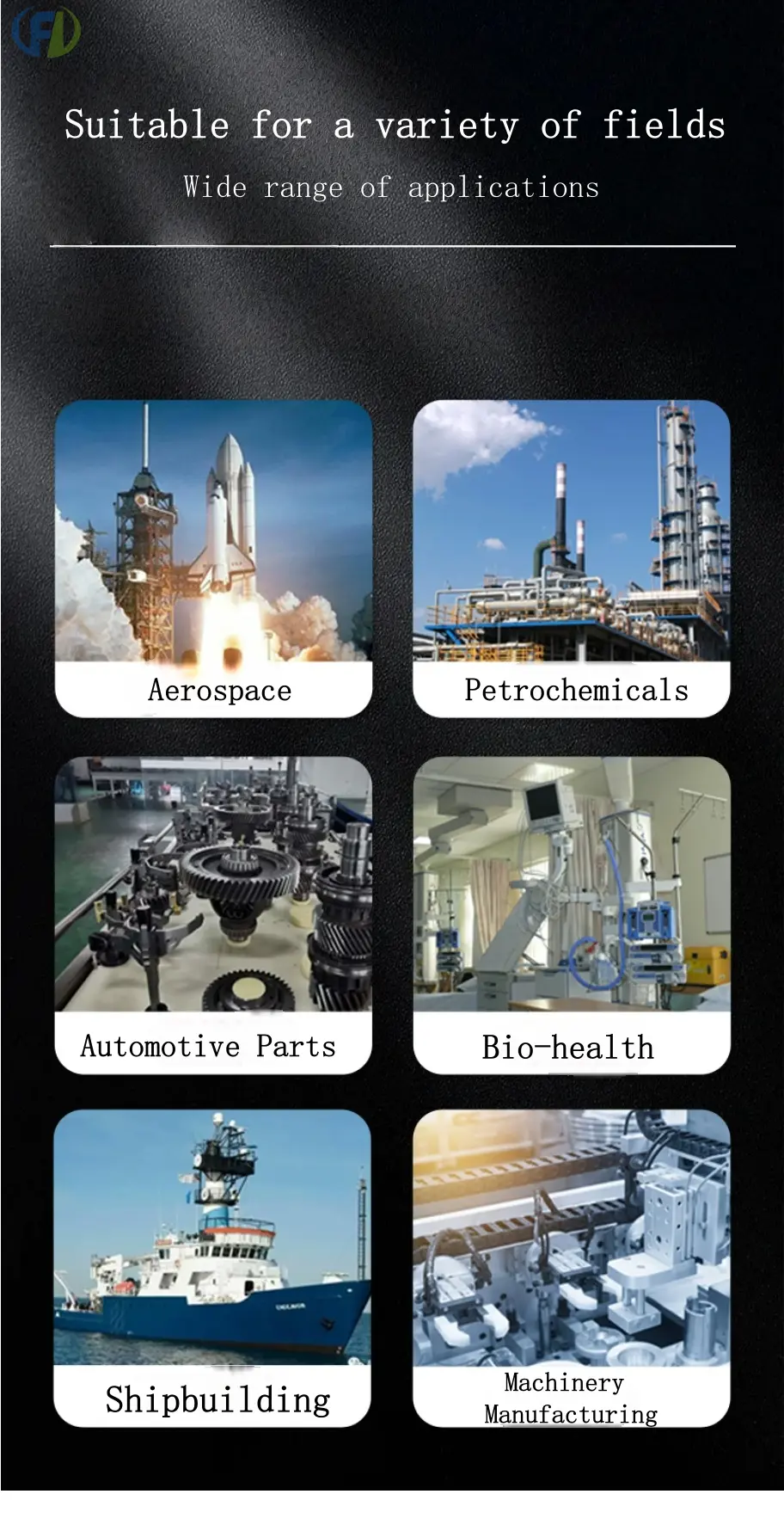
II. Main Application Areas
1. Nuclear Industry (Core Application, accounting for 80%+)
Fuel Cladding Tubes: Cladding for pressurized water reactor/boiling water reactor fuel rods, encasing uranium pellets, preventing leakage, and resisting corrosion from 350℃ high-pressure water.
Core Structural Components: Pressure tubes, guide tubes, positioning grids, end plugs, container tubes, supporting nuclear fuel assemblies.
Nuclear Reactor Components: Key materials for nuclear submarine and nuclear-powered aircraft carrier reactors, ensuring safe and efficient nuclear reactions.
2. Chemical and Corrosion-Resistant Industries
Highly Corrosion-Proof Equipment: Heat exchangers, reactors, pumps, valves, pipelines, and tower linings for hydrochloric acid, acetic acid, and urea production.
Seawater Engineering: Seawater desalination, offshore platforms, ship pipelines, and condensers; resistant to long-term seawater corrosion.
Chemical Containers: Corrosion-resistant storage tanks, electrolytic cells, and filters for chlor-alkali, pharmaceutical, and fine chemical industries.
3. Medical and Biological Fields
Orthopedic Implants: Zr-2.5Nb alloy artificial hip and knee joints, bone plates; elastic modulus close to human bone, wear-resistant, and non-rejectable.
Dental Restoration: Dental implants; excellent biocompatibility, aesthetics, corrosion resistance, and high strength.
Surgical Instruments: Minimally invasive instruments and orthopedic tools; non-magnetic, sterilization-resistant, stain-resistant, and rust-proof.
4. Aerospace and Military Industries
Aero-engines: Combustion chamber, nozzle, and blade coatings; high temperature resistance (1000℃+), lightweight, and creep-resistant.
Aerospace Components: Rocket engine nozzles, satellite separation mechanisms, hydrogen storage systems; radiation resistant and hydrogen-absorbing stable.
Military Equipment: Hypersonic weapon warheads, scramjet engine components; extreme temperature resistance and corrosion resistance.
5. Other High-End Fields
Metallurgical Industry: Special steel deoxidizers, alloy additives; improving the strength, toughness, and corrosion resistance of steel.
Electronics & Semiconductors: Sputtering targets, vacuum devices, integrated circuit heat sinks; high purity, low impurities, and stable thermal conductivity.
Precision Manufacturing: Instrument parts, optical bearings, cold-welding resistant components; high precision, wear resistance, and dimensional stability.
 |
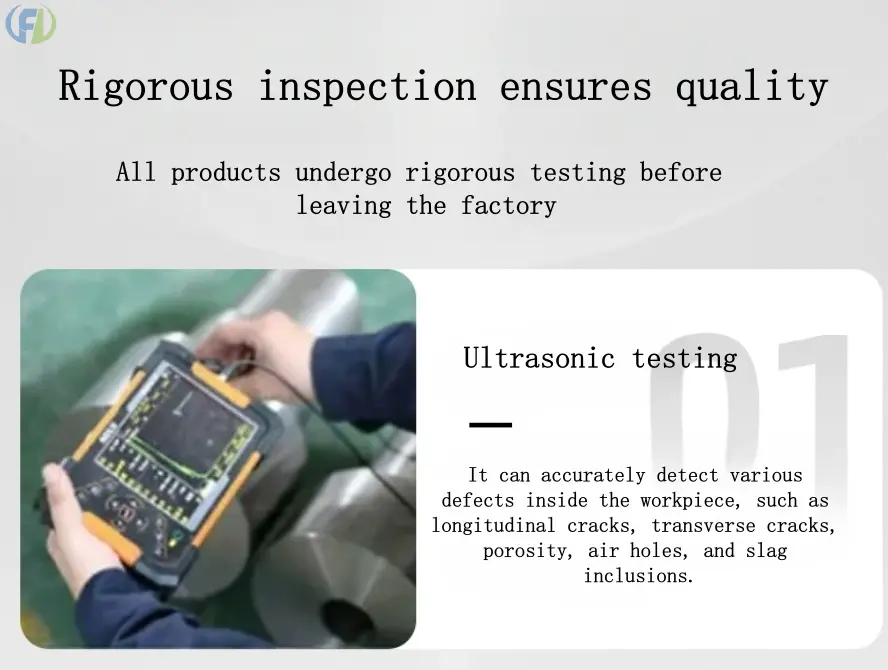
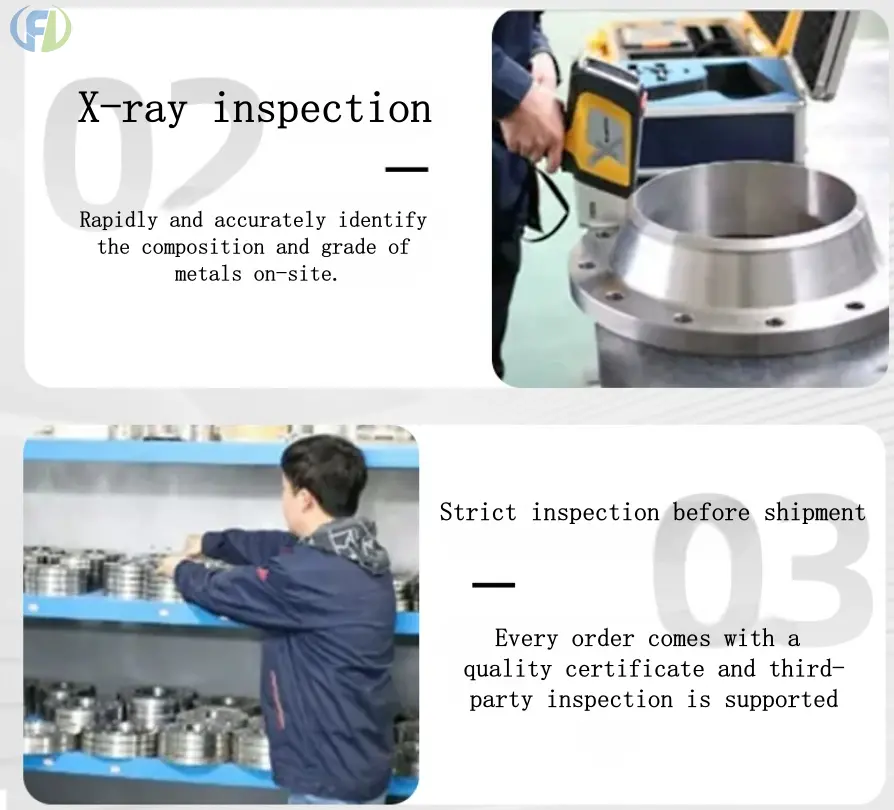
Quality Control and Testing
Each product undergoes rigorous inspection before shipment:
Dimensional Inspection: Precise measurement of thickness, length, and width
Chemical Composition and Mechanical Property Analysis: Third-party testing reports
Surface Inspection: Visual and microscopic inspection for defects
Ultrasonic Testing: Detection of internal defects
 |
 |
Why Choose Us
Technology and Quality: Located in Baoji, China's Titanium Valley, we possess professional production technology and extensive experience in non-ferrous metal manufacturing.
Global Coverage: We provide consistently high-quality products to customers in Australia, South Korea, Germany, the USA, the UK, Malaysia, and the Middle East.
Quality Commitment: We never compromise on quality and are responsible for every product we manufacture.
Technical Support: We have professional personnel overseeing the entire process from raw materials to finished products!
 |
Contact Us
Our team is dedicated to serving you and hopes that every product you purchase will meet your expectations!
Email: lucky@bjfreelong.com
WhatsApp: +86 13335371763

Please contact us for detailed quotations and technical specifications. We look forward to becoming your trusted high-end titanium materials partner.
_1767767290221.png)
_1745389039151.webp)
_1783410770330.png)
_1772096183564.png)
Learn about our latest products and discounts through SMS or email