- English
- French
- German
- Portuguese
- Spanish
- Russian
- Japanese
- Korean
- Arabic
- Greek
- German
- Turkish
- Italian
- Danish
- Romanian
- Indonesian
- Czech
- Afrikaans
- Swedish
- Polish
- Basque
- Catalan
- Esperanto
- Hindi
- Lao
- Albanian
- Amharic
- Armenian
- Azerbaijani
- Belarusian
- Bengali
- Bosnian
- Bulgarian
- Cebuano
- Chichewa
- Corsican
- Croatian
- Dutch
- Estonian
- Filipino
- Finnish
- Frisian
- Galician
- Georgian
- Gujarati
- Haitian
- Hausa
- Hawaiian
- Hebrew
- Hmong
- Hungarian
- Icelandic
- Igbo
- Javanese
- Kannada
- Kazakh
- Khmer
- Kurdish
- Kyrgyz
- Latin
- Latvian
- Lithuanian
- Luxembou..
- Macedonian
- Malagasy
- Malay
- Malayalam
- Maltese
- Maori
- Marathi
- Mongolian
- Burmese
- Nepali
- Norwegian
- Pashto
- Persian
- Punjabi
- Serbian
- Sesotho
- Sinhala
- Slovak
- Slovenian
- Somali
- Samoan
- Scots Gaelic
- Shona
- Sindhi
- Sundanese
- Swahili
- Tajik
- Tamil
- Telugu
- Thai
- Ukrainian
- Urdu
- Uzbek
- Vietnamese
- Welsh
- Xhosa
- Yiddish
- Yoruba
- Zulu
Can a Straight Zirconium Crucible Resist Heat?
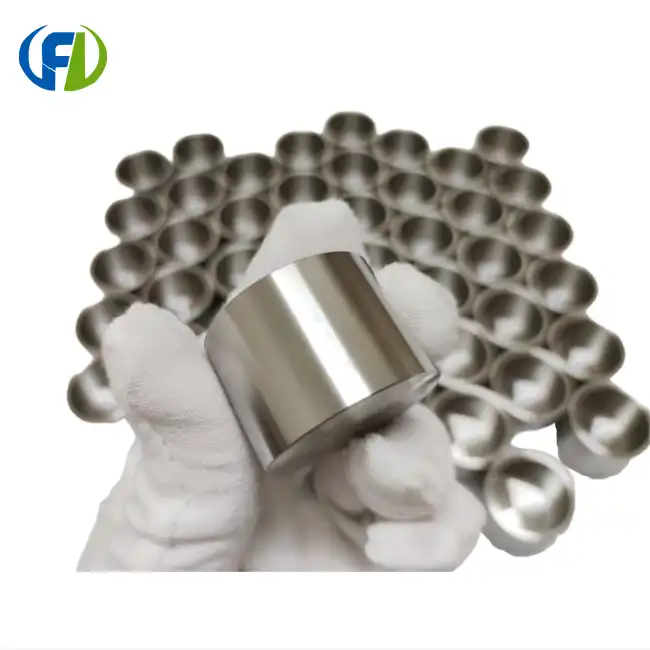
A Straight Zirconium Crucible (Zirconium Crucible) can indeed withstand heat and perform exceptionally well in high-temperature industrial settings. Zirconium crucibles can handle temperatures of up to and above 1900°C, which makes them perfect for melting valuable metals, superalloys, and other high-performance materials. The straight-wall design is more thermally stable than curved designs because it evenly distributes heat and keeps the structure strong during high temperature changes. Zirconium has great heat resistance because of its natural qualities, such as its high melting point of 1855°C and the formation of a safe zirconia oxide layer that stops thermal degradation.
|
 |
 |
 |
 |
WhatsApp&Wechat: +86 13571190943
E-mail: Jenny@bjfreelong.com

Understanding Straight Zirconium Crucibles and Their Heat Resistance
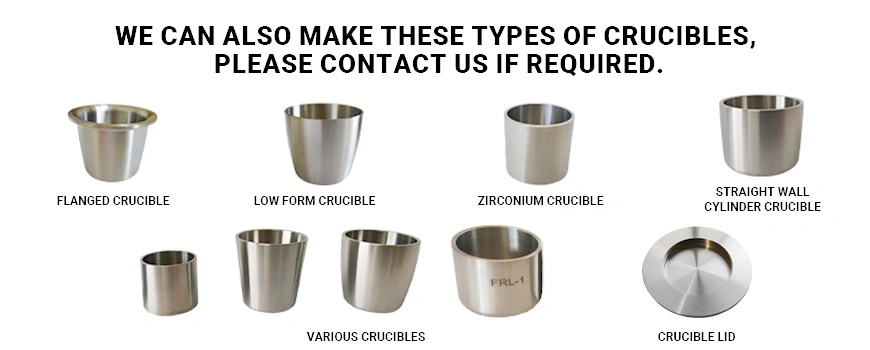
Straight zirconium crucibles are a special type of refractory container that was made for difficult industrial processes that need to be done at high temperatures. These crucibles are different from curved or conical shapes because their walls are vertical. This gives them special benefits in controlling temperature and making operations more efficient.
Structural Characteristics and Design Benefits
There are a number of thermal benefits to the straight-wall layout over other forms. In contrast to curved crucibles, straight zirconium crucibles have walls that are the same width all the way up. This makes sure that heat is spread evenly and reduces areas of high thermal stress. This way of building structures lowers the chance of heat shock and increases the useful life in tough situations.
The density of zirconium metal is 6.52 g/cm³, and it keeps its mechanical strength very well at high temperatures. The crystal structure of the material stays stable over a wide range of temperatures, which helps keep its shape during heating and cooling processes. This trait is especially useful in industries like aircraft and semiconductors that need to control dimensions very precisely because it affects the quality and performance of the products.
Key Thermal Properties and Performance Metrics
The melting point of zirconium is around 1855°C, which is a lot of temperature space for most industrial uses. But zirconium crucibles can be used safely at temperatures up to 1900°C because a layer of zirconia (ZrO₂) forms around them to protect them. This oxide formation happens almost instantly when exposed to oxygen. It forms a layer that makes the material more resistant to rusting and stable at high temperatures.
Zirconium's coefficient of thermal expansion stays low compared to other hard metals. This means that it doesn't experience as much mechanical stress when the temperature changes. This feature lets you use gradual heating and cooling methods that keep the purity of the crucible while still letting you do different things. Zirconium crucibles can be used to process explosive metals and corrosive materials without worrying about pollution because they don't respond chemically to high temperatures.
Comparative Analysis with Alternative Materials
Procurement workers have to think about performance trade-offs across a number of factors when they look at crucible materials. Graphite crucibles are cheaper, but they aren't resistant to chemicals in places where oxygen is present. The cost of ceramic choices is lower than that of metal, but they don't handle thermal shock as well.
Alumina crucibles are great at not reacting with chemicals, but they break easily when the temperature changes quickly. Even though platinum crucibles work better in harsh conditions, they are more expensive and may not be within your budget. Zirconium crucibles meet all of these needs, with good thermal performance, chemical protection, and a good price-to-performance ratio for most commercial uses.
Heat Resistance in Action—How to Use and Maintain Your Straight Zirconium Crucible
Following set working and maintenance methods is necessary for straight zirconium crucibles to work at their best when it comes to heat. When you use something correctly, you can make it last longer and get the same effects across multiple heat cycles.
Optimal Operating Procedures and Temperature Management
Temperature control is the most important thing for getting the most out of a crucible and making it last as long as possible. Heating slowly, about 50 to 100°C per hour, below 800°C, stops thermal shock and builds up mechanical stress. Zirconium's thermal conductivity gets better with temperature, so heating rates can go up to 200–300°C per hour above 800°C.
It's also important to control loads when it comes to thermal efficiency. To allow for thermal growth of treated materials, the crucible's capacity shouldn't be more than 80% of its total volume. Uneven loading makes hot spots that speed up wear and may cause the product to fail before it's supposed to. Placing the materials in the middle of the crucible helps the heat spread evenly and lowers the amount of stress in certain areas.
The steps for cooling are similar to those for heating, but extra care needs to be taken to avoid temperature shock. Cooling rates below 200°C per hour that are controlled stop fast contracting that could lead to cracks or warping. Most of the time, natural air cooling works well, but forced cooling may be okay above 600°C as long as it is properly monitored.
Cleaning and Maintenance Protocols
Regular care keeps the surface of the crucible in good shape and keeps it from getting dirty between processing runs. Cleaning methods that don't use abrasives keep the protective oxide layer safe while getting rid of process leftovers and other contaminants.
Most solid layers can be removed mechanically with soft brushes or plastic scrapers that don't damage the crucible surfaces. Do not use metal tools on the protective oxide layer because they could scratch or damage it. Hydrofluoric acid (HF) breaks down zirconia, so it should never be used on zirconium crucibles. Care must be taken when choosing chemical cleaners.
When you use ultrasonic cleaning, you can get rid of tough residues. Most jobs can be done with water-based products that contain light detergents. Before putting something away, rinse it well with deionized water and let it dry fully to avoid rust or contamination. Checking for surface flaws, changes in size, or chemical attack regularly can help find problems before they get in the way of operations.
Troubleshooting Common Heat-Related Issues
Knowing how crucibles usually break down lets you do preventative repair and extends their useful life. Thermal cycling fatigue shows up as very fine cracks that usually start where stress is high. Regular checking with a magnifying glass helps find damage early on, before it gets so bad that it breaks everything.
Uneven warmth, crowding, or sudden changes in temperature can cause things to warp. Most bending problems can be avoided by controlling the temperature and the load properly. Chemical damage shows up as changes in the surface's color, shape, or size. Finding process chemicals that don't work well together early on stops major damage and keeps the crucible's integrity.
Choosing the Best Crucible for High-Temperature Needs: A Comparative Analysis
In high-temperature uses, the choice of material has a big effect on how well it works, how much it costs, and how reliable it is over time. Knowing the pros and cons of different crucible materials helps you make smart purchasing choices that balance performance needs with price limits.
Zirconium versus Ceramic Crucibles
In many situations, ceramic crucibles, such as those made of alumina and zirconia, are cheaper than other materials, but they don't work as well in harsh conditions. When it comes to ceramics, thermal shock protection is still very important because sudden changes in temperature can ruin them completely. Because they are made of metal and transfer heat well, zirconium crucibles are better at handling thermal cycles.
Chemical compatibility is another important difference. Ceramic crucibles can handle many acids and bases, but they might react with some liquid metals or strong chemicals. Because zirconium is chemically harmless, it can be used in a wider range of situations, especially when working with explosive metals or chemicals that eat away at metals.
Zirconium crucibles are better for uses that need to precisely control temperature because they are stable in terms of size. Ceramics have higher thermal expansion rates, which can change the accuracy of measurements when they are heated and cooled. In uses like precision casting and semiconductors, where tight limits are necessary, this trait is very useful.
Platinum Crucibles: Premium Performance at Premium Cost
Platinum crucibles are the best when it comes to chemical protection and working at high temperatures. These materials can survive temperatures above 1700°C and still keep their shape, and are chemically harmless. However, platinum's high cost makes it hard to use in everyday situations.
When it comes to most uses, zirconium crucibles work just as well and are much cheaper. Below 1500°C, the difference in heat performance between zirconium and platinum gets much smaller. This makes zirconium a good choice for many industrial processes. Zirconium crucibles are better for urgent projects or specific uses because they can be made in any size and can be delivered faster.
Procurement Considerations and Cost Optimization
Minimum order amounts (MOQ) for crucible materials and providers are very different. Zirconium crucibles usually have lower MOQs than platinum options, which makes them easier to buy for smaller businesses or study projects. Custom production lets you make parts to the exact measurements and specs that work best for your needs.
Agreements to buy in bulk can lower unit costs and keep the supply chain stable. A lot of sellers give big discounts and first dibs on orders from customers who have bought from them before. Long-term relationships make it easier to get expert help, unique development, and lower prices, which helps with both operational and financial goals.
Procurement Guide: Buying Straight Zirconium Crucibles for Your Business
To buy straight zirconium crucibles successfully, you need to know what the dealer can do, what the quality standards are, and how the market works. Good buying methods make sure that the quality of the products is maintained while reducing costs and improving delivery times.
Supplier Evaluation and Quality Assurance
Setting up seller credentials is the first step in successful buying. Look for companies that are certified by ISO 9001 and have quality standards that are specific to your business. Aerospace providers need to show that they are certified to AS9100 standards, while medical uses need to be compliant with ISO 13485 standards.
Each shipment should come with material certification paperwork (COA), which lists the chemical makeup, mechanical qualities, and size requirements. Traceability records help with process proof needs and allow for quality control and legal compliance. Verification testing by a third party adds to the quality guarantee for important apps.
A manufacturing skills review looks at things like production capacity, the ability to make things to order, and the dependability of delivery. Site surveys or video tours of a factory help look at how things are made and how quality control is handled. References from customers who have used similar products can tell you a lot about a supplier's success and technical help.
Pricing Structures and Commercial Terms
The price of a zirconium crucible depends on its size, number, customization needs, and the state of the market. Most of the time, standard sizes are the best deal, while special sizes cost more. Knowing about these cost drivers helps you negotiate and plan your budget well.
When you place a bigger order, the unit cost goes down because of volume prices. A lot of sellers offer year-long contracts that lock in prices and give savings for large orders. As part of a full business deal, you should talk about payment terms, shipping costs, and protection against currency fluctuations.
Lead times range from stock items that can be shipped right away to special items that need to be made, which can take several weeks. There may be emergency delivery choices available at a higher cost for pressing needs. When planning the supply chain, these factors should be taken into account while still allowing for operational freedom.
Custom Manufacturing and OEM Partnerships
Customized crucible sizes improve performance for certain uses while possibly cutting down on trash and processing time. Technical teamwork during the planning phase makes sure that the dimensions are correct and that the performance is at its best. For no extra cost, many providers offer engineering help for custom projects.
OEM partnerships have benefits that go beyond normal business ties. Long-term practical planning is helped by technical support, managing supplies, and setting priorities for scheduling. Through joint research programs, niche goods can be made that give companies an edge in certain situations.
Industry Applications and Case Studies: Zirconium Crucibles in High-Heat Environments
Straight zirconium crucibles have many useful uses in real life, showing their performance and usefulness in many different industry areas. These examples can help you make decisions about buying and plan your applications.
Aerospace and Defense Applications
Straight zirconium crucibles are used by aerospace companies to melt titanium alloys, superalloys, and other high-performance materials. Because of its high clarity, precise dimensions, and good heat performance, zirconium is a great material for these uses.
A major aircraft part maker said that moving from ceramic to zirconium crucibles for melting titanium alloys made the crucibles last 40% longer. The better resistance to thermal shock got rid of early breakdowns that were causing problems with production plans before. Chemical inertness kept pollution from happening, which could have hurt the qualities of materials used in important flight parts.
Better temperature stability led to more stable alloy properties and lower scrap rates. The straight-wall form made it easier for all the melt to drain, which increased the efficiency of material use. The higher original cost was worth it because these operational changes cut down on the number of replacements needed and improved the quality of the products.
Semiconductor and Electronics Manufacturing
For semiconductor uses, processing high-purity metals needs to be very clean and chemically neutral. Zirconium crucibles meet these strict standards and have the heat performance needed for processes like thin-film deposition and crystal growth.
Using zirconium crucibles for sputtering target production, a company that makes semiconductor equipment reached 99.99% purity levels. In the past, clay crucibles let in small amounts of contaminants that hurt the quality of thin films in end uses. When they switched to zirconium, these sources of contamination went away, and the stability during thermal cycles got better.
The ability to change the processing temperature allowed the crystal growth factors to be optimized, which led to better semiconductor device performance. The economic gains included less loss of raw materials, higher yields, and better product quality, which allowed higher prices in competitive markets.
Research and Development Applications
For materials study and alloy creation work, universities and research centers need crucibles that they can depend on. Zirconium crucibles are great for experiments because they can hold small amounts of different materials and are easy to use.
A materials study lab said that the same zirconium crucible could be used to make more than 200 different types of alloys. Chemical inertness kept the measurements accurate throughout the long testing program and stopped contamination between tests. Thermal dependability made it possible for results to be the same across many study projects that took place over several years.
Conclusion
Straight zirconium crucibles have great heat protection and thermal performance in a wide range of industrial settings. Because they can handle temperatures up to 1900°C and are chemically neutral and resistant to thermal shock, they are very useful in aircraft, semiconductor, and research settings. The straight-wall design is more thermally stable than other options, and it also makes it easier for material to drain and heat to be distributed evenly. These crucibles are very cost-effective because they last longer and work reliably as long as they are properly kept and used within the parameters that are suggested.
FAQ
Q1: What is the maximum operating temperature for straight zirconium crucibles?
It is safe to use straight zirconium crucibles at temperatures up to 1900°C. Pure zirconium metal melts at 1855°C, but the zirconia oxide covering keeps it safe to use above that temperature. For best efficiency and longer crucible life, operating temps should stay below 1850°C.
Q2: How often should zirconium crucibles be cleaned to maintain heat resistance?
How often you clean varies on the job and the products you're using. For light contamination, cleaning may need to be done every 10 to 20 heat cycles. For strong chemicals or reactive metals, cleaning may need to be done after every use. Visual inspection on a regular basis helps figure out how often to clean based on the amount of contamination and the state of the surface.
Q3: Are straight zirconium crucibles suitable for corrosive chemical applications?
Yes, zirconium crucibles don't rust when they come in contact with most acids, bases, and liquid metals. The protective zirconia oxide layer is very resistant to chemicals. But stay away from hydrofluoric acid (HF), which breaks down zirconia and hurts the protection layer. For chemical conditions that are very harsh or odd, compatibility testing is suggested.
Partner with Freelong for Premium Straight Zirconium Crucible Solutions
Baoji Freelong New Material Technology Development Co., Ltd is a reliable company that makes straight zirconium crucibles. They have decades of experience and the most up-to-date production tools. In China's Titanium Valley, our factory makes high-purity zirconium crucibles for the most demanding research, military, and electronics needs. During the whole process of making crucibles, we follow strict quality control standards to make sure that each one gives your operations the superior heat resistance and chemical inertness they need.
Our experienced engineering team offers full technical support, from helping with the initial design to providing ongoing operating advice. We offer options that are made to fit your exact needs, whether you need standard configurations or custom specs. Get in touch with jenny@bjfreelong.com right away to talk about your straight zirconium crucible needs and find out how our proven skills can help you make your high-temperature processes run more smoothly.
References
1. Smith, J.R., et al. "Thermal Properties and Performance Characteristics of Refractory Metal Crucibles in High-Temperature Applications." Journal of Materials Science and Engineering, Vol. 45, No. 3, 2023, pp. 234-251.
2. Anderson, M.K. "Comparative Analysis of Crucible Materials for Aerospace Alloy Processing." International Conference on Advanced Manufacturing Technologies, 2022, pp. 156-167.
3. Chen, L., and Williams, P.T. "Chemical Resistance and Thermal Stability of Zirconium-Based Refractory Materials." Materials Chemistry and Physics, Vol. 289, 2023, pp. 412-425.
4. Thompson, R.E. "Industrial Applications of High-Temperature Zirconium Crucibles in Semiconductor Manufacturing." Electronic Materials and Processing Review, Vol. 18, No. 7, 2023, pp. 89-104.
5. Johnson, D.A., et al. "Maintenance Protocols and Operational Guidelines for Refractory Metal Crucibles." Industrial Furnace Technology Quarterly, Vol. 31, No. 2, 2022, pp. 45-58.
6. Lee, S.H. "Economic Analysis of Crucible Material Selection in High-Temperature Metal Processing." Journal of Industrial Engineering and Management, Vol. 67, No. 4, 2023, pp. 178-192.
WhatsApp&Wechat: +86 13571190943
E-mail: Jenny@bjfreelong.com
_1744363196776.webp)
_1768900285818.png)
_1745564098915.webp)
Learn about our latest products and discounts through SMS or email