- English
- French
- German
- Portuguese
- Spanish
- Russian
- Japanese
- Korean
- Arabic
- Greek
- German
- Turkish
- Italian
- Danish
- Romanian
- Indonesian
- Czech
- Afrikaans
- Swedish
- Polish
- Basque
- Catalan
- Esperanto
- Hindi
- Lao
- Albanian
- Amharic
- Armenian
- Azerbaijani
- Belarusian
- Bengali
- Bosnian
- Bulgarian
- Cebuano
- Chichewa
- Corsican
- Croatian
- Dutch
- Estonian
- Filipino
- Finnish
- Frisian
- Galician
- Georgian
- Gujarati
- Haitian
- Hausa
- Hawaiian
- Hebrew
- Hmong
- Hungarian
- Icelandic
- Igbo
- Javanese
- Kannada
- Kazakh
- Khmer
- Kurdish
- Kyrgyz
- Latin
- Latvian
- Lithuanian
- Luxembou..
- Macedonian
- Malagasy
- Malay
- Malayalam
- Maltese
- Maori
- Marathi
- Mongolian
- Burmese
- Nepali
- Norwegian
- Pashto
- Persian
- Punjabi
- Serbian
- Sesotho
- Sinhala
- Slovak
- Slovenian
- Somali
- Samoan
- Scots Gaelic
- Shona
- Sindhi
- Sundanese
- Swahili
- Tajik
- Tamil
- Telugu
- Thai
- Ukrainian
- Urdu
- Uzbek
- Vietnamese
- Welsh
- Xhosa
- Yiddish
- Yoruba
- Zulu
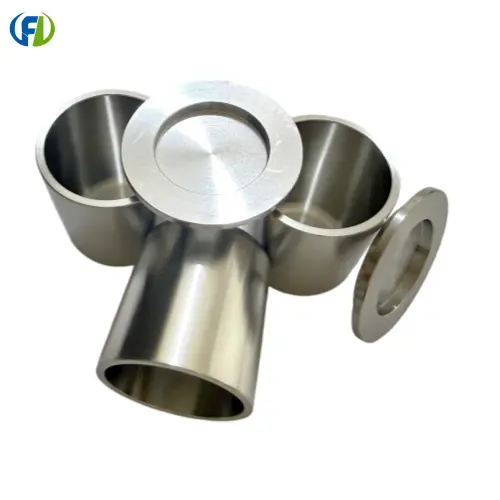
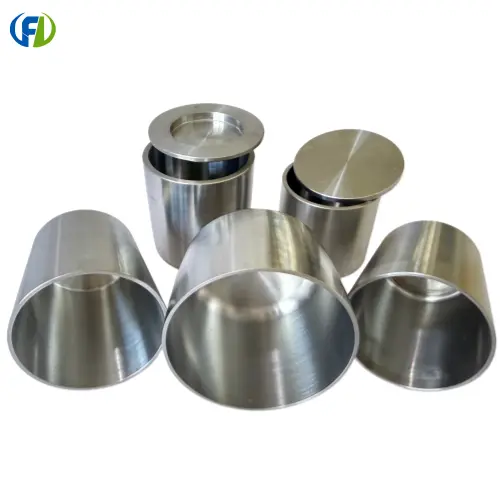
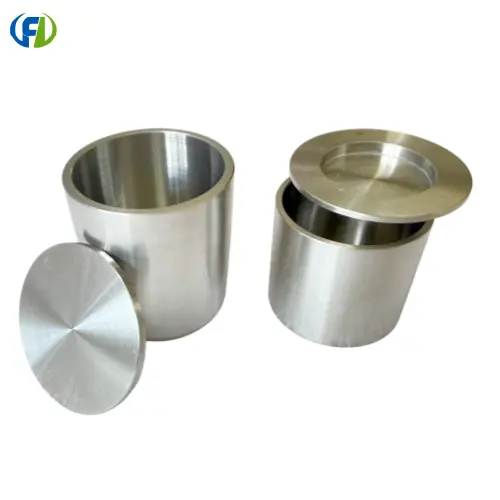
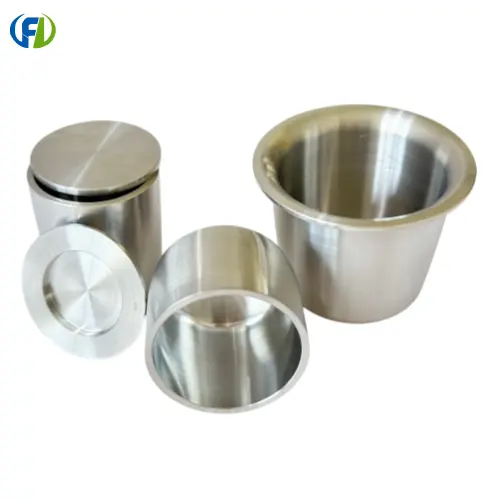
R60702 30ml Pure Zirconium Crucible (with Lid) – For Laboratory Use
Brand: FRL Metal
Product Name: Pure Zirconium Crucible (with lid)
Grade: R60702
Density: 6.51 g/cm³
Wall Thickness: 1–2 mm
Capacity: 5–50 ml
Style: Tapered wall, straight wall, low-profile, flanged
Standards: ASTM, DIN, EN
Manufacturing Process: Hot rolling, cold rolling, annealing
Surface Treatment: Pickled / Polished (bright)
Certification: ISO9001
Lead Time: 5–7 days
Payment Terms: Bank Transfer (T/T)
Packaging: Standard packaging
Baoji Freelong New Material Technology Development Co., Ltd. loated in Baoji City--China's Titanium Valley,we are mainly doing Zirconium,Titanium,Nickel,Niobium,Tantalum etc metal material and other alloy's produce,OEM and Sales.and also exporting the goods what we make. we have a lot of trustful clients and partner.and also we were authority by some firms.At present,we were build our relationship with Australia,Korea,German,US,UK,Malaysia,AZ,Middle East,Taiwan,Etc. Our company always take the quality and service as our responsibility,We always get close even match the quality what our customer wanted and as for quality,we never say no and no reason for quality failure.
I. Product Description:
Zirconium crucibles offer excellent resistance to high temperatures and highly corrosive chemicals, making them an ideal, cost-effective alternative to platinum crucibles for laboratory use.
Zirconium crucibles are engineered for durability and high performance in fusion sample preparation processes. Crafted from high-purity zirconium, these crucibles—along with their matching lids—exhibit exceptional resistance to corrosion and thermal shock, helping to ensure consistent analytical results.
II. Function of the Lid for Crucibles:
1. Prevents sample loss due to splashing or spattering.
2. Isolates the sample from the air and allows for atmosphere control (preventing oxidation/contamination).
3. Reduces the loss of volatile components.
4. Maintains uniform internal temperature.
III. Product Showcase
 |
 |
 |
 |
Grade: Zr702, Zr705, R60001, R60901
Capacity: 5–50 ml (custom fabrication based on provided drawings is available)
Type: Low-rim zirconium crucible, flanged zirconium crucible, straight-wall zirconium crucible, tapered-wall zirconium crucible, cylindrical zirconium crucible
Surface: Bright/Polished
Wall Thickness: 1 mm, 2 mm, or customizable
Service Life: Crucibles with a 2 mm wall thickness offer a longer service life than thin-walled versions and can be reused more than 100 times.
Contact Us
Our team is dedicated to serving you and hopes that every product you purchase will meet your expectations!
Email: lucky@bjfreelong.com
WhatsApp: +86 13335371763

Chemical Composition of R60702 Crucible
 |
Common Crucible Specifications
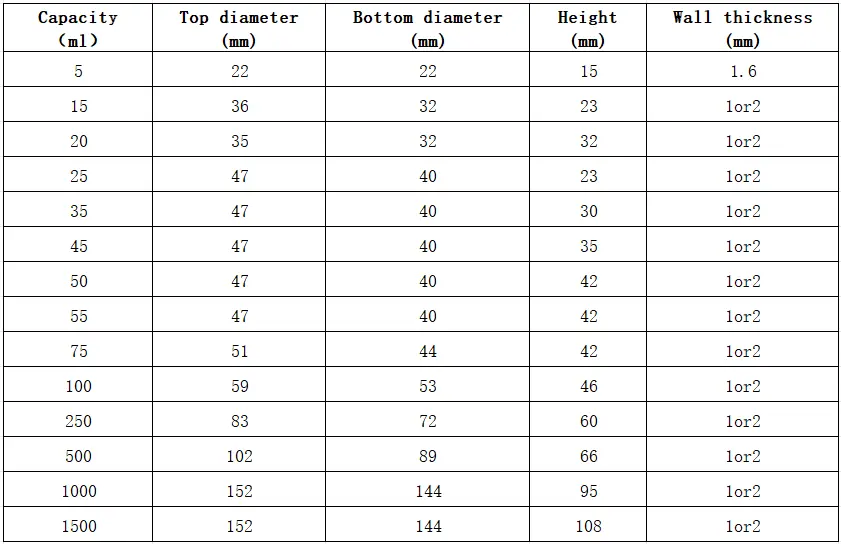 |
Crucible Dimension Measurement
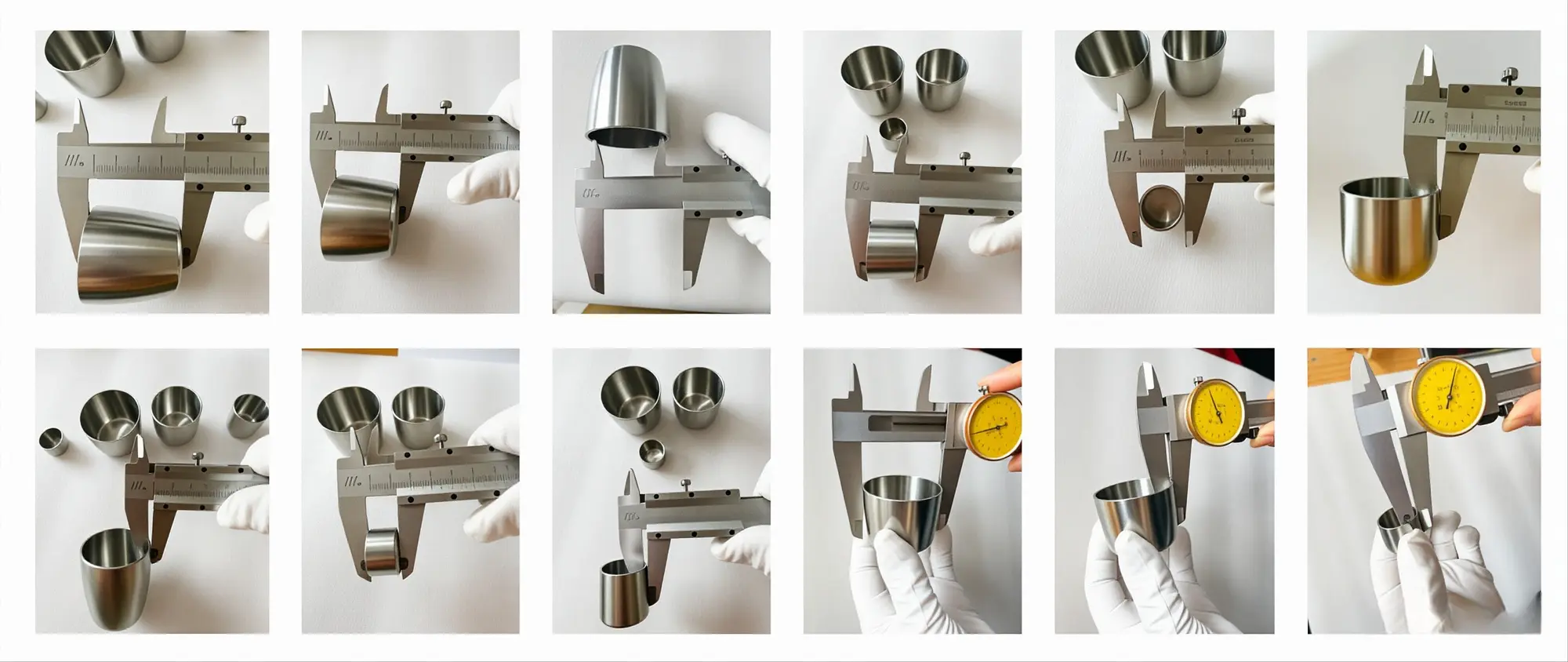 |
Laboratory Heat Treatment
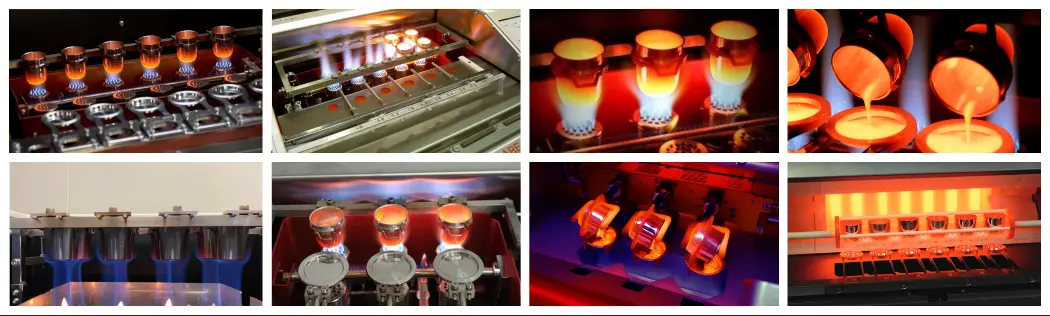 |
Analysis of Common Issues with Zirconium Crucibles(FAQ)
1. What is the maximum temperature that an R60702 zirconium crucible can withstand?
In air: The temperature should generally not exceed 300°C–500°C (and typically should not exceed 900°C); heating duration should be kept as short as possible.
Under vacuum or an inert gas atmosphere (such as high-purity argon): It can typically be used at temperatures ranging from 1200°C to 1500°C, or even higher.
2. Which chemical substances or fluxes should R60702 zirconium crucibles not come into contact with?
Hydrofluoric acid (HF) and media containing fluoride ions: Regardless of concentration, HF causes severe corrosion to zirconium.
Strong oxidizing agents and certain mixed acids: Concentrated nitric acid, fuming nitric acid, wet chlorine gas, or aqua regia may, under certain conditions, trigger violent reactions or pose a risk of combustion.
Iron contamination: During use and storage, avoid direct, forceful contact or friction with carbon steel tools. This prevents the transfer of iron onto the crucible surface, which could otherwise lead to the formation of low-melting-point eutectics at high temperatures or accelerate corrosion.
3. What are the advantages of zirconium crucibles compared to common platinum, nickel, or iron crucibles?
Compared to nickel, iron, or silver crucibles: When used for alkali fusion, zirconium crucibles contribute minimal metallic impurities to the sample, significantly reducing contamination—making them ideal for high-purity analysis.
Compared to platinum crucibles: Zirconium crucibles are far more affordable than platinum. Furthermore, they exhibit superior resistance to certain types of melts, avoiding the damage or alloying issues that can occur with platinum.
4. Should the discoloration or oxide layer on the crucible surface be scraped off after each use?
No frequent cleaning required: When heated, zirconium naturally develops a dense, protective oxide film; this film is precisely what provides its corrosion resistance.
Cleaning recommendation: Generally, no special treatment is necessary between consecutive uses. If residue must be removed, use a gentle method (such as lightly wiping with fine zirconium sand). The use of fluorine-containing cleaning agents or scraping the surface forcefully with hard iron tools is strictly prohibited.
5. Why might a zirconium crucible develop bulges, become deformed, or turn brittle after heating? Causes:
Prolonged exposure to high temperatures in air: Heating a crucible in an open flame or an air-atmosphere furnace to temperatures exceeding 600°C–900°C causes the zirconium to absorb significant amounts of oxygen. This leads to "oxygen embrittlement," resulting in a sharp decline in ductility.
Rapid heating or cooling (thermal shock): Placing a red-hot crucible directly into cold water or onto a cold surface generates intense thermal stress, which can cause deformation or even cracking.
Best practice: Follow a protocol of gradual heating and gradual cooling to avoid thermal shock.
6. What is the difference between crucibles made of R60702 and R60705?
R60702 (Zr702): Commercially pure zirconium. It contains minimal impurities, offers excellent corrosion resistance, and possesses superior ductility; it is the most common material used for standard chemical analysis and in the fabrication of chemical processing vessels. R60705 (Zr705): A zirconium-niobium alloy (Zr-2.5Nb). It is approximately twice as strong as R60702; however, due to the presence of alloying elements, its corrosion resistance in certain specific environments—as well as its machinability—may differ slightly from that of pure zirconium. R60705 might be selected if the crucible is required to withstand higher mechanical stress, but for routine sample fusion and general corrosion-resistance applications, R60702 remains the standard and most widely used choice.
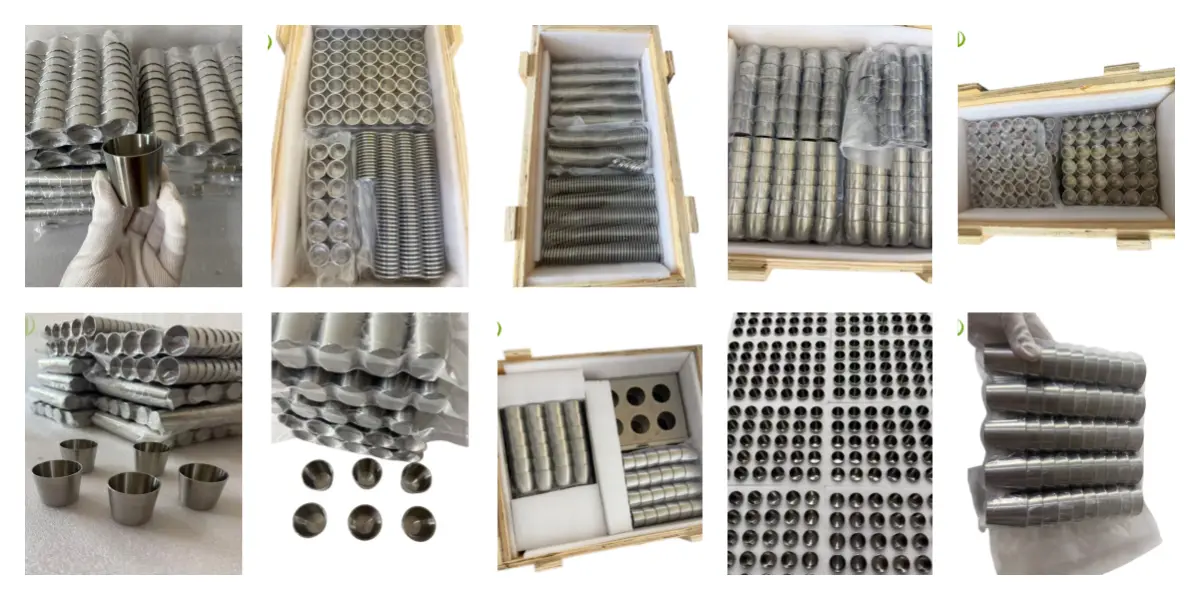
IV. Product Packaging and Shipment
Plywood crates or other packaging suitable for truck, overseas, or air transport.
Details
① Layer 1: Wrapped in plastic bags.
② Layer 2: Cushioned with anti-collision materials to prevent damage.
③ Layer 3: Packed in plywood crates, drums, or other appropriate containers.
④ Layer 4: Secured with iron frames, packing straps, or waterproof film.
⑤ Markings: Destination, product description, order number, package number, net weight, country of origin, etc.
We work closely with air and sea freight forwarders, as well as carriers like FedEx, UPS, and DHL, to expedite delivery. Wherever you are located, we ensure that your goods reach you with the speed and efficiency you expect.
 |
Why Choose Us?
With over a decade of industry experience, Baoji Furuilong is your trusted partner for raw material processing. Backed by a team of expert technical consultants and skilled machinists, we specialize in the R&D and manufacturing of processed components across a wide range of materials. We are committed to excellence, ensuring the perfect delivery of your products.
Our Strengths:
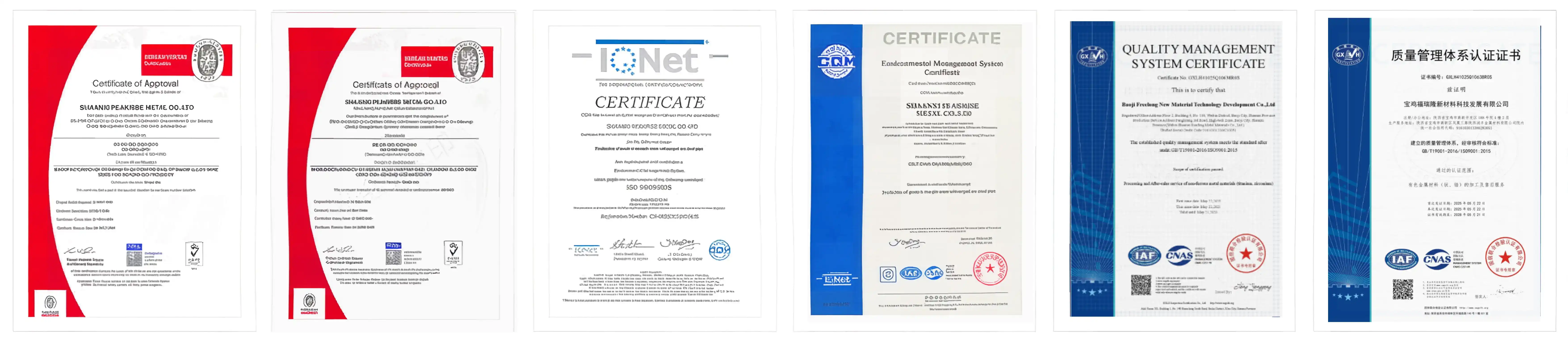
ISO9001-certified quality management system
Advanced CNC machining and heat treatment capabilities
Global reach spanning over 50 countries
Comprehensive professional support and consultation
Customized project management for specialized applications
Fast shipping and ample inventory
 |
Contact Us
Our team is dedicated to serving you and hopes that every product you purchase will meet your expectations!
Email: lucky@bjfreelong.com
WhatsApp: +86 13335371763

Please contact us for detailed quotations and technical specifications. We look forward to becoming your trusted high-end titanium materials partner.
_1745735419923.webp)
_1745891477448.webp)
_1744958752532.webp)
Learn about our latest products and discounts through SMS or email