- English
- French
- German
- Portuguese
- Spanish
- Russian
- Japanese
- Korean
- Arabic
- Greek
- German
- Turkish
- Italian
- Danish
- Romanian
- Indonesian
- Czech
- Afrikaans
- Swedish
- Polish
- Basque
- Catalan
- Esperanto
- Hindi
- Lao
- Albanian
- Amharic
- Armenian
- Azerbaijani
- Belarusian
- Bengali
- Bosnian
- Bulgarian
- Cebuano
- Chichewa
- Corsican
- Croatian
- Dutch
- Estonian
- Filipino
- Finnish
- Frisian
- Galician
- Georgian
- Gujarati
- Haitian
- Hausa
- Hawaiian
- Hebrew
- Hmong
- Hungarian
- Icelandic
- Igbo
- Javanese
- Kannada
- Kazakh
- Khmer
- Kurdish
- Kyrgyz
- Latin
- Latvian
- Lithuanian
- Luxembou..
- Macedonian
- Malagasy
- Malay
- Malayalam
- Maltese
- Maori
- Marathi
- Mongolian
- Burmese
- Nepali
- Norwegian
- Pashto
- Persian
- Punjabi
- Serbian
- Sesotho
- Sinhala
- Slovak
- Slovenian
- Somali
- Samoan
- Scots Gaelic
- Shona
- Sindhi
- Sundanese
- Swahili
- Tajik
- Tamil
- Telugu
- Thai
- Ukrainian
- Urdu
- Uzbek
- Vietnamese
- Welsh
- Xhosa
- Yiddish
- Yoruba
- Zulu
Best Zirconium Crucibles for Laboratory Use: Comparing Durability and Performance
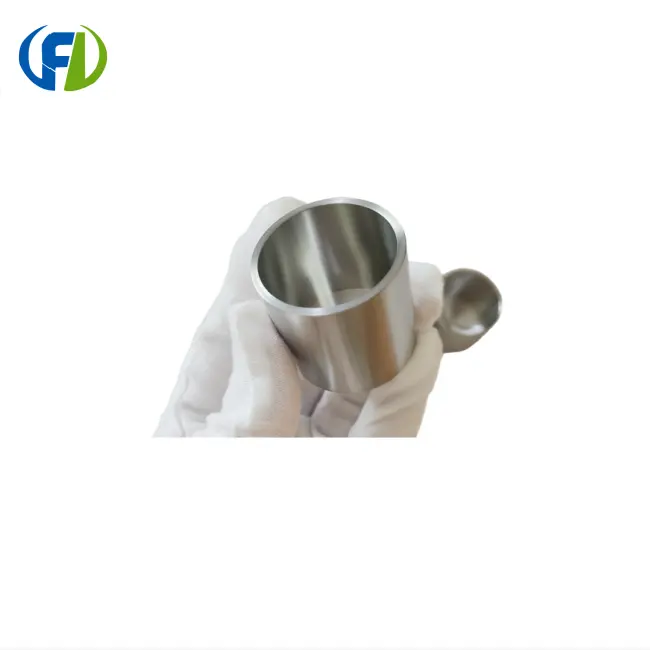
When looking for analytical vessels for difficult fusion processes, the Laboratory Zirconium Crucible 25ml stands out as the best choice for labs that need to save money and get the best chemical resistance. These crucibles are made from commercial-grade zirconium according to ASTM B550 standards. They are a middle ground between platinum labware that is too expensive for most people to afford and less durable materials like nickel or porcelain. The 25ml capacity is the best standard volume for preparing intermediate samples because it keeps the reagents safe while still allowing enough handling for geochemical, metallurgical, and pharmaceutical uses that use strong alkaline fluxes.
Introduction
Modern analysis labs have a constant problem: they need to find crucibles that can handle tough chemical conditions without contaminating samples or needing to be replaced all the time. Because we work with research centers and industrial labs in Australia, Korea, Germany, and the US, we at Baoji Freelong New Material Technology Development Co., Ltd. know this problem very well. Zirconium crucibles have become the practical choice for labs that want long-lasting and effective tools that don't lose their analytical precision. This piece looks at why zirconium crucibles, especially the 25ml version, have become the best choice for preparing samples for spectrometry, breaking down fusions, and doing high-temperature analytical processes. We will compare the properties of materials, look at maintenance schedules, and give buying advice that is specific to industrial buyers, chemical engineers, and lab managers who care about both quality and efficiency.
Understanding Laboratory Zirconium Crucibles: Properties and Uses
Material Composition and Standards Compliance
UNS R60702 zirconium metal, which has more than 99.2% zirconium and hafnium mixed, is used to make laboratory-grade zirconium crucibles. According to ASTM B550 standards, this material has a consistent density of 6.51 g/cm³ and a melting point of about 1855°C. Because it is amphoteric, the material is resistant to most natural acids, such as hydrochloric, sulphuric, and nitric acids. It is also more resistant to liquid alkalis, like sodium hydroxide and potassium carbonate, than vitreous carbon or even platinum-gold alloys.
Thermal and Physical Performance Characteristics
Zirconium crucibles can be used at temperatures between 450°C and 600°C for long periods of time. For short periods of time, they can be used at temperatures up to 900°C when the flame is low. The top diameter of 25ml units is usually between 35 and 45mm, the height is between 30 and 40mm, and the wall thickness is between 0.6mm and 1.0mm. This engineering makes sure that the structure stays strong during the cooling phase while heat moves quickly during fusion. The deep-drawn, seamless construction doesn't have any welds that could trap sample residue or cause failure points.
Primary Application Scenarios in Industrial Laboratories
Zirconium crucibles are very good at three important types of work. In geochemical research, Laboratory Zirconium Crucible 25ml is the usual container for fusing hard ores like chromite, zircon, and columbite-tantalite with sodium peroxide. Platinum crucibles would break during this process and could not be fixed. Metallurgical quality assurance labs use these crucibles to mix slag and blast furnace raw materials in an alkaline solution before ICP-OES/MS analysis. They do this because they have low background interference, which gets rid of the nickel spike that comes with cheaper options. For pharmaceutical ashing uses, the 25ml size is best for dry ashing of organic matrices because the polished surface finish keeps complex organic compounds from getting mixed up.
Comparing the Zirconium Crucible 25ml with Other Crucible Types
Chemical Resistance and Contamination Profile
Material choice has a direct effect on the accuracy of analyses and the costs of running the business. Zirconium is very resistant to alkaline fusion settings, which is a big plus compared to graphite crucibles, which break down quickly in oxidising circumstances. Nickel crucibles can make trace analysis very difficult because they introduce a lot of metallic interference. Zirconium, on the other hand, keeps samples pure even when processing them for parts-per-billion detection limits. Alumina and porcelain alternatives break when heated quickly and partially dissolve in strong fluxes, adding silica contamination that lowers the quality of the results.
Cost-Benefit Analysis Across Material Options
Platinum crucibles are a big investment—often more than a few thousand dollars each—, but they can be used over and over again as long as they are kept in good shape. Zirconium crucibles are meant to be used only a few times, 20 to 50 times, depending on how aggressive the flux is. They usually cost less than 10% of platinum equivalents. This means that damaging fusion methods have better cost-per-test rates. Ceramic and graphite choices may seem cheap at first, but they need to be replaced often, which adds up to secret costs because it takes longer to prepare samples and gives inconsistent results that need to be run again.
Temperature Tolerance and Physical Durability
Platinum is reliable from room temperature to 1700°C, which is the biggest temperature range it can withstand. Zirconium crucibles work well within a smaller range of conditions, but they are still more than enough for normal fusion methods that don't go above 700°C in muffle furnace settings. A protected shell of zirconium dioxide forms during heating, which makes it very resistant to oxidation. However, workers should avoid long-term contact above 600°C to keep the material from scaling too much. While graphite crucibles can handle high temperatures, they oxidise when exposed to air. On the other hand, alumina variants are brittle and crack when the temperature changes quickly.
Because of these performance traits, procurement managers are asking for zirconium crucibles more and more for regular fusion analysis. The material is a good medium between performance needs and price constraints. This is especially true for labs that process dozens of samples every week, which makes platinum difficult and lower-quality materials unacceptable.
How to Use and Maintain a 25ml Zirconium Crucible in Your Laboratory
Safe Handling and Heating Protocols
The first step in proper handling of Laboratory Zirconium Crucible 25ml is to look for flaws on the surface, small cracks, or tooling marks on the inner radius that could trap residues. When you load samples, make sure the flux-to-sample ratio stays within the ranges given (10:1 for sodium peroxide fusions, for example), and don't fill the container more than 80% of the way to avoid spillage during strong reactions. Especially when using Bunsen stoves, heating should start slowly, with a gentle light that goes out and then gradually gets stronger. Rapid changes in temperature put stress on the crucible, which shortens its life. Before putting filled crucibles into a muffle furnace, heat it up to 300°C. Then, raise the temperature slowly until it reaches the goal level, 10°C per minute.
Cleaning Procedures That Preserve Material Integrity
Let the crucibles cool down normally after each fusion cycle. Do not force them to cool down, as this can cause heat shock. The dark oxide layer that forms when something is heated is a normal part of passivation and shouldn't be worn away by rubbing. Boiling in a solution of 20% hydrochloric acid for 15 to 20 minutes gets rid of the leftover flux and sample material without hurting the protective oxide layer. Don't use metal brushes or steel wool because they can damage the surface finish by introducing iron. Rinse well with deionised water and let it dry completely on its own before putting it away in a clean, dry place where it won't get damaged.
Safety Considerations and Compliance Requirements
People working in laboratories must wear the right safety gear, like heat-resistant gloves, safety glasses, and lab coats, when they handle crucibles with molten materials inside them. Never put hydrofluoric acid in zirconium crucibles; this acid reacts violently with zirconium at any concentration, so you need to use platinum or PTFE instead. Set up clear procedures for what to do in case of an emergency, like a flux spill or an unexpectedly violent reaction. Make sure there is enough air flow during fusion processes to get rid of alkali vapours that can be harmful to your lungs. As part of your lab's quality management system, write down how to clean and maintain things. This will help you make sure that everyone is following the same rules and that you can always be tracked for regulatory purposes.
Procurement Guide for Laboratory Zirconium Crucibles 25ml
Identifying Reliable Suppliers and Manufacturers
To find lab-grade zirconium crucibles, you need to find providers who have experience with the supply lines for hard metals and analysis tools. Direct makers who are based in areas that make specialised materials can help with quality control, customisation, and expert support. Check the material certifications of potential suppliers against ASTM B493 standards to make sure the hafnium content is within acceptable limits and interstitial impurities are kept to a minimum. Ask for proof of deep-draw manufacturing methods that create uniform vessels without welds that might affect their performance.
Pricing Structures and Volume Considerations
When buying from reputable makers, zirconium crucibles with a volume of 25 ml usually cost between 15% and 30% more than platinum jars of the same size. Volume pricing works better for labs that process a lot of samples, and when they buy 50 or more units at once, they often get discounts of 10 to 20 percent. When figuring out the total cost of ownership, you should take into account the average 20–50 cycle lifespan and compare it to the longer service life of platinum and the frequent replacement needs of ceramic alternatives. International purchasing adds new things to think about, like freight costs, customs duties, and longer lead times, which change how inventory is managed.
Quality Verification and Supplier Credibility Assessment
Reliable suppliers give full material certificates of analysis that show the chemical make-up, mechanical properties, and size tolerances. Ask for proof of batch testing that includes oxidation resistance testing at 600°C and volumetric capacity testing that confirms the 25ml specification within a ±5% range. Supplier reputation isn't just based on the quality of their products; it also depends on how well they treat their customers, offer expert advice, and handle service issues after the sale. Look at the insurance options that cover problems with the way the product was made, but keep in mind that regular wear and tear isn't covered by these warranties. Well-known companies keep in touch with approved testing labs that provide third-party confirmation of the material's properties, giving users even more peace of mind for important uses.
Making the Right Choice: Selecting the Best Zirconium Crucible for Your Lab
Technical Specifications Aligned with Application Requirements
Selecting optimal crucibles begins with analyzing your specific analytical workflows and chemical environments. Laboratories primarily conducting sodium peroxide or lithium metaborate fusions for geological samples find Laboratory Zirconium Crucible 25ml zirconium crucibles ideally suited to these aggressive conditions. The 25ml capacity accommodates standard sample masses between 0.5-2.0 grams while providing adequate freeboard for vigorous flux reactions. Temperature requirements below 700°C align perfectly with zirconium's optimal performance range, while applications regularly exceeding 900°C might warrant platinum despite higher costs. Chemical compatibility assessment must account for all reagents contacted during fusion and cleaning cycles—remember that hydrofluoric acid remains completely incompatible with zirconium.
Economic Evaluation and Return on Investment
Calculating return on investment requires comprehensive cost modeling beyond the initial purchase price. A single zirconium crucible priced at approximately $80-150, delivering 30 fusion cycles, yields a per-test cost of $2.67-5.00 before considering labor and reagent expenses. Comparatively, a platinum crucible at $3000 used for 500+ cycles produces a per-test cost of $6.00 or less but demands substantial capital commitment. For laboratories processing 50-100 samples monthly, zirconium crucibles optimize cash flow while maintaining analytical quality. Higher throughput operations exceeding 500 samples monthly should revisit platinum investment, given its superior longevity and lower incremental costs at scale.
Supplier Partnership and Long-Term Supply Assurance
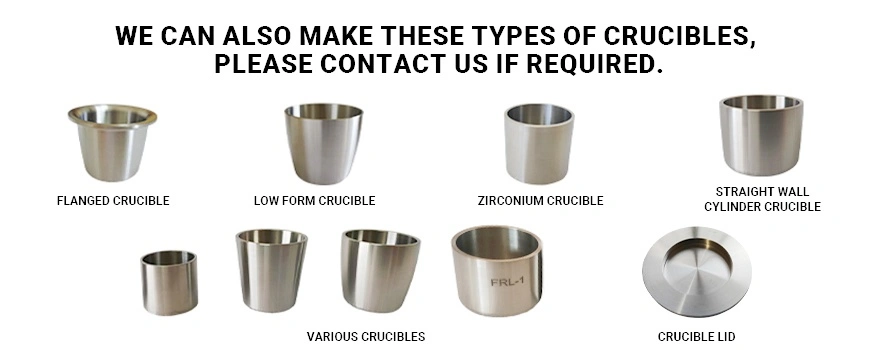
Beyond product specifications and pricing, supplier reliability fundamentally impacts laboratory operations. Establishing relationships with manufacturers capable of consistent delivery schedules prevents workflow disruptions when crucible inventory depletes unexpectedly. Technical support availability proves invaluable when troubleshooting unusual sample behaviors or optimizing fusion protocols for challenging matrices. Manufacturers offering customization services accommodate specialized requirements such as modified capacities, unique dimensional specifications, or enhanced purity grades for ultra-trace analysis applications. We at Freelong have built our reputation on delivering precisely these capabilities, supporting analytical laboratories worldwide with materials manufactured in China's Titanium Valley under rigorous quality systems.
Conclusion
For everyday fusion analysis tasks, laboratory zirconium crucibles are the best combination of efficiency and cost-effectiveness. The 25ml capacity makes it useful for geochemical, metallurgical, and pharmaceutical analytical workflows that need strong chemical resistance for harsh alkaline fluxes. Platinum crucibles last forever, but zirconium alternatives make reliable fusion analysis more accessible by requiring much less capital and having great per-test economics. For procurement to go well, it needs to be done with manufacturers who can guarantee consistent quality, full technical support, and clear material certification. Zirconium crucibles have been proven by labs all over the world to be important for getting accurate analysis results without breaking the bank or contaminating the samples.
FAQ
1. Can zirconium crucibles replace platinum for all fusion applications?
Zirconium crucibles excel in alkaline fusion environments with temperatures below 700°C, making them ideal replacements for platinum in sodium peroxide, sodium carbonate, and lithium metaborate fusion protocols. However, applications requiring hydrofluoric acid digestion or sustained temperatures exceeding 900°C remain unsuitable for zirconium and necessitate platinum or PTFE alternatives. The cost savings of zirconium become most pronounced in routine analysis, where consumable replacement aligns with budget cycles.
2. Why does my crucible develop a black coating during use?
The dark coloration represents zirconium dioxide formation—a protective passivation layer that actually enhances corrosion resistance during subsequent uses. This oxide layer forms naturally when heating zirconium in oxidizing atmospheres and should not be removed through abrasive cleaning. The coating indicates normal operation rather than contamination or deterioration. Maintaining this protective layer through gentle cleaning with dilute hydrochloric acid preserves crucible performance across its service life.
3. How many fusion cycles should laboratories expect from each crucible?
Typical service life ranges from 20-50 fusion cycles depending on flux aggressiveness, operating temperatures, and handling practices. Sodium peroxide fusions represent the most demanding application, potentially limiting lifespan toward the lower range, while gentler lithium tetraborate fusions extend usability toward the upper range. Proper maintenance, including gradual heating, appropriate cleaning protocols, and careful handling, maximizes cycle counts and optimizes cost-per-test economics.
Partner with Freelong for Premium Laboratory Zirconium Crucible 25ml Supply
Analytical laboratories seeking a reliable Laboratory Zirconium Crucible 25ml supplier will find Freelong uniquely positioned to meet demanding requirements. Located in Baoji City—recognized globally as China's Titanium Valley—we manufacture zirconium crucibles under rigorous quality control systems that ensure ASTM B550 compliance and dimensional precision. Our deep expertise in refractory metal processing translates to products that consistently deliver the chemical resistance, thermal stability, and contamination-free performance your analytical workflows demand. We serve research institutions, geochemical laboratories, metallurgical testing facilities, and pharmaceutical manufacturers across six continents with customized solutions, competitive bulk pricing, and responsive technical support. When you need Laboratory Zirconium Crucible 25ml units that perform reliably through dozens of fusion cycles while maintaining your analytical integrity, contact our team at jenny@bjfreelong.com to discuss your specific requirements and receive detailed quotations tailored to your procurement volume.
References
1. American Society for Testing and Materials. (2019). ASTM B550-19: Standard Specification for Zirconium and Zirconium Alloy Bar, Rod, and Wire for Nuclear Application. West Conshohocken: ASTM International.
2. Thompson, M., & Walsh, J.N. (2020). Handbook of Inductively Coupled Plasma Spectrometry. Third Edition. New York: Chapman and Hall.
3. Potts, P.J., & Webb, P.C. (2018). X-ray Fluorescence Spectrometry: Principles and Practice of Wavelength Dispersive Spectrometry. London: Royal Society of Chemistry.
4. Ingamells, C.O., & Switzer, P. (1973). A Proposed Sampling Constant for Use in Geochemical Analysis. Talanta, 20(6), 547-568.
5. Lurie, J. (2017). Handbook of Analytical Chemistry. Boca Raton: CRC Press.
6. Perry, R.H., & Green, D.W. (2019). Perry's Chemical Engineers' Handbook. Ninth Edition. New York: McGraw-Hill Education

_1744789998889.webp)
_1767950289006.png)
_1783496511363.png)
_1748230079113.webp)
Learn about our latest products and discounts through SMS or email