- English
- French
- German
- Portuguese
- Spanish
- Russian
- Japanese
- Korean
- Arabic
- Greek
- German
- Turkish
- Italian
- Danish
- Romanian
- Indonesian
- Czech
- Afrikaans
- Swedish
- Polish
- Basque
- Catalan
- Esperanto
- Hindi
- Lao
- Albanian
- Amharic
- Armenian
- Azerbaijani
- Belarusian
- Bengali
- Bosnian
- Bulgarian
- Cebuano
- Chichewa
- Corsican
- Croatian
- Dutch
- Estonian
- Filipino
- Finnish
- Frisian
- Galician
- Georgian
- Gujarati
- Haitian
- Hausa
- Hawaiian
- Hebrew
- Hmong
- Hungarian
- Icelandic
- Igbo
- Javanese
- Kannada
- Kazakh
- Khmer
- Kurdish
- Kyrgyz
- Latin
- Latvian
- Lithuanian
- Luxembou..
- Macedonian
- Malagasy
- Malay
- Malayalam
- Maltese
- Maori
- Marathi
- Mongolian
- Burmese
- Nepali
- Norwegian
- Pashto
- Persian
- Punjabi
- Serbian
- Sesotho
- Sinhala
- Slovak
- Slovenian
- Somali
- Samoan
- Scots Gaelic
- Shona
- Sindhi
- Sundanese
- Swahili
- Tajik
- Tamil
- Telugu
- Thai
- Ukrainian
- Urdu
- Uzbek
- Vietnamese
- Welsh
- Xhosa
- Yiddish
- Yoruba
- Zulu
Essential Certifications and Testing Standards for Reliable Tantalum Tubes
When sourcing high-performance materials for critical industrial applications, understanding essential certifications and testing standards becomes paramount for ensuring reliable tantalum tube procurement. These specialized metal components require rigorous quality validation through internationally recognized standards like ASTM B365 and ISO 9001 certifications. Proper certification frameworks guarantee that tantalum tubes meet stringent requirements for corrosion resistance, dimensional accuracy, and chemical purity demanded by aerospace, electronics, and chemical processing industries. Comprehensive testing protocols validate material integrity while ensuring compliance with sector-specific regulations that protect both operational safety and long-term performance reliability.
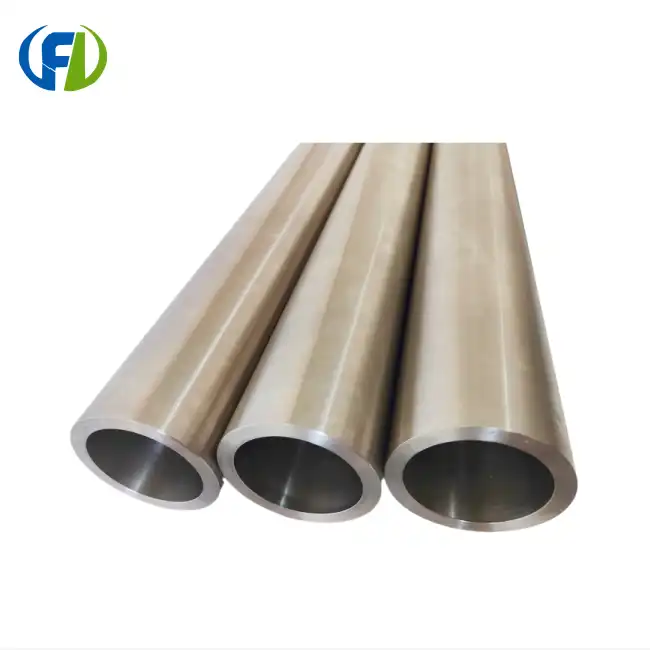
Understanding the Importance of Certifications and Testing in Tantalum Tubes
When looking at tantalum tubes for commercial uses, it's very important to make sure they are properly certified and tested. These specialized parts are very important in high-temperature areas, chemical processing equipment, and aircraft systems, where failure of the material would have very bad results. Certifications build trust between sellers and buyers and make sure that rules are followed in a wide range of markets.
Material Integrity and Safety Assurance
Tantalum is used in medical devices and chemical processing equipment because it is very resistant to rust and is safe for living things. But these traits only stay the same when strict quality standards are followed during the making process. Certification systems make sure that the makeup of a material meets certain levels of purity, which are usually higher than 99.95% for important uses. To keep things from breaking down too soon in tough working conditions, testing methods look at things like grain structure, surface finish quality, and dynamic qualities.
Regulatory Compliance and Market Access
Before letting a product into an international market, quality standards must be proven to be met in writing. Aerospace uses need both AS9100 approval and ASTM B365 compliance. Medical device makers, on the other hand, need biocompatibility proof through ISO 10993 testing procedures. These standards set clear responsibility frameworks for makers and sellers along the supply chain and protect end users.
Risk Mitigation in High-Stakes Applications
Chemical processing plants that use harsh media depend on tantalum's chemical inertness to keep their equipment from breaking down in disastrous ways. In the same way, aircraft use materials that can keep their shape even when temperatures change a lot, and they are under a lot of dynamic stress. Before they are put into use, these performance characteristics are confirmed through thorough testing. This lowers practical risks and upkeep costs while increasing the service life of the equipment.
Core Certifications for Reliable Tantalum Tubes
The making of tantalum tubes and the quality control processes are governed by a number of important approval standards for tantalum tubes. Knowing about these models helps buying workers make smart choices while making sure they follow the rules for each application.
ASTM B365 Standard Requirements
ASTM B365 sets the basic standards for tantalum and tantalum alloys, which can be made in both smooth and bonded tube shapes. It tells producers how much chemical makeup, mechanical qualities, and changes in size they must always check for. Tantalum comes in a number of different types, such as R05200 (unalloyed electron-beam melted) and R05400 (powder metallurgy mixed). It also has special metals that make it work better, such as R05252 (Ta-2.5W) and R05255 (Ta-10W).
Different production methods and performance needs are met by different ASTM B365 material grades. Electron-beam-melted tantalum has better mechanical properties for building structures, and powder metallurgy products make accurate parts with better surface quality and stable dimensions. When choosing materials for different working settings, these differences become very important.
ISO 9001 Quality Management Systems
Getting ISO 9001 approval means that a company will use the same quality control methods in every step of the production process. This method makes sure that quality control, growth, and customer happiness all happen as expected. Check the raw materials, keep an eye on the process, do a final check, and fix any problems you find to make tantalum tubes that meet ISO 9001 standards.
Management systems that follow ISO 9001 have ways to accept service providers, train staff, keep track of paperwork, and make sure that equipment is regulated. Together, these parts make sure that most of the time, the results are the same from one production batch to the next. This is very important to make sure that important programs keep going smoothly.
AS9100 Aerospace Quality Standards
For better quality control in aerospace uses, AS9100 approval is needed. This standard builds on ISO 9001 rules and adds controls that are unique to aerospace. This standard covers configuration management, risk assessment, and product safety issues that are important for use in space and flight. Being certified by AS9100 means that you can meet the strict standards of the aircraft business for paperwork, tracking, and dependability.
Testing Methods to Ensure Tantalum Tube Performance
Comprehensive testing methods confirm the performance features of tantalum tubes across a wide range of factors that are important for industrial uses. To make sure the purity of the material is maintained without affecting the supply of the product, these methods include both harmful and nondestructive methods.
Non-Destructive Testing Techniques
More advanced nondestructive testing methods thoroughly check the stability of tantalum tubes without changing their features or dimensions. These methods are especially useful for checking expensive parts without damaging them, since violent testing would waste a lot of material.
Ultrasonic testing uses high-frequency sound waves to find flaws, inclusions, and changes in wall thickness along the length of the tube. This method accurately measures the uniformity of wall thickness and finds possible weak spots that could affect performance when the system is under a lot of stress. Eddy current testing checks for surface and near-surface flaws and makes sure that the material has the electrical conductivity qualities needed for computer uses.
Radiographic checking uses X-rays or gamma radiation to see what's inside and find manufacturing flaws that can't be seen with the naked eye. This method works really well for finding problems with the welding on finished parts and making sure that the joints in complicated systems are solid.
Chemical Composition and Purity Analysis
Chemical purity verification makes sure that tantalum tubes meet certain makeup standards and finds small amounts of elements that might change how well they work. Spectroscopic methods, such as inductively coupled plasma (ICP) and X-ray fluorescence (XRF), can accurately find out the elements' make-up down to the parts-per-million level.
Oxygen, nitrogen, and carbon content research is very important for uses that need high resistance to rust or biocompatibility. These intermediate elements have a big effect on the mechanical and chemical properties, so controlling them is necessary to make sure that all production batches work the same way.
Mechanical Property Validation
Tensile testing measures a material's final strength, yield strength, and stretch qualities while it is under controlled load. These factors decide the strength and safety gaps of a structure for use in pressure vessels. Hardness testing gives you more information about the state of the material and how well it can be processed, and it also shows how resistant it is to wear.
It is very important for aircraft and medical device uses, where failure of a component has serious effects, that fatigue testing mimics the repetitive stress conditions that happen in real life for tantalum tubes. These tests find the safest working limits and the projected service life for different types of loads.
How to Choose Certified Tantalum Tubes for B2B Procurement?
Selecting appropriate tantalum tubes requires careful consideration of application requirements, certification needs, and supplier capabilities. Strategic procurement decisions balance performance requirements with cost considerations while ensuring long-term supply chain reliability.
Application-Specific Certification Requirements
Different industrial applications demand specific certification frameworks aligned with operational environments and regulatory requirements. Chemical processing equipment typically requires ASTM B365 compliance alongside corrosion resistance validation through exposure testing in representative media. Aerospace applications mandate AS9100 certification with additional requirements for material traceability and configuration control.
Medical device applications require biocompatibility testing according to ISO 10993 standards, demonstrating safety for human contact applications. Electronic applications focus on electrical conductivity and purity requirements validated through specialized testing protocols. Understanding these application-specific needs helps narrow certification requirements and focus supplier evaluation efforts.
Supplier Evaluation and Qualification
Comprehensive supplier assessment encompasses certification authenticity verification, quality system auditing, and production capability evaluation. Requesting certificate copies with verification through issuing bodies ensures authenticity while preventing documentation fraud. On-site audits provide direct observation of manufacturing processes, quality control procedures, and technical capabilities.
Production capacity evaluation includes assessment of equipment capabilities, lead times, minimum order quantities, and customization abilities. These factors influence supply chain planning and cost optimization strategies while ensuring adequate production capacity for projected demand levels.
Cost-Benefit Analysis and Material Alternatives
Comparative analysis against alternative materials like niobium, titanium, or specialized stainless steels helps optimize material selection decisions. While tantalum offers superior corrosion resistance and biocompatibility, cost considerations may favor alternatives for less demanding applications. Certification scope and testing requirements vary among materials, affecting overall procurement costs and timeline considerations.
Total cost of ownership analysis encompasses initial material costs, processing requirements, maintenance intervals, and expected service life. This comprehensive approach often reveals long-term advantages of certified tantalum tubes despite higher initial investment costs.
Ensuring Compliance and Reliability: Best Practices for B2B Buyers
Implementing robust procurement practices ensures consistent quality of tantalum tubes while minimizing supply chain risks associated with substandard materials. These practices encompass supplier qualification, ongoing monitoring, and quality assurance integration throughout procurement workflows.
Certification Verification and Documentation
Rigorous verification of certification authenticity protects against fraudulent documentation while ensuring compliance with regulatory requirements. Third-party certification bodies provide verification services that confirm certificate validity and scope. Maintaining comprehensive documentation systems enables traceability throughout the supply chain while supporting regulatory audits and quality investigations.
Certificate verification should include confirmation of scope, expiration dates, and accreditation body recognition. Many certification schemes maintain online databases allowing real-time verification of certificate status and validity. Establishing direct communication with certification bodies provides additional assurance and clarification of scope limitations.
Quality Control Integration and Monitoring
Integrating quality control checkpoints throughout procurement processes helps maintain consistent standards while identifying potential issues before they impact operations. Incoming inspection procedures should verify dimensional characteristics, surface quality, and documentation completeness. Sample testing programs provide ongoing validation of supplier performance while building statistical databases for trend analysis.
Supplier performance monitoring encompasses delivery reliability, quality metrics, and responsiveness to technical inquiries. Regular performance reviews identify improvement opportunities while recognizing exceptional performance. These relationships foster continuous improvement while building strategic partnerships with qualified suppliers.
Case Studies and Industry Applications
Real-world examples from the aerospace, chemical processing, and electronics industries demonstrate the value of certified tantalum tubes in demanding applications. A major aerospace manufacturer reduced component failure rates by 40% after implementing AS9100-certified tantalum tubes in fuel system applications. The enhanced reliability resulted from improved material traceability and quality control procedures required by the certification framework.
Similarly, a chemical processing facility extended equipment service life by 60% through deployment of ASTM B365-certified tantalum heat exchangers in aggressive chemical environments. The certification framework ensured consistent material properties while providing documented proof of corrosion resistance capabilities essential for the application.
Conclusion
Understanding essential certifications and testing standards empowers procurement professionals to make informed decisions when sourcing tantalum tubes for critical applications. ASTM B365, ISO 9001, and AS9100 certifications provide comprehensive frameworks ensuring material integrity, manufacturing quality, and application-specific compliance. Advanced testing methods validate performance characteristics while non-destructive techniques preserve material value throughout evaluation processes. Strategic supplier selection balances certification requirements with cost considerations and production capabilities, enabling optimized procurement decisions that support operational excellence and long-term reliability in demanding industrial environments.
FAQ
1. What certifications are required for aerospace tantalum tube applications?
Aerospace applications typically require AS9100 certification alongside ASTM B365 compliance for material specifications. Additional requirements may include NADCAP accreditation for specialized processes and configuration management procedures for traceability. Military applications often require additional certifications specific to defense industry standards.
2. How do I verify the authenticity of tantalum tube certifications?
Certification authenticity can be verified through direct contact with issuing certification bodies, online database searches, and third-party verification services. Request original certificates with traceable document numbers and confirm accreditation body recognition. Many certification schemes maintain publicly accessible databases for verification purposes.
3. What testing methods ensure tantalum tube quality for chemical processing applications?
Chemical processing applications require corrosion resistance testing in representative media, chemical composition analysis, and mechanical property validation. Non-destructive testing methods, including ultrasonic and eddy current inspection, verify structural integrity without compromising material properties. Purity analysis ensures compatibility with process chemicals.
Partner with Freelong for Certified Tantalum Tube Solutions
Baoji Freelong New Material Technology Development Co., Ltd combines decades of expertise with comprehensive certification capabilities to deliver reliable tantalum tube solutions for demanding industrial applications. Located in China's Titanium Valley, our ISO 9001-certified manufacturing facility produces high-purity tantalum tubes meeting ASTM B365 and other international standards. We maintain an extensive inventory of certified materials with 5-7 day delivery capability while offering custom fabrication services to meet specific dimensional requirements. Our quality assurance team provides complete documentation, including material reports and third-party testing when required. Contact jenny@bjfreelong.com today to discuss your tantalum tube supplier needs and discover how our certified materials can enhance your project reliability and performance.
References
1. American Society for Testing and Materials. "ASTM B365: Standard Specification for Tantalum and Tantalum Alloy Seamless and Welded Tubes." ASTM International Standards, 2019.
2. International Organization for Standardization. "ISO 9001: Quality Management Systems - Requirements and Guidelines for Performance Improvements." ISO Publications, 2015.
3. Society of Automotive Engineers. "AS9100: Quality Management Systems for Aerospace Industry Standards." SAE International Aerospace Standards, 2018.
4. Materials Properties Handbook: Titanium Alloys. "Certification Requirements for High-Performance Metal Components in Industrial Applications." ASM International, 2020.
5. Industrial Corrosion Prevention and Control. "Testing Standards for Refractory Metal Components in Chemical Processing Equipment." NACE International Publications, 2021.
6. Aerospace Materials Specification Committee. "Quality Assurance Requirements for Aerospace Grade Tantalum Components." AMS Standards Documentation, 2019.

_1773026073345.png)
_1744959568232.webp)
_1772436730264.png)
Learn about our latest products and discounts through SMS or email