- English
- French
- German
- Portuguese
- Spanish
- Russian
- Japanese
- Korean
- Arabic
- Greek
- German
- Turkish
- Italian
- Danish
- Romanian
- Indonesian
- Czech
- Afrikaans
- Swedish
- Polish
- Basque
- Catalan
- Esperanto
- Hindi
- Lao
- Albanian
- Amharic
- Armenian
- Azerbaijani
- Belarusian
- Bengali
- Bosnian
- Bulgarian
- Cebuano
- Chichewa
- Corsican
- Croatian
- Dutch
- Estonian
- Filipino
- Finnish
- Frisian
- Galician
- Georgian
- Gujarati
- Haitian
- Hausa
- Hawaiian
- Hebrew
- Hmong
- Hungarian
- Icelandic
- Igbo
- Javanese
- Kannada
- Kazakh
- Khmer
- Kurdish
- Kyrgyz
- Latin
- Latvian
- Lithuanian
- Luxembou..
- Macedonian
- Malagasy
- Malay
- Malayalam
- Maltese
- Maori
- Marathi
- Mongolian
- Burmese
- Nepali
- Norwegian
- Pashto
- Persian
- Punjabi
- Serbian
- Sesotho
- Sinhala
- Slovak
- Slovenian
- Somali
- Samoan
- Scots Gaelic
- Shona
- Sindhi
- Sundanese
- Swahili
- Tajik
- Tamil
- Telugu
- Thai
- Ukrainian
- Urdu
- Uzbek
- Vietnamese
- Welsh
- Xhosa
- Yiddish
- Yoruba
- Zulu
High Purity Zirconium Crucibles: The Best Choice for Semiconductor and Laboratory Applications
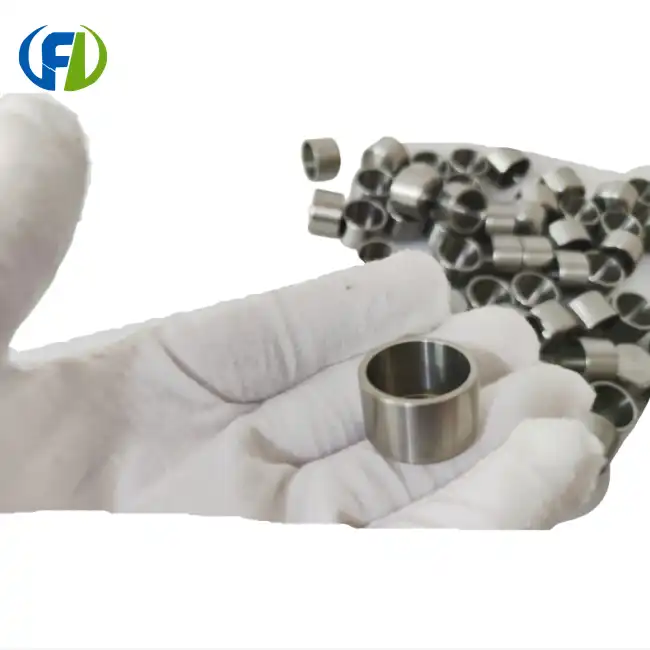
The 99% Purity Zirconium Crucible is the only thing that electronics companies and research labs need for their most important processes that can't be compromised on performance. These high-performance tanks are very resistant to chemicals and don't change much when heated or cooled. This lets you work without contamination in places where accuracy is very important. Zirconium crucibles are more reliable than other options because they can handle aggressive flux fusion, high-temperature melting, and trace element analysis. They are also cost-effective, which means that both production facilities and research institutions can use them.
 |
 |
 |
 |
WhatsApp&Wechat: +86 13571190943
E-mail:Jenny@bjfreelong.com

Understanding 99% Purity Zirconium Crucibles: Properties and ApplicationsDefining the 99% Purity Standard
As per ASTM B550/R60702 standards, a 99% Purity Zirconium Crucible is a laboratory jar made from high-quality zirconium metal that is suitable for industrial use. The mixture has at least 99.2% zirconium and hafnium in it, making a metal crucible that was designed to work well with violent chemical fusion processes. This amount of purity is the best compromise between performance and ease of manufacture. It provides the dependability needed for making semiconductors and doing analytical chemistry without the high costs of platinum options.
Physical and Thermal Characteristics
The material has a density of 6.51 g/cm³ and stays structurally sound up to about 1852°C, which is its melting point. When the temperature is changed, the crucible creates a solid, self-healing layer of zirconium dioxide that keeps the base from corroding even more. This safety feature is especially useful when making semiconductors, where heating processes subject vessels to frequent changes in very high and low temperatures. It has a coefficient of thermal expansion of 5.8 µm/m·°C, which means that the size of the material changes predictably when it is heated and cooled. This means that industrial engineers can safely use this information to set the settings for the process.
Chemical Resistance Profile
The crucible is very resistant to molten alkalis like sodium hydroxide and potassium hydroxide, carbonates like sodium carbonate, and peroxides like sodium peroxide. These are all substances that are widely used in methods for sample digestion and flux fusion. This chemical resistance gets rid of the problems that labs have with contamination when they use stainless steel or nickel containers. Trace metal influence makes it harder to get accurate results. Users should be aware, though, that zirconium doesn't fight sulfuric acid and acidic fluoride fusions very well when forced, which means that choosing the right material for the chemical environment is very important.
Core Applications Across Industries
These crucibles are used by semiconductor companies to grow very pure crystals and work with electronic-grade materials, where even a small amount of contamination can hurt the performance of a device. They are used by analytical laboratories to prepare alkali fusion samples for elemental analysis of hard rocks and geological samples. The pots are used by materials research labs that do tests with metals and alloys that react easily and would damage regular clay or quartz crucibles. Chemical processing plants use them to make small amounts of special chemicals that need to be contained in a neutral medium in harsh circumstances.
Comparing Zirconium Crucibles with Other Crucible Materials
Material choice has a big effect on how the process works, how long the equipment lasts, and how much it costs to run. Knowing how zirconium-based vessels compare to other options helps buying teams make smart choices that meet the needs of their applications.
Alumina Crucibles: Hardness Versus Chemical Limits
Aluminum oxide crucibles are popular for general laboratory heating because they are reasonably priced and have good mechanical strength and thermal shock resistance. But when it comes to alkaline flux fusion processes, their chemical protection isn't good enough. At high temperatures, alumina mixes with sodium peroxide and sodium carbonate, contaminating samples with aluminum. This is a major way that trace element research can go wrong. In hydrofluoric acid conditions, the material breaks down, too, but zirconium is not harmed at all.
Graphite Crucibles: Temperature Capability with Oxidation Concerns
Very high temperatures don't hurt graphite vessels, and they're good at transferring heat evenly. In acidic environments, where the carbon structure breaks down quickly above 500°C when exposed to air, their limitations become clear. Because of this limitation, graphite can only be used in neutral or reducing environments. On the other hand, zirconium crucibles can work consistently in air at temperatures close to 1800°C. Graphite can also be a source of pollution in processes or analyses that need to be done without carbon.
Quartz Crucibles: Purity with Thermal Constraints
Most of the time, crucibles made of fused quartz are used to grow semiconductor crystals because they are very pure and clear. The highest temperature that the material can handle is about 1200°C, which is much lower than what zirconium can handle. Quartz doesn't stand up well to alkaline substances; it dissolves easily in sodium hydroxide and other similar chemicals. The tanks are also sensitive to thermal shock, which means that the rates at which they are heated and cooled must be carefully controlled. This slows down the process output.
Platinum Crucibles: Premium Performance at Premium Prices
Platinum is the standard for high-purity fusion uses because it is very stable at high temperatures and doesn't react with chemicals. The price of the material is usually 5 to 10 times higher than that of similar zirconium tanks, which makes it hard for many labs and small production facilities to afford. In alkaline settings, zirconium crucibles work just as well or better than other types of crucibles, and they cost a lot less to buy and repair.
High-purity 99% Purity Zirconium Crucible products are the best way to balance performance needs with practical costs because they have so many benefits. This is especially true for companies that are working on multiple samples at once or running continuous production campaigns.
Manufacturing Process and Quality Assurance of 99% Purity Zirconium Crucibles
Quality starts with getting the materials and continues through all stages of production. Manufacturing procedures at Baoji Freelong New Material Technology Development in China's Titanium Valley make sure that the products' purity and structural soundness are always the same, which is what customers count on.
Raw Material Selection and Verification
The process starts with a high-quality zirconium sponge or crystal bar that meets the chemical makeup standards of ASTM B550. When new material comes in, it is analyzed using ICP-OES to check the amount of zirconium and hafnium present and to control intermediate elements like oxygen, nitrogen, and hydrogen that could make the material less flexible. Before stock goes into production, material certificates prove compliance. This is what quality control systems need to set up tracking.
Forming and Consolidation Techniques
Manufacturers use pressing and sintering techniques that are designed to keep the purity of the material while getting it to the right density for strength. Controlled heating below the melting point makes zirconium powder or crushed material stronger. This lets diffusion bonding happen without adding crucible refractory materials that could be contaminated. For some shapes, machining from solid bar stock is used because it gives more accurate measurements for unique needs than standard pressing can.
Comprehensive Testing Protocols
Ultrasonic testing according to ASTM E114 finds holes, spots, or cracks inside the material that could grow when it is heated and cooled. Dimensional metrology checks that tolerances meet h8–h11 levels of accuracy, which ensures that the part always fits correctly with lab tools and process fittings. Tensile properties are checked mechanically at both room temperature and high temperatures. This makes sure the material will keep its shape under service loads. Chemical analysis of finished crucibles gives quality assurance staff the proof of analysis they need for incoming review.
ISO Compliance and Certification
During production, ISO quality management systems keep track of processes, work directions, and inspection records in manufacturing sites. When chip companies and research institutions are looking for providers, they need a methodical approach that is always the same. Third-party audits make sure that rules are followed, which gives procurement teams faith that material standards will stay the same across multiple orders and production lots.
These strict procedures build buyer trust through openness, showing that the products are made to a high standard that sets reputable sellers apart from low-cost competitors.
Handling, Cleaning, and Maintaining Zirconium Crucibles for Optimal Performance
Proper Cleaning Procedures
Use non-reactive cleaners to get rid of leftovers without damaging the zirconium surface. Warm, diluted hydrochloric acid breaks down alkali flux leftovers that are left over after fusion operations. To keep water stains from showing up, rinse well with deionized water and let dry completely before putting away. Don't use rough cleaning methods that could scratch the protected oxide layer and create places where rust could start. Cleaners with fluoride should never be used on zirconium because they break it down even at room temperature.
Operating Temperature Management
Keep service temps below 1800°C to make the crucible last longer, even though the material can handle being exposed to higher temperatures for short periods of time. Slowly raise the temperature, usually by 100 to 150°C per hour, to lower the risk of thermal shock as the temperature rises. When you want to cool something down, let the heater cool itself instead of using forced air cooling, which makes a big difference in temperature. Managing temperature in this way makes things last a lot longer than quickly changing temperatures, which causes thermal stress.
Storage and Inspection Protocols
Keep crucibles in a clean, dry place, away from acidic or fluoride-containing air that could rust the surface while they are being stored. Do regular eye checks of the surfaces to look for cracks, pits, or changes in color that could mean a chemical attack. Measure changes in size on a regular basis, since wall shrinking means the end of the service life. Throw away crucibles whose structures are breaking down before they break during operations. This will keep valuable samples or production runs from getting contaminated.
Proper maintenance protocols enable businesses to maximize operational uptime and minimize replacement costs, reinforcing the value proposition these specialized vessels provide across their service lifetime.
Procurement Guide for 99% Purity Zirconium Crucibles
Verifying Purity and Certification
Ask for material certificates that show the chemical makeup meets the requirements of ASTM B550. These should show that the 99% Purity Zirconium Crucible content is higher than 99.2% and that the amounts of iron, chromium, and other metal impurities are managed. Instead of relying on the supplier's own analysis, you should ask for approval from approved testing labs. If your product needs to be sensitive to neutrons, make sure that the hafnium content matches the nuclear-grade requirements. Standard zirconium grades still contain 1% to 3% hafnium, which changes the nuclear properties.
Evaluating Supplier Capabilities
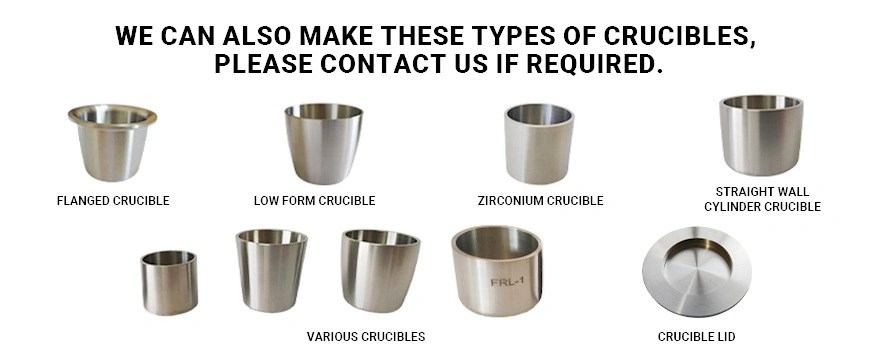
Check to see if the possible sellers offer unique sizing to fit the exact measurements and volume needs of your equipment. It's possible that standard stock sizes won't work for your processes or the specific furnace setups they need. Check out the technical support options, such as whether you can talk to materials engineers who can help you choose the best types for your chemical environment and temperature conditions. Check the supplier's quality management system certifications to make sure that the production process is the same for all order sizes.
Balancing Price Against Total Cost of Ownership
Even though the original purchase price plays a role in the choice to buy, projected service life, replacement frequency, and the costs of process downtime caused by crucible failure should all be taken into account when figuring out the total cost. More pure materials that cost more often last longer, which lowers their yearly costs below what other materials that need to be replaced more often seem like they would be. Think about the chance of contamination that could ruin whole batches of products or research studies, which could cost a lot more than the cost of the crucible itself.
International Shipping and Lead Times
Make sure that the minimum order numbers match your rate of consumption and store space, as specialty metals often need minimum batch sizes to be produced cost-effectively. Talk about wait times that range from stock items that can be sent within days to custom-made items that need 4 to 8 weeks from the time the order is placed. Check the company's international shipping experience, making sure they know about export paperwork, the right way to package items to keep them safe during transport, and freight handling relationships that make sure cross-border orders are cleared by customs on time.
These buying tips give buyers the confidence to choose zirconium crucibles that meet strict application needs and make the whole supply chain more efficient and cost-effective.
Conclusion
In 99% Purity Zirconium Crucible applications, material science and practical engineering come together to make performance qualities that semiconductor makers, research labs, and advanced materials facilities need. Because they are so resistant to chemicals, stable at high temperatures, and long-lasting mechanically, they keep working areas clean, which is important for analysis precision and product quality. Because these vessels are less expensive than platinum options, they can be used by groups that need to balance performance needs with budget realities. When procurement teams choose reputable providers that offer tested and proven purity, thorough testing, and application support, they get reliable processing tools that improve operational efficiency and technical skills across a wide range of demanding applications.
FAQ
1. Why choose 99% purity zirconium crucibles for semiconductor applications?
In order to make semiconductors, the surroundings must be free of pollution, as trace metal interference can hurt device function and output. Zirconium crucibles are chemically harmless, which is needed for working with materials that are used in electronics. They also keep their shape even after many heat cycles. Because they don't react with alkaline substances, they are perfect for preparing flux fusion samples to help with quality control in the process.
2. How frequently should zirconium crucibles be cleaned and replaced?
How often you clean depends on the chemicals you're using and the temperature at which they're working. Flux fusion operations usually need to be cleaned up after each use to get rid of any leftover particles that could affect later samples. When a visible check shows surface pitting, dimensional thinning, or crack formation that points to structural degradation that could lead to failure during operations, the crucible needs to be replaced.
3. Can suppliers provide custom dimensions for specialized equipment?
Manufacturers with a good reputation can make the sizes to fit specific furnace setups and sample number needs. Depending on the difficulty of the shape and the production schedule, custom manufacturing usually takes 4 to 8 weeks. Giving suppliers specific dimensional models and numbers helps them give accurate quotes and suggest the best ways to make things.
4. What lead times should buyers expect for standard and custom orders?
Most stock items in standard sizes ship between 5 and 10 business days after an order is confirmed. Custom-made crucibles take between 4 and 8 weeks, based on how complicated the specifications are, how busy the factory is, and the need for quality tests. Depending on the location and the steps needed to clear customs, international shipping can add one to two weeks for ocean freight or three to seven days for air freight.
Partner with Freelong for Your 99% Purity Zirconium Crucible Requirements
We at Baoji Freelong New Material Technology Development have been making high-purity zirconium goods for decades. Our factory is in China's famous Titanium Valley. Our 99% Purity Zirconium Crucible supplier can make crucibles in any size, speed up production plans, and offer full expert support to help customers get the most out of their thermal processing operations. We have strict quality standards that are backed up by ISO compliance and ASTM conformance testing. This makes sure that the materials we use are consistent, which is what semiconductor manufacturing and analytical labs need. We are committed to building reliable foreign supply ties, as shown by the fact that we already have customers in Australia, Korea, Germany, the US, the UK, Malaysia, and the Middle East. Get in touch with jenny@bjfreelong.com WhatsApp&Wechat: +86 13571190943 right away to talk about your specific needs and find out how our reasonable prices, technical knowledge, and customer-focused service can help you save money during the whole buying process.
References
1. American Society for Testing and Materials. Standard Specification for Zirconium and Zirconium Alloy Ingots for Nuclear Application. ASTM B350/B350M-18. West Conshohocken, PA: ASTM International, 2018.
2. Cox, B. "Pellet-clad Interaction (PCI) Failures of Zirconium Alloy Fuel Cladding—A Review." Journal of Nuclear Materials, vol. 172, no. 3, 1990, pp. 249-292.
3. Liang, S.Y., and Liu, A.J. "Surface Integrity in Machining of Zirconium and Its Alloys—A Review." International Journal of Advanced Manufacturing Technology, vol. 50, no. 9-12, 2010, pp. 1069-1081.
4. Northwood, D.O., and Kosasih, U. "Hydrides and Delayed Hydrogen Cracking in Zirconium and Its Alloys." International Metals Reviews, vol. 28, no. 1, 1983, pp. 92-121.
5. Rickover, H.G., Geiger, L.D., and Lustman, B. History of the Development of Zirconium Alloys for Use in Nuclear Reactors. Washington, DC: United States Atomic Energy Commission, Division of Naval Reactors, 1975.
Zinkle, S.J., and Was, G.S. "Materials Challenges in Nuclear Energy." Acta Materialia, vol. 61, no. 3, 2013, pp. 735-758.
WhatsApp&Wechat: +86 13571190943
E-mail:Jenny@bjfreelong.com

_1745205381200.webp)
_1744966046687.webp)
_1744688304252.webp)
_1745830239756.webp)
Learn about our latest products and discounts through SMS or email