- English
- French
- German
- Portuguese
- Spanish
- Russian
- Japanese
- Korean
- Arabic
- Greek
- German
- Turkish
- Italian
- Danish
- Romanian
- Indonesian
- Czech
- Afrikaans
- Swedish
- Polish
- Basque
- Catalan
- Esperanto
- Hindi
- Lao
- Albanian
- Amharic
- Armenian
- Azerbaijani
- Belarusian
- Bengali
- Bosnian
- Bulgarian
- Cebuano
- Chichewa
- Corsican
- Croatian
- Dutch
- Estonian
- Filipino
- Finnish
- Frisian
- Galician
- Georgian
- Gujarati
- Haitian
- Hausa
- Hawaiian
- Hebrew
- Hmong
- Hungarian
- Icelandic
- Igbo
- Javanese
- Kannada
- Kazakh
- Khmer
- Kurdish
- Kyrgyz
- Latin
- Latvian
- Lithuanian
- Luxembou..
- Macedonian
- Malagasy
- Malay
- Malayalam
- Maltese
- Maori
- Marathi
- Mongolian
- Burmese
- Nepali
- Norwegian
- Pashto
- Persian
- Punjabi
- Serbian
- Sesotho
- Sinhala
- Slovak
- Slovenian
- Somali
- Samoan
- Scots Gaelic
- Shona
- Sindhi
- Sundanese
- Swahili
- Tajik
- Tamil
- Telugu
- Thai
- Ukrainian
- Urdu
- Uzbek
- Vietnamese
- Welsh
- Xhosa
- Yiddish
- Yoruba
- Zulu
GR5 Titanium Plate Mechanical Properties and Industrial Uses
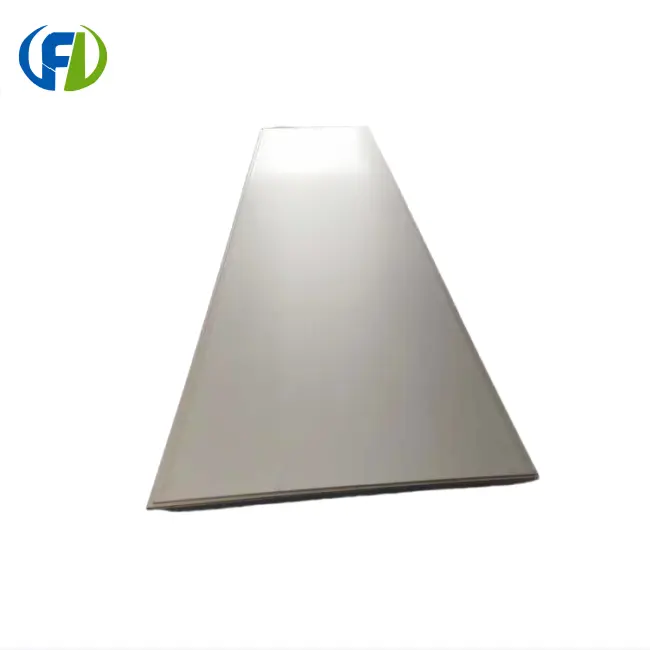
These days, GR5 titanium plate is one of the best and most useful products used in manufacturing. Ti-6Al-4V is another name for this titanium metal that is used in airplanes. It is very strong and light and doesn't rust, so it is very useful in many areas. Many things, from medical procedures to spaceship parts, work better with this titanium metal plate than with other materials. Engineers and makers can make better decisions about their most important projects when they know about their technical properties and the many ways they can be used in business.
Understanding GR5 Titanium Alloy Composition
The type that is used most often around the world is GR5. Only 6% of it is aluminum, and 4% is vanadium. Somewhat stronger and less likely to rust than titanium alone can be made by mixing them.
As a result, it is harder and lighter than steel. Heating things up makes them stronger and more stable. These parts work together to make a titanium plate that won't bend or break when situations get rough.
If you do this alloying process exactly as written, this titanium plate will be strong enough for the military. But watch out for the cold. The strict standards of ASTM B265 Grade 5 have finally been met. In this way, it will always be sufficient for big tasks.
Mechanical Properties of Ti-6Al-4V Plate
Ti-6Al-4V plate is great for tough jobs because of its unique mechanical properties. Tensile strength is between 950 and 1100 MPa, which is a lot stronger than pure titanium types. The yield strength is usually between 880 and 950 MPa, which means it doesn't bend easily when it's loaded.
It has a density of about 4.43 g/cm³, which is about 45% lighter than steel while still being strong. This measure of strength to weight is very important in aircraft and car uses, where reducing weight has a direct effect on speed and fuel economy.
Around 114 GPa is the modulus of elasticity, which means that the material is stiff. Elongation rates are usually between 10 and 15 percent, which means the material is flexible enough for shaping. Because these qualities don't change much at different temperatures, this high-strength titanium can be used in both low-temperature and high-temperature situations.
Adding heat can improve material qualities even more. Solution treatment and age make something stronger, while annealing makes it more flexible. This titanium is resistant to heat and keeps its qualities at temperatures up to 400°C, which means it can be used in more situations.
Core Industrial Applications and Uses
Aerospace and Aviation Components
Most of the titanium plates used in aircraft, including the GR5 Titanium Plate, are used in aerospace applications. This material is used by aircraft makers for structural parts, engine parts, and landing gear systems. The thin metal plate makes the plane lighter while still giving it the power it needs for safe flying.
The metal works well at high temperatures, which is good for engine parts. Extremely hot or cold places don't affect the performance of compressor blades, engine cases, or exhaust systems. The wear resistance of the material guarantees a long service life under the repeated stress conditions that are common in aircraft uses.
Applications in spacecraft take advantage of the material's ability to work in vacuums. This corrosion-resistant titanium is used in the frames of satellites, rocket engines, and parts for space stations. It works well in the hard conditions of space.
Medical and Biomedical Devices
Medical-grade titanium is used to make a lot of different biological tools and implants. This titanium is safe and works really well with human bone tissue. This is why it is used in artificial hip and knee replacement joints. The material is non-toxic, which means it doesn't hurt the body.
The surgical tools made from this precise titanium plate last longer and are less likely to get germs. The osseointegration qualities of the material help dental implants work by letting bone grow naturally around the implant surface.
Heart valve parts and pacemaker housings are examples of cardiovascular uses. Because the material is resistant to body fluids, it will work for a long time without breaking down or rusting.
Chemical Processing Equipment
In the chemistry business, this industrial titanium sheet is used to make line systems, reactor tanks, and heat exchange devices. It can handle strong chemicals like bleach, acids, and alkaline solutions without breaking down because it doesn't rust.
The material's ability to conduct heat and prevent rust makes it useful for heat exchangers. Processing equipment stays efficient while lowering the costs of repairs and downtime caused by replacing parts and working less.
Distillation columns, pressure tanks, and floating platform parts are all used in petrochemicals. The marine-grade titanium can handle being exposed to sea and chemical production conditions at the same time.
Marine and Offshore Applications
Titanium that doesn't rust, like GR5 Titanium Plate, is used in the maritime industry for motor shafts, ship parts, and systems that handle seawater. The fact that the material doesn't corrode in salt water means that protective layers aren't needed and less upkeep is needed.
Titanium is used in important structural parts and handling tools on offshore oil and gas sites. The fact that it is strong, doesn't rust, and isn't heavy makes it perfect for tough sea settings.
Parts of the engine system, water tank sections, and deck sections can all be used in submarines. The material's ability to work under atmospheric pressure and ocean contact makes sure that it will work as expected.
Automotive and Racing Industry
High-performance automotive applications increasingly adopt this lightweight metal plate for engine components, exhaust systems, and suspension parts. Racing teams utilize titanium components to reduce vehicle weight while maintaining structural integrity.
Engine valve applications benefit from the material's high-temperature performance and fatigue resistance. Connecting rods manufactured from titanium alloy plate reduce reciprocating mass, improving engine responsiveness and fuel efficiency.
Exhaust system components withstand high temperatures and corrosive exhaust gases. The material's thermal properties enable better heat management while reducing overall system weight.
Electronics and Semiconductor Manufacturing
Electronics industries utilize this material for sputtering targets in thin-film deposition processes. The high purity levels achieve consistent coating quality in semiconductor manufacturing applications.
Heat sink applications leverage the material's thermal conductivity and corrosion resistance. Electronic enclosures protect sensitive components while providing electromagnetic interference shielding.
Precision components in electronic devices benefit from the material's dimensional stability and machining characteristics. Custom titanium plate components meet exact specifications for critical electronic applications.
Energy and Power Generation
Power generation industries employ this heat-resistant titanium for turbine components, heat exchangers, and cooling systems. The material's high-temperature performance and corrosion resistance enhance operational efficiency and equipment lifespan.
Nuclear applications include reactor components and fuel handling equipment. The material's radiation resistance and corrosion properties ensure safe operation in nuclear environments.
Renewable energy applications include wind turbine components and solar panel frameworks. The combination of strength, lightweight properties, and corrosion resistance supports sustainable energy infrastructure development.
Manufacturing and Processing Considerations
There are specific ways to cut titanium plates because of how they are made. Find the best cutting speeds, tool materials, and ways to cool down so that the job doesn't get too hard and you get the surface finish you want.
Inert gas protection is needed for titanium welding methods to keep them clean. The quality of the weld meets the needs of the application when the joint is properly prepared and the heat flow is controlled. It may be necessary to use heat after the welding process to help relieve stress.
When shaping the material, its flexibility is used along with its springback properties. To make a custom titanium plate that is the right size and doesn't crack during the making process, careful planning is needed.
Chemical research, mechanical tests, and nondestructive examination are all types of quality control methods for GR5 titanium plate. These steps make sure that the material meets the standards for the purpose and the specs.
Cost-Benefit Analysis and Economic Considerations
Titanium is more expensive than most materials when it comes to initial costs, but the benefits over time often make the investment worth it. Overall cost efficiency is improved by less upkeep, longer service life, and less weight.
Performance benefits save money for businesses by making them more efficient, using less fuel, and replacing things less often. When used in aircraft and naval applications, these factors become even more important.
Costs and planning for projects are affected by the abundance of materials and the supply line. Working with well-known titanium plate providers guarantees steady quality and on-time delivery.
Future Trends and Developments
Ti powders made from plate parts are being used more and more in additive production these days. 3D printing gives you more design options because it lets you keep the qualities of the material even when you make shapes that aren't simple.
Reusing things lets you save money and make them last longer. Titanium is good for the environment and still useful because it can be used again.
It's still possible to make modern metals better for some uses. Formulas that have been changed can make things stronger, more flexible, or better able to handle high temperatures.
Quality Standards and Certifications
ASTM B265 Grade 5 specifications define chemical composition, mechanical properties, and dimensional tolerances. These standards ensure material consistency across suppliers and applications.
AMS specifications provide additional requirements for aerospace applications. These stringent standards address surface finish, heat treatment, and inspection requirements.
ISO certifications demonstrate GR5 Titanium Plate quality management system compliance. These certifications provide confidence in GR5 Titanium Plate supplier capabilities and product consistency.
Conclusion
GR5 titanium plate continues revolutionizing industries through its exceptional mechanical properties and versatile applications. The combination of high strength, lightweight characteristics, and superior corrosion resistance makes it indispensable for critical applications across aerospace, medical, chemical, and marine sectors. Understanding these properties enables engineers to make informed material selections that optimize performance while reducing lifecycle costs. As manufacturing technologies advance and new applications emerge, this remarkable material will undoubtedly play an increasingly important role in modern engineering solutions.
FAQ
1. What makes GR5 titanium plate superior to other titanium grades?
GR5 titanium plate offers the optimal balance of strength, weight, and corrosion resistance. The aluminum and vanadium additions significantly increase strength compared to pure titanium while maintaining excellent corrosion properties. This combination makes it suitable for the widest range of applications.
2. How does titanium plate thickness affect its properties?
Thickness variations can influence mechanical properties through processing effects. Thicker sections may require different heat treatment cycles to achieve uniform properties. However, the fundamental characteristics remain consistent across standard thickness ranges when properly processed.
3. Can GR5 titanium plate be welded to other materials?
Welding titanium to other materials requires careful consideration of thermal expansion, chemical compatibility, and galvanic corrosion potential. Dissimilar metal joints often utilize transition pieces or mechanical fastening methods to avoid metallurgical incompatibility issues.
4. What surface treatments are available for titanium plates?
Surface treatments include anodizing, chemical etching, and various coating applications. These treatments can enhance specific properties like wear resistance or provide decorative finishes while maintaining the base material's corrosion resistance.
5. How does temperature affect GR5 titanium plate performance?
This alloy maintains excellent properties from cryogenic temperatures up to approximately 400°C. Beyond this temperature, strength begins to decrease, though the material remains useful for many applications at elevated temperatures with appropriate design considerations.
Partner with Freelong for Premium GR5 Titanium Plate Solutions
Freelong stands as your trusted GR5 titanium plate supplier, delivering exceptional quality from China's Titanium Valley in Baoji City. Our comprehensive manufacturing capabilities ensure precise specifications for aerospace, medical, and industrial applications. Connect with our technical team at jenny@bjfreelong.com to discuss your specific requirements and experience the Freelong advantage in titanium excellence.
References
1. Boyer, R.R., Welsch, G., & Collings, E.W. (2007). Materials Properties Handbook: Titanium Alloys. ASM International, Materials Park, Ohio.
2. Lutjering, G., & Williams, J.C. (2003). Titanium: Engineering Materials and Processes. Manchester University Press, Manchester, UK.
3. American Society for Testing and Materials. (2019). ASTM B265-19: Standard Specification for Titanium and Titanium Alloy Strip, Sheet, and Plate. ASTM International, West Conshohocken, PA.
4. Donachie, M.J. (2000). Titanium: A Technical Guide. ASM International, Materials Park, Ohio.
5. Peters, M., Hemptenmacher, J., Kumpfert, J., & Leyens, C. (2003). Structure and Properties of Titanium and Titanium Alloys. Titanium and Titanium Alloys: Fundamentals and Applications, Wiley-VCH, Weinheim.
6. SAE International. (2018). AMS 4911K: Titanium Alloy Sheet, Strip, and Plate 6Al-4V Annealed. SAE International, Warrendale, Pennsylvania.

_1769051556869.png)
_1767684224047.png)
_1744877889674.webp)
Learn about our latest products and discounts through SMS or email