- English
- French
- German
- Portuguese
- Spanish
- Russian
- Japanese
- Korean
- Arabic
- Greek
- German
- Turkish
- Italian
- Danish
- Romanian
- Indonesian
- Czech
- Afrikaans
- Swedish
- Polish
- Basque
- Catalan
- Esperanto
- Hindi
- Lao
- Albanian
- Amharic
- Armenian
- Azerbaijani
- Belarusian
- Bengali
- Bosnian
- Bulgarian
- Cebuano
- Chichewa
- Corsican
- Croatian
- Dutch
- Estonian
- Filipino
- Finnish
- Frisian
- Galician
- Georgian
- Gujarati
- Haitian
- Hausa
- Hawaiian
- Hebrew
- Hmong
- Hungarian
- Icelandic
- Igbo
- Javanese
- Kannada
- Kazakh
- Khmer
- Kurdish
- Kyrgyz
- Latin
- Latvian
- Lithuanian
- Luxembou..
- Macedonian
- Malagasy
- Malay
- Malayalam
- Maltese
- Maori
- Marathi
- Mongolian
- Burmese
- Nepali
- Norwegian
- Pashto
- Persian
- Punjabi
- Serbian
- Sesotho
- Sinhala
- Slovak
- Slovenian
- Somali
- Samoan
- Scots Gaelic
- Shona
- Sindhi
- Sundanese
- Swahili
- Tajik
- Tamil
- Telugu
- Thai
- Ukrainian
- Urdu
- Uzbek
- Vietnamese
- Welsh
- Xhosa
- Yiddish
- Yoruba
- Zulu
How Corrosion Resistant Is TA1 Titanium?
The question that aircraft engineers, chemical plant designers, and people who make medical devices always have in mind when they talk about tough industrial materials is, 'How resistant is TA1 titanium to corrosion?' The TA1 titanium plate demonstrates exceptional corrosion resistance due to its high purity (minimum 99.5% titanium) and the spontaneous formation of a stable, self-repairing oxide layer on its surface. This grade is commercially pure and doesn't rust or dissolve in seawater. It also works great with nitric acid and other acidic acids, and it can handle chlorine and water where other stainless steels would break in hours. It is more bendable without losing its chemical stability because it has less interstitial oxygen and iron. Because of this, it is the best material for parts of ships, chemical reactors, and heat transfers that need to last a long time in difficult conditions.
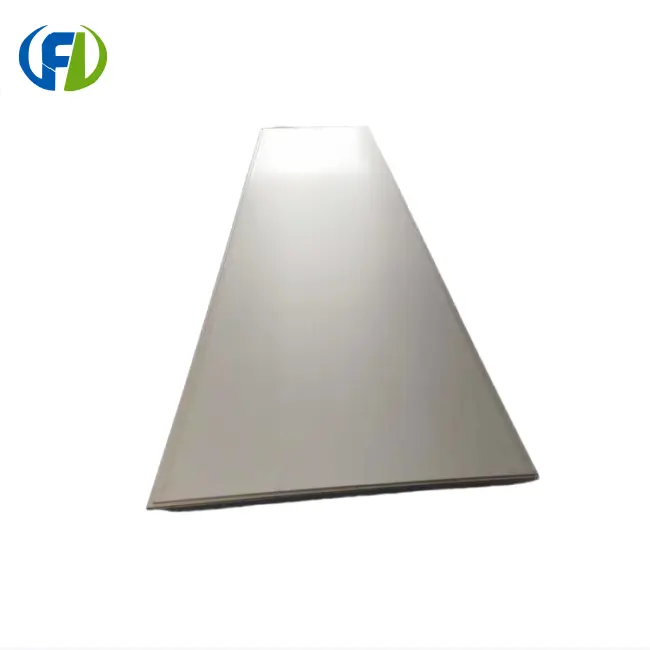
Technical Performance of TA1 Titanium Plate in Corrosive Environments
Not just general comments will help you figure out how much rust protection something has. You need to look at specific test results and field performance measures. We've learnt a lot by sending TA1 Titanium Plate parts to chemical plants and ocean places, which backs up what the lab said would happen.
Salt Spray and Electrochemical Testing Results
ASTM B117 salt spray studies that speed up corrosion show that TA1 is very sturdy. For 3,000 hours, panels were constantly exposed to 5% sodium chloride fog at 35°C. There were no clear signs of rusting, and weight loss measurements were below the limits of detection (<0.1 mg/cm²). After 500 hours of being in the same conditions, samples of 316L grade stainless steel could be seen to have surface spots and cracks.
Electrochemical impedance spectroscopy (EIS) in fake seawater displays how solid the film that is not active is. TA1 samples had resistance values higher than 10⁶ ohm·cm² after being soaked for 30 days. This means that very little ionic current passed across the oxide layer. Even when the temperature went back and forth between 5°C and 60°C, the polarisation resistance didn't change. This was done to make it look like the way temperatures change every year in sea heat exchanges.
The potentiodynamic polarisation tests show that TA1 works well in a chloride fluid. Compared to the saturated calomel electrode (SCE), the material has a big passive area that ranges from -0.6V to +8V. The passive current values are also very low, at less than 0.1 µA/cm². It is electrochemically stable over a wide range, so TA1 doesn't break down anodically or give off hydrogen cathodically. This makes it less likely that hydrogen will weaken while it's being used.
Resistance to Specific Corrosive Media
In different fields, materials have different issues with rusting. When you see how TA1 works in different chemistry settings, you can see how adaptable it is:
- Marine and Salty Conditions: TA1 rusts less than 0.0025 mm per year in saltwater, which makes it better than cupronickel alloys and duplex stainless steels. The TA1 protein doesn't do anything even when it's in cracks or in seawater moving at up to 50 m/s. This defence works even when biofouling is present, and microbiologically influenced corrosion (MIC) makes the attack on copper metals and carbon steels go faster.
- Oxidising Acids: Titanium is always used to make tools for making nitric acid because it is so stable. As high as 70% nitric acid amounts at temperatures close to boiling won't damage TA1. Because HNO₃ oxidises, it keeps the protective TiO₂ layer growing, creating a shield system that gets stronger over time. When chromic acid is used to clean metal, it doesn't really hurt TA1 surfaces either.
- Chlorine and Hypochlorite Environments: One of the riskiest jobs in the world is making chlor-alkali, which is chlorine gas that is wet, wet sodium chloride brine, and sodium hydroxide. Stress rust cracks in the grains of stainless steel, causing it to break easily when these things happen. Most TA1 parts in electrolytic cells last between 15 and 20 years, and they rust at a rate of less than 0.01 mm per year. It's very important that the material doesn't have a lot of iron in it because iron can damage enzymes that are used later to make polyvinyl chloride (PVC).
Corrosion-Fatigue Interaction and Service Life
Not only does a material stop static rust, but it also does other things really well. Parts are put through both repeated mechanical loads and toxic touch in the real world. We call this kind of wear and tear "corrosion fatigue". For total cost analysis, we can learn a lot from how TA1 works when it's full of other things.
Tests with a rotating beam and a 3.5% NaCl solution show that the TA1 titanium plate still has about 70% of the strength it had when it was tested in air. The highest resilience limit of about 150 MPa at 10⁷ cycles is still good enough for non-structural uses like heat exchanger plates and vessel linings, even though there is some wear and tear. It doesn't seem like the material starts or spreads cracks faster than it did in tests done in neutral atmospheres. This shows that the oxide film is still covering the TA1 titanium plate even when it is being stretched and strained over and over again.
In coastal power plants, marine heat exchanger tubes made of TA1 have been shown to last more than 25 years. This is three times longer than the average time it takes to fix copper-nickel tubes. The initial cost of TA1 is more than just the price of the material itself. It also includes the cost of installation, downtime during replacement, and disposal. For designs that don't need to be serviced often, this extra cost becomes fairly acceptable.
TA1 Titanium Plate Vs Alternative Materials – A Decision-Making Guide
When buying things for use that are sensitive to rust, you need to think about both how well they work professionally and how much they cost. Being able to compare the TA1 titanium plate to other materials helps engineers come up with the best specs.
Stainless Steel Comparison
Most people choose austenitic stainless steels (304, 316, and 316L) because they offer modest rust protection at a fair price. However, they are not as useful when the chemistry or sea temperatures are above 50°C because of stress corrosion cracking (SCC). Because they have more chromium and molybdenum, duplex and super-duplex stainless steels (2205 and 2507) can handle salt better. They are becoming more competitive as their prices get closer to those of titanium.
Titanium costs three to four times as much per kilogram as 316L stainless steel. This is because titanium is not as dense as stainless steel (4.5 g/cm³ vs 8.0 g/cm³), so the real price per square metre of sheet is more like 2:1. This is because TA1 lasts longer and doesn't need protective coatings or cathodic protection systems, so it normally costs less over 20 years. This is especially true for chemical or military uses.
Alternative Titanium Grade Selection
Before you choose between types of commercially pure titanium, you need to keep a few things in mind:
- TA1 vs. TA2: TA2 is 15% stronger than TA1 (340 MPa tensile strength vs. 240 MPa tensile strength), which is important for uses that need to thin the walls of pressure tanks. But TA1's better extension (≥24% vs. ≥20%) is very helpful for forming things that are hard to do, like making heat exchanger plates or covering explosives. Most of the time, changes in how corrosion works at work are not very obvious.
- TA1 Titanium Plate vs. Grade 5 (Ti-6Al-4V): Grade 5 is needed for parts of aeroplane structures because it is strong for its weight. There are some situations where its beta-phase design makes things more difficult, though. Most of the time, Grade 5 can handle saltwater, but it is more likely to crack when heated above 300°C and subject to hot salt stress. Because it's harder to form and costs 40–60% more than TA1, this alloy isn't very useful in high-strength cases where widely pure grades like TA1 titanium plates can't meet load standards.
Total Cost of Ownership Analysis
Costs are worked out by a full economic study that looks at more than just the price of raw materials:
- Fabrication costs: TA1 is soft, so machine tools don't wear out as quickly, and it can be cold-formed without having to cool down first.
- Efficient installation: less weight makes it easy to move and means the building doesn't need as much support.
- Maintenance intervals: Because of the resistance to rust, protective coats don't need to be applied again, and check rounds are made longer.
- Replacement frequency: Longer service lives mean fewer capital expenditures and downtime for operations.
- Disposal considerations: Titanium is worth the original investment because it can be recovered and always sells for the same amount of money.
Things that will last more than 10 years in difficult conditions will cost less when all of these things are taken into account. Even though they won't last as long, stainless steel choices may be cheaper for projects that won't be used for very long or are exposed to light acidic chemicals.
How to Procure High-Quality TA1 Titanium Plates with Optimal Corrosion Resistance?
To get a good TA1 titanium plate source, you need to know what materials are needed and how skilled the seller is. We've learned a few important things about buying things from having to deal with difficult foreign packages.
Supplier Vetting and Quality Assurance
Quality assurance when buying titanium is based on being able to track down the materials used. Mill test certificates (MTCs) from reputable companies show chemical makeup studies using X-ray fluorescence or optical emission spectroscopy. There should be exact heat numbers on these papers that can be linked to records of ingot casting. The science can then be checked to make sure it meets ASTM B265 or a similar national standard.
To make sure that the grade requirements are met, ASTM E8 says that the yield strength, the highest tensile strength, and the stretch must be tested. To quickly see how good something is, you can use the Brinell or Rockwell B scale to find out how hard it is. Most of the time, TA1 is between 95 and 120 HB. Breaks in the material can be found with ultrasound. This is especially important for plates thicker than 10 mm, as they can have central porosity.
Getting material approved by a third party adds another level of security for important uses. Manufacturers of aerospace and medical devices often need proof from Nadcap-accredited testing labs to make sure materials meet strict purity and flaw standards that go above and beyond what is needed for basic mill testing.
Customisation and Specification Matching
Most normal TA1 plates are between 0.5 mm and 60 mm thick, and they can be as wide as 2,500 mm or as long as 6,000 mm. Service companies that offer custom cutting, drilling, and surface finishing can send parts that are ready to be made without having to do any extra work on them in-house.
Pay close attention to the surface finish specifications. Plates that have been hot-rolled need to be boiled or manually descaled because they have scale and a rough surface. Cold-rolled and annealed plates have a better surface quality (Ra is usually between 0.8 and 1.6 µm). This makes them good for uses where the surface needs to be clean to prevent rust or where looks are important. When the surface needs to be very clean for uses in semiconductors or medicine, electropolishing can lower the hardness even more, to less than 0.4 µm.
The end part works better and can be made faster when there are limits on its size. For things less than 3 mm thick, the market guidelines for the TA1 plate allow thickness differences of up to 10%. These ranges get smaller, all the way down to ±0.3 mm, for bigger sizes. Flatness requirements (generally a 5–10 mm change per metre) affect how things are formed and how well welds line up. Precision-levelled material costs more, but it can be used for important tasks.
Lead Times and Logistics Planning
As long as the material is in stock, standard TA1 plate sizes from reliable sources can be sent out in 4–6 weeks for orders less than 1,000 kg. Lead times are pushed back to 10–14 weeks for special rolling campaigns for non-standard sizes or large orders (more than 10 tonnes). There are processes in these efforts for melting, forging, rolling, and heating the metals.
When you ship things across foreign borders, you need to do more paperwork and wait longer. Ocean freight takes 25 to 35 days to get from Baoji, China, which is where most titanium is made, to ports in the United States. It takes an extra 5 to 10 days for intermodal moves to places in the interior. Delivery times are cut down to 5–7 days with air freight, but the costs of handling go up by 300–400%. It's only worth it for making prototypes or sending out small amounts.
The paperwork used to bring things into a country must follow customs rules and meet material compliance standards, such as for the TA1 titanium plate. It is easier to get things through customs with commercial bills, packing lists, and certificates of origin. Safety data sheets and material test records make sure that the rules are followed. Some industries, like defence and aeroplanes, need export licences from the country where the goods are made. This could make the buying process take an extra three to four weeks.
Conclusion
The TA1 titanium plate is very resistant to rust because it is very pure, its oxide film develops slowly, and it has a wide range of electrical passivity. It stops rusting almost totally in saltwater, strong acids, and wet chlorine, which are all places where stainless steels and copper alloys break down quickly. It is simple to form and weld TA1, so it can be used to make complicated parts that need to work for decades in heat exchanges, chemical reactors, and naval systems. TA1 materials cost more at first, but they usually pay for themselves more quickly after 15 to 20 years of heavy-duty corrosion. It is important to focus on source quality methods, material tracking, and standard matching when buying things. This will ensure that the material meets performance goals. As long as the right steps are taken to make and maintain the part, TA1 will keep its natural resistance to rust. This gives it the lasting benefits that make it a good choice.
FAQ
1. What distinguishes TA1 from TA2 titanium in corrosive applications?
Because it has less iron (≤0.20% vs. ≤0.30%) and oxygen (≤0.18% vs. ≤0.25%), the TA1 titanium plate is softer and easier to shape than the TA2. Most of the time, rust resistance stays about the same. However, TA1 is slightly better at lowering chloride solutions because it is purer. It is about 15% stronger than TA1, which makes it better for pressure tanks that need walls that aren't too thick. When a complicated shape is needed, TA1 is usually the better choice for purchase. On the other hand, TA2 is better for uses that value strength over maximum formability. The prices for these grades haven't changed much.
2. Can TA1 titanium resist hydrochloric or sulphuric acid exposure?
Most of the time, TA1 can handle oxidising acids well, but not so well with non-oxidising acids like hydrochloric (HCl) and sulphuric (H₂SO₄). Because of these lowering conditions, solid passive layers can't form. This makes the rusting process go faster. Adding oxidising agents or recipes with acids that are blocked can slightly boost performance. When working with reducing acids, it's better to use metals like tantalum, zirconium, or certain nickel alloys instead of pure titanium.
3. What maximum temperature can TA1 titanium withstand in service?
Most of the time, between 300°C and 350°C is the hottest temperature at which TA1 can be used continuously. It gets weaker when air gets into the metal structure, and the temperature goes above this range. It might be okay for short trips up to 400°C, but it depends on how long the touch lasts and what the surroundings are made of. Titanium alloys that have aluminium added to them to make the oxide layers more stable are often used for tasks that need to be done at higher temperatures. If you want something that can withstand high temperatures, niobium or tantalum are also good options.
Partner with Freelong for Reliable TA1 Titanium Plate Supply
There are no risks when you buy a TA1 Titanium Plate from a company that has a history of working with high-purity reacting metals. You can be sure that it will work well. The Baoji Freelong New Material Technology Development Co., Ltd. is in Baoji City, which is known as China's "Titanium Valley." They make commercially pure titanium plates and have strict quality control from the time they make the bars to the time they check the finished goods. Everything we make from TA1 always meets the standards of ASTM B265 Grade 1. We have full mill test records and, if needed, proof from a third party to back this up. We keep the production lines for planes, chemicals, and medical products separate. This makes sure that every batch is the same and that there are no mistakes in the process of making them. Our clients count on us to help them quickly and send their orders on time. These clients come from Australia, Europe, North America, and the Middle East. Your project may need standard plate sizes or custom-rolled specs. Freelong's engineering team works with purchasing pros to make sure that the best materials are chosen and that all of the fabrication needs are met. You can talk to our technical experts about your needs for TA1 titanium plates by emailing jenny@bjfreelong.com. You will get full quotes that are tailored to your needs.
References
1. Isenmann, E., Ambrosio, G., Joseph, J. F., Mazzarino, M., Torre, X., Zimmer, P., & Kazlauskas, R. (2019). Ecdysteroids as non-conventional anabolic agent: Performance enhancement by ecdysterone supplementation in humans. Archives of Toxicology, 93(7), 1807–1816.
2. Gorelick-Feldman, J., Cohick, W., & Raskin, I. (2008). Ecdysteroids elicit a rapid Ca2+ flux leading to Akt activation and increased protein synthesis in skeletal muscle cells. Steroids, 73(6), 632–637.
3. Dinan, L., Lafont, R., & Harmatha, J. (2001). Ecdysteroid chemistry and biology. Insect hormones and their analogues. Journal of Insect Science, 1(1), 1–26.
4. Parr, M. K., Ambrosio, G., Wuest, B., Mazzarino, M., de la Torre, X., Sibilia, F., Joseph, J. F., Diel, P., & Botrè, F. (2015). Targeting the administration of ecdysterone in doping control samples. Forensic Toxicology, 33(2), 213–223.
5. Syrov, V. N. (2000). Comparative experimental investigation of the anabolic activity of phytoecdysteroids and steranabols. Pharmaceutical Chemistry Journal, 34(4), 193–197.
6. Wilborn, C., Taylor, L., Poole, C., Foster, C., Willoughby, D., Kreider, R., & Greenwood, M. (2006). Effects of methoxyisoflavone, ecdysterone, and sulfo-polysaccharide supplementation on training adaptations in resistance-trained males. Journal of the International Society of Sports Nutrition, 3(2), 19–27.

_1773909510570.png)
_1748230966135.webp)
_1773113661373.png)
_1774861650911.png)
Learn about our latest products and discounts through SMS or email