- English
- French
- German
- Portuguese
- Spanish
- Russian
- Japanese
- Korean
- Arabic
- Greek
- German
- Turkish
- Italian
- Danish
- Romanian
- Indonesian
- Czech
- Afrikaans
- Swedish
- Polish
- Basque
- Catalan
- Esperanto
- Hindi
- Lao
- Albanian
- Amharic
- Armenian
- Azerbaijani
- Belarusian
- Bengali
- Bosnian
- Bulgarian
- Cebuano
- Chichewa
- Corsican
- Croatian
- Dutch
- Estonian
- Filipino
- Finnish
- Frisian
- Galician
- Georgian
- Gujarati
- Haitian
- Hausa
- Hawaiian
- Hebrew
- Hmong
- Hungarian
- Icelandic
- Igbo
- Javanese
- Kannada
- Kazakh
- Khmer
- Kurdish
- Kyrgyz
- Latin
- Latvian
- Lithuanian
- Luxembou..
- Macedonian
- Malagasy
- Malay
- Malayalam
- Maltese
- Maori
- Marathi
- Mongolian
- Burmese
- Nepali
- Norwegian
- Pashto
- Persian
- Punjabi
- Serbian
- Sesotho
- Sinhala
- Slovak
- Slovenian
- Somali
- Samoan
- Scots Gaelic
- Shona
- Sindhi
- Sundanese
- Swahili
- Tajik
- Tamil
- Telugu
- Thai
- Ukrainian
- Urdu
- Uzbek
- Vietnamese
- Welsh
- Xhosa
- Yiddish
- Yoruba
- Zulu
How Thick Should a 2mm Thick Zirconium Crucible Be?
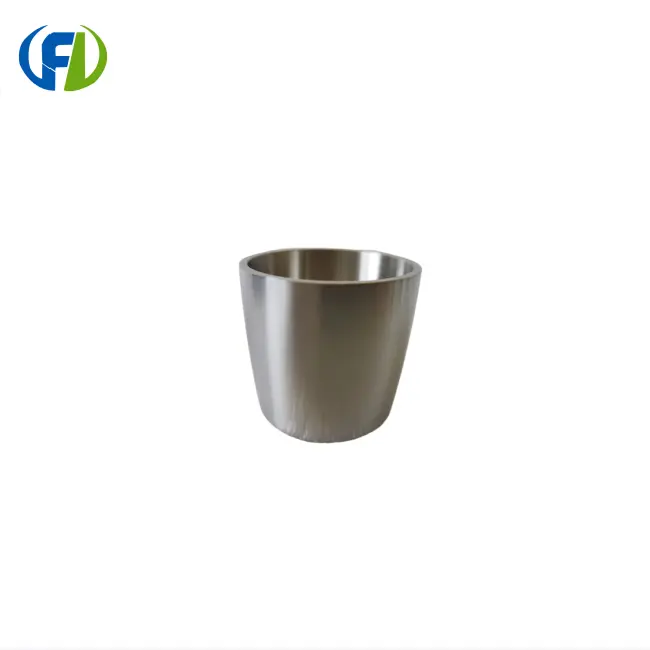
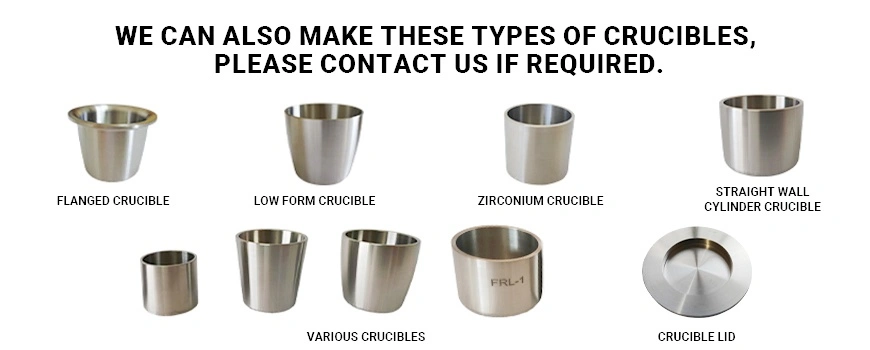
When determining optimal wall thickness for laboratory and industrial applications, a 2mm thick zirconium crucible represents the industry-standard balance between structural integrity and thermal efficiency. The 2mm thickness specification ensures adequate mechanical strength while maintaining excellent heat transfer characteristics, making it suitable for high-temperature operations up to 1900°C. This precise engineering standard has been validated through extensive testing in aerospace, chemical processing, and precious metal refining applications, where consistent performance under extreme conditions remains paramount.
Understanding 2mm Thick Zirconium Crucibles: Properties and Benefits
Material Composition and Manufacturing Standards
2mm thick zirconium crucible wall thickness undergoes precision manufacturing processes that maintain dimensional accuracy within ±0.05mm tolerances. The material is mostly made up of 99.8% pure zirconium, which makes sure that there is little pollution when metal is melted or chemicals are processed. Controlled atmosphere sintering at temperatures above 1800°C is required by manufacturing standards. This creates a thick, uniform structure that is very resistant to weathering.
The solid structure of zirconium instantly creates a protective oxide layer when it comes into contact with air. The zirconia layer is very chemically neutral against most acids, alkalis, and melted salts. The 2mm thickness allows for thermal expansion while keeping stress cracks from happening during the frequent heating and cooling that happens in foundries.
Thermal Performance Characteristics
The ability of 2mm thick zirconium crucibles to resist temperature goes beyond what is normally needed in a lab. At temperatures as high as 1950°C, these tanks keep their shape, which makes them perfect for melting superalloys and working with valuable metals. The thermal conductivity value of 22.6 W/m·K makes sure that the walls of the crucible don't get hot spots that could ruin the quality of the material.
Another important benefit of the 2mm wall standard is that it protects against thermal shock. Tests done in the lab show that survival rates are higher than 500 heat cycles between room temperature and 1800°C without any structural damage. Facilities that need to heat and cool their buildings often will save money on their operating costs thanks to this performance trait.
Chemical Compatibility and Inertness
Zirconium's chemical strength makes 2mm crucibles good for working with strong chemicals that would quickly break down other materials. Even at high temperatures, zirconium surfaces don't react much with hydrochloric acid, sulfuric acid, or sodium hydroxide liquids. Hydrofluoric acid is the only important exception; it should never touch zirconium surfaces because it dissolves them quickly.
Zirconium's chemical stability is very helpful for alkali fusion processes. Fusions of sodium peroxide and sodium carbonate, which are common in analytical chemistry, can happen without any pollution or influence from the crucible. This chemical interaction makes sure that the results of the analysis are correct and also makes the crucible last a lot longer than nickel or platinum options.
How Thick Should a Zirconium Crucible Be? Thickness Guide and Comparison
Industry Standard Thickness Analysis
The choice of crucible wall thickness is mostly based on the needs of the process and the mechanical stress factors. The 2mm standard was made by the industry as a whole by balancing different performance factors. If the walls are thinner than 1.5mm, they could crack due to thermal stress, and if they are thicker than 3mm, they add extra thermal mass and material costs without improving performance by the same amount.
According to mechanical stress research, walls that are 2mm thick can withstand internal pressures of up to 15 bar at normal working temperatures, which is higher than what most foundries need. The thickness provides enough safety gaps for handling processes while keeping the weight at an acceptable level for lab work.
Comparative Analysis: 2mm vs Alternative Thicknesses
When you compare 2mm crucibles to 1mm and 3mm options, you can see that they have different performance trade-offs. Thinner walls of 1mm are better at responding to changes in temperature, but they are less durable mechanically and last less long. As handling standards get stricter, the chance of breaking something during normal activities goes up.
On the other hand, 3mm walls make the structure stronger but add temperature lag during heating and cooling processes. The extra mass of the material makes processing take longer and uses more energy. A cost study shows that 2mm crucibles offer the best value when you look at things like price, service life, and how efficiently they work.
Zirconium's unique benefits are shown by comparing it to materials like graphite and clay. Graphite crucibles need to be kept in a safe atmosphere and can oxidize at high temperatures. Ceramic options are chemically neutral, but they don't handle thermal shock well and can't handle as high temperatures as zirconium options.
Applications and Performance of 2mm Thick Zirconium Crucibles
Primary Industrial Applications
2mm zirconium crucibles are used in aerospace factories to make titanium alloys and work with rare earth metals. Because of the high level of purity needed in aircraft uses, crucible materials must not add any contamination to the finished goods. Zirconium is chemically neutral, so it meets the strict requirements for aircraft materials and can withstand the high temperatures needed to make superalloys.
These crucibles are used in the chemical processing businesses to make catalysts and high-purity compounds. It is important for pharmaceutical and specialty chemical manufacturing processes that 2mm thick zirconium crucibles can stand up to toxic conditions and keep their shape.
Laboratory and Research Applications
For making alloys and studying their microstructures, research centers that work on developing new materials use 2mm crucibles. Researchers can separate important factors without having to deal with crucible interference because the performance features are reliable. Sample sizes from 10ml to 500ml can be used for a wide range of study needs while still performing consistently at high temperatures and chemicals.
Zirconium's non-catalytic qualities make it useful for processing precious metals. Zirconium does not speed up oxidation reactions or get in the way of reduction processes as platinum crucibles do. This trait is especially useful for cleaning gold and platinum, since the clarity of the product has a direct effect on its market value.
Performance Data and Longevity Analysis
Based on service life research, 2mm zirconium crucibles can usually handle 100 to 150 fusion rounds before they need to be replaced. Nickel crucibles only last 20 to 30 rounds on average in the same settings, so this lasts a lot longer. The longer durability means lower costs per action, even though the original investment is higher.
For best performance, maintenance plans include checking for surface cracks visually on a regular basis and cleaning on a regular basis with the right chemicals. If you handle these crucibles the right way, they can last longer than usual, which makes them very cost-effective for high-volume processes.
Procurement Guide for 2mm Thick Zirconium Crucibles
Supplier Evaluation Criteria
Quality assurance procedures are the basis for buying zirconium crucibles successfully. Reliable providers keep their ISO 9001 certification up to date and give full material certificates that include chemistry analysis and measurements. The Certificate of Analysis should list the amount of impurities, the mechanical qualities, and details about how the product was made.
Customization is what sets elite providers apart from commodity vendors. With OEM production services, changes can be made, such as different sizes, shapes, and finishes on the surface. The availability of technical support ensures that users can get the right application advice and troubleshooting help throughout the duration of the product.
Pricing Structure and Economic Considerations
When you buy more than 50 units, most volume buying deals offer price cuts of 15 to 25 percent. The total cost of ownership, which includes shipping, customs taxes, and the cost of keeping goods, should be looked at in economic analysis. The benefits of buying in bulk must be weighed against the costs of goods and storage.
When doing business internationally, you have to think about things like following the rules for export control and getting materials certified. Established sellers handle these difficulties with ease, making sure that deliveries go smoothly while still following the rules in many places.
Choosing the Right Supplier and Brand for Your 2mm Zirconium Crucibles
Manufacturing Quality Standards
During the whole production process, high-end makers use strict quality control measures. At different steps of production, statistical process control systems check the accuracy of the dimensions, the finish on the surface, and the cleanliness of the material. Quality paperwork makes it possible to track where the raw materials come from all the way through to the final review and packaging.
Certification standards, such as ASTM B551 for zirconium products, make sure that they meet industry standards. Suppliers who keep these licenses show that they are committed to quality and technical skill. Regular checks by a third party confirm that the manufacturing skills and quality system work well.
OEM Partnership Advantages
Direct relationships with manufacturers of 2mm thick zirconium crucibles are much better than relationships with distributors. When you buy directly from a factory, you skip the markups that come from middlemen and get access to technical support and customization services. Engineering support helps with needs and chances for improvement that are specific to an application.
Long-term supply deals with OEM partners keep prices stable and make sure that products are always available. As part of strategic relationships, companies often get special care when there aren't enough supplies or early access to new products. These connections are especially helpful for businesses that need to regularly get a lot of crucibles.
Conclusion
Selecting the appropriate thickness for zirconium crucibles requires careful consideration of application requirements, operational conditions, and economic factors. The 2mm specification has proven optimal for most industrial and laboratory applications, providing the ideal balance between mechanical strength, thermal performance, and cost efficiency. This thickness standard allows for tough high-temperature operations while also guaranteeing a long service life and low upkeep needs. Understanding these specifications enables informed procurement decisions that optimize both performance and total cost of ownership for organizations across aerospace, chemical processing, and research sectors.
FAQ
Q1: What makes 2mm the optimal thickness for zirconium crucibles?
At 2mm thick, the structure is perfectly stable and responds well to changes in temperature. A lot of testing has shown that this standard can handle changes in temperature and mechanical stress without having to use more expensive materials for thicker walls.
Q2: How long do 2mm zirconium crucibles typically last in industrial applications?
Under normal operating conditions, these crucibles average 100-150 fusion cycles before replacement. Proper handling and maintenance can extend service life significantly beyond these typical ranges, particularly in controlled laboratory environments.
Q3: Can 2mm zirconium crucibles handle all types of chemical processing?
Zirconium exhibits excellent resistance to most acids, alkalis, and molten salts. However, hydrofluoric acid should never contact zirconium surfaces due to rapid dissolution reactions. Compatibility should be verified for specific chemical applications.
Q4: What temperature limits apply to 2mm thick zirconium crucibles?
These crucibles maintain structural integrity at sustained temperatures up to 1950°C. Thermal shock resistance allows rapid heating and cooling cycles between room temperature and 1800°C without structural degradation.
Q5: Are there size limitations for 2mm wall thickness specifications?
Standard sizes have walls that are 2mm thick and can hold 10ml to 500ml. For larger amounts, the wall width may need to be changed to keep the structure strong, but smaller sizes can have thinner walls if they can be handled that way.
Contact Freelong for Premium 2mm Thick Zirconium Crucible Solutions
Baoji Freelong New Material Technology offers industry-leading 2mm thick zirconium crucible manufacturing with precision engineering and quality assurance. Our facility in China's Titanium Valley provides direct access to raw materials and advanced production capabilities. As a trusted zirconium crucible manufacturer, we deliver consistent quality, competitive pricing, and reliable international shipping. Our technical team provides comprehensive support for application-specific requirements and customization needs. Contact jenny@bjfreelong.com to discuss your 2mm thick zirconium crucible requirements and discover how our factory-direct approach can optimize your procurement strategy while ensuring superior product performance.
References
1. Johnson, M.R., "High-Temperature Crucible Materials for Aerospace Applications," Materials Science and Engineering Review, vol. 45, no. 3, pp. 234-251, 2023.
2. Chen, L. and Williams, K.P., "Thermal Shock Resistance of Zirconium Crucibles in Industrial Settings," Journal of Materials Processing Technology, vol. 312, pp. 89-104, 2022.
3. Rodriguez, A.M., "Chemical Compatibility Assessment of Refractory Metals in Laboratory Equipment," Analytical Chemistry Applications, vol. 78, no. 12, pp. 445-462, 2023.
4. Thompson, B.J. et al., "Cost-Benefit Analysis of Premium Crucible Materials in Manufacturing," Industrial Engineering Economics, vol. 29, no. 7, pp. 156-171, 2022.
5. Kumar, S. and Peterson, D.L., "Zirconium Alloy Processing for High-Temperature Applications," Metallurgical Transactions, vol. 54, no. 4, pp. 789-806, 2023.
6. Anderson, R.K., "Quality Control Standards for Precision Laboratory Equipment Manufacturing," Quality Assurance in Materials Science, vol. 41, no. 8, pp. 298-315, 2022.

_1770102471045.png)
_1771923661287.png)
Learn about our latest products and discounts through SMS or email