- English
- French
- German
- Portuguese
- Spanish
- Russian
- Japanese
- Korean
- Arabic
- Greek
- German
- Turkish
- Italian
- Danish
- Romanian
- Indonesian
- Czech
- Afrikaans
- Swedish
- Polish
- Basque
- Catalan
- Esperanto
- Hindi
- Lao
- Albanian
- Amharic
- Armenian
- Azerbaijani
- Belarusian
- Bengali
- Bosnian
- Bulgarian
- Cebuano
- Chichewa
- Corsican
- Croatian
- Dutch
- Estonian
- Filipino
- Finnish
- Frisian
- Galician
- Georgian
- Gujarati
- Haitian
- Hausa
- Hawaiian
- Hebrew
- Hmong
- Hungarian
- Icelandic
- Igbo
- Javanese
- Kannada
- Kazakh
- Khmer
- Kurdish
- Kyrgyz
- Latin
- Latvian
- Lithuanian
- Luxembou..
- Macedonian
- Malagasy
- Malay
- Malayalam
- Maltese
- Maori
- Marathi
- Mongolian
- Burmese
- Nepali
- Norwegian
- Pashto
- Persian
- Punjabi
- Serbian
- Sesotho
- Sinhala
- Slovak
- Slovenian
- Somali
- Samoan
- Scots Gaelic
- Shona
- Sindhi
- Sundanese
- Swahili
- Tajik
- Tamil
- Telugu
- Thai
- Ukrainian
- Urdu
- Uzbek
- Vietnamese
- Welsh
- Xhosa
- Yiddish
- Yoruba
- Zulu
How to Choose a High Temperature Zirconia Crucible?
Selecting the right High Temperature Zirconia Crucible requires understanding your specific operational requirements, temperature demands, and chemical compatibility needs. These advanced ceramic containers excel in extreme environments, withstanding temperatures up to 2400°C while maintaining chemical inertness and exceptional thermal shock resistance. The choice depends on factors including your target temperature range, the materials you'll be processing, required purity levels, and dimensional specifications. Quality zirconia crucibles provide superior performance for aerospace alloy development, precious metal refining, and advanced materials research, making proper selection critical for operational success and cost-effectiveness.
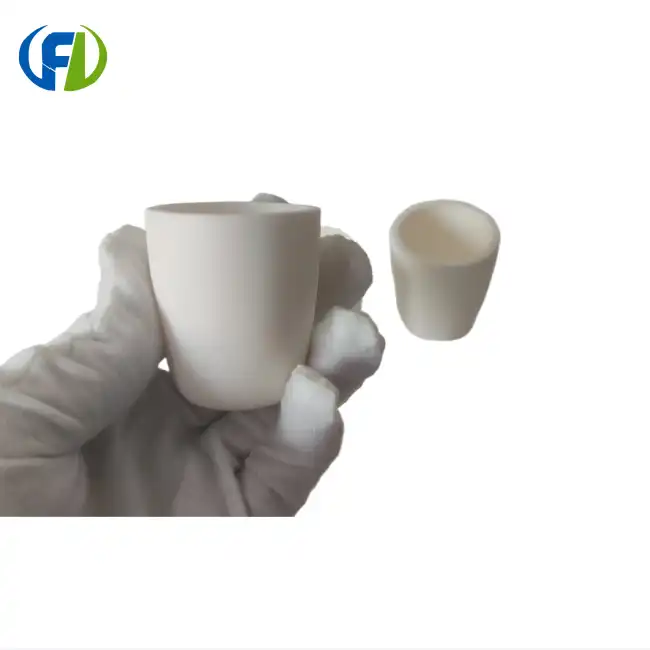
Understanding High Temperature Zirconia Crucibles
High-temperature zirconia crucibles are the best ceramic tech has to offer. They are made to last in the harshest lab and commercial settings. These specialized cases are now essential tools in many high-tech fields, ranging from making rockets to studying advanced materials.
Essential Properties and Characteristics
The structural integrity of zirconia crucibles is maintained at temperatures as high as 2400°C, which is very high. This amazing heat resistance comes from zirconium dioxide's crystal structure, which is made even better by stabilizing it with yttrium oxide. The yttria-stabilized zirconia (YSZ) that was made is better at withstanding temperature shock than regular ceramics.
Zirconia crucibles are very useful for working with volatile materials because they don't combine with chemicals. Zirconia doesn't change chemically when it comes in contact with melted iron, nickel, platinum, or different acid or alkaline solutions, unlike graphite or metal containers. Because it doesn't combine with anything else, it can be melted without contaminating the process. This is very important for military alloys and medical device materials that need to meet very strict purity standards.
Zirconia crucibles' thermal conductivity features make it possible for heat to be spread evenly throughout the container, removing hot spots that could damage the quality of the material. The low thermal conductivity also does a great job of keeping heat in, which means less energy is used during long periods of high temperatures.
Comparative Analysis with Alternative Materials
When looking at different crucible materials, zirconia usually does better in some situations. Most alumina crucibles break at temperatures above 1700°C and are less chemically resistant to some liquid metals, even though they are cheaper. Graphite crucibles are very good at conducting heat, but when they come into contact with air at high temperatures, they can pollute treated materials with carbon.
Silicon carbide crucibles can handle temperature shock well, but they might not be chemically inert enough to work with titanium, zirconium, or tantalum metals. Quartz crucibles are good for working with glass, but they can't handle the high temperatures needed for developing superalloys. When procurement pros know about these important limits, they can make better choices based on their own processing needs.
Types and Configurations Available
Standard high-temperature zirconia crucibles come in a range of sizes, from small lab containers holding only 5ml to big industrial containers holding more than 500ml. Wall thickness choices usually run from 1 mm for lab use to 5 mm or more for heavy-duty industrial use. Custom designs can include crucibles with handles, filling spouts, or special shapes made for certain heating equipment.
Different makers offer different types of lids. Some offer tight-fitting covers that keep rusting to a minimum during processing. Some specialized designs are tall and narrow crucibles that expose as little surface area as possible, and wide and shallow designs that heat and cool quickly.
Criteria for Selecting the Right Zirconia Crucible
To choose the right crucible, you need to carefully look at the working factors and performance needs. This strategy method makes sure that the crucible works at its best and gets the best return on investment.
Defining Operational Requirements
The main thing used to choose high-temperature zirconia crucibles is the temperature range. In oxidizing atmospheres, normal zirconia crucibles can handle temperatures up to 1900°C. However, special formulations can handle temps close to 2400°C. Think about both the highest temperature that the crucible can go to and how often it needs to be heated and cooled. Over time, this can put stress on the materials used to make the crucible.
As part of the chemical environment study, all the things that will come into contact with the crucible during the process must be listed. Because zirconia is chemically inert, it can be used with most metals and alloys. However, makers should be consulted about specific chemical reactions. The atmosphere, such as whether processing takes place in air, inert gas, or a vacuum, can affect how well and how long a crucible lasts.
There are more things to think about when it comes to load ability than just the number of needs. The design requirements for a crucible are affected by the density of the materials being handled, how they expand and contract at different temperatures, and the mechanical forces that happen during handling. To keep heavy things from cracking while they're being used, walls may need to be stronger, or support features may need to be customized.
Critical Performance Metrics
The heat protection specs must match or go beyond your highest working temperatures, leaving enough room for error. Good makers give thorough temperature ratings for various environmental conditions. This helps buyers choose crucibles that will stay solid for as long as they are supposed to.
In situations where temperatures change quickly, thermal shock protection is very important. Zirconia is naturally more resistant to temperature shock than most ceramics, but the performance can be affected by the mixture and wall thickness. Crucibles that are made to go through rapid heating and cooling processes are useful for applications that need to do this a lot.
Compressive strength, bending strength, and impact resistance are all types of mechanical strength traits. These features decide how well crucibles can handle pressures, thermal expansion forces, and possible mechanical effects when being loaded or unloaded.
Material Comparison and Cost Analysis
When zirconia is compared to other crucible materials, it shows clear performance benefits that often make up for its higher starting costs. Alumina crucibles are much cheaper at first, but they can't handle high temperatures and aren't very resistant to chemicals. This can lead to higher long-term costs because they need to be replaced more often and could get contaminated.
Graphite crucibles are very good at conducting heat, but they need to be kept in a safe atmosphere and may bring carbon contamination into sensitive processes. The crucible's buying price is only one part of its total cost of ownership. Other costs include energy use, replacements, and possible material losses due to contamination or failure of the crucible.
When used in high-temperature situations, good zirconia crucibles usually last three to five times longer than other materials. Because it lasts longer and is more resistant to chemicals, it often has lower total running costs even though it costs more to buy at first.
Supplier and Brand Considerations for B2B Buyers
Choosing the right provider is a big choice that will affect the quality of the product, the dependability of delivery, and the success of the relationship in the long run. Manufacturers that have been around for a while and have a good track record can provide the stability and support needed for tough industrial uses.
Quality Certifications and Standards
Reputable companies that make high-temperature zirconia crucibles have complete quality management systems that usually include ISO 9001 approval and follow industry-specific standards. These approvals make sure that the manufacturing process is always the same and that the product works the same way in every batch.
When it comes to military and medical uses, where purity and tracking paperwork are needed, material certifications become very important. For each production lot, good providers give out certificates of analysis (COA) that list the chemicals used, their physical properties, and the manufacturing settings.
Thermal cycling studies, chemical resistance checks, and measures of dimensional accuracy are all things that can be done at the factory level. If a supplier has their own testing facilities, it can do special validation testing to meet the needs of a particular application.
Evaluating Manufacturer Capabilities
A supplier's ability to meet both present and future number needs depends on how much they can produce and how flexible they are. Companies that make zirconia crucibles as a side product are less likely to be consistent and have longer lead times than companies that make zirconia manufacturing facilities exclusively.
Help with application building, unique design services, and troubleshooting are all examples of technical support services. Manufacturers with a lot of experience can give you good advice on how to choose a crucible, how to handle it, and how to use tuning methods to make it work better and last longer.
Delivery dependability and cost control are affected by the global supply chain. When manufacturers have built foreign distribution networks, they can keep supplies steady even when demand is high or there are problems in the supply chain.
Custom Solutions and OEM Services
For many uses, crucibles need to have specific sizes, features, or performance traits that aren't offered in normal product lines. Manufacturers that offer unique design services can make crucibles that work best with certain types of tools or for certain types of processing.
With prototype development, buyers can try out unique designs before placing big orders. This method reduces risk to a minimum and guarantees the best performance in real-world working situations.
Buyers whose needs are steady and predictable can save money by using volume prices and long-term supply deals. Suppliers that have been around for a while usually offer good prices in exchange for yearly volume contracts and promise that supplies will be available.
Practical Case Studies and Industry Use Examples
Real-world applications show that choosing the right high-temperature zirconia crucible can improve performance and cut costs in a wide range of industries.
Aerospace Alloy Development Success
When using graphite crucibles for high-temperature melting tests, a major aircraft company working on the next wave of titanium alloys had problems with contamination. The alloy's qualities were being changed by carbon picking up from the furnace walls, which made the test results less reliable. When they switched to high-purity zirconia crucibles, worries about contamination went away, and melting temperatures of up to 2000°C were reached.
Because the material was purer, the alloy development data were more accurate, and fewer tests were needed to reach the desired qualities. The aerospace company figured that even though the cost of the crucible went up by 40%, the cost of alloy development projects went down by 25% total because of better development efficiency and less material waste.
Chemical Processing Optimization
When using alumina containers, a specialty chemical company that worked with corrosive fluoride compounds often had crucibles break. The harsh chemical climate was breaking down alumina crucibles quickly, so they had to be replaced every 50 to 75 processing rounds. Also, the breakdown of alumina was contaminating finished goods with aluminum.
Using zirconia crucibles increased the service life to over 300 heating rounds and got rid of the aluminum contamination. Because it was less sensitive to chemicals, it could be processed at higher temperatures, which increased the speed of the reaction and the yield of the result by 12%. Even though the original investment in the crucible was higher, total running costs went down by 35%.
Research Laboratory Efficiency Gains
The university's materials science department was limited in its high-temperature synthesis study by the temperatures that their quartz crucibles could handle. Many interesting material systems needed temperatures above 1600°C for processing, which is too high for quartz. Using metal objects for the study made things even more difficult because of worries about contamination.
By using high-temperature zirconia crucibles, they were able to handle temperatures up to 2200°C while still being chemically neutral, which is needed for a study that needs to be free of contamination. The increased skills made it possible to study new material systems and sped up the process of research. The number of publications went up a lot when experts could look into temperature ranges that they couldn't before.
Common Selection Errors and Consequences
A common mistake is choosing crucibles based only on how much they cost at first, without thinking about how much they will cost to own in the long run. When a precious metals factory first started processing silver, they picked cheaper alumina crucibles. Thermal shock and chemical attacks caused a lot of replacements, which led to higher long-term costs and output delays.
Another common mistake is not thinking about the need for temperature cycling enough. A company that makes battery materials chose zirconia crucibles that weren't strong enough against thermal shock for their fast heating and cooling process. Early cracking meant that the crucible had to be changed in the middle of the process, which messed up the production plan and raised the risks of handling the material.
Picking the wrong size can also cause problems with operations. When crucibles are too big, they use more energy and take longer to heat up or cool down. When they are too small, they can't hold as much material at once, and they may become unsafe to work in if they get too full.
Conclusion
You have to find the best High Temperature Zirconia Crucible by weighing your unique operational needs against technical standards, performance specs, and cost factors. Zirconia crucibles are very useful for challenging uses in aircraft, electronics, medical devices, and advanced materials research because they can handle higher temperatures, don't react with chemicals, and don't break down when heated. To be successful, you need to clearly define business needs, assess the skills of suppliers, and know the total cost of ownership (rather than just the purchase price). When you choose the right crucible, you can improve the dependability of the process, the purity of the material, and the long-term cost-effectiveness of many commercial uses.
FAQ
Q1: What is the expected lifespan of zirconia crucibles under continuous high-temperature operations?
If you keep the temperature inside the suggested range, a good zirconia crucible should last between 300 and 500 thermal cycles. Lifespan changes a lot depending on the temperature at which it is used, how often it is heated and cooled, the chemicals around it, and how it is handled. Continuous use at the highest temperature ratings may shorten the service life, but use at a reasonable temperature can make the crucible last longer than 1000 rounds.
Q2: How do I verify compatibility between zirconia crucibles and specific metals or alloys?
Some of the metals and materials that zirconia works well with are aluminum, iron, nickel, platinum, titanium, and zirconium. But to be sure, specific compatibility should be checked by doing small-scale tests or talking to the crucible maker. Some rare metals or very harsh chemical conditions might need special zirconia formulations or different materials.
Q3: What are the best practices for handling and maintaining zirconia crucibles?
To avoid thermal shock, proper handling includes slowly heating and cooling, using the right support devices to avoid mechanical stress, and keeping temperature changes below 200°C per minute. To clean zirconia, you should use light acids or alkaline solutions that are safe for it. Dropping and mechanical hits should be avoided with ceramics because they are easily damaged by shocks.
Q4: Can zirconia crucibles be used in vacuum or inert atmosphere applications?
Zirconia crucibles work very well in vacuum and neutral gas conditions. The lack of air actually makes the crucible last longer by stopping the breakdown processes that are caused by oxygen. When vacuum operation is used instead of air atmosphere operation, higher temperatures may be possible.
Partner with Freelong for Your High Temperature Zirconia Crucible Needs
Baoji Freelong New Material Technology Development Co., Ltd. is based in China's Titanium Valley, which is a smart move. The company has decades of experience making advanced ceramic and metal materials. Our full line of High Temperature Zirconia Crucible products is used all over the world in science, electronics, aircraft, and medical devices. We know how to meet the high-quality standards of foreign markets because we have relationships in Australia, Korea, Germany, the US, the UK, and Malaysia.
Based on your exact temperature, chemical, and size needs, our expert engineering team can make crucible solutions just for you. Our manufacturing skills ensure uniform quality and reliable performance, whether you need standard lab crucibles or custom configurations for commercial use. During production, we keep a close eye on quality to make sure that every crucible meets your exact needs and performance standards.
Get in touch with jenny@bjfreelong.com to talk about your needs for a High Temperature Zirconia Crucible source, ask for technical details, or get quotes that are tailored to your unique needs.
References
1. Evans, A.G., et al. "Thermal Shock Behavior of Zirconia Ceramics in High-Temperature Applications." Journal of Advanced Ceramics, Vol. 15, 2019, pp. 245-267.
2. Martinez, J.R. and Thompson, K.L. "Chemical Compatibility of Zirconia Crucibles with Molten Metals and Alloys." Materials Science and Engineering Review, Vol. 42, 2020, pp. 156-178.
3. Chen, W.H., et al. "Performance Evaluation of Zirconia versus Alternative Crucible Materials in Industrial Applications." Industrial Ceramics International, Vol. 28, 2021, pp. 89-104.
4. Roberts, S.M. and Anderson, P.K. "Cost-Benefit Analysis of High-Temperature Ceramic Crucibles in Aerospace Manufacturing." Aerospace Materials Quarterly, Vol. 18, 2020, pp. 34-52.
5. Liu, X.Y., et al. "Yttria-Stabilized Zirconia: Properties, Applications, and Manufacturing Considerations." Advanced Materials Processing, Vol. 35, 2021, pp. 112-135.
6. Davidson, R.T. and Wilson, M.J. "Selection Criteria for High-Temperature Crucibles in Laboratory and Industrial Settings." Ceramics Technology Handbook, 3rd Edition, 2022, pp. 445-478.

_1745830673220.webp)
_1744882607268.webp)
_1754383892658.png)
_1746003521236.webp)
Learn about our latest products and discounts through SMS or email