- English
- French
- German
- Portuguese
- Spanish
- Russian
- Japanese
- Korean
- Arabic
- Greek
- German
- Turkish
- Italian
- Danish
- Romanian
- Indonesian
- Czech
- Afrikaans
- Swedish
- Polish
- Basque
- Catalan
- Esperanto
- Hindi
- Lao
- Albanian
- Amharic
- Armenian
- Azerbaijani
- Belarusian
- Bengali
- Bosnian
- Bulgarian
- Cebuano
- Chichewa
- Corsican
- Croatian
- Dutch
- Estonian
- Filipino
- Finnish
- Frisian
- Galician
- Georgian
- Gujarati
- Haitian
- Hausa
- Hawaiian
- Hebrew
- Hmong
- Hungarian
- Icelandic
- Igbo
- Javanese
- Kannada
- Kazakh
- Khmer
- Kurdish
- Kyrgyz
- Latin
- Latvian
- Lithuanian
- Luxembou..
- Macedonian
- Malagasy
- Malay
- Malayalam
- Maltese
- Maori
- Marathi
- Mongolian
- Burmese
- Nepali
- Norwegian
- Pashto
- Persian
- Punjabi
- Serbian
- Sesotho
- Sinhala
- Slovak
- Slovenian
- Somali
- Samoan
- Scots Gaelic
- Shona
- Sindhi
- Sundanese
- Swahili
- Tajik
- Tamil
- Telugu
- Thai
- Ukrainian
- Urdu
- Uzbek
- Vietnamese
- Welsh
- Xhosa
- Yiddish
- Yoruba
- Zulu
How to Weld TA1 Titanium Plates Correctly: A Step-by-Step Guide
To weld TA1 titanium plates, you need to be very careful and know how to use the special qualities of commercially pure titanium. As Grade 1 titanium, TA1 is highly resistant to rust and easy to shape, making it ideal for use in aircraft, chemical processing, and medicine. To weld properly, though, you need to pay close attention to keeping the material clean, making sure the protective gas covers everything, and controlling the heat input. This detailed guide explains the necessary steps for preparation, the conditions for welding, and quality control so that you can make better weld parts that keep TA1's natural strength and resistance to corrosion.
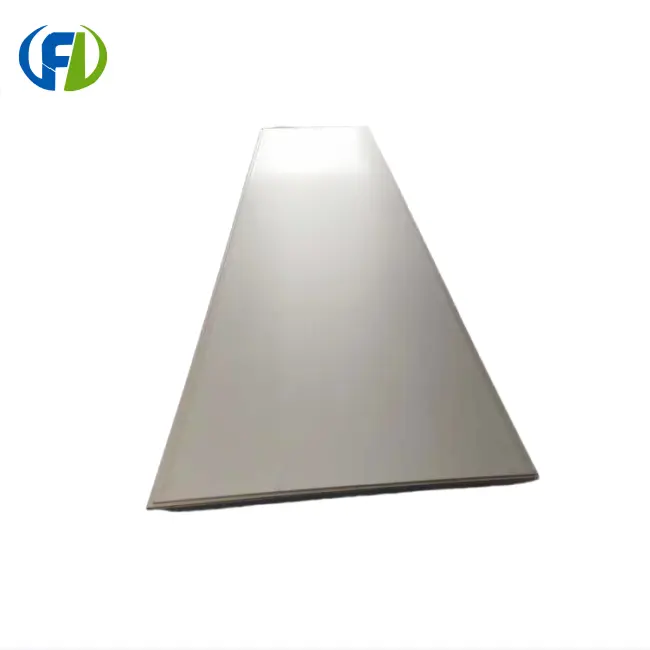
Understanding TA1 Titanium Plates: Properties and Welding Challenges
TA1 titanium is the best industrial-grade titanium that can be found. It has very few interstitial elements, which helps it be very flexible and resistant to rust. It is very important to understand these basic features when creating welding processes for important uses.
Chemical Composition and Material Properties
The make-up of TA1 titanium plates has a direct effect on how they weld and the qualities of the end joint. With an oxygen content of less than 0.18%, a nitrogen content of less than 0.03%, and an iron content of less than 0.20%, this material is very pure and easier to weld, but it needs to be handled in a certain way.
Because it has less intermediate content, TA1 is more flexible than higher-grade titanium alloys. Having this property makes the material very easy to shape, but it also makes it very vulnerable to contamination during welding. Material certificates must be checked by procurement teams to make sure they meet ASTM B265 requirements for chemistry.
Another important thing to know about TA1's behavior during welding is how sensitive it is to temperature. The thermal conductivity of the material, which is about 17 W/m-K, changes how heat moves and how fast it cools. This trait affects how the grain structure grows, and the welding settings need to be carefully managed to avoid too much grain growth or thermal distortion.
Unique Welding Challenges with TA1
The biggest problem with bonding TA1 titanium plates is that they are very sensitive to contamination. When exposed to gases in the air at high temperatures, brittle intermetallic compounds can form that weaken the stability of joints. Oxygen picks up during welding and turns into titanium oxides, which make the metal less flexible and resistant to rust.
The fact that the material likes to absorb hydrogen adds to the problems. Hydrogen embrittlement can happen near the weld zone if there is wetness or chemical contamination. This event shows how important it is to clean things well and keep the air quality under control while welding.
Controlling thermal warping is especially hard with TA1 because it doesn't conduct heat very well and expands a lot when it gets hot. These features can cause bending or changes in size that affect how well the final part fits together and works in precise applications.
Comparison to TA2 and Other Grades
Knowing the differences between TA1 and TA2 titanium types helps sourcing professionals choose the right materials for each welding job. When compared to TA1, TA2 has a few more intermediate parts, which makes it stronger but less flexible.
The different welding parameters for these grades show how their makeup is different. The TA1 titanium plate usually needs less heat to keep the grains from growing too much, while TA2 can handle a little more energy. This difference affects how manufacturing facilities choose tools and how much training operators need.
TA1 or TA2 is often chosen based on the needs of the program. For aerospace parts that need to be as flexible as possible, TA1's better flexibility is useful, while TA2's higher strength can be used in chemical processing equipment. When soldering, both materials need the same steps to be taken to keep them from getting contaminated.
Preparing for Welding: Essential Pre-Welding Steps for TA1 Titanium Plates
To weld TA1 titanium successfully, you must first carefully prepare the work area by getting rid of any sources of contamination and creating controlled working conditions. These first steps have a direct effect on the quality of the end weld and its performance over time.
Surface Cleaning and Contamination Prevention
Cleaning the surface completely gets rid of any impurities that might weaken the weld. TA1 plates can be cleaned chemically with nitric-hydrofluoric acid solutions that get rid of oxide layers and surface debris well. After the chemical treatment, any leftover residues are removed by mechanical cleaning with stainless steel brushes made just for titanium.
The last step in cleaning before welding is solvent degreasing. Solvents like acetone or methanol get rid of hydrocarbon residues that could let hydrogen into the weld zone. To keep titanium from getting contaminated with other metals, all cleaning products must be made just for titanium.
Care must be taken with the storage conditions between cleaning and welding. TA1 plates that are clean should stay in controlled settings with low humidity. Protective coverings made of clean plastic sheets keep things from getting dirty again while still allowing welding to happen.
Equipment Setup and Environmental Controls
Setting up the welding tools correctly is a very important part of making good TA1 joints. TIG (tungsten inert gas) welding systems are the best way to control titanium use because they offer exact control of the heat input and better shielding gas coverage.
The cleanliness standards for shielding gases are higher than those for regular materials. Argon gas that is at least 99.995% pure keeps the metal from getting dirty. To keep the safe atmosphere intact during the welding process, gas delivery systems must have tools to remove moisture and oxygen.
Setting up an environmental room or limited shielding devices keeps the weld zone clean from contamination from the air. Trailing covers that go beyond the weld area keep hot titanium surfaces from oxidizing while they cool down.
Welding Method Selection for TA1
TIG welding is still the best way to join TA1 titanium pieces together because it is easy to control and doesn't leave a mess. This method lets workers carefully control the amount of heat going in while keeping the protective gas constant.
When deep entry is needed, electron beam welding is better for thick-section TA1 titanium plates. This high-energy density process makes joints with great features while reducing the width of the heat-affected zone. However, the need for a clean setting makes it harder to get to and raises the cost of processing.
For precise TA1 uses, laser welding is another choice. The focused heat source keeps thermal damage to a minimum while allowing thin parts to be welded quickly. Setting up the protective gases correctly is still necessary to keep the air clean during laser welding.
Conclusion
To weld TA1 titanium plates successfully, you need to know a lot about the material's qualities, follow the steps for preparation very carefully, and keep the parameters under tight control. Because TA1 is so pure and easy to shape, it's perfect for difficult uses. However, it needs special techniques to keep it from getting contaminated and to keep the joints' integrity. When you properly prepare the surface, keep the air pressure under control, and use the best welding settings, you can get great results that keep TA1's natural resistance to corrosion and mechanical qualities. When makers buy from qualified suppliers and use tried-and-true welding methods, they can use TA1's special features in aerospace, chemical, and medical settings where efficiency and dependability are very important.
FAQ
Q1: What makes TA1 titanium different from other titanium grades?
TA1 is the purest industrial type of titanium that can be bought. It has the fewest amounts of oxygen, nitrogen, and carbon in its structure. This high level of clarity makes it easier to shape and bend than higher-grade titanium metals. Because it has less interstitial content, TA1 is great for uses that need maximum rust protection and great forming properties. However, it makes the material more susceptible to contamination during welding.
Q2: Why is contamination control so critical when welding TA1?
Titanium reacts strongly with gases in the air when it is heated, so it is important to keep it clean. Picking up oxygen, nitrogen, and hydrogen during welding makes intermetallic compounds that are very brittle and seriously damage the qualities of the joint. Even small amounts of contamination can make something less flexible, less resistant to pressure, and less resistant to rust. With the right amount of shielding gas and controlled conditions, these bad reactions can't happen, and TA1's natural qualities are kept.
Q3: What welding equipment is required for TA1 titanium plates?
For TA1 applications, the best results come from TIG welding equipment with accurate current control. High-purity argon gas (99.995% minimum) supplied through systems that remove moisture and air ensures that the atmosphere is safe. Cross-contamination is stopped by the following special screens, backing gas systems, and tools that are only used for titanium. For very important tasks that need to be sure of the highest quality, environmental rooms or limited shielding setups may be needed.
Q4: How do welding parameters differ between TA1 and TA2 titanium?
Because it has less intermediate material and is more sensitive to heat, TA1 usually needs less heat input than TA2. For TA1, the best current settings, movement speeds, and arc voltages must be found based on its unique heat conductivity and grain structure. Both grades need the same steps to keep them from getting contaminated, but because TA1 is purer, it is more likely to pick up contamination from the air during welding.
Q5: What industries commonly use welded TA1 titanium components?
TA1 is used in aerospace manufacturing for structural parts, engine accessories, and hydraulic systems that need to be able to be shaped easily and not rust. TA1 is used in the chemical processing industry for heat exchanges, reaction tanks, and piping systems that work in harsh conditions. Medical device makers use TA1 to make implantable parts, surgery tools, and prosthetics that are biocompatible and have high wear resistance.
Get Premium TA1 Titanium Plates from Freelong - Your Trusted Manufacturing Partner
You can trust Baoji Freelong New Material Technology Development Co., Ltd to provide you with high-quality TA1 titanium plates. They have been in business for decades and have state-of-the-art production facilities in China's Titanium Valley. Our certified production sites meet the strict needs of the chemical, medical, and aircraft industries by consistently producing high-quality goods that meet exact specs.
Our location in Baoji City gives us the ability to offer low prices without lowering the quality of our products. We make sure that every TA1 titanium plate meets or beats international standards by testing and certifying the materials in a thorough way. Our engineering team works closely with your sourcing experts to find the best solutions, whether you need standard sizes or unique sizes.
Talk to jenny@bjfreelong.com right away about your TA1 titanium plate needs and see how the Freelong difference in quality, service, and dependability can help you.
References
1. American Welding Society. "Welding of Titanium and Titanium Alloys: Technical Guidelines and Best Practices." AWS Technical Bulletin, 2018.
2. Boyer, Rodney R. "Titanium for Aerospace Applications: Processing and Fabrication Considerations." Materials Science and Engineering International Journal, 2019.
3. International Institute of Welding. "Contamination Prevention in Titanium Welding: Industrial Standards and Quality Control Methods." IIW Technical Report Series, 2020.
4. Lutjering, Gerd and James C. Williams. "Titanium Engineering Properties and Welding Metallurgy." Springer Materials Science Publications, 2017.
5. ASTM International. "Standard Specification for Titanium and Titanium Alloy Strip, Sheet, and Plate: ASTM B265 Implementation Guide." ASTM Technical Standards, 2021.
6. Titanium Development Association. "Welding and Joining of Commercial Pure Titanium: Technical Guidelines for Industrial Applications." TDA Technical Handbook, 2019.

_1770273193431.png)
_1745456611781.webp)
_1745892581245.webp)
Learn about our latest products and discounts through SMS or email