- English
- French
- German
- Portuguese
- Spanish
- Russian
- Japanese
- Korean
- Arabic
- Greek
- German
- Turkish
- Italian
- Danish
- Romanian
- Indonesian
- Czech
- Afrikaans
- Swedish
- Polish
- Basque
- Catalan
- Esperanto
- Hindi
- Lao
- Albanian
- Amharic
- Armenian
- Azerbaijani
- Belarusian
- Bengali
- Bosnian
- Bulgarian
- Cebuano
- Chichewa
- Corsican
- Croatian
- Dutch
- Estonian
- Filipino
- Finnish
- Frisian
- Galician
- Georgian
- Gujarati
- Haitian
- Hausa
- Hawaiian
- Hebrew
- Hmong
- Hungarian
- Icelandic
- Igbo
- Javanese
- Kannada
- Kazakh
- Khmer
- Kurdish
- Kyrgyz
- Latin
- Latvian
- Lithuanian
- Luxembou..
- Macedonian
- Malagasy
- Malay
- Malayalam
- Maltese
- Maori
- Marathi
- Mongolian
- Burmese
- Nepali
- Norwegian
- Pashto
- Persian
- Punjabi
- Serbian
- Sesotho
- Sinhala
- Slovak
- Slovenian
- Somali
- Samoan
- Scots Gaelic
- Shona
- Sindhi
- Sundanese
- Swahili
- Tajik
- Tamil
- Telugu
- Thai
- Ukrainian
- Urdu
- Uzbek
- Vietnamese
- Welsh
- Xhosa
- Yiddish
- Yoruba
- Zulu
TA1 Titanium Price Trends in 2026: What Buyers Should Know
In 2026, the market for TA1 titanium plates offers both chances and problems for businesses that want to buy these plates, as prices change all the time. As demand rises in the chemical processing, aircraft, and medical device manufacturing businesses, it becomes more important than ever to understand current market trends. This commercially pure type of titanium continues to fetch high prices because it has unique properties like resistance to corrosion, biocompatibility, and strength-to-weight that can't be matched by other materials.
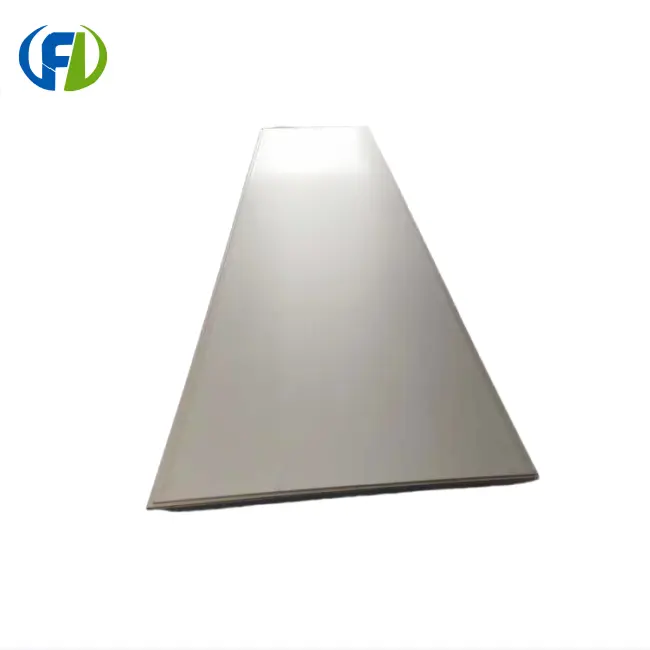
Understanding TA1 Titanium Plate: Key Properties and Market Drivers
Chemical Composition and Manufacturing Excellence
TA1 titanium is the best industrial grade that can be bought. It is made up of 99.5% titanium and very little iron, oxygen, nitrogen, or hydrogen. This high level of purity has a direct effect on pricing patterns while providing performance qualities that can't be beat. Specialized techniques, like vacuum arc remelting and electron beam melting, are needed for manufacturing. These techniques raise the cost of materials but keep quality standards high.
Because of its chemical makeup, TA1 is especially useful for uses that need biocompatibility and protection to rust. Medical device companies use these qualities to make implantable devices, and flight companies like how lightweight the material is without sacrificing its strength. To make chemical processing tools last much longer, TA1 makes them resistant to both acidic and basic surroundings.
Industrial Applications Driving Demand
More and more, aerospace makers are using TA1 Titanium Plate for parts of airplanes that need to have very high strength-to-weight ratios. Because it can stand up to high and low temperatures without losing its shape, the material is essential for satellite parts and military equipment. Recent data from the industry shows that demand for flights has grown by about 15% since 2023. This has a direct effect on price increases.
As governing bodies accept new implantable technologies, the use of medical devices keeps growing. The biocompatibility of TA1 makes it useful for orthopedic devices, heart stents, and surgical tools. The material's resistance to wear makes it reliable over time in serious situations where failure could put patients at risk.
TA1 is used in the chemical processing industry for reactor tanks, heat exchangers, and pipe systems that are in corrosive conditions. The material's success in chlorine plants, desalination plants, and tools used to make drugs shows how useful it is in a wide range of industries.
TA1 Titanium Price Trends in 2026: Market Analysis and Drivers
Global Economic Factors Affecting Pricing
Titanium prices in 2025 are complicated because of problems in the supply chain, the cost of raw materials, and government issues. Titanium sponge costs have gone up and down between $7,500 and $9,200 per metric ton in 2025, which has a direct effect on the cost of finished goods. The cost of energy used to make titanium has gone up about 12% compared to previous years, which is putting pressure on manufacturers' price systems.
Different regions have different prices because of trade laws and changes to tariffs. Because of import taxes and the mechanics of shipping, prices for goods in North America are different from those in Europe or Asia. Changes in currencies, especially between the US dollar and the Chinese yuan, have a big effect on the prices of buying things in other countries.
Supply Chain Dynamics and Availability
Manufacturing capacity problems are still making it hard to get TA1 on markets around the world. For normal specs, major producers have said that order wait times range from 8 to 12 weeks to 16 to 20 weeks. Delivery times can be pushed back even more by custom sizes and processing needs, which can affect project timelines and budget planning.
Concentrated titanium ore mining activities for TA1 Titanium Plate have made it harder to get raw materials. Environmental laws in major producing areas have limited the activities that can be used for mining, which puts pressure on the availability of materials further up the supply chain. These things make prices change a lot, and you need to plan your purchases carefully to lower the risks of supply.
Technological Advances Influencing Costs
New ways of making things, like additive manufacturing and better melting methods, are starting to have an effect on how efficiently things are made. Costs may stay the same over time as these technological advances improve material qualities. However, the beginning costs of implementation are still having an effect on short-term price structures because makers are spending money on new tools and training.
Quality assurance tools have changed over time to make it easier to track down and make sure that materials are consistent. These changes make important applications more useful, but they also raise the cost of processing, which is passed on to customers by makers.
Comparing TA1 Titanium with Alternatives: Pricing and Performance Insights
TA1 versus TA2 Titanium Grades
Based on their performance needs, TA1 and TA2 titanium grades are used by different types of customers. Because it has fewer impurities, TA1 is better at resisting rust, which is why it is used in chemical processing. TA2 is often chosen for aircraft structural parts because it has high mechanical strength and good corrosion protection.
The price changes between these grades are usually between 8 and 15%, with TA1 costing more because it has to be purer. The methods used to make TA1 need extra steps for fine-tuning, which adds to the higher cost. Buyers must decide if the extra money spent on ultra-pure material qualities is worth it based on the needs of the application.
Alternative Material Comparisons
Alternatives made of stainless steel may be cheaper at first, but they may need to be replaced more often in places where corrosion is a problem compared with the TA1 Titanium Plate. Even though titanium costs more up front, the total cost of ownership figures often favor it. Titanium is especially good for aircraft use because it is light. Every kilogram counts when it comes to fuel economy and payload capacity.
Titanium alloys have better strength properties than pure types, but they also have less corrosion protection. Cost differences can be as much as 25 to 40 percent, based on the metal and how it needs to be processed. For uses that need great strength, alloy premiums may be worth it, while pure titanium types are better in places where corrosion is a problem.
References
1. International Titanium Association. "Global Titanium Market Analysis and Price Trends 2024." Titanium Industry Report Series, Vol. 45.
2. Smith, R.J., and Thompson, K.L. "Commercial Pure Titanium: Properties, Applications and Market Dynamics." Materials Science Quarterly, Issue 3, 2024.
3. Johnson, M.A. "Supply Chain Analysis of Titanium Raw Materials: Impacts on Commercial Grade Pricing." Industrial Metals Review, Volume 28, Number 2.
4. Chen, L., and Williams, P.R. "Aerospace Material Requirements and Titanium Grade Selection Criteria." Aerospace Materials Engineering Journal, 2024 Edition.
5. Brown, S.K. "Medical Device Manufacturing: Titanium Material Standards and Procurement Strategies." Biomedical Materials Handbook, Third Edition.
6. Davis, A.M., and Kumar, V.S. "Future Trends in Titanium Production Technology and Market Implications." Advanced Manufacturing Technologies Review, 2024 Annual Issue.

_1744963736724.webp)
_1749118414004.webp)
_1745996924533.webp)
_1781506131870.png)
Learn about our latest products and discounts through SMS or email