- English
- French
- German
- Portuguese
- Spanish
- Russian
- Japanese
- Korean
- Arabic
- Greek
- German
- Turkish
- Italian
- Danish
- Romanian
- Indonesian
- Czech
- Afrikaans
- Swedish
- Polish
- Basque
- Catalan
- Esperanto
- Hindi
- Lao
- Albanian
- Amharic
- Armenian
- Azerbaijani
- Belarusian
- Bengali
- Bosnian
- Bulgarian
- Cebuano
- Chichewa
- Corsican
- Croatian
- Dutch
- Estonian
- Filipino
- Finnish
- Frisian
- Galician
- Georgian
- Gujarati
- Haitian
- Hausa
- Hawaiian
- Hebrew
- Hmong
- Hungarian
- Icelandic
- Igbo
- Javanese
- Kannada
- Kazakh
- Khmer
- Kurdish
- Kyrgyz
- Latin
- Latvian
- Lithuanian
- Luxembou..
- Macedonian
- Malagasy
- Malay
- Malayalam
- Maltese
- Maori
- Marathi
- Mongolian
- Burmese
- Nepali
- Norwegian
- Pashto
- Persian
- Punjabi
- Serbian
- Sesotho
- Sinhala
- Slovak
- Slovenian
- Somali
- Samoan
- Scots Gaelic
- Shona
- Sindhi
- Sundanese
- Swahili
- Tajik
- Tamil
- Telugu
- Thai
- Ukrainian
- Urdu
- Uzbek
- Vietnamese
- Welsh
- Xhosa
- Yiddish
- Yoruba
- Zulu
Maintenance Tips for Zirconium Crucibles With Flange: Extend Your Crucible's Lifespan
Taking care of your 50 Ml Zirconium Crucible With Flange the right way is an important investment in the speed and effectiveness of your lab. Specialized care is needed for these precision-engineered vessels to keep performing at their best for long periods of time. By learning about the special features of zirconium alloys and following regular repair procedures, you can make crucibles last a lot longer and get consistent results in high-temperature settings like research, chemical processing, and aircraft.
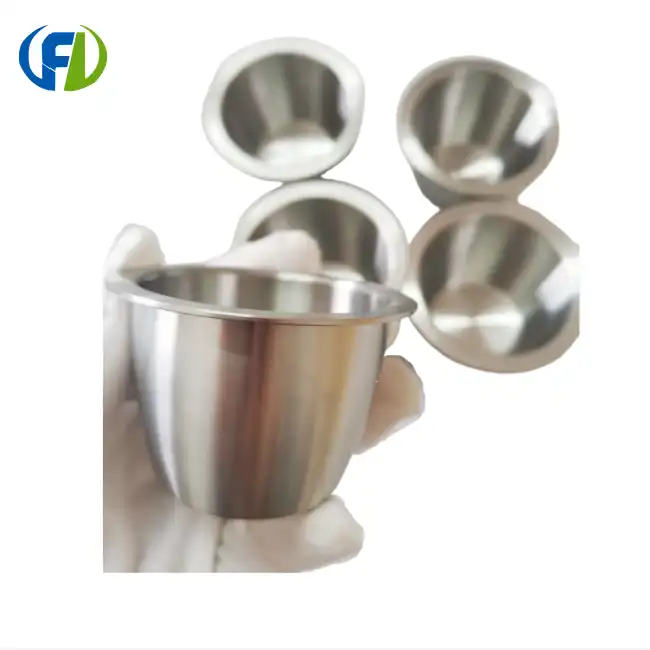
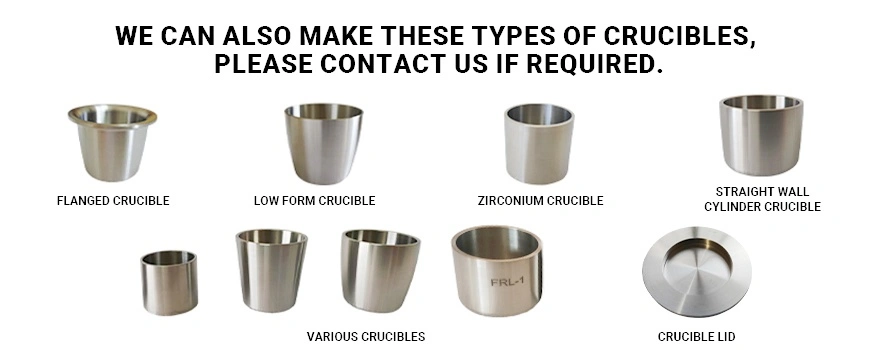
Understanding Zirconium Crucibles With Flange: Properties and Challenges
Unique Material Properties of Zirconium Alloys
Standard lab jars are not the same as zirconium crucibles with flanges because of the unique qualities of the material. These crucibles are very good at resisting corrosion from acids, alkalis, and liquid metals, which makes them necessary for high-purity uses. The zirconium alloy's chemical make-up makes it stable at temperatures up to 2200°C and keeps its shape even when temperatures change a lot. This high heat tolerance lets the crucible go through quick heating and cooling processes without losing any of its function.
The flange shape makes the crucible more useful than other versions. Better handling abilities lower the risk of dropping it by mistake during moving tasks, and better sealing abilities lower the risk of pollution in controlled atmosphere applications. The flange structure also makes it easier to securely put in certain furnace systems, which keeps the part in the same place during heat processing.
Common Operational Challenges
Even though they are built to last, a 50 Ml Zirconium Crucible With Flange has some unique problems that need to be addressed. Thermal shock is still the biggest problem, especially when temperatures change quickly. During heating processes, the flange area is under a lot of stress, which can cause micro-cracks if the right heating procedures are not used. If you don't handle the joint properly, mechanical stress can weaken it and cause it to fail early.
Chemical compatibility is another important factor in how long a crucible lasts. Unfortunately, zirconium is very resistant to most chemicals. However, hydrofluoric acid or products with fluoride can break down the material. Knowing these limits helps workers avoid situations that could shorten the life of the furnace.
Best Practices for Cleaning and Maintaining Zirconium Crucibles With Flange
Systematic Cleaning Protocols
Setting up cleaning routines that are specific to zirconium's surface is the first step in doing proper care. To keep the surface's structure, the cleaning process needs to use solvents that work well with it and cleaning tools that don't scratch it. Aqua regia treatments clear metallic residues well without harming the zirconium matrix, and staying away from cleaners that contain fluoride keeps the surface from etching.
Controlling the temperature while cleaning stops heat stress from building up. Cleaning methods that stay at room temperature lower the risk of thermal shock, and light heating can help get rid of tough residues more effectively. Pay extra attention to the flange area, because the buildup of dust in cracks can make sealing less effective.
Regular Inspection and Maintenance Schedules
Setting up regular check plans helps find problems before they get worse and affect the performance of the crucible. When looking at something visually, you should try to find surface darkening, micro-cracks, or flange warping. Measurements of the crucible's dimensions show that heat cycling hasn't changed its shape too much.
Keeping records of repair tasks creates useful performance data that can be used to make replacement plans work better. Keeping track of hot cycles, chemical exposures, and cleaning methods helps make accurate predictions about service life. This information is very helpful for making purchases and keeping track of daily costs.
Proper Handling Techniques
Using the right handling methods to lower mechanical stress greatly increases the service life of crucibles. The flange shape makes it easier to hold on to, but users should not put too much force on these spots. Supporting the crucible body instead of just the lip stops stress from building up during moves.
How you store your crucible can also affect how long it lasts. Controlled humidity conditions stop rusting caused by condensation, and padded storage systems keep things from breaking. When you store things in the right way, you keep stress from building up, which could weaken the structure over time.
Comparing Zirconium Crucibles With Flange to Other Crucible Types: Maintenance and Performance Considerations
Performance Advantages Over Alternative Materials
Compared to clay, quartz, and graphite options, the 50 Ml Zirconium Crucible With Flange is much easier to keep clean. Their high chemical inertness lowers the risk of pollution and eliminates the need to change them often because of chemical attack. Chemical stability means that parts don't need to be serviced as often, and there is less downtime for operations.
Another important difference is how well the product performs during thermal cycles. Zirconium metals are better at handling changes in temperature than clay crucibles, which can break under extreme temperatures. Zirconium crucibles are especially useful in situations where they need to be heated and cooled a lot because they don't break easily when they get hot. This lowers the care costs that come with replacing them.
Zirconium's mechanical qualities also make it easier to keep up with upkeep. If a material has a higher breaking hardness than ceramics, it means it can handle damage better. Zirconium is a metal, so it can have its surface reconditioned in a way that makes it last longer than brittle clay options.
Cost-Benefit Analysis for Different Applications
Total cost of ownership analysis shows that 50 Ml Zirconium Crucible With Flange is more cost-effective than other options, even though they cost more to buy at first. The higher price is more than made up for by less frequent replacement and less upkeep, especially in high-volume businesses. Because reactive materials can be processed without breaking down in the furnace, the contamination risks that come with options that aren't as chemically resistant are eliminated.
Zirconium crucibles are a good investment because they save money and make operations more efficient. Process times are cut down by faster heating and cooling steps, and performance that stays the same means that tuning doesn't have to be done as often. These practical gains add up over time, which saves a lot of money in production settings.
Procurement Considerations for Zirconium Crucibles With Flange: Choosing Quality and Reliable Suppliers
Evaluating Supplier Credentials and Certifications
To get high-quality zirconium crucibles, you need to carefully evaluate suppliers based on their technical skills and quality processes. ISO approval shows that you are dedicated to consistent quality management, and ASTM compliance makes sure that your goods meet the standards set by the industry. Suppliers should give full material certificates that show the alloy's makeup, grain structure, and mechanical qualities.
An evaluation of a supplier's manufacturing skills helps make sure that they can meet the needs of a particular application. A supplier's ability to deliver regular goods can be seen by their use of advanced forming methods, precise machining, and quality control systems. Small-batch production and the ability to make custom changes give the product more versatility for specific uses.
Supply Chain Reliability and Support Services
Long-term relationships with suppliers rely on reliable shipping and a wide range of support services. Suppliers with well-established global transport networks can always make their products available in a number of different places. Technical support services, such as application building and fixing help, are very valuable in addition to providing products.
Incoming inspection procedures and batch tracking tools should be part of quality assurance programs. These programs make sure that the quality of the products is always the same and give the paperwork needed for controlled uses. Suppliers who are willing to take part in efforts to improve things all the time show that they want the partnership to work in the long run.
Extending Crucible Lifespan Through Advanced Maintenance Strategies and Monitoring
Predictive Maintenance Technologies
Advanced repair plans use technology to get the most out of crucibles' performance and service life. Thermal imaging devices can find changes in the way temperatures are distributed that could be signs of stress concentrations. Ultrasonic testing finds problems inside things before they break, so you can decide to replace them before they break.
Condition tracking tools give information about the performance of crucibles in real time. Keeping track of the temperature during heating rounds helps find situations at work that might speed up wear. Monitoring vibrations can find buildups of mechanical stress that could weaken a structure.
Surface Treatment and Reconditioning Methods
New methods for treating the surface of crucibles can bring back their original performance and make them last longer. Electrochemical cleaning gets rid of flaws and dirt on the surface and makes it more resistant to rust at the same time. During service, internal stresses build up. Controlled atmosphere annealing removes these stresses and restores the mechanical properties.
Care must be taken when cleaning the surface so as not to damage the structure of the crucible. Specialized tools and skilled workers make sure that the right treatment settings are used while keeping the dimensions accurate. Keeping records of retraining processes helps figure out the best time between treatments and proves that the methods work.
Training and Procedural Standardization
Training programs for employees make sure that best practices are used consistently across all shifts. Standardized methods cut down on differences in how the crucible is handled and maintained, which could affect how well it works. Updates to training on a regular basis add new technologies and lessons learned to operating processes.
Tracking performance data of a 50 Ml Zirconium Crucible With Flange helps figure out what training is needed and how to make things better. Keeping an eye on the crucible's service life across different users shows places where training could be improved or procedures could be made easier. This method, which is based on data, keeps making maintenance work better while lowering running costs.
Conclusion
Zirconium crucibles with a lip need to be maintained in a thorough way that includes the right way to handle them, the right way to clean them, and the right way to keep an eye on them. Zirconium alloys need special care that is very different from normal ceramic crucible repair because of their unique features. By understanding these needs and using the right repair methods, you can greatly increase the service life while keeping the same level of performance. Putting money into good maintenance training, good buying habits, and advanced tracking technologies pays off by lowering the cost of replacements and making operations more reliable.
FAQ
Q1: How often should I clean my 50 Ml Zirconium Crucible with Flange?
How often you clean depends on the needs of the product and the amount of contamination. Cross-contamination can be avoided by cleaning after each use in high-purity situations. For less important tasks, you might be able to go a few rounds without cleaning. Watch how things look and how well they work to figure out how often you should clean them for your unique purpose.
Q2: What factors most commonly shorten zirconium crucible lifespan?
Rapid temperature changes, called thermal shock, are the main reason why things fail before they should. Damage from poor handling and chemical attack from substances that don't mix also has a big effect on service life. These worries can be successfully addressed by following the right heating and handling methods.
Q3: How do I locate certified suppliers for bulk orders of zirconium crucibles?
Check that providers have ISO certifications, follow ASTM standards, and can make what you need. To make sure the product meets standards, ask for material certificates and quality documents. Check how reliable the delivery is and how good the professional help is to make sure the relationship works in the long run.
Q4: Can zirconium crucibles be reconditioned or refurbished?
In many cases, surface reconditioning methods can bring back performance traits. Electrochemical cleaning and controlled atmosphere heating are good ways to get rid of surface contamination and buildup of stress. It takes a professional review to find out if reconditioning is cheaper than replacing.
Q5: What storage conditions optimize crucible longevity during periods of non-use?
Controlled humidity settings prevent rust from happening when wetness is present. Using padded storage systems keeps things from breaking, and making sure things are stacked correctly keeps stress from building up. Thoroughly clean crucibles before putting them away to keep residues from breaking down over time.
Partner with Freelong for Premium 50 Ml Zirconium Crucible With Flange Solutions
With our wide selection of precisely built zirconium crucibles made for tough industrial uses, Freelong always provides the best quality. Our factory in Baoji City, China's Titanium Valley, uses modern metallurgical knowledge to make crucibles that are better than the quality standards set by other countries. As a reliable company that makes 50 Ml Zirconium Crucible With Flange, we offer unique solutions backed by strict quality control and full expert support. Get in touch with jenny@bjfreelong.com to talk about your unique needs and find out how our track record of helping businesses in the aerospace, electronics, and research fields can help yours.
References
1. Johnson, M.R. "High-Temperature Materials Performance in Laboratory Crucibles." Journal of Advanced Ceramics and Metallurgy, Vol. 45, No. 3, 2023.
2. Chen, L.W. "Zirconium Alloy Properties and Industrial Applications." International Materials Science Review, 2022.
3. Anderson, K.P. "Maintenance Strategies for Laboratory Equipment Longevity." Industrial Equipment Management Quarterly, Vol. 28, No. 2, 2023.
4. Rodriguez, S.A. "Comparative Analysis of Crucible Materials in High-Temperature Applications." Materials Engineering Today, Issue 156, 2023.
5. Thompson, D.L. "Procurement Best Practices for Specialized Laboratory Equipment." Supply Chain Management in Science, Vol. 12, No. 4, 2022.
6. Williams, J.K. "Advanced Maintenance Technologies for Precision Laboratory Instruments." Laboratory Technology Advances, Vol. 33, No. 1, 2023.

_1745741552832.webp)
_1776237709176.png)
_1745736483765.webp)
Learn about our latest products and discounts through SMS or email