- English
- French
- German
- Portuguese
- Spanish
- Russian
- Japanese
- Korean
- Arabic
- Greek
- German
- Turkish
- Italian
- Danish
- Romanian
- Indonesian
- Czech
- Afrikaans
- Swedish
- Polish
- Basque
- Catalan
- Esperanto
- Hindi
- Lao
- Albanian
- Amharic
- Armenian
- Azerbaijani
- Belarusian
- Bengali
- Bosnian
- Bulgarian
- Cebuano
- Chichewa
- Corsican
- Croatian
- Dutch
- Estonian
- Filipino
- Finnish
- Frisian
- Galician
- Georgian
- Gujarati
- Haitian
- Hausa
- Hawaiian
- Hebrew
- Hmong
- Hungarian
- Icelandic
- Igbo
- Javanese
- Kannada
- Kazakh
- Khmer
- Kurdish
- Kyrgyz
- Latin
- Latvian
- Lithuanian
- Luxembou..
- Macedonian
- Malagasy
- Malay
- Malayalam
- Maltese
- Maori
- Marathi
- Mongolian
- Burmese
- Nepali
- Norwegian
- Pashto
- Persian
- Punjabi
- Serbian
- Sesotho
- Sinhala
- Slovak
- Slovenian
- Somali
- Samoan
- Scots Gaelic
- Shona
- Sindhi
- Sundanese
- Swahili
- Tajik
- Tamil
- Telugu
- Thai
- Ukrainian
- Urdu
- Uzbek
- Vietnamese
- Welsh
- Xhosa
- Yiddish
- Yoruba
- Zulu
Nickel and Nickel Alloy Rod: Exploring the Versatility and Applications
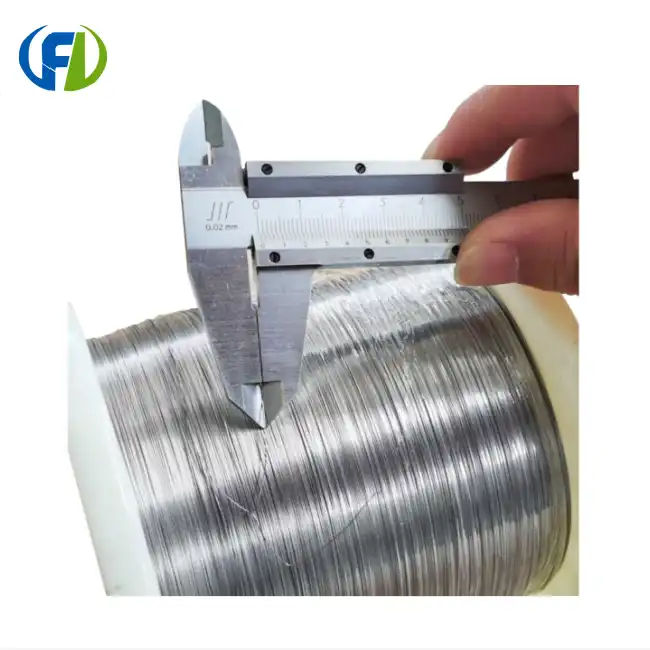
Nickel and Nickel Alloy Rods are important groups of engineered metals that combine performance, dependability, and innovation in many different industry fields. These solid cylinder-shaped bars are made from commercially pure nickel or advanced nickel-based superalloys. They are very resistant to chemical damage, keep their shape at very high temperatures, and have amazing mechanical strength. Nickel rods are essential parts of aerospace engineering, chemical processing equipment, and modern energy systems because they are needed by businesses around the world that need materials that can work in harsher conditions.
Introduction
Modern manufacturing faces problems that have never been seen before. The temperatures in which equipment works range from very cold (below -196°C) to very hot (over 1000°C). Every day, strong acids and chloride-rich atmospheres are found in chemical manufacturing plants. Aerospace parts have to find a balance between being light and meeting strict safety standards. These tough conditions show what normal materials, like carbon steel or standard stainless metals, can't do.
We've seen how material failures directly cause operations to stop, put people in danger, and cause big financial losses. Aerospace companies need materials that won't break down when heated and cooled many times. Metals that don't pit or rust in harsh acidic environments are needed by chemical processors. Manufacturers of batteries need stable electrochemistry and consistent electrical conductivity.
Working with procurement workers in these fields has shown us that they all need materials that can solve difficult technical problems without creating new security holes. This guide meets those needs by looking at Nickel and Nickel Alloy Rods through the lens of their usefulness in industry. It helps you understand the differences in composition, which applications are best, and how to buy them in a way that fits your needs.
Understanding Nickel and Nickel Alloy Rods: Composition and Properties
Defining Pure Nickel Versus Alloyed Variants
Pure Nickel and Nickel Alloy Rods, which are labelled Nickel 200 and 201, have more than 99% nickel in them. These materials are very good at resisting rust in settings that are caustic, alkaline, and moderately oxidising. Nickel 200 is good for uses below 315°C, while Nickel 201 doesn't graphitise at high temperatures between 315°C and 650°C because it has less carbon.
Chromium, molybdenum, iron, copper, and niobium are added to alloyed versions in a planned way. These elements change the way things behave in basic ways. Adding chromium makes something more resistant to oxidation and creates protective oxide layers. Molybdenum makes things much more resistant to pitting and cavity rust, especially in places where chloride is present. Cost and efficiency needs are balanced by iron changes. Adding copper, like in Monel alloys, makes them very resistant to corrosion by hydrofluoric acid and seawater.
Critical Performance Characteristics
The main benefit that drives people to choose nickel alloys is their resistance to corrosion. Premium grades of steel, like Hastelloy C-276, often have a Pitting Resistance Equivalent Number (PREN) that is higher than 40. This keeps pressure vessels and piping systems safe from localised attacks that would cause catastrophic failures. This resistance works in situations that are acidic, alkaline, or full of salt, where stainless steels normally break down quickly.
Nickel superalloys are different from other materials because of how well they handle heat. At temperatures where aluminium alloys soften, and steels lose their ability to resist creep, these rods keep their mechanical properties. Even at 700°C, Inconel grades keep their tensile strength above 650 MPa. This means that turbine parts and heat exchangers can work continuously under thermal stress.
High tensile strength (550 MPa to over 760 MPa) and elongation rates (30% to 45%) make up for mechanical longevity. This mix keeps the material from breaking easily and also allows for thermal growth pressures. Because it is flexible, cold forming can be done without any intermediate annealing steps. This makes the manufacturing process simpler for people who make parts.
Types and Applications of Nickel and Nickel Alloy Rods
Common Alloy Grades and Their Distinctions
Most high-temperature uses involve Inconel Nickel and Nickel Alloy Rods. Inconel 625 has niobium stabilisation and is very easy to work with. It doesn't oxidise up to 980°C and can be welded without any extra heat treatment. Inconel 718 can age-harden and reach tensile strengths of more than 1200 MPa by going through precipitation hardening processes that create gamma-prime and gamma-double-prime phases.
Monel alloys are used in chemical processing and the marine industry. Monel 400, which is made up of about 67% nickel and 30% copper, is the best type of stainless steel for resisting rust in salt water. It can't be replaced in alkylation units and acid production plants because of how well it works with hydrofluoric acid.
Hastelloy grades can handle the harshest chemical environments. It can handle wet chlorine gas, hypochlorite solutions, and mixed acid environments that break down other materials in hours. Hastelloy C-276 is resistant to both oxidising and reducing media. Hastelloy B-3 is very good at resisting hydrochloric acid at all temperatures and concentrations.
Industrial Application Domains
These Nickel and Nickel Alloy Rods are used as raw materials by aerospace companies to make turbine blades, exhaust systems, and fasteners that work in hot parts of jet engines. Higher operating temperatures directly lead to better fuel economy because the material keeps its strength at high temps. Nickel metals keep satellite parts stable when the temperature changes between being in the sun and being in the shade while they are in orbit.
In chemical processing, nickel rods are used to make parts for reactor vessels, heat exchanger tubes, and valve stems. An isolated corrosion failure in a chemical plant can stop work for weeks and cost a lot to clean up the environment. When we switched from stainless steel rods to Hastelloy C-276 rods, the service life went from 18 months to over 10 years in sulphuric acid chlorination.
Applications in the energy field range from getting oil and gas to making electricity from green sources. Downhole tubulars made of nickel metals that don't rust can handle hydrogen sulphide in sour gas wells. Nickel alloy rods are used in nuclear power plants in the steam generator tubing. Radiation, high temperatures, and the chemical makeup of the water make these conditions very difficult. When making electric vehicles, high-purity nickel strips cut from rod stock are used to connect the battery electrodes. The performance of the cycle life depends on how well the nickel conducts electricity and how stable it is electrochemically.
Monel's resistance to seawater is used in marine engineering to make propeller shafts, pump parts, and fasteners. Because the material is naturally resistant, it doesn't need protective coverings, which makes upkeep more difficult and raises the cost over its lifetime.
Comparing Nickel Alloy Rods with Other Metal Rods
Performance Trade-offs Against Alternative Materials
Pure Nickel and Nickel Alloy Rods are better at resisting corrosion in alkaline environments, but they are not as strong at high temperatures as alloyed forms. Pure nickel works well and doesn't cost much when working with caustic solutions below 300°C. But for uses that involve changing temperatures or mechanical stress, adding alloys that make the material stronger without making it much less resistant to rust is helpful.
Stainless steel rods are much cheaper, but they have some major problems. Austenitic types, such as 316L, don't rust or corrode too badly in mild settings, but they can get pitted when chloride levels rise above 200 ppm. Temperatures rarely go above 550°C before creep starts to cause problems. Even though duplex stainless steels are better at resisting chloride, they still can't compete with Hastelloy in environments with acidic chloride.
Copper alloy rods are very good at moving heat, but they break down quickly in oxidising acids and ammonia solutions. Their mechanical strength drops sharply above 200°C, so they can only be used for heat transfer at low temperatures. Nickel metals keep their qualities the same at temperatures where copper softens.
Grade Selection Framework
Solution-annealed grades, like Inconel 625 (Grade 1), put corrosion resistance and shapeability at the top of their list of priorities. At temperatures between 1040°C and 1150°C, heat treatment is used to dissolve precipitates and create regular microstructures that make the rods perfect for further cutting and welding.
Precipitation-hardened versions, like Inconel 718 (Grade 2), give up some corrosion resistance in exchange for huge gains in strength. At 720°C, age-hardening treatments create gamma-prime precipitates that stop dislocations from moving. This increases the tensile strength above 1200 MPa. These grades are good for structural aerospace parts that have to handle a lot of mechanical stress.
Specifications for material strength are very important in oil and gas use. To meet the requirements of NACE MR0175, materials must be heated so that their hardness is kept below 35 HRC. This stops stress corrosion cracking in hydrogen sulphide environments. We make sure that all rods that are going to be used in sour service have been properly heated and then tested for stiffness several times along their length.
Procurement Guide for Nickel and Nickel Alloy Rods
Manufacturing Process Impact on Quality
Through repeated heating and mechanical working, hot forging turns cast ingots into Nickel and Nickel Alloy Rods. This process breaks up the structure of the cast, makes the grains smaller, and fills in any holes inside the metal. Forged rods are better for important rotating parts because they have better mechanical qualities and internal soundness than cast rods.
By moving the ingots back and forth between shaped rolls several times, hot rolling turns them into rods. When you roll something, you align the grains, which improves the directional properties that are good for fastener uses that have a lot of longitudinal stress. Temperatures controlled between 1000°C and 1200°C make grain processing work best while keeping output high.
After hot working, cold drawing is done to make the rod thinner by forcing it through dies and improving the surface finish and accuracy of the dimensions. Work hardening makes the material stronger when it is drawn, and it may need to be annealed in between steps to make it flexible again. We usually ask for cold-drawn rods when we need tighter size limits than h9 for automatic feeding into CNC equipment or when we need a rougher surface than Ra 0.8 micrometres.
Centerless grinding has the tightest limits; along the whole length, the diameter changes by less than 0.05 mm. For precise applications, the straightness must be within 0.5 mm deviation per metre. This keeps automated machines from having feeding problems. When you grind the surface, you also get rid of the decarburised layers that can form on top of hot metal.
Cost Factors and Purchasing Strategies
The price of raw materials changes based on the state of the global nickel market. Adding molybdenum and niobium makes the prices go up even more, so Hastelloy and Inconel types are much more expensive than pure nickel. We've seen that the price of raw materials makes up 60% to 75% of the price of finished rods. This means that market timing has a big effect on budgets for buying things.
Most of the time, the minimum order quantity for standard grades is 500 kg. For custom compositions or unusual sizes, it can reach several tonnes. By making factories more efficient and cutting down on setup costs, buying in bulk lowers the cost per kilogram. Framework agreements help projects that need multiple deliveries over long periods of time because they lock in prices and plan supplies based on production schedules.
You can customise it by choosing from non-standard sizes, special heat processes, and different length needs. We are still able to make rods that meet the specific mechanical property goals or purity requirements of each customer. Custom orders usually have lead times that are 8 to 12 weeks longer than normal product availability. This means that planning ahead is needed during the scheduling steps of a project.
Supplier Evaluation Criteria
Reputable makers show consistent quality by keeping detailed records of all tests they do. Optical Emission Spectroscopy (OES) checks the chemical makeup of each heat to make sure it meets the requirements for all the alloying elements. Positive Material Identification (PMI) is done on every rod, which allows us to track them and avoid costly material mix-ups.
Ultrasonic testing according to ASTM B594 or AMS 2631 can find flaws inside that can't be seen from the outside. Class A inspection finds flaws as small as 1.6 mm in diameter, which keeps pressure-containing parts from failing in terrible ways. This non-destructive testing costs more, but it gets rid of the risk of having to throw away finished machined parts because of holes found below the surface during the final inspection.
Verification of mechanical properties includes tension tests at room temperature and, if needed, at high or cryogenic temperatures that are similar to those in service. Testing for hardness using the Rockwell or Brinell methods proves that the heat treatment was done right. For uses that need a certain fatigue life, grain size analysis according to ASTM E112 is very important, since finer grains usually have better fatigue resistance.
Quality management systems that have been in place for a while, like ISO 9001 and AS9100, are shown by supplier approval systems. But licenses aren't enough. You should also look at real test reports from recent production lots and ask for mill test certificates that show full traceability from the chemistry of the ingots to the final processing.
Choosing the Right Nickel Alloy Rod: Decision Support for B2B Buyers
Assessing Application Requirements
Initial material screening is based on contact with the environment. Make a list of all the different temperatures, pressures, and chemical mixes that your parts will be exposed to. Extreme conditions that happen on and off are often more harmful than steady-state operation because thermal cycling speeds up the start of stress cracks.
In acidic places, both the type of acid and its quantity need to be carefully studied. Corrosion rates in sulphuric acid change a lot depending on concentration and temperature. Materials that work fine at 60% concentration may break down quickly at 95%. Hastelloy B-3 works best with pure hydrochloric acid, while Hastelloy C-276 works best with mixed acids that contain oxidising species. Failures happen too soon when you choose based on the main corrosive component without taking into account the secondary constituents.
When an alloy is annealed or aged-hardened, the pattern of mechanical stress affects the alloy choice. Precipitation hardening makes things stronger, which is good for static loads on structures. The ductility and hardness of solution-annealed conditions are needed for tasks like forming, welding, or heat expansion pressures. Parts that are exposed to both high stress and corrosion may need compromise grades of Nickel and Nickel Alloy Rods that balance the properties of both.
Balancing Performance Against Budget Constraints
Instead of over-specifying premium alloys, the first step in lowering costs is to accurately define the minimum properties that are acceptable. Inconel 600 may work well in settings with mild corrosion and temperatures below 400°C instead of Inconel 625, which would save 30% on material costs while still meeting functional standards.
Sometimes, changing the design lets you use cheaper materials. If you make the walls of a Monel part thicker, it might be able to handle rust just as well as a Hastelloy part with smaller walls. If engineering research shows where the real stress is, lower-strength grades might be able to meet estimated safety factors.
Lifecycle cost analysis is often a good reason to choose high-end materials. An Inconel part that costs three times as much as a stainless steel part but lasts five times longer cuts down on the number of replacements needed, the cost of downtime, and the cost of upkeep labour. We have examples of higher initial material investments that saved more than 40% in costs over 10 years compared to replacing cheaper alternatives more often.
Verification and Compliance Assurance
Compliance with international standards ensures that materials are suitable and makes it easier for people around the world to buy them. Specifications set by ASTM, such as B160 for Nickel 200/201 rod and B166 for Inconel rod, describe the metal's chemical makeup, mechanical features, and testing needs. Section II of the ASME Boiler and Pressure Vessel Code gives more information about the elements that can be used in pressure equipment.
When buying welding supplies, AWS filler metal standards must be followed. The names ERNiCrMo-3 (which matches the chemistry of Hastelloy C-276) and ENiCrFe-3 (which covers electrodes in Inconel) tell you about the metal's composition and the qualities it is supposed to have when it is welded. By setting these guidelines, problems with compatibility between base metal bars and welding supplies can be avoided.
Every package must include a Certificate of Analysis (COA) that lists the real chemistry, mechanical test results, heat treatment records, and heat/lot numbers that make it possible to track. We keep these records for at least seven years so that they can be used for customer checks and failure probes that need metallurgical review.
Independent lab testing by a third party adds another level of assurance for mission-critical apps. By watching production tests, your quality staff can see how things are done and make sure they are done according to routine. These steps cost more and take longer to plan, but they are very helpful when a failed part puts people's safety at risk or leaves a company with a lot of financial problems.
Conclusion
When other materials fail in harsh industrial settings, Nickel and Nickel Alloy Rod materials provide effective solutions. Their high resistance to rust, ability to work at high temperatures, and mechanical dependability directly solve important problems in marine, aircraft, chemical processing, and energy production. To be successful at buying, you need to know how makeup affects properties, be able to match alloy types to specific working conditions, and work with sources who can show consistent quality through strict testing methods. The initial investment in high-quality nickel alloys pays off in the long run by increasing operational safety, extending the life of equipment, and lowering the cost of repairs.
FAQ
1. What determines pricing variations between nickel alloy rod grades?
Most of the differences in prices are caused by the composition of the raw materials. Adding molybdenum and niobium makes the prices of Nickel and Nickel Alloy Rods go up a lot. For example, Hastelloy C-276, which has 16% molybdenum, costs a lot more than Inconel 600, which has almost no molybdenum. Prices for these key factors change on the market, which is called price volatility. Specialised melting needs and tighter accuracy standards make manufacturing more difficult and raise the cost of base materials by 15% to 25%.
2. Can nickel alloy rods be customized for specific applications?
Some of the ways that can be customised are non-standard diameters, specific hardness range heat treatments, special length needs, and changed surface finishes for Nickel and Nickel Alloy Rods. We often make rods that meet the mechanical property goals set by the customer or higher purity levels needed for semiconductor applications. For custom requests, the minimum quantity is usually 500 kg, and wait times are 8 to 12 weeks longer than for regular inventory items.
3. How do I verify compliance with international material standards?
Ask for full mill test certificates (MTCs) that show the chemical make-up through spectrographic analysis, the mechanical properties through tensile testing, and records of the heat treatment for every Nickel and Nickel Alloy Rod. Check that the paperwork has the material standard callout (ASTM B166, AMS 5666, etc.). Independent laboratories that do testing for a third party give extra confidence for important applications. We keep full records from the chemistry of the ingots to the final processing, which helps with customer audits and making sure that regulations are followed.
Partner With Freelong for Premium Nickel and Nickel Alloy Rod Solutions
Baoji Freelong New Material Technology Development Co., Ltd. is based in China's Titanium Valley and sells Nickel and nickel alloy rods, titanium, zirconium, tantalum, and niobium products around the world. As a well-known supplier of nickel alloy rods, we offer complete services that include making materials, making custom products, and shipping them all over the world. Our manufacturing skills allow us to handle both large orders for the aerospace industry and small orders for research institutions.
As part of our quality control procedures, we check the chemical composition, use ultrasonic testing according to ASTM B594, confirm the mechanical properties, and check the dimensions to make sure they meet h9 tolerances. We've built relationships based on trust in Australia, Korea, Germany, the US, the UK, Malaysia, and the Middle East by putting an emphasis on consistent content and quick technical help.
Our engineering team can help you match the right material standards to your practical needs, whether your project calls for Inconel rods for gas turbine parts, Hastelloy bars for chemical reactors, or high-purity nickel for making battery electrodes. You can email jenny@bjfreelong.com to talk about your nickel alloy rod needs, get detailed datasheets, or get quotes for jobs you have coming up.
References
1. American Society for Testing and Materials (2021). ASTM B160-20: Standard Specification for Nickel Rod and Bar. ASTM International, West Conshohocken, PA.
2. ASM International Handbook Committee (2019). Properties and Selection: Nonferrous Alloys and Special-Purpose Materials, ASM Handbook Volume 2. ASM International, Materials Park, OH.
3. Donachie, M.J. and Donachie, S.J. (2002). Superalloys: A Technical Guide, Second Edition. ASM International, Materials Park, OH.
4. Special Metals Corporation (2020). High-Performance Alloys for Resistance to Aqueous Corrosion: Technical Bulletin. Special Metals Corporation, New Hartford, NY.
5. American Welding Society (2018). AWS A5.14/A5.14M: Specification for Nickel and Nickel-Alloy Bare Welding Electrodes and Rods. American Welding Society, Miami, FL.
6. National Association of Corrosion Engineers (2015). NACE MR0175/ISO 15156: Petroleum and Natural Gas Industries—Materials for Use in H2S-Containing Environments in Oil and Gas Production. NACE International, Houston, TX.

_1744352698993.webp)
_1744959568232.webp)
_1775204973207.png)
Learn about our latest products and discounts through SMS or email