- English
- French
- German
- Portuguese
- Spanish
- Russian
- Japanese
- Korean
- Arabic
- Greek
- German
- Turkish
- Italian
- Danish
- Romanian
- Indonesian
- Czech
- Afrikaans
- Swedish
- Polish
- Basque
- Catalan
- Esperanto
- Hindi
- Lao
- Albanian
- Amharic
- Armenian
- Azerbaijani
- Belarusian
- Bengali
- Bosnian
- Bulgarian
- Cebuano
- Chichewa
- Corsican
- Croatian
- Dutch
- Estonian
- Filipino
- Finnish
- Frisian
- Galician
- Georgian
- Gujarati
- Haitian
- Hausa
- Hawaiian
- Hebrew
- Hmong
- Hungarian
- Icelandic
- Igbo
- Javanese
- Kannada
- Kazakh
- Khmer
- Kurdish
- Kyrgyz
- Latin
- Latvian
- Lithuanian
- Luxembou..
- Macedonian
- Malagasy
- Malay
- Malayalam
- Maltese
- Maori
- Marathi
- Mongolian
- Burmese
- Nepali
- Norwegian
- Pashto
- Persian
- Punjabi
- Serbian
- Sesotho
- Sinhala
- Slovak
- Slovenian
- Somali
- Samoan
- Scots Gaelic
- Shona
- Sindhi
- Sundanese
- Swahili
- Tajik
- Tamil
- Telugu
- Thai
- Ukrainian
- Urdu
- Uzbek
- Vietnamese
- Welsh
- Xhosa
- Yiddish
- Yoruba
- Zulu
TA3 Titanium Plate Properties and Industrial Applications
TA3 Titanium Plate is a fairly pure grade of titanium that falls between TA2 (which isn't as strong) and more expensive titanium alloys. It's about the same as ASTM Grade 3. This material has a limited amount of oxygen and iron, which gives it higher tensile strength while still keeping its excellent corrosion protection. Because it has balanced mechanical qualities, it can be used in chemical processing equipment, aircraft parts, or marine uses where regular stainless steels would fail in harsh conditions.
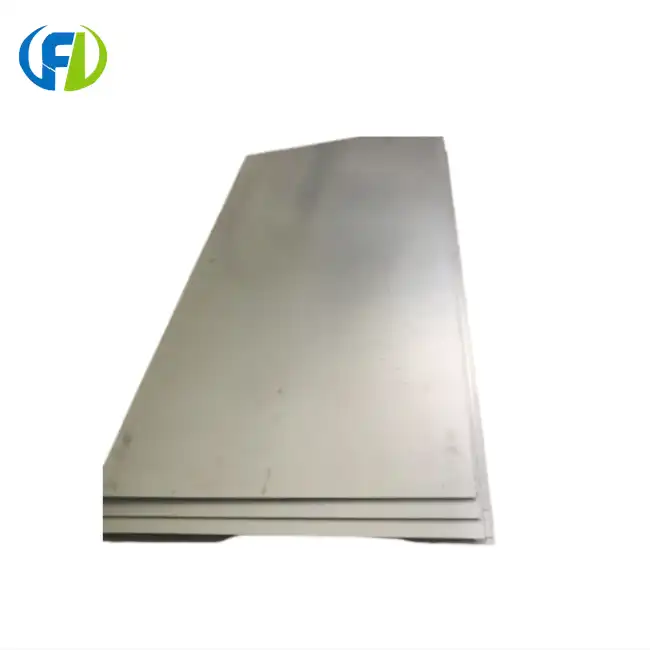
Understanding TA3 Titanium Plate: Properties and Composition
What is the TA3 Titanium Plate?
Commercially Pure (CP) titanium, which is what the TA3 Titanium Plate is, is specifically called an alpha-phase metal. It's about the same as ASTM Grade 3 in the world grading scheme. Compared to TA1 and TA2, it has a higher interstitial impurity content, mostly Oxygen and Iron. This gives it a much higher mechanical strength while still keeping its excellent rust resistance.
This information answers three important problems in the business. When TA2 (Grade 2) doesn't have enough tensile strength and Ti-6Al-4V (Grade 5) is too expensive or hard to shape, TA3 is the best compromise. It fixes problems with rusting in chemical handling equipment made of stainless steel that rusts quickly in chloride-rich or highly acidic environments. Compared to TA1 and TA2, its higher allowed stress values allow pressure tank designs to use walls that are thinner.
Chemical Composition and What Makes It Different
The chemical make-up of TA3 Titanium Plate is different from other widely pure grades because the interstitial elements are carefully managed. Oxygen levels are usually between 0.25% and 0.35%, and iron levels can reach up to 0.30%. These elements work as solid-solution strengtheners, making the material stronger without making it much less flexible.
To keep the steel from becoming weak, the levels of carbon and nitrogen are kept below 0.08% and 0.05%, respectively. When limited amounts of oxygen are added, they form atomic-level barriers that stop dislocations from moving during mechanical loading. This makes the yield strength higher. This metalworking method makes things stronger without using pricey alloying elements like aluminum or vanadium, which are found in higher-grade titanium alloys.
Mechanical Properties That Matter in Real Applications
The compressive strength of TA3 Titanium Plate is between 450 and 550 MPa, which is a lot higher than the minimum strength of TA2 plates, which is 345 MPa. The yield strength usually goes up to 380 MPa, which is high enough for pressure control uses. When the elongation value is between 18% and 20%, it's easy to shape the metal into tanks and other complicated shapes.
The hardness ranges from 140 to 180 HV, which is a good mix between resistance to wear and ease of machining. The material stays mechanically sound at temperatures up to 300°C, which means it can be used for mild thermal cycling. The structural stiffness is helped by its Young's modulus of about 103 GPa, and its density of 4.51 g/cm³ is still much lower than that of stainless steel options.
Corrosion Resistance Capabilities
A strong titanium dioxide (TiO₂) passive film forms naturally, giving the metal great rust resistance. When broken, this protected layer grows back right away, giving it the self-healing properties that are important for long-term service. It is very hard for seawater, salt solutions, and most organic acids to damage the TA3 Titanium Plate.
The material can handle oxidizing conditions with up to 70% nitric acid at high temperatures, which is very bad for stainless steels because it causes severe pitting corrosion. When there is a reduction in acid and fluoride ions, there are limits to performance that need to be carefully looked at. To keep linked systems from rusting faster, galvanic compatibility with metals that are not the same must be checked.
Standard Heat Treatment Processes
When the TA3 Titanium Plate is heated, they are mostly annealed to relieve stress rather than being strengthened. After cold working, annealing at temperatures between 650°C and 750°C for one to two hours gets rid of any remaining stresses and makes the metal flexible again. Controlled cooling rates keep grains from getting too big, which could damage their mechanical properties.
Most hot shaping processes take place between 700°C and 900°C, which is when the material is most flexible. During heat processing, vacuum or inert atmosphere protection stops oxygen from picking up, which would make the alpha case on uncovered surfaces break easily. Pickling in hydrofluoric-nitric acid solutions gets rid of any surface dirt left over after treatment, returning the metal's clean finish that is needed for service.
Industrial Applications of TA3 Titanium Plate
Aerospace and Aviation Components
Aerospace companies use TA3 Titanium Plate for parts that aren't solid and need to be moderately strong and resistant to rust. Compared to steel options, aluminum panels for engine nacelles, housings for hydraulic systems, and ducts for environmental control systems are lighter. The material's strength-to-weight ratio lets smaller pieces be used, which lowers the total weight of the plane without affecting its structural integrity.
Because the TA3 Titanium Plate is compatible with aviation fuels and doesn't crack under stress, it is used to make fuel tanks for both civilian and military planes. The material can handle the wide range of temperatures that come up in tough regions and during high-altitude flights. Dimensional stability under thermal cycles ensures that parts will fit reliably for the whole life of the airplane.
Chemical Processing Equipment
A lot of reactor tanks, heat exchangers, and pipe systems that deal with toxic media in the chemical processing industry use TA3 Titanium Plate. This stuff is used in oxidation tanks where temperatures hit 200°C and pressures are higher than 20 bar in places that make acetic acid. The passive oxide film stays steady in these harsh conditions, which keeps high-purity chemical goods from getting contaminated.
Chlor-alkali electrolysis tanks use TA3 Titanium Plate parts to protect materials from chlorine gas and sodium hydroxide solutions, which break down most materials very quickly. Because it is strong and doesn't rust, it can be built with thin walls, which makes process heat exchangers more efficient at moving heat. Compared to lined steel tanks that need to be replaced often, long service life cuts down on repair downtime and total cost of ownership.
Marine Engineering Solutions
Offshore oil and gas sites use TA3 Titanium Plate for heat exchangers that are cooled by saltwater, tube sheets for desalination equipment, and riser clad parts. Being exposed to saltwater all the time, which contains dissolved oxygen, sulfides, and living things, makes conditions very toxic. Pitting and crack rust can't hurt the TA3 Titanium Plate, so it will work reliably for decades in these harsh conditions.
This material is used to stop galvanic rust in shipboard firefighting systems, ballast water treatment equipment, and cooling lines for the propulsion system. The naval industry likes that the TA3 Titanium Plate can resist biofouling without needing protective layers that break down over time. Compared to copper-nickel metals, they are lighter, which helps ships use less fuel and carry more cargo.
Medical Device Manufacturing
Because it is biocompatible and doesn't rust, the TA3 Titanium Plate can be used in some medical device uses that don't need the better biocompatibility of higher-purity grades. This stuff is used to make parts for surgical instruments, tools for cleaning, and prosthetic external fixation devices. Because it doesn't contain any harmful alloying elements, it is safe for patients to be in long-term contact with body fluids and tissues.
When something is compatible with an autoclave, it can be sterilized with steam over and over again without breaking down or changing color. The fact that they are not magnetic is helpful for devices that are used in MRI rooms. Implantable medical devices usually need TA2 or titanium metals, but the TA3 Titanium Plate is used for outdoor medical uses where higher strength is useful without putting safety at risk.
TA3 Titanium Plate vs Other Materials: Comparative Analysis for Informed Procurement
TA3 vs TA2 Commercially Pure Titanium
There are clear trade-offs in speed when you compare the TA3 Titanium Plate and the TA2. TA2 is very flexible, with elongation values above 25%, which makes complicated cold forming processes easier. The tensile strength of TA3 Titanium Plate is about 30% higher, which means that thinner materials can be used in pressure tank designs. Since they use similar production methods, there aren't many changes in costs.
When making a procurement choice, the need for strength should be weighed against the need for forming. Applications that need to do a lot of cold working, like TA2's better shapeability. The higher allowed stress levels in the TA3 Titanium Plate are good for parts that are under pressure. Corrosion performance stays pretty much the same, so choosing is based only on mechanical property needs.
TA3 vs Stainless Steel Alternatives
Austenitic stainless steels, such as 304 and 316L, are cheaper to buy at first, but they fail horribly in chloride-rich conditions above 60°C. These steels don't work as well as TA3 Titanium Plate in seawater, chloride solutions that are acidic, and oxidizing acids. Saving about 40% of a structure's weight lowers the cost of lifting and transporting it.
Lifecycle cost analysis often chooses titanium over other materials, even though it costs more at first. Because of pitting rust, stainless steel equipment needs to be replaced often, but TA3 Titanium Plate parts can last 20 to 30 years. Getting rid of protective layers and corrosion gaps in design makes the economy even more competitive. For TA3 Titanium Plate welding, you need to use an inert gas cover, but the joints you make will not rust or corrode at all at the base metal level.
TA3 vs Ti-6Al-4V Titanium Alloy
Grade 5 Ti-6Al-4V has tensile forces of more than 900 MPa, but it costs a lot more to make and process. At 50 to 60 percent of the price of metal, the TA3 Titanium Plate is strong enough for many uses. Because commercially pure titanium is easy to shape, it makes production easier and cheaper by cutting down on the need for tools and labor.
In most industrial settings, the two materials still have about the same level of corrosion protection. Ti-6Al-4V works better at temperatures above 300°C and in situations with a lot of stress. TA3 Titanium Plate is good for chemical processing at low temperatures and coastal uses where the alloy's higher price is not justified. The fact that the TA3 Titanium Plate comes in a wider range of dimensions makes it useful for a wide range of applications.
How to Procure TA3 Titanium Plates: A Practical B2B Buying Guide
Selecting Qualified Suppliers and Manufacturers
Check manufacturing skills and safety certificates to locate reliable suppliers. Vertical integration allows factory-direct manufacturers in TA3 Titanium Plate-making regions to cut costs. Certification to ISO 9001 quality management standards reveals that the process is planned, which is needed for consistent materials.
ASTM B265 ensures worldwide mechanical quality and size requirements. Suppliers should provide mill test sheets showing chemical makeup, tension test results, and how to trace ingredients to output lots. Auditing tools, such as on-site inspections, demonstrate production and quality control. Long-term supply relationships with OEM-certified manufacturers reduce procurement risk and ensure the most vital goods are shipped first in tight markets.
Understanding Pricing Factors and Lead Times
The price of the TA3 Titanium Plate depends on raw material costs, plate difficulty, and plate quantity requested. Thickness specifications affect unit costs. Due to their difficulty rolling, plates thinner than 3 mm cost more. Material is best used in 1000mm and 1500mm lengths rather than in custom mill runs.
The minimum order quantity for stock sizes is 500–1000 kg. Special sizes may need 2000 kilogram minimum purchase. Normal lead times are 4–6 weeks; unique dimensions or stringent tolerances might take 10–12 weeks. When you purchase over 5,000 kg annually, bulk pricing makes sense. Letters of credit safeguard both sides of international commerce.
Customization Options and Technical Support
Reliable services provide precision cutting, surface polishing, and edge preparation. Laser or waterjet cutting achieves tight size tolerances without heat. Pickled finishes for chemical service and glossy finishes for food processing are offered.
Technical advice helps with material selection, design, and problem-solving. Engineering assistance should include finite element analysis for pressure vessel design and welding method qualification. Custom alloys suit application demands that conventional grades don't. Before mass manufacturing, prototype quantities help you test the design.
Verification of Quality and Certification
Material traceability links each plate to its heat and test data. A Certificate of Analysis (COA) should contain spectroscopy-measured chemical composition and mechanical test findings from representative samples. Without touching the material, third-party testing agencies assess its size, cleanliness, and characteristics.
The ASTM B265 and associated national standards establish surface defect, dimensional limit, and mechanical quality acceptance requirements. Ultrasonic testing identifies tank weaknesses that might damage it. Hydrostatic testing of completed boats confirms design calculations and material performance. Buyers rely their purchases on suppliers' failure rates and production efficiency.
Conclusion
When it comes to tough industrial uses, TA3 Titanium Plate offers the best mix of mechanical strength, resistance to rust, and low cost. By learning about the material's properties, its benefits over other materials, and how to buy it, you can make smart buying choices that improve operational performance and long-term value. As performance needs grow beyond what standard alloys can handle, more and more industries, including aerospace, chemical processing, naval engineering, and medical devices, are turning to this flexible material. Working with manufacturers with a lot of experience ensures that you can get the quality, technical know-how, and stable supply lines that are needed for important uses.
Frequently Asked Questions
1. What thickness ranges are available for TA3 titanium plates?
Typical production sizes range from 0.5 mm to 60 mm, and widths can be as long as 6000 mm and as wide as 2500 mm. Thinner sizes (less than 3 mm) of TA3 Titanium Plate need special cold rolling tools and cost more because they are harder to work with. Plates that are thicker than 25 mm might need to be tested with ultrasonic waves to make sure they are sound inside. You can get custom thickness specs, and the minimum order quantity is usually 1000 kg. Tolerance standards are based on ASTM B265, and for plates less than 5 mm thick, differences in thickness can be up to ±10%. Tighter tolerances can be reached by precision grinding.
2. Can TA3 titanium plates be welded to other materials?
TA3 Titanium Plate is easily joined to other types of commercially pure titanium and a lot of titanium alloys using TIG or plasma arc welding with an inert gas screen. When welding to different metals, like stainless steel, you need to use transition joints or explosive bonding to deal with differences in temperature expansion and keep the intermetallic from becoming rigid. Full-strength joints are made possible by using the right welding settings, strict cleaning processes, and the right joint design. Post-weld stress reduction annealing at 650°C makes thick parts more flexible and stable in their shape.
3. How does surface finish affect corrosion performance?
Pickled and passivated surfaces are the best at resisting rust because they get rid of contamination and build up a uniform oxide layer on the TA3 Titanium Plate. Finishes that are mechanical, like grinding or sandblasting, can leave behind foreign bits that can start rusting in certain places. In food processing and pharmaceutical uses, polished surfaces make it harder for germs to stick to them. The inactive film reforms itself on broken surfaces, protecting them no matter what the finish is like. When you clean regularly, you get rid of deposits that could lead to crevice rust in areas that stay still.
Partner with Freelong for Premium TA3 Titanium Plate Supply
Strategically situated in China's Titanium Valley, Baoji Freelong New Material Technology Development Co., Ltd. makes and sells high-purity titanium goods, such as precision-grade TA3 Titanium Plate. Our manufacturing services cover the whole production chain, from sponge processing to final testing. This makes sure that the material properties are always the same and meet the strict requirements of aircraft and chemical processing.
A buying manager in North America, Europe, or the Asia-Pacific area can trust us to make TA3 Titanium Plate. Tough quality control procedures that are in line with ASTM B265 standards make sure that every package meets all of your needs. Our technical team can help you choose the right materials, figure out the best ways to make them, and improve their performance for your unique needs. We offer custom cutting services, fast shipping choices, and low prices to meet the needs of both prototype development and large-scale production.
Our main goal will always be to build long-term relationships through responsive contact and reliable delivery. Email our export team at jenny@bjfreelong.com to talk about your needs for TA3 Titanium Plate, get full technical specs, or set up a video tour of our plant.
References
1. American Society for Testing and Materials. (2021). Standard Specification for Titanium and Titanium Alloy Strip, Sheet, and Plate. ASTM B265-20a.
2. Boyer, R., Welsch, G., & Collings, E.W. (2019). Materials Properties Handbook: Titanium Alloys. ASM International.
3. Schutz, R.W. & Thomas, D.E. (2018). Corrosion of Titanium and Titanium Alloys in Industrial Applications. In Uhlig's Corrosion Handbook, Third Edition. John Wiley & Sons.
4. Donachie, M.J. (2020). Titanium: A Technical Guide, Third Edition. ASM International.
5. Peters, M., Kumpfert, J., Ward, C.H., & Leyens, C. (2017). Titanium and Titanium Alloys: Fundamentals and Applications. Wiley-VCH Verlag.
6. Lutjering, G. & Williams, J.C. (2019). Engineering Materials and Processes: Titanium, Second Edition. Springer-Verlag Berlin Heidelberg.

_1745892067903.webp)
_1745821704137.webp)
_1745894245803.webp)
_1745487930453.webp)
Learn about our latest products and discounts through SMS or email