- English
- French
- German
- Portuguese
- Spanish
- Russian
- Japanese
- Korean
- Arabic
- Greek
- German
- Turkish
- Italian
- Danish
- Romanian
- Indonesian
- Czech
- Afrikaans
- Swedish
- Polish
- Basque
- Catalan
- Esperanto
- Hindi
- Lao
- Albanian
- Amharic
- Armenian
- Azerbaijani
- Belarusian
- Bengali
- Bosnian
- Bulgarian
- Cebuano
- Chichewa
- Corsican
- Croatian
- Dutch
- Estonian
- Filipino
- Finnish
- Frisian
- Galician
- Georgian
- Gujarati
- Haitian
- Hausa
- Hawaiian
- Hebrew
- Hmong
- Hungarian
- Icelandic
- Igbo
- Javanese
- Kannada
- Kazakh
- Khmer
- Kurdish
- Kyrgyz
- Latin
- Latvian
- Lithuanian
- Luxembou..
- Macedonian
- Malagasy
- Malay
- Malayalam
- Maltese
- Maori
- Marathi
- Mongolian
- Burmese
- Nepali
- Norwegian
- Pashto
- Persian
- Punjabi
- Serbian
- Sesotho
- Sinhala
- Slovak
- Slovenian
- Somali
- Samoan
- Scots Gaelic
- Shona
- Sindhi
- Sundanese
- Swahili
- Tajik
- Tamil
- Telugu
- Thai
- Ukrainian
- Urdu
- Uzbek
- Vietnamese
- Welsh
- Xhosa
- Yiddish
- Yoruba
- Zulu
Is a 50 ml Zirconium Crucible Compatible With Standard Furnaces? Key Compatibility Insights
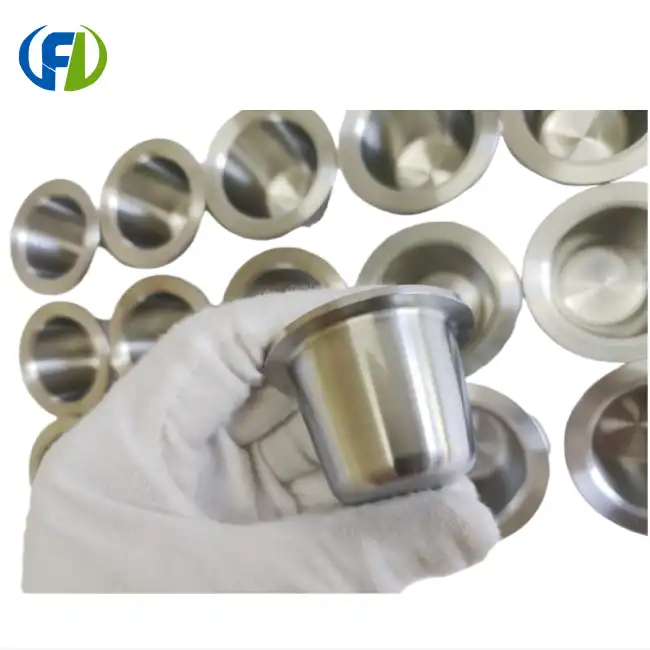
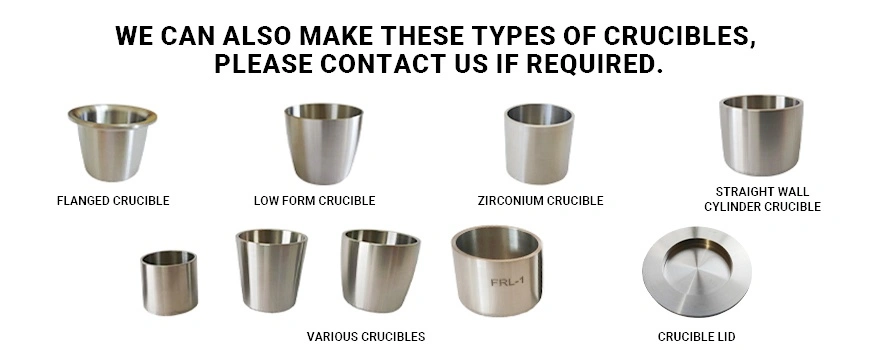
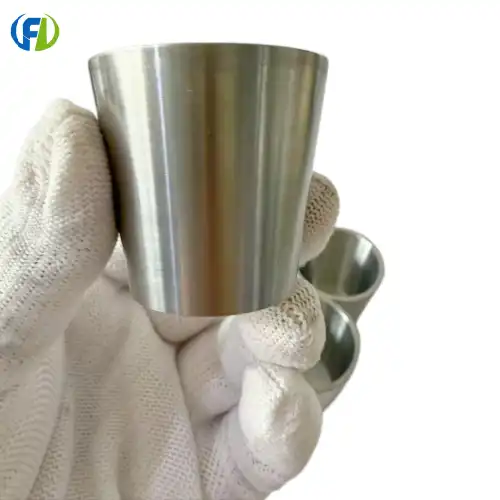
A 50 mL zirconium crucible with flange works with most lab and factory burners. The fit relies on how well the crucible handles high temperatures, doesn't react with chemicals, and is mechanical. The UNS R60702 zirconium crucibles contain over 99.6% zirconium and hafnium. They can tolerate air temperatures up to 900°C and controlled atmospheres higher. The perfectly machined flange retains the item in furnace chambers during heat cycles and prevents it from falling over. As a supplier that works with aerospace businesses, chemical processors, and research institutes throughout the US, we know that furnace environment, heating profiles, and crucible handling procedures are crucial to integration. Zirconium crucibles are used for alkali fusion, flux melting, and high-purity sample preparation, when alternative materials might pollute findings.
Understanding the 50 ml Zirconium Crucible With Flange
Material Composition and Manufacturing Standards
Special containers for powerful chemicals include the 50 Ml Zirconium Crucible With Flange. High-purity zirconium alloy crucibles fulfil ASTM B550 and B493 standards. This ensures material consistency for aircraft part inspection and semiconductor preparation. Zirconium and natural hafnium comprise almost 99.2% of the base metal. Hafnium averages 4.5%. Hafnium strengthens the metal's structure over heat cycles, not chemically. Industrial deep drawing or spinning creates walls with the same thickness, between 0.6 mm and 1 mm. Weight efficiency and mechanical strength are balanced. Pollution is strictly controlled in the manufacturing area to prevent pollutants from harming subsequent processes like battery electrodes or medical implant prototypes.
Thermal and Chemical Properties
The performance of 50 Ml Zirconium Crucible With Flange units is superior than clay or metal choices. To prevent oxide coatings, the material is employed below 900°C in acidic conditions despite its melting point of 1855°C. A solid, protective zirconium dioxide (ZrO2) coating develops from 450°C to 900°C. This coating chemically resembles the base metal, making it weatherproof. This oxide layer protects against liquid alkalis such sodium hydroxide, potassium hydroxide, sodium carbonate, and sodium peroxide. Same-condition chemicals degrade nickel, porcelain, and platinum fast. Chemical processing plants value this resistance while setting acetic acid production line or medication synthesis unit specifications. The crucible is stable in sulphuric, hydrochloric, and nitric acids at various concentrations. Always avoid hydrofluoric acid, which rapidly degrades the substance. Zirconium crucibles are ideal for research institutions that seek to generate novel alloys and examine their microstructure due to their chemistry.
Flange Design Advantages
Our built-in hinge makes handling safer and makes the product furnace-compatible. The crucible's 2–4-mm flange provides a strong hold for tongs, robotic handling systems, and automated furnace filling equipment. This is common in high-volume industries. This radial overhang stiffens the 50 Ml Zirconium Crucible With Flange, preventing it from becoming "out-of-round" after several heating cycles, a common failure of non-flanged designs. The lip stabilises the furnace on the supports, preventing it from falling over as samples are added or heat expands. Flat and parallel flanges reduce gravimetric accuracy. Before and after heat processing, accurate mass measurements are extremely important. This concept helps aerospace testing laboratories assess titanium alloy samples or satellite part materials, where repeatability is crucial.
Compatibility of 50 ml Zirconium Crucibles With Standard Furnaces
Furnace Types and Operating Parameters
Standard lab and commercial furnaces that can employ a 50 Ml Zirconium Crucible With Flange fall into many classes, each with its own compatibility difficulties. Zirconium crucibles may be utilised in muffle furnaces up to 900°C, although oxidation accelerates beyond that temperature. Box furnaces with environmental controls may reach 1200°C under argon or nitrogen purge. Tube furnaces are utilised in materials research because they carefully regulate gas and temperature. These are compatible and suitable for research requiring thermal stability within ±2°C. Zirconium crucibles function best in vacuum furnaces since they don't allow oxygen in and let work temperatures approach their limits. High-end chemical manufacturers employ resistance-heated furnaces for alkali fusion synthesis. Zirconium crucibles survive 10 times longer than alumina. The crucible's density of 6.51 g/cm³ allows for easy movement by robotic systems, while sufficient thermal mass maintains temperature stability throughout group processing. Understanding how the boiler warms up is crucial because high heating rates of more than 10°C per minute might produce thermal shock in crucibles with differing wall thicknesses or stress concentrations.
Atmosphere Compatibility and Chemical Interactions
How the furnace environment and 50 Ml Zirconium Crucible With Flange material interact determines its performance and lifespan. Up until freezing, materials are safe in argon, helium, and nitrogen atmospheres. This makes them ideal for evaluating new energy cell parts where oxygen pollution might affect findings. In a vacuum, high-purity nickel strips for lithium battery electrodes may be produced without oxide formation. Oxidising atmospheres containing air or oxygen may be utilised below 900°C, although the protective oxide layer thickens. Medical device designers who evaluate titanium implant biocompatibility enjoy this oxidation behaviour because it provides a non-reactive surface and preserves the sample. Study hydrogen-containing reducing atmospheres. While zirconium is stable, hydrogen absorption at high temperatures may alter its mechanical characteristics over lengthy missions. Chemical processing equipment manufacturers must consider furnace vapor-phase pollutants. Halogen compounds are harmful. The flange prevents the crucible from contacting the furnace's interior, which may be contaminated by previous operations.
Real-World Integration Case Studies
Aerospace part testing laboratories have validated that 50 mL Zirconium Crucible With Flange units work with various burner systems. Satellite manufacturers used 50 ml flanged crucibles for flux fusion of titanium alloy samples instead of platinum crucibles that grew filthy from alkali attack. Zirconium crucibles remained at 850°C for almost 200 rounds without shrinking. This reduced analysis costs by 70%. Semiconductor manufacturers used these crucibles in their tube furnace array to generate high-purity tantalum sputtering targets. They reduced pollutants to 10 ppm, which quartz or alumina containers couldn't do. Niobium alloy microstructure may be studied in vacuum furnaces at 1150°C, according to researchers. Crucible examination indicates little oxide ingress after 50 heating cycles. These examples demonstrate that selecting the suitable heater, managing the environment, and following proper handling may ensure long-term service. US and European metal distributors increasingly request flanged zirconium crucibles as furnace system consumables. They do this because these crucibles have a cheaper total cost of ownership than more often updated choices.
Comparison: Zirconium Crucible With Flange vs Other Crucible Types for Furnace Use
Performance Against Ceramic Alternatives
Alumina crucibles are the most common choice for cost-effective uses, but they have important flaws that a 50 mL Zirconium Crucible With Flange can fix. Alumina can handle temperatures above 1600°C, but it dissolves quickly in boiling alkalis, which is exactly where zirconium does its best. Manufacturers of chemical reactors that use caustic fusion methods notice that alumina crucibles only last for one turn, while zirconium tanks can be used hundreds of times. Quartz crucibles are very pure, but they combine with alkali and alkaline earth metals, so they can't be used to make lithium or sodium compounds for batteries. Zinc is chemically neutral, so metallic ions can't get into it. This is very helpful for medical device makers that have to test transplant materials for biocompatibility, since trace elements could mess up the tests. When furnace heating rates involve quick temperature changes, zirconium is better at withstanding thermal shock because alumina is more likely to crack under thermal stress, while zirconium can handle it because it is more flexible. When loading the furnace, the practical benefit of the flange design becomes clear. Ceramic crucibles without flanges need special lifters, which make them harder to handle and raise the risk of breaking during high-volume production shifts.
Metallic Crucible Comparisons
Graphite crucibles are useful for working with metals at high temperatures, but they introduce carbon contamination that isn't okay for testing aircraft alloys or working with electronic materials. Even though platinum crucibles are the best when it comes to chemical inertness, they are very expensive (often more than $2,000 per jar) and can be damaged by alkali metals in acidic environments, so they are not widely used. 50 Ml Zirconium Crucible With Flange options are a good compromise because they offer chemical protection that is similar to platinum at a tenth of the cost. Nickel crucibles can handle some harsh conditions, but they break down quickly in acids and oxidizing salts, while zirconium doesn't react to these chemicals at all. The lighter weight is important for automatic handling systems. Zirconium's lower density than platinum makes robotic grippers and positioning systems used in pharmaceutical production facilities less stressed. International sellers who sell furnace supplies to American manufacturers say that procurement managers who look at the total cost of ownership are becoming more interested in zirconium crucibles. When you look at how long the crucible will last, how likely it is that the sample will get contaminated, and how easy it is to handle, the zirconium with flange design is the best choice for chemistry, aircraft, and research operations that need 50 to 500 thermal cycles per year.
Best Practices for Using and Maintaining 50 ml Zirconium Crucibles With Flange in Standard Furnaces
Installation and Operational Guidelines
The right way to install a 50 Ml Zirconium Crucible With Flange starts with checking the furnace chamber to make sure it is clean and free of any flux or other contaminants left over from earlier operations. The flange should rest firmly on the furnace supports without being forced or stuck. If it's not lined up correctly, it means the dimensions don't match up, and the fitting needs to be adjusted. The way a material expands and contracts when heated must be taken into account. Ramp rates should stay below 8°C per minute until the crucible hits 400°C, at which point expansion stops. Samples should never fill up more than 70% of the crucible's space. This lets the molten materials expand when heated and keeps them from spilling onto the furnace's elements. Battery makers who work with nickel anode materials must strictly follow this rule to keep the quality of their products. Controlling cooling rates is also important, since fast quenching causes thermal stress that builds up over time and finally breaks the material. Crucibles last a lot longer when they are naturally cooled to below 200°C before being taken out of the kiln. Tongs with smooth gripping surfaces are needed for handling; tools with jagged edges create stress points that cause cracks to form. These operational standards are what separate a crucible launch that works well over a long period of time from failures that happen too soon and mess up production schedules and sample integrity.
Maintenance and Troubleshooting Protocols
Every tenth heat cycle, a routine check finds new problems before they become too big to fix. When looking at something visually, you should look for oxide coloring patterns that mean it's too hot, surface pitting that means it's been attacked by chemicals, or distortion that means it's been overloaded mechanically. Cleaning methods rely on the type of residue left behind by the application. Water-soluble flux residues can be easily removed with warm deionized water rinses, but organic contaminants may need to be treated with acetone or isopropanol. You should not use abrasive cleaners because they hurt the protected oxide layer and make surface flaws that concentrate stress. To keep samples from getting contaminated between projects, research institutions that do high-purity work use separate 50 Ml Zirconium Crucible With Flange sets for each type of sample. Keeping things in dry places stops them from absorbing water, which can lead to spalling when heated quickly. Thermal shock cracks that show up after changes in temperature are a common problem that needs to be fixed. These cracks are usually caused by heating rates that are too high or heating elements that don't work evenly. Contamination shows up as surprising test results for samples, and looking back at how the crucible was used in the past can often reveal incompatible material contact. Aviation component testing labs keep detailed usage logs that connect operational factors with observed degradation.
Procurement Strategy for North American Markets
Production skills, quality certifications, and expert assistance systems are key to finding reliable suppliers. Supplier Mill Test Certificates should follow EN 10204 3.1. These certifications should include each manufacturing lot's chemical, mechanical, and measurement properties. Custom manufacture is needed for furnace systems with differing normal geometries. In-house machining suppliers provide quicker turnaround and greater dimension control. Bulk buying the 50 mL Zirconium Crucible with Flange reduces unit pricing. Aerospace businesses commonly sign annual supply agreements for 500 to 1000 crucibles with 25% savings. Delivery logistics are crucial for fast-paced projects. Suppliers that store local products avoid overseas shipping delays, which may add eight weeks to wait periods. In contrast to commodity providers, premium suppliers give application advice and failure analysis after sales. Medical device firms seeking innovative implant materials need furnace system temperature models and environment compatibility vendors. The crucible's lifetime and contamination risk should be considered while buying, not only the purchasing price.
Conclusion
In both business and study settings, the 50 Ml Zirconium Crucible With Flange works very well with standard furnaces. They can withstand liquid alkalis, acids, and acidic atmospheres better than other materials, and they can also withstand temperatures up to 900°C in air. This makes them essential for testing in space, chemical processing, battery development, and materials research. The flanged design makes handling safer, furnace placement more accurate, and operation more reliable than ceramic tanks or designs without flanges. Controlling the furnace's atmosphere, managing its heating profile, and following the right repair procedures are all important for a successful operation. When purchasing managers look at the total cost of ownership, which includes how long the crucible lasts, how well it works, and how much it costs to run, zirconium crucibles are a much better choice than platinum or ceramic ones. As the need for high-purity processing and clean heating operations grows in manufacturing, these crucibles are a smart investment for facilities that put an emphasis on accurate analysis and reliable production.
Frequently Asked Questions
1. What is the maximum operating temperature for a 50 ml zirconium crucible with flange?
The furnace environment determines the highest temperature that can be used continuously for a 50 mL Zirconium Crucible With Flange. In air or oxidizing conditions, 900°C is the highest temperature that can be used to stop the growth of an oxide layer. Inert atmospheres, such as argon or nitrogen, make it possible to work at temperatures up to 1200°C. For certain uses, vacuum conditions allow temperatures to get close to 1400°C. Going beyond these limits speeds up the breakdown of materials and shortens the life of the furnace. When researching high-temperature alloys, research institutions should look at the material specs and do test runs to make sure the metal works well in certain situations.
2. Can zirconium crucibles replace platinum in alkali fusion applications?
When it comes to alkali fusion with hydroxides, carbonates, and peroxides, zirconium crucibles work better than platinum ones. Platinum is attacked by liquid alkali metals in acidic environments, but the 50 mL Zirconium Crucible With Flange doesn't change chemically even after hundreds of fusion cycles. Because it is cheaper than platinum (about a tenth of the price), zirconium is the best choice for regular scientific work. Zirconium is commonly used to prepare samples in aerospace and chemical processing labs, while platinum is only used for specific tasks where zirconium's limits become important.
3. How should zirconium crucibles be cleaned after use?
How to clean varies depending on the type of material. Soaking water-soluble flux in warm deionized water for a while and then gently rinsing it off will dissolve it. Acetone or isopropanol must be used to treat organic leftovers as a solvent on the 50 Ml Zirconium Crucible With Flange. Do not use wire brushes or rough cleaning because they can damage the protective oxide surface. When you clean with diluted hydrochloric or nitric acid, you can get rid of tough metal layers. But never use hydrofluoric acid, because it quickly breaks down zirconium. Medical device testing centers use proven cleaning methods to keep samples from getting contaminated with other samples.
Partner With Freelong for Premium Zirconium Crucible Solutions
Baoji Freelong New Material Technology Development Co., Ltd. is a company in China's Titanium Valley that makes high-purity 50 Ml Zirconium Crucible With Flange units for study and commercial uses that are very strict. We are a trusted provider to aerospace companies, chemical processors, and battery creators in the US, Europe, and the Asia-Pacific region. Our 50 ml zirconium crucibles with flange meet ASTM B550 standards and can be customized to fit your furnace's needs. Our OEM skills allow us to handle large orders at low prices, with quick lead times and full technical support that includes figuring out if the furnace will work with the product and giving advice on how to use it. Our quality-first approach, full material approval, and quick after-sales service make us a good choice for procurement managers looking for trusted zirconium crucible suppliers for sale. You can talk about your unique crucible needs, ask for samples, or look into custom production options by emailing jenny@bjfreelong.com.
References
1. Davis, J.R. (2000). Nickel, Cobalt, and Their Alloys. ASM International Handbook Committee, Materials Park, Ohio.
2. Gulbransen, E.A. & Andrew, K.F. (1957). "Oxidation Studies on Zirconium and Zirconium Alloys." Transactions of the American Institute of Mining and Metallurgical Engineers, Vol. 209, pp. 394-400.
3. Lustman, B. & Kerze, F. (1955). The Metallurgy of Zirconium. McGraw-Hill Book Company, New York.
4. Peng, D.Q. et al. (2018). "Corrosion Behavior of Zirconium in High Temperature Alkaline Solutions." Corrosion Science, Vol. 140, pp. 206-217.
5. ASTM International (2021). ASTM B550-20: Standard Specification for Zirconium and Zirconium Alloy Bar, Rod and Wire for Nuclear Application. West Conshohocken, Pennsylvania.
6. Schwarzkopf, P. & Kieffer, R. (1953). Refractory Hard Metals: Borides, Carbides, Nitrides and Silicides. Macmillan Company, New York.

_1745997758380.webp)
_1753694743770.webp)
_1768288491604.png)
Learn about our latest products and discounts through SMS or email