- English
- French
- German
- Portuguese
- Spanish
- Russian
- Japanese
- Korean
- Arabic
- Greek
- German
- Turkish
- Italian
- Danish
- Romanian
- Indonesian
- Czech
- Afrikaans
- Swedish
- Polish
- Basque
- Catalan
- Esperanto
- Hindi
- Lao
- Albanian
- Amharic
- Armenian
- Azerbaijani
- Belarusian
- Bengali
- Bosnian
- Bulgarian
- Cebuano
- Chichewa
- Corsican
- Croatian
- Dutch
- Estonian
- Filipino
- Finnish
- Frisian
- Galician
- Georgian
- Gujarati
- Haitian
- Hausa
- Hawaiian
- Hebrew
- Hmong
- Hungarian
- Icelandic
- Igbo
- Javanese
- Kannada
- Kazakh
- Khmer
- Kurdish
- Kyrgyz
- Latin
- Latvian
- Lithuanian
- Luxembou..
- Macedonian
- Malagasy
- Malay
- Malayalam
- Maltese
- Maori
- Marathi
- Mongolian
- Burmese
- Nepali
- Norwegian
- Pashto
- Persian
- Punjabi
- Serbian
- Sesotho
- Sinhala
- Slovak
- Slovenian
- Somali
- Samoan
- Scots Gaelic
- Shona
- Sindhi
- Sundanese
- Swahili
- Tajik
- Tamil
- Telugu
- Thai
- Ukrainian
- Urdu
- Uzbek
- Vietnamese
- Welsh
- Xhosa
- Yiddish
- Yoruba
- Zulu
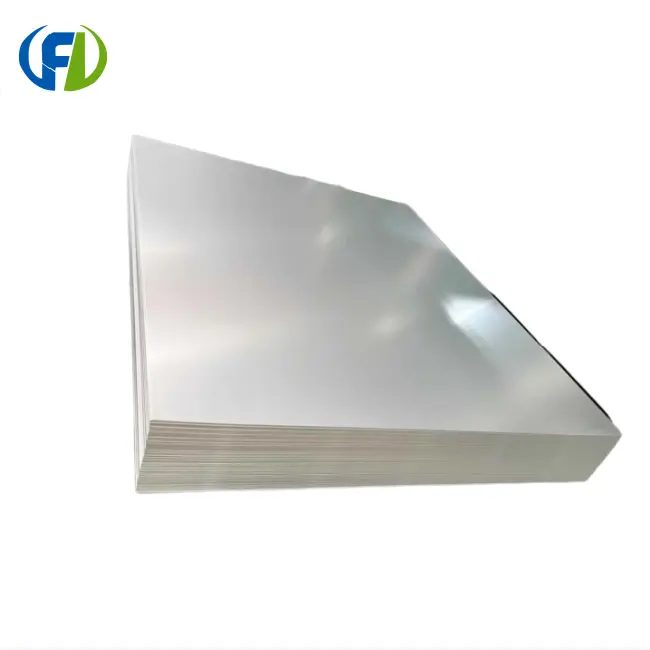
TC4 Titanium Plate vs GR5 Titanium Plate: Are They the Same
In a word, yes. TC4 Titanium Plate and GR5 Titanium Plate are basically the same thing. They have the same chemical makeup and mechanical qualities. TC4 is the Chinese name for it, and GR5 is the name used by the American ASTM standard. Both have about 6% aluminum and 4% vanadium. Because they are so strong for their weight and don't rust, they are the most commonly used titanium alloys in aircraft, medicine, and high-performance industry settings.
Understanding the Nomenclature: Regional Standards and Global Recognition
TC4 and GR5 titanium plates are hard to tell apart because they are governed by different international standards. This metal is called TC4 in China's GB/T 3621 standard but Grade 5 by the American Society for Testing and Materials (ASTM). According to European rules, it may be called Ti-6Al-4V, which gives the exact chemical makeup.
Both names are used by factories all over the world, but purchasing offices often have trouble getting supplies from different parts of the world. It still has the same chemical makeup: 6% aluminum, 4% vanadium, and the rest is titanium. This makes sure that the basic qualities of the material don't change whether you choose TC4 or GR5.
Both designations have strict testing methods that are used for quality control. Tensile strength is usually between 895 and 1000 MPa, and yield strength is usually between 825 and 895 MPa. These rules are the same no matter what name system is used.
Key points for standardization:
- Chemical makeup is the same for all standards.
- The ranges of mechanical traits stay the same.
- Responses to heat treatment follow the same trends.
- The traits of welding stay the same.
- The qualities of corrosion resistance match exactly.
Understanding these similar names is important for smooth buying processes if you need materials for foreign projects that involve different legal settings.
Chemical Composition Analysis: Breaking Down the Elemental Structure
The parts that go into both TC4 and GR5 titanium plates are carefully picked out to meet exact specifications that make them work so well. There is between 5.5% and 6.75% aluminum in the TC4 titanium plate. This makes it harder and lighter. Between 3.5% and 4.5% vanadium is present in the TC4 titanium plate. This helps the material stay solid at high temperatures and makes it stronger when pulled apart.
It's very important for things to have trace parts that work well. There can't be more than 0.40% iron and 0.20% oxygen. Nitrogen stays below 0.05%, and carbon stays below 0.08%. They make sure that the material always works the same way by adding the same amount of impurities.
Testing information from aircraft clearance programs shows that TC4 and GR5 plates are very similar. A spectroscopic study shows that the peak patterns are the same, which proves that the elements are regular. X-ray fluorescence testing shows that concentration patterns are the same across different runs of production.
Details about the composition:
- Titanium: Balance (usually at least 90%)
- Aluminum: 5.5% to 6.7%
- 3.5% to 4.5% vanadium
- Iron: ≦0.40%
- Oxygen: ≦0.20%
These specs will stay the same for both labels thanks to advanced production methods. Vacuum arc remelting methods get rid of the risk of contamination while keeping exact control over the elements.
Both TC4 and GR5 plates can meet aerospace-grade standards if they come from approved makers and are used for uses that need to be very pure and have tight chemical limits.
Mechanical Properties Comparison: Strength, Durability, and Performance
When tested mechanically, TC4 and GR5 titanium plates show the same performance qualities in all important areas. When the steel is annealed, its ultimate tensile strength is always between 895 and 1000 MPa, and its yield strength is always between 825 and 895 MPa. These numbers don't change no matter what method is used to name them.
The elongation qualities show that the material is very flexible, with minimum values of 10% for plates of normal thickness. Reductions in area readings usually go over 25%, which shows better shaping abilities for complicated shapes. Young's modulus stays fixed at about 114 GPa, which means that the behavior of an elastic material can be predicted.
When tested for fatigue resistance, it performs very well under repeated loading situations. At 10^7 cycles, the high-cycle failure strength hits 510 MPa, so both names can be used for important spinning parts in aircraft uses. Low-cycle wear resistance shows that this type of steel metal is better at stopping cracks from spreading than other types.
Ranges of mechanical properties:
- 895 to 1000 MPa for tensile strength
- Strength of Yield: 825 to 895 MPa
- Size increase: ≥10%
- Take away ≥25% of the area
- 30 to 37 HRC hardness
Impact testing shows that the toughness is very good at both normal and high temperatures. Charpy V-notch values are higher than 20 J at room temperature, and the toughness stays good down to -196°C for cold uses.
The performance of TC4 and GR5 plates is the same if you need parts that need to be strong for their weight and have good resistance to wear.
Application Areas: Where Both Materials Excel
Both TC4 and GR5 titanium plates are used a lot by aerospace makers for parts of airplane structures, engines, and landing gear. Because TC4 titanium plate is so resistant to rust, it is perfect for coastal settings where salt spray is always a problem. Both names have biocompatibility features that make them useful in biomedical uses.
These materials are used in the chemical processing industry for reactor tanks, heat exchangers, and pipe systems that deal with toxic substances. The mix of strength and chemical inertness is very helpful for keeping the system's purity in tough working conditions. These materials are being used more and more in automotive racing for exhaust systems, connecting rods, and valve springs.
The military and defense industries use both materials in a lot of different ways, like making metal plates, rocket parts, and navy ships. Because they are lightweight, they are very useful for mobile tools and keep their structural integrity in harsh circumstances.
Main areas of application:
- Aerospace: airframes, engine parts, and bolts
- Medical: limbs, implants, and surgery tools
- Chemical: Tanks, pipes, and process tools
- Marine: gear, propeller shafts, and ship parts
- Performance engine parts and exhaust systems for cars
Researchers are still coming up with new uses for the unique mixtures of properties that both TC4 and GR5 plates have. With additive manufacturing, you can make things with complicated shapes that weren't possible with traditional cutting.
Both names mean the same thing when it comes to materials that are needed for tough jobs that need to be strong, resistant to rust, and biocompatible.
Manufacturing and Heat Treatment: Processing Considerations
Hot working temperatures for both TC4 and GR5 plates typically range from 900°C to 1000°C, allowing for efficient forming operations while maintaining microstructural integrity. Cold working capabilities remain limited due to work hardening characteristics, though proper annealing schedules restore ductility for subsequent processing steps.
Annealing treatments follow identical procedures regardless of designation. Standard mill annealing occurs at 700-760°C for 1-2 hours, followed by air cooling to room temperature. This treatment produces a balanced combination of strength and ductility suitable for most applications.
Solution treatment and aging (STA) processes enhance strength properties significantly. Solution treatment at 955°C for 1 hour, followed by water quenching and aging at 540°C for 4 hours, increases yield strength to approximately 1100 MPa while maintaining adequate ductility.
Welding procedures remain consistent for both materials. Gas tungsten arc welding (GTAW) provides excellent results with proper shielding gas protection. Electron beam welding offers superior penetration for thick sections while minimizing heat-affected zone width.
Heat treatment schedules:
- Mill Annealing: 700-760°C, 1-2 hours, air cool
- Stress Relief: 480-650°C, 1-4 hours, air cool
- Solution Treatment: 955°C, 1 hour, water quench
- Aging: 540°C, 4 hours, air cool
- Beta Annealing: 1020°C, 15 minutes, air cool
Surface treatments, including shot peening, chemical etching, and coating applications, follow identical procedures. These processes enhance fatigue life and corrosion resistance for specialized applications.
If you need materials requiring specific heat treatment conditions or custom processing schedules, both TC4 and GR5 plates respond identically to thermal processing operations.
Quality Standards and Certification: Ensuring Material Integrity
International quality standards govern both TC4 titanium plate and GR5 titanium plate production through comprehensive testing protocols and certification procedures. ASTM B265 specifications cover chemical composition, mechanical properties, and dimensional tolerances for GR5 plates. Chinese GB/T 3621 standards provide equivalent requirements for TC4 designations.
Certification documentation includes material test certificates (MTC) detailing chemical analysis results, mechanical test data, and heat treatment records. Third-party inspection agencies verify compliance with applicable standards through independent testing programs. Traceability systems track material from initial melting through final delivery.
Non-destructive testing procedures ensure internal soundness and surface quality. Ultrasonic inspection detects subsurface discontinuities, while liquid penetrant testing reveals surface-breaking defects. Dimensional inspection confirms thickness tolerances and flatness requirements.
Aerospace applications require additional certifications, including AS9100 quality management compliance and NADCAP-accredited processing. Medical applications demand ISO 13485 certification and biocompatibility testing according to ISO 10993 standards.
Standard certification requirements:
- Chemical composition analysis per heat
- Mechanical property testing on samples
- Microstructural examination and documentation
- Dimensional inspection and recording
- Surface quality assessment and certification
Quality management systems ensure consistent production processes across different manufacturing facilities. Statistical process control monitors critical parameters while maintaining compliance with customer specifications.
If you need materials meeting specific aerospace, medical, or industrial standards, both TC4 and GR5 plates can achieve identical certification levels when sourced from qualified suppliers.
Conclusion
TC4 and GR5 titanium plates represent identical materials distinguished only by regional naming conventions. Both designations offer exceptional strength-to-weight ratios, outstanding corrosion resistance, and reliable performance across demanding applications. Understanding these equivalencies enables procurement professionals to source materials globally while maintaining specification compliance. Whether pursuing aerospace certifications, medical device approvals, or industrial applications, both TC4 and GR5 plates deliver consistent performance characteristics. Successful material selection depends on partnering with experienced suppliers who understand international standards and maintain rigorous quality control processes throughout production and delivery.
Get Premium TC4 Titanium Plate Solutions from Freelong
Freelong stands as your trusted TC4 titanium plate supplier, delivering exceptional quality materials backed by comprehensive technical support and reliable delivery schedules. Our manufacturing expertise spans over two decades, serving aerospace giants, medical device manufacturers, and chemical processing leaders worldwide. Contact jenny@bjfreelong.com today to discuss your specific requirements and discover how our premium TC4 titanium plate solutions can enhance your next project's success.
References
1. Boyer, R.R., Welsch, G., and Collings, E.W. "Materials Properties Handbook: Titanium Alloys" ASM International, Materials Park, OH, 1994.
2. Lutjering, G. and Williams, J.C. "Titanium: Engineering Materials and Processes" 2nd Edition, Springer-Verlag, Berlin, 2007.
3. Donachie, Matthew J. "Titanium: A Technical Guide" 2nd Edition, ASM International, Materials Park, OH, 2000.
4. Peters, M., Kumpfert, J., Ward, C.H., and Leyens, C. "Titanium Alloys for Aerospace Applications" Advanced Engineering Materials, Vol. 5, No. 6, 2003.
5. Rack, H.J. and Qazi, J.I. "Titanium Alloys for Biomedical Applications" Materials Science and Engineering C, Vol. 26, No. 8, 2006.
6. Banerjee, D. and Williams, J.C. "Perspectives on Titanium Science and Technology" Acta Materialia, Vol. 61, No. 3, 2013.

_1770175208853.png)
_1744785959296.webp)
_1745734744988.webp)
_1745889999950.webp)
Learn about our latest products and discounts through SMS or email