- English
- French
- German
- Portuguese
- Spanish
- Russian
- Japanese
- Korean
- Arabic
- Greek
- German
- Turkish
- Italian
- Danish
- Romanian
- Indonesian
- Czech
- Afrikaans
- Swedish
- Polish
- Basque
- Catalan
- Esperanto
- Hindi
- Lao
- Albanian
- Amharic
- Armenian
- Azerbaijani
- Belarusian
- Bengali
- Bosnian
- Bulgarian
- Cebuano
- Chichewa
- Corsican
- Croatian
- Dutch
- Estonian
- Filipino
- Finnish
- Frisian
- Galician
- Georgian
- Gujarati
- Haitian
- Hausa
- Hawaiian
- Hebrew
- Hmong
- Hungarian
- Icelandic
- Igbo
- Javanese
- Kannada
- Kazakh
- Khmer
- Kurdish
- Kyrgyz
- Latin
- Latvian
- Lithuanian
- Luxembou..
- Macedonian
- Malagasy
- Malay
- Malayalam
- Maltese
- Maori
- Marathi
- Mongolian
- Burmese
- Nepali
- Norwegian
- Pashto
- Persian
- Punjabi
- Serbian
- Sesotho
- Sinhala
- Slovak
- Slovenian
- Somali
- Samoan
- Scots Gaelic
- Shona
- Sindhi
- Sundanese
- Swahili
- Tajik
- Tamil
- Telugu
- Thai
- Ukrainian
- Urdu
- Uzbek
- Vietnamese
- Welsh
- Xhosa
- Yiddish
- Yoruba
- Zulu
Top Manufacturers of 50ml Zirconium Crucibles With Flange: Quality and Reliability Guide
It is important to know about the top 50ml Zirconium Crucible With Flange makers when you need to find precise lab dishes for difficult analytical work. These special jars are made of high-purity zirconium, which is very resistant to chemicals, and have a designed flange design that makes them safer to handle and lasts longer when heated and cooled. We know how important material consistency and performance dependability are to aircraft makers, chemical engineers, and research centers. You can use this complete guide to choose crucibles that will give you long-term value and excellent performance by understanding their technical features, manufacturing standards, and buying strategies.
Understanding 50ml Zirconium Crucibles With Flange
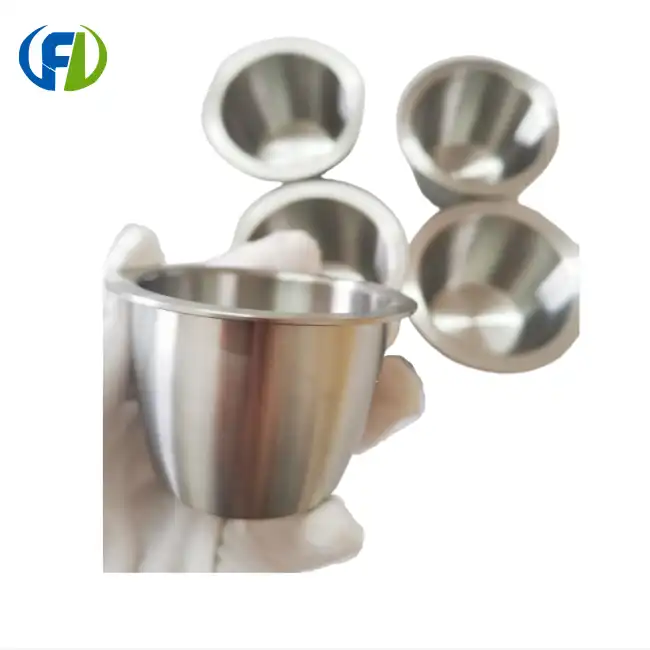
A 50ml Zirconium Crucible With Flange is a special lab jar made from commercially pure zirconium that usually meets the requirements of UNS R60702 and has a Zirconium plus Hafnium content of more than 99.2%. The flange, which is what makes it unique, sticks out from the top rim to provide structural strength and a safe contact for automatic fusion equipment or tongs for human handling. This design keeps the rim from deforming when the temperature is changed over and over again. This keeps the lid in place and reduces volatile loss during high-temperature activities.
Material Composition and Chemical Inertness
Zirconium naturally reacts with oxygen to make a solid, non-porous layer of zirconium dioxide (ZrO2). This layer acts as a barrier against aggressive alkalis like sodium peroxide, sodium carbonate, and potassium hydroxide. Instead of nickel or ceramic, which let in contaminants or break down in acidic environments, zirconium keeps the purity of the sample during fusion operations. The substance is resistant to sulfuric acid, hydrochloric acid, and nitric acid. However, hydrofluoric acid quickly breaks down zirconium and should never be used to clean or prepare samples.
Technical Parameters Defining Performance
The crucible's mass of 6.51 g/cm³ gives it a better weight-to-performance ratio than platinum ware, which keeps operators from getting tired during long lab sessions. The wall thickness is usually between 0.6mm and 1.0mm, and it is set up to survive heat shock while keeping the volumetric accuracy needed for gravimetric analysis. Precision-machined with a 2-4 mm extension, the flange width works with fusion machine clamps and keeps things from slipping during moves. Zirconium crucibles can handle temperatures up to 900°C in air for short-duration fusion cycles because their melting point is around 1855°C. However, if they are exposed to temperatures above 550°C for a long time, a protective dark oxide layer forms that makes them more resistant to chemicals.
Applications Across High-Performance Industries
In analytical chemistry, these crucibles, 50ml Zirconium Crucible With Flanges, solve problems where platinum's high cost makes other materials impractical or compromises the quality of the sample. Zirconium tanks are used by semiconductor companies to prepare sputtering target materials and high-purity metal samples without adding metal contamination. These crucibles are used in geological laboratories that study trace metals to fuse carbonate and peroxide, which gets geological samples ready for ICP-MS and XRF analysis. For advanced materials studies, research groups like having access to small-batch, high-purity vessels that can be customized to meet particular needs. These vessels help with microstructure analysis and metal development work.
Top Manufacturers Offering High-Quality 50ml Zirconium Crucibles With Flange
To find makers whose crucibles regularly meet ASTM B550 and B493 standards, you have to look at where they get their raw materials, how they make their products, and how they check the quality of their work. Leading sellers stand out because they control every step of the production process, from choosing the zirconium ingots to checking the finished dimensions.
Quality Assurance and Certification Standards
Reputable producers have quality management systems that are ISO 9001 approved and give full Certificates of Analysis (COA) that show the chemical makeup, mechanical properties, and dimensional limits of their products. These documentation packages help medical device makers and aircraft sources meet legal requirements for full material traceability. Advanced makers use spectroscopic analysis to make sure that impurity levels stay below certain limits. This makes sure that the levels of oxygen, nitrogen, and iron stay within acceptable ranges that keep the rust resistance.
Manufacturing Capabilities and Customization Options
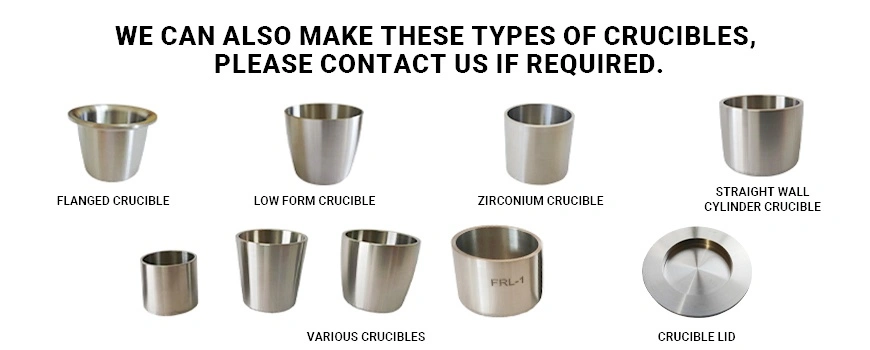
Using deep drawing methods, zirconium sheet can be made into seamless crucibles with walls that are all the same thickness. This gets rid of the weak spots that appear in welding structures. Precision machining processes make flanges with flat, parallel sides that make sure they fit correctly in automatic fusion equipment. Custom-sized manufacturers can meet the needs of specific study uses that need non-standard volumes or unique flange configurations. Surface finishing choices are also flexible in production, and some providers offer pre-oxidized crucibles with established protective layers that shorten the break-in time. Baoji Freelong New Material Technology Development Co., Ltd is a great example of how to make things because it has combined production sites in Baoji City, which is known around the world as China's Titanium Valley. We are experts at working with refractory metals like zirconium, titanium, niobium, and tantalum, and we help a wide range of businesses, from aircraft to medical products. We've had long-term relationships with clients in Australia, North America, Europe, and Southeast Asia thanks to our reliable delivery of high-quality work and quick expert help.
Distribution Networks and Global Reach
Strategic makers form relationships with distributors that shorten lead times and make the process of importing easier for buyers from other countries. Standard sizes can be quickly filled by regional warehouses in major markets, while special orders with clear lead times are handled by centralized production centers. Established exporters handle the complicated certification needs of various markets, making sure that goods arrive with the right paperwork to clear customs and follow rules. This worldwide network is especially useful for companies that trade and distribute metals and serve customers in different parts of the world with 50ml Zirconium Crucible With Flange, with different needs.
Comparing 50ml Zirconium Crucibles With Flange to Alternative Materials
The choice of material has a big effect on the correctness of the analysis, the safety of operations, and the long-term cost-effectiveness. Figuring out how zirconium performs compared to other materials helps with finding the right one for a job.
Zirconium Versus Quartz and Alumina
Quartz crucibles are clear and chemically resistant enough for many uses, but they break easily when they are heated or strained mechanically. Alumina is good at withstanding high temperatures, but it combines with some acidic fluxes and adds aluminum to samples. Zirconium gets around these problems because it is very tough mechanically and doesn't react with chemicals, so it doesn't contaminate samples during forceful fusion processes. The material can create a self-healing oxide layer that protects against damage and makes it last longer than other materials.
Advantages of Flanged Over Non-Flanged Designs
Standard straight-wall crucibles don't have any internal support at the rim, so they can change shape out of round after being heated many times. This distortion makes it harder for the lid to fit, which can lead to fluid loss and sample contamination. The flange is a mechanical stiffener that keeps the crucible spherical throughout its service life. This makes sure that the lid always seals properly and that it is easy to hold on to. Standardized flange measurements are especially helpful for automated fusion systems because they allow reliable robotic handling without having to change the position between rounds.
Cost Considerations and Lifecycle Value
Zirconium crucibles are more expensive to buy at first than quartz or alumina options, but they are still much cheaper than platinum. Durability benefits mean longer service life; with proper care, the fuse can be used hundreds of times before it needs to be replaced. This long life cuts down on the cost of each sample and keeps operations running smoothly even when the crucible fails. When looking at the total cost of ownership, zirconium's speed and longevity make it a great choice for labs that do a lot of alkali fusion work.
Procurement Guide for 50ml Zirconium Crucibles With Flange
Strategic buying means knowing how the market works, how to evaluate suppliers, and how to handle operations in a way that ensures a steady supply at a price that is competitive.
Pricing Structures and Volume Discounts
Standard 50ml Zirconium Crucible With Flange prices on the market usually vary based on the number of units ordered, with larger orders getting better per-unit prices. Suppliers often set up tiered price systems that reward larger pledges while still making it easy for research institutions that only need small amounts to get started. Long-term supply deals lock in stable prices, which protects buying budgets from changes in the cost of raw materials and ensures that priority is given during times of high demand.
Lead Times and Order Fulfillment
Standard crucible designs that are kept in stock can be shipped within days of an order being placed, which helps with just-in-time buying and pressing project needs. Custom specs that call for unique measurements or special surface treatments add time to the wait time so that tools can be made and quality checks can be done. Experienced sellers give clear estimates of wait times during quotations, which makes it easier to plan projects and keep track of supplies. Online buying systems make it easier to buy things because they let you see what's in stock at all times and automatically track your orders.
Verification and Certification Requirements
Making sure the source is real keeps you safe from fake materials that can mess up analysis results and put people at risk. Asking for test results on materials that show their chemical makeup and mechanical features proves that they meet the required grades. Quality certifications and supplier registration numbers with the right industry groups give you even more trust in the production capabilities. A lot of well-known makers keep customer websites that give users access to old COAs and technical documents that help with regulatory audits and quality system requirements.
Best Practices and Safety Tips in Using 50ml Zirconium Crucibles With Flange
To get the most out of your crucible's performance and service life, you need to follow the right handling methods and maintenance processes that are made for zirconium.
Cleaning and Maintenance Protocols
Cleaning the crucible right away after use keeps the flux dust from setting, which makes it harder to remove and could damage the surface. Most alkali leftovers can be removed without harsh scrubbing by rinsing the crucible with deionized water while it is still warm. When you boil stubborn deposits in a diluted hydrochloric acid solution (about 20% strength), the inorganic leftovers dissolve without damaging the zirconium substrate. Do not use hydrofluoric acid or rough mechanical cleaning methods that hurt the protective oxide layer and speed up the rust that follows.
Temperature Management and Thermal Cycling
Zirconium has a melting point higher than 1850°C, but its useful limits depend on 50ml Zirconium Crucible With Flange the temperature and length of burning. For short fusion cycles, furnace temps can get up to 900°C, but the crucible forms a dark gray or black oxide layer that protects it by forming ZrO2. Long-term contact above 600°C in oxidizing atmospheres leads to continuous scaling that weakens the structure over time. Gradual temperature rising and controlled cooling rates reduce thermal stress, which stops cracks from starting and spreading during subsequent cycles.
Safety Equipment and Handling Procedures
For jobs that involve high temperatures, workers need to wear the right safety gear, like gloves that can handle the heat, face shields, and protective clothing to keep them from getting burned. The lip design makes it easier to hold on securely with lab tools, which lowers the risk of dropping the crucibles and damaging them, which is also good for safety. Setting aside special tools for zirconium crucibles keeps them from getting contaminated by leftovers that build up from working with other materials. Setting up controlled work areas with surfaces that don't melt in the heat and enough air flow helps keep fusion processes safe while also keeping nearby tools from getting too hot.
Conclusion
Choosing the right 50ml Zirconium Crucible With Flange maker has a direct effect on the accuracy of the analysis, the efficiency of operations, and the optimization of the purchase budget. Zirconium is very chemically inert, and the flanged form makes it better for mechanical purposes. This makes zirconium vessels perfect for demanding fusion uses where platinum alternatives are too expensive or pose too many contamination risks. We've looked at the technical factors that determine how well a crucible works, compared the strengths and weaknesses of top makers, and suggested buying strategies that guarantee a steady supply at a reasonable cost. Your company can maintain analytical excellence in aerospace, electronics, research, and industrial settings that need unwavering material performance by following the right handling procedures and working with certified suppliers who uphold strict quality standards.
FAQ
1. What makes zirconium flanged crucibles superior to platinum for alkali fusions?
Zirconium crucibles are chemically neutral, but they are much cheaper than platinum. They can withstand sodium peroxide and carbonate fluxes that quickly weaken or destroy platinum. The flanged design has structural benefits that platinum can't match, and the rim stays strong through hundreds of temperature cycles. For labs that do regular fusion work, this combo gives them the best term value.
2. How do I verify the authenticity and quality of zirconium crucibles from new suppliers?
Ask for Certificates of Analysis that show the chemical makeup and prove that the product has at least 99.2% zirconium plus hafnium, as required by ASTM B550. Check the surface finish for evenness and the shape of the flange to make sure it will work with your tools. Established sellers get their materials tested by recognized labs and keep their ISO 9001 certification, which shows that they have a strict quality system.
3. Can hydrofluoric acid be used for cleaning zirconium crucibles?
No way! Hydrofluoric acid targets zirconium very strongly and breaks it down quickly, even at low amounts. For tough flux leftovers, clean crucibles right away with deionized water or boil them in diluted (20%) hydrochloric acid. This method of cleaning keeps the protective oxide layer that is needed for long-term protection from rust.
4. What are the lowest and highest temperatures that these crucibles can be used at?
Short-duration fusion processes can handle temperatures close to 900°C, but the crucible forms a dark oxide layer to protect it. Long-term activities above 600°C in air lead to scaling that gets worse over time. Keep an eye on the rates of heating and use slow cooling to reduce the amount of thermal stress that could cause cracks in later rounds.
Partner With Freelong for Premium Zirconium Crucible Solutions
Baoji Freelong New Material Technology Development Co., Ltd is ready to help you meet your 50ml Zirconium Crucible With Flange needs by providing you with the best production services and customer-focused support in the industry. We are a specialized seller located in China's most important refractory metal production hub. We oversee the whole production process, from choosing the raw materials to doing the final check. Our dedication to quality meets or goes beyond what the customer wants, and we back this up with certifications and other paperwork that meet your legal needs. Our technical team works together to make sure you get the best solutions for your lab, whether you need standard crucibles for regular analytical work or custom setups for specialized research. Contact jenny@bjfreelong.com right away to talk about your unique needs, get full technical specs, and get cheap quotes that show how valuable we are as a long-term manufacturer and supplier of zirconium crucibles.
References
1. American Society for Testing and Materials. (2021). ASTM B550 Standard Specification for Zirconium and Zirconium Alloy Bar and Wire. ASTM International, West Conshohocken, PA.
2. Davis, J.R. (2000). Nickel, Cobalt, and Their Alloys: Properties and Selection. ASM International Handbook Committee, Materials Park, OH.
3. Lide, D.R. (2005). CRC Handbook of Chemistry and Physics, 86th Edition. CRC Press, Boca Raton, FL.
4. Lustenberg, P.G. & Marquis, F.D.S. (2018). "Corrosion Resistance of Refractory Metals in Molten Alkali Environments," Journal of Materials Science, Vol. 53, Issue 12, pp. 8891-8906.
5. National Institute of Standards and Technology. (2019). Material Property Database for Advanced Refractory Metals. NIST Special Publication 1234, Gaithersburg, MD.
6. Zhang, W.F. & Chen, Y.L. (2020). "Comparative Analysis of Laboratory Crucible Materials for High-Temperature Fusion Applications," Analytical Chemistry Research, Vol. 24, pp. 156-171.

_1745485194426.webp)
_1770262381983.png)
_1745572207921.webp)
Learn about our latest products and discounts through SMS or email