- English
- French
- German
- Portuguese
- Spanish
- Russian
- Japanese
- Korean
- Arabic
- Greek
- German
- Turkish
- Italian
- Danish
- Romanian
- Indonesian
- Czech
- Afrikaans
- Swedish
- Polish
- Basque
- Catalan
- Esperanto
- Hindi
- Lao
- Albanian
- Amharic
- Armenian
- Azerbaijani
- Belarusian
- Bengali
- Bosnian
- Bulgarian
- Cebuano
- Chichewa
- Corsican
- Croatian
- Dutch
- Estonian
- Filipino
- Finnish
- Frisian
- Galician
- Georgian
- Gujarati
- Haitian
- Hausa
- Hawaiian
- Hebrew
- Hmong
- Hungarian
- Icelandic
- Igbo
- Javanese
- Kannada
- Kazakh
- Khmer
- Kurdish
- Kyrgyz
- Latin
- Latvian
- Lithuanian
- Luxembou..
- Macedonian
- Malagasy
- Malay
- Malayalam
- Maltese
- Maori
- Marathi
- Mongolian
- Burmese
- Nepali
- Norwegian
- Pashto
- Persian
- Punjabi
- Serbian
- Sesotho
- Sinhala
- Slovak
- Slovenian
- Somali
- Samoan
- Scots Gaelic
- Shona
- Sindhi
- Sundanese
- Swahili
- Tajik
- Tamil
- Telugu
- Thai
- Ukrainian
- Urdu
- Uzbek
- Vietnamese
- Welsh
- Xhosa
- Yiddish
- Yoruba
- Zulu
Using Straight Zirconia Crucibles for Metal Melting: Best Practices and Safety Tips
The crucible you use has a direct effect on the quality of the product and the safety of the process when melting high-performance metals like titanium, tantalum, or superalloys. A Straight Zirconia Crucible is very stable at high temperatures and doesn't react with chemicals, so it is essential for making electronics, medical devices, and spacecraft. Its vertical walls make the best use of space and reduce the risk of pollution during high-temperature processes. Knowing how to handle these crucibles properly and how to keep them in good shape will protect your investment in precision metallurgy tools and make sure they work as expected.
Understanding Straight Zirconia Crucibles: Composition, Benefits, and Applications
Zirconia-based tanks are a big step forward from regular refractory materials when it comes to melting metals. Their unique qualities as a material solve important problems that producers with ultra-high purity standards face.
Material Composition and Structural Advantages
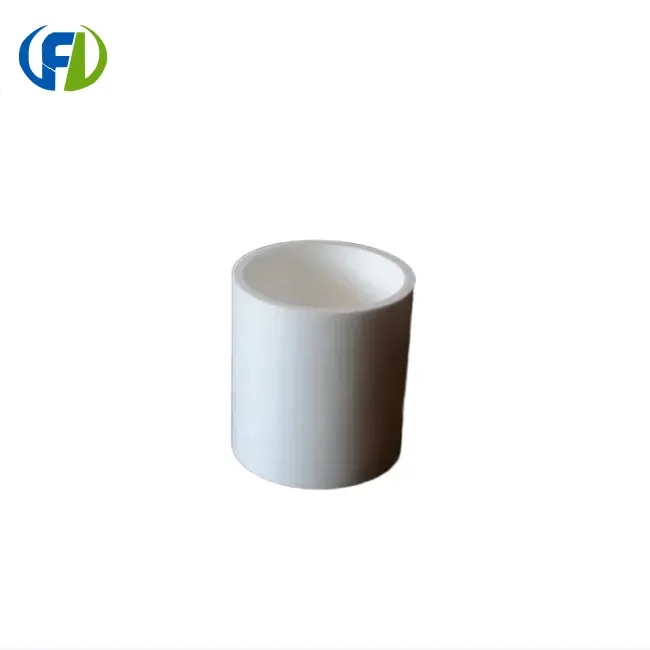
Straight Zirconia Crucible jars are made from very pure zirconium dioxide (ZrO₂) that is stabilised with yttria (Y₂O₃), magnesia (MgO), or calcia (CaO). This stabilisation process stops phase changes during the heat cycle, which would lead to terrible cracking if it happened. The straight-wall shape is basically different from curved designs because it improves electromagnetic coupling in induction heating systems and makes melting easier. Because they have a melting point above 2700°C and a mass of around 5.6–6.0 g/cm³, these crucibles stay strong in harsh situations where alumina or silica vessels would break. The material's low thermal expansion rate (about 10 × 10⁻⁶/°C) makes it very resistant to thermal shock, so it can handle sudden changes in temperature without breaking down.
Core Performance Benefits in Industrial Settings
Zirconia is chemically neutral, so it acts as a shield against unstable liquid metals like titanium, zirconium, and platinum group metals. This surface doesn't respond with anything, so it keeps material specs from being broken in aircraft parts or medical implants. Zirconia crucibles keep high-purity nickel alloys for battery cells from getting contaminated with iron or chromium, which can happen with metal vessels. The material's high creep resistance keeps its shape even when it's under constant loads at high temperatures, which is very important for keeping exact melt amounts for batch consistency. Zirconia crucibles don't pick up carbon in titanium melts as graphite crucibles do. This directly addresses a big quality control issue for flight makers. These performance traits lead to lower scrap rates, better material certification compliance, and longer crucible service life.
Industrial Application Scenarios
Zirconia crucibles are used in vacuum arc remelting (VAR) and electron beam melting (EBM) processes in aerospace foundries, where keeping the process clean is very important. When heating tantalum or niobium metals for satellite parts, the straight-wall shape makes it easier for the heat to spread evenly. These tanks are used by companies that make semiconductor equipment to prepare ultra-high-purity sputtering targets. Even small amounts of impurities can affect the quality of thin-film deposition. Small amounts of money are useful for research labs that are studying how alloys work and don't want to lower the standards for material quality. When medical device makers melt safe titanium-niobium metals, they use zirconia crucibles to make sure they follow FDA material rules. The electrochemical stability that stops unexpected reactions during heat processing steps is appreciated by battery makers who work with nickel strips and anode materials.
Best Practices for Using Straight Zirconia Crucibles in Metal Melting
By following the right steps, you can make your Straight Zirconia Crucible last a lot longer while still meeting the quality standards needed to make high-value metals. Systematic rules protect both the investment in tools and the quality of the output.
Pre-Operation Inspection and Conditioning
Look at the crucibles visually before each melting cycle for surface cracks, chips, or discolouration that could mean they've been under a lot of heat stress before. Small flaws on the surface might not affect how well it works, but cracks that are spreading need to be replaced right away to keep them from breaking down completely while it's being used. To condition new crucibles, they are slowly heated to 800°C, held there for two hours, and then left to cool to room temperature on their own. This process gets rid of any remaining industrial stresses and keeps the crystal structure stable. If you let crucibles get wet before you use them, the water that they receive can cause steam pressure to build up when they are heated quickly. Keep crucibles in climate-controlled spaces with less than 50% relative humidity to avoid hydration effects that weaken the zirconia matrix.
Temperature Control and Heating Protocols
Controlled heating rates keep thermal shock damage from happening, which would weaken the crucible. Heating at 5–10°C per minute until it reaches 1000°C is what we suggest. After that, raise the heat to 15–20°C per minute until the melt temperature is reached. When heating titanium metals at 1700°C, this slow method lets the wall width of the crucible expand at the same rate all the way through. Do not go above the highest temperatures recommended by the maker, which are usually between 2200°C and 2400°C based on the stabiliser's make-up. Rapid cooling is more dangerous than heating; let the crucibles cool down naturally in the boiler until they hit 400°C before exposing them to air outside the boiler. Using adjustable temperature controls with recorded thermal profiles ensures that each batch is the same and provides quality records that can be used to track down problems.
Loading Techniques and Charge Management
The right amount of metal loading keeps machines from breaking and makes sure that melting goes smoothly. Do not drop metal charges into the crucible; instead, place them gently there. Dropping them can cause impact cracks in the clay structure. When heating old metal, stay away from pieces with sharp edges that put a lot of stress on the points where they touch. Fill crucibles no more than 80% of the way to the top so that they don't overflow when the liquid metal expands at high temperatures. Spread the charge out evenly to help heat move evenly and stop spots from getting too hot. Make sure that a neutral atmosphere is set up before heating starts when working with unstable metals like zirconium. This will stop oxidation that could bond the metal to the crucible surface.
Maintenance and Cleaning Procedures
Once the metal has cooled, it should be removed using gentle mechanical methods instead of hitting it hard. Differential thermal expansion makes thermal cycling between room temperature and 400°C possible, which can help free metal that is stuck together. Soft brushes and other non-abrasive methods should be used to clean the sides of crucibles. Steel tools should not be used because they scratch the zirconia surface and create stress concentration points. Using weak acid solutions (5–10% HCl or HNO₃) for chemical cleaning gets rid of oxide leftovers well without hurting the ceramic. Before storing or using, rinse well with deionised water and let dry fully. Keep track of how often the crucible is used and what you find during inspections so that you can make repair plans that are based on real working conditions. Industrial pottery experts have found that proper handling can extend the normal crucible's life by 40 to 60 per cent compared to places that don't follow set processes.
Comparing Straight Zirconia Crucibles with Other Crucible Types for Metal Melting
Material selection significantly influences melting process outcomes, operational costs, and final product quality. Choosing the right Straight Zirconia Crucible helps procurement teams make data-driven decisions aligned with specific production requirements.
Performance Comparison with Alumina Crucibles
Alumina (Al₂O₃) crucibles are cheaper to buy at first, but they don't handle heat shock as well as zirconia versions. Because it grows bigger when it gets hot, alumina is more likely to break when temperatures change quickly, like more than 200°C per minute. Because alumina can only work at temperatures up to about 1800°C, it can't be used for working hard metals like tantalum or tungsten, which need higher temperatures. When melting alkaline or basic metals, a chemical reaction can be a problem. For example, alumina slowly dissolves when it comes into contact with melted alkali metals, making the mix dirty. Zirconia is chemically stable over a wider pH range, so it can be used in metal systems that are both acidic and basic. In situations where the temperature is constantly changed, zirconia crucibles last 3–5 times longer than alumina ones, according to test results.
Advantages Over Graphite and Quartz Options
Even though graphite crucibles are cheap and good at conducting heat, they add carbon, which is not okay for unstable metals like zirconium or titanium. Even a small amount of carbon (50–100 ppm) can change the mechanical qualities of aircraft metals, which leads to rejection during material approval. Graphite oxidises quickly in air above 500°C, so it needs a safe atmospheres that make operations more difficult. Quartz (SiO₂) crucibles work well for metals with lower melting points, but they don't handle thermal shock well and can only be used at temperatures up to 1200°C. Quartz pollution of silicon affects the production of electronic materials, especially when making high-purity sputtering targets for semiconductor use. Zirconia's inactive behaviour blocks these ways for pollution to happen, and it can handle working temperatures close to 2400°C in controlled atmospheres.
Economic Considerations and Total Cost of Ownership
Zirconia crucibles are 2–4 times more expensive to buy at first than alumina alternatives, but a total cost study shows a different picture. Longer service life means that crucibles don't need to be replaced as often, which cuts down on both the cost of materials and the time that production is interrupted to make changes. When working with expensive metals like tantalum ($150–200/lb) or medical-grade titanium alloys, the costs of contamination-related scrap are much higher than the costs of the crucible. A single tainted batch can cause material loss of $10,000 to $50,000, which is a lot more than the annual cost of the crucible. When aerospace companies do cost-benefit studies, they usually find that zirconia crucibles have a 25–40% lower total cost of ownership over 24 months. The economics work in zirconia's favour, especially for high-throughput tasks where the cleanliness of the material has a direct effect on following the rules and getting customers to accept it.
Procurement Guide: How to Source Straight Zirconia Crucibles for Your Business
Strategic sourcing ensures a steady supply of any Straight Zirconia Crucible meeting technical specifications while optimising procurement costs and delivery timelines. Establishing relationships with qualified suppliers creates competitive advantages in specialised manufacturing sectors.
Supplier Qualification and Quality Assurance
If you choose makers with written quality management systems, you can avoid performance changes that throw off your production plans. We give more weight to providers who have ISO 9001 certification and industry-specific standards for the medical device (ISO 13485) or aircraft (AS9100) sectors. For each output lot, you should ask for material certificates of analysis (COA) that show the chemistry make-up, density readings, and porosity tests. Reliable providers give thermal cycling test results that show crucibles can handle at least 50 heating and cooling cycles without breaking down. When you can, visit factories to get a sense of how well they can make things and how much technical knowledge they have. Baoji Freelong New Material Technology Development Co., Ltd. has full testing labs that support the unique material specs needed by tough medical and aircraft uses.
Customisation Capabilities and Lead Times
Straight-wall crucibles come in standard sizes that range from 50 mL for labs to 5000 mL for factories, but special sizes often work best for certain tasks. Custom height-to-diameter ratios make operations more efficient when working with set batch amounts or combining with burner equipment that is already in place. Standard sizes usually have lead times of 4–6 weeks from the time the order is confirmed. Custom setups, on the other hand, need 8–12 weeks, based on how complicated they are. Setting up blanket purchase orders with planned releases helps keep track of goods without tying up too much cash in supplies that will be used up quickly. Tell them which stabiliser you prefer (yttria vs. magnesia) based on the temperature ranges and chemical conditions you run your processes in.
Pricing Strategies and Volume Discounts
Unit prices change a lot depending on the size, type of stabiliser, and number of orders. Laboratory-sized crucibles (100–250 mL) cost between $80 and $150 each, while industrial-sized ones (2000 mL or more) cost between $400 and $800, based on the wall thickness and purity grade. When you buy more than 50 units, you can often get savings of 15 to 25 per cent, which is good for high-volume production plants' bottom lines. By negotiating yearly supply deals with assured minimum purchases, you can get better prices and make sure that your needs are met first when supply is limited. To lower the cost of delivery per unit, ask for freight cost estimates that separate material costs from handling costs. Payment terms usually include a 30% to 50% payment, with the rest due upon receipt of shipping papers. However, if you have been doing business with us for a while, you may be able to get net-30 or net-60 terms.
Troubleshooting and Optimisation: Common Issues and How to Avoid Them
Operational challenges occasionally arise even with proper procedures, but understanding root causes enables effective corrective actions for every Straight Zirconia Crucible in service. Systematic troubleshooting protects equipment investments and maintains production continuity.
Addressing Premature Cracking and Failure
Thermal shock remains the leading cause of premature crucible failure, typically resulting from excessive heating or cooling rates. When cracks appear as vertical lines propagating from the crucible rim, this indicates rapid cooling induced by ambient air exposure while still above critical temperature thresholds. Implementing controlled cooling protocols inside the furnace until reaching 400°C eliminates most thermal shock failures. Horizontal crack patterns near the crucible base suggest mechanical stress from improper support or uneven heating. Ensure that crucible pedestals provide uniform contact across the entire bottom surface rather than point loading that concentrates stress. Chemical attack manifests as surface erosion or discolouration, indicating incompatibility between melt chemistry and crucible material.
Contamination Prevention and Purity Maintenance
Unexpected contamination in finished melts often traces to crucible surface preparation or storage conditions rather than material quality. Residual cleaning agents or adsorbed atmospheric moisture introduce impurities during heating cycles. Establishing contamination control procedures includes dedicated storage areas, handling with powder-free gloves, and pre-melt purging cycles under an inert atmosphere. Cross-contamination between different metal types processed in the same crucible requires thorough cleaning validation or dedicating crucibles to specific alloy families. When producing medical implant materials, documentation demonstrating cleaning effectiveness becomes part of the device master record supporting FDA submissions. Material suppliers can provide cleaning validation protocols tested specifically for zirconia surfaces.
Case Study: Aerospace Manufacturer Optimisation
A satellite component manufacturer experienced inconsistent titanium alloy properties traced to crucible performance variability. Investigation revealed inadequate preconditioning of new crucibles and excessive heating rates approaching 25°C per minute. Implementing standardised thermal profiles with documented preconditioning procedures reduced property variation by 60% and extended average crucible life from 12 to 31 melting cycles. Material cost savings exceeded $18,000 annually while improving first-pass yield rates on expensive tantalum-titanium forgings. This optimisation demonstrates how systematic attention to crucible handling protocols directly impacts bottom-line manufacturing performance.
Conclusion
A Straight Zirconia Crucible delivers unmatched performance for demanding metal melting applications where contamination control and thermal stability are critical success factors. Their superior material properties enable aerospace manufacturers, medical device producers, and electronics companies to achieve stringent purity requirements while maintaining operational efficiency. Implementing proper handling protocols, systematic maintenance procedures, and strategic supplier relationships maximises crucible lifespan and protects substantial investments in high-performance metallurgical equipment. The comparative advantages over alternative materials justify premium pricing through reduced contamination risks, extended service life, and lower total cost of ownership across evaluation periods.
Frequently Asked Questions
1. What is the maximum operating temperature for straight zirconia crucibles?
Most yttria-stabilized Straight Zirconia Crucible products safely operate continuously at temperatures up to 2400°C under controlled atmospheres. Short-term excursions to 2600°C are possible but may accelerate degradation. Always consult manufacturer specifications for your specific crucible grade and stabiliser composition.
2. How should I clean zirconia crucibles between melting cycles?
Allow complete cooling before handling, then use soft brushes to remove loose residue. Chemical cleaning with dilute acids (5–10% HCl or HNO₃) effectively removes stubborn oxides without damaging ceramic surfaces. Rinse thoroughly with deionised water and dry completely before storage or reuse.
3. What lead times should I expect when ordering custom crucibles?
Standard sizes typically ship within 4–6 weeks, while custom configurations require 8–12 weeks, depending on specification complexity. Establishing relationships with qualified suppliers and planning procurement needs in advance prevents production delays from extended lead times.
Partner with Freelong for Premium Straight Zirconia Crucible Solutions
Baoji Freelong New Material Technology Development Co., Ltd. specialises in high-performance refractory materials supporting aerospace, medical, and electronics industries worldwide. As an established Straight Zirconia Crucible manufacturer, we provide customised solutions matching your exact metallurgical requirements. Our engineering team offers technical consultation to optimise crucible specifications for titanium, tantalum, zirconium, and speciality alloy applications. With proven quality control processes and certifications supporting demanding regulatory environments, we deliver consistent performance you can trust. Contact jenny@bjfreelong.com to discuss your specific needs, request material certificates, or arrange sample testing.
References
1. Carter, C.B., Norton, M.G. (2013). Ceramic Materials: Science and Engineering. Springer Science & Business Media.
2. Kingery, W.D., Bowen, H.K., Uhlmann, D.R. (1976). Introduction to Ceramics, Second Edition. John Wiley & Sons.
3. Reed, J.S. (1995). Principles of Ceramics Processing, Second Edition. John Wiley & Sons.
4. ASM International Handbook Committee (1998). ASM Handbook Volume 15: Casting. ASM International.
5. Samsonov, G.V. (1982). The Oxide Handbook, Second Edition. IFI/Plenum Press.
6. Green, D.J. (1998). An Introduction to the Mechanical Properties of Ceramics. Cambridge University Press.

_1744601338161.webp)
_1751438453544.webp)
_1745287206690.webp)
Learn about our latest products and discounts through SMS or email