- English
- French
- German
- Portuguese
- Spanish
- Russian
- Japanese
- Korean
- Arabic
- Greek
- German
- Turkish
- Italian
- Danish
- Romanian
- Indonesian
- Czech
- Afrikaans
- Swedish
- Polish
- Basque
- Catalan
- Esperanto
- Hindi
- Lao
- Albanian
- Amharic
- Armenian
- Azerbaijani
- Belarusian
- Bengali
- Bosnian
- Bulgarian
- Cebuano
- Chichewa
- Corsican
- Croatian
- Dutch
- Estonian
- Filipino
- Finnish
- Frisian
- Galician
- Georgian
- Gujarati
- Haitian
- Hausa
- Hawaiian
- Hebrew
- Hmong
- Hungarian
- Icelandic
- Igbo
- Javanese
- Kannada
- Kazakh
- Khmer
- Kurdish
- Kyrgyz
- Latin
- Latvian
- Lithuanian
- Luxembou..
- Macedonian
- Malagasy
- Malay
- Malayalam
- Maltese
- Maori
- Marathi
- Mongolian
- Burmese
- Nepali
- Norwegian
- Pashto
- Persian
- Punjabi
- Serbian
- Sesotho
- Sinhala
- Slovak
- Slovenian
- Somali
- Samoan
- Scots Gaelic
- Shona
- Sindhi
- Sundanese
- Swahili
- Tajik
- Tamil
- Telugu
- Thai
- Ukrainian
- Urdu
- Uzbek
- Vietnamese
- Welsh
- Xhosa
- Yiddish
- Yoruba
- Zulu
What Are Titanium Rods Used For? Exploring Applications in Aerospace and Medical Implants?
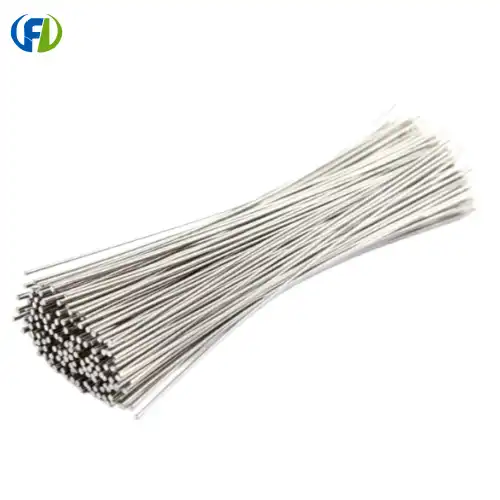
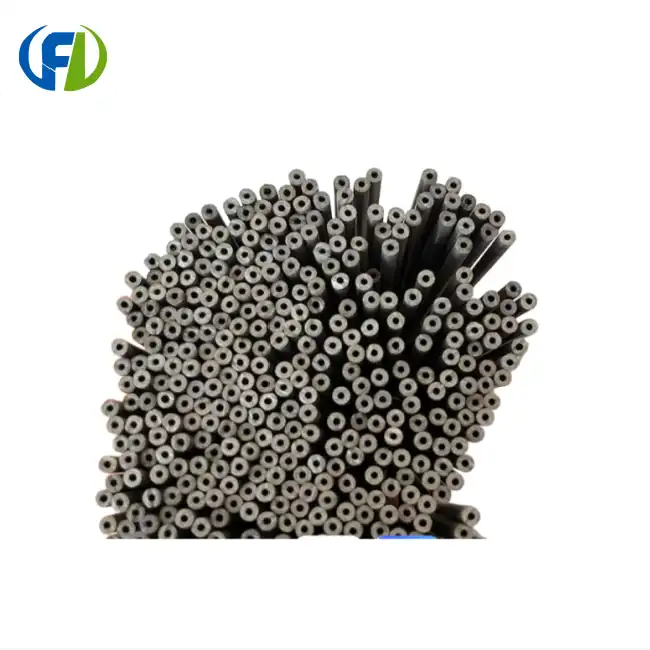
Titanium rods and bars are one of the best high-performance materials for important uses that can be used in a lot of different fields. Titanium's unique properties make these cylinder-shaped metal parts work better than any other material in tough situations. Titanium bars are an important part of modern engineering. They are very strong, don't react with living things, and don't rust, so they are important in both medical and military uses.

Understanding Titanium Rods: Properties and Grades
Because they are stronger and less likely to react chemically with other materials, titanium bars are the best materials that have ever been made. A lot of people like these parts because they are strong for how light they are (4.51 g/cm³), which makes them stronger than steel but still cheaper. Titanium is special because it is made of a solid material and can protect itself with oxide layers that keep it from rusting in tough conditions.
Key Mechanical Properties of Titanium
TiN bars are great for jobs that need to last a long time and be stable because of how they work. These things are very strong and won't break even when they are pushed over and over again. Even when it's very hot or very cold, it doesn't change much. It doesn't rust either, so it lasts a long time in tough chemical conditions.
The best products can be used when both professionals and people who want to buy them know what they are. It's easy to shape titanium in different ways, and it can keep its shape after being bent. This lets you make complicated parts that fit perfectly.
Critical Titanium Grades for Industrial Applications
Titanium of different types works best for different tasks because of their unique properties. Pure titanium types 1 through 4 are stronger than the ones below them. On the other hand, Grade 5 (Ti-6Al-4V) is the most common titanium mix. It is stronger because it has aluminum and vanadium added to it.
Grade 2 titanium is very resistant to rust and works well with living things, which makes it perfect for medical implants that need to integrate with the body's tissues. Its middling strength and excellent formability make it possible for medical equipment to have complex shapes. Grade 5, on the other hand, has higher strength qualities that are needed for aircraft structure parts that need to be lighter without sacrificing performance.
For implant uses, medical device makers often choose Grade 23 (Ti-6Al-4V ELI—Extra Low Interstitial) because it is better at being biocompatible and withstanding wear and tear. This grade goes through extra cleaning steps to lower the amount of oxygen, nitrogen, and carbon in it. This makes it work better in living settings.
Applications of Titanium Rods in Aerospace and Medical Fields
The aerospace industry places a high value on titanium bars and titanium rods as key parts for making planes faster while still meeting safety standards. Because they are lighter, these materials help planes use less fuel, and they also keep the frame strong enough for rough weather. Titanium rods are important for modern flying because they can stand up to hard conditions and high temperatures that would normally break down metals.
Aerospace Engineering Applications
Titanium bars are used in many important ways throughout airplane systems in aerospace manufacturing. Titanium is stable at high temperatures and doesn't rust, which is helpful for engine parts, especially in turbine parts that have to withstand extreme heat cycles. Titanium bars are used in structural frames to make the plane lighter while still keeping it strong enough to fly safely in a variety of situations.
Titanium is used in landing gear systems so that they can handle the repeated stress loads that come with takeoff and landing. Titanium's wear resistance means that it will work reliably over long periods of time between services. This cuts down on the need for upkeep and boosts working efficiency. Titanium is also resistant to rust, which is helpful for bolt uses throughout the airplane, especially in sea settings where salt is frequent.
Applications for spacecraft and satellites need materials that can handle the hard conditions of space. Titanium bars are strong and stable enough for orbital activities, and they don't break down when exposed to radiation or when temperatures change a lot.
Medical Implant Innovation
The smart use of safe titanium materials in medicine has changed the way patients are cared for. Most of the medical titanium that is used is in orthopedics, where plates are used as internal support devices to repair and rebuild bones. Titanium is biocompatible, which means that bone tissue can grow straight onto the surface of the implant, making a strong biological link.
Titanium spike systems are used a lot in spinal fusion treatments to hold the structure while the patient heals. These implants have to be able to handle a lot of force while also helping the bones grow and fuse together properly. Titanium is non-toxic, so there are no worries about the bad bodily effects that can happen with other metal devices.
Titanium is used in dentistry for implant posts and prosthesis frames because it is stable over time and works well with flesh. In terms of lifelong tooth replacements, titanium is the best material because it can directly fuse with bone.
Titanium Rods vs. Other Metal Rods: Making the Right Choice
Titanium bars are clearly better than metals like carbon steel, aluminum, and stainless steel for important jobs. Always know what the long-term goals are, how much it will cost, and how it will help the business before making a choice.
Performance Comparison Analysis
Steel that doesn't rust as quickly and costs less is called stainless steel. But Ti is better for living things and stronger for its weight. The fact that stainless steel is denser is a big problem for airplanes, since losing weight directly impacts how much fuel they use and how much weight they can move. Steel made from stainless steel has a small amount of nickel, which makes it less useful for some medical jobs.
Aluminum metals are light, but they aren't strong enough or can't handle high temperatures for purposes that need to be very strong. Tin is more likely to rust and has a higher melting point than aluminum. Because of this, aluminum is not as good for many high-reliability uses in medicine and airplanes.
Carbon steel is very strong and doesn't cost much, but it is very dense and doesn't fight rust well. Protective coats make things more complicated and require more upkeep, which cancels out any cost savings at the start over the lifetime of the parts.
Economic Considerations and Value Proposition
Metallic rods cost more than other types of rods at first. For the most part, though, they cost less in the long run because they last longer and need less upkeep. Because it doesn't rust, it doesn't need to be covered or changed as often, so it costs less over time.
Using titanium rods cuts down on weight, which directly lowers running costs in aircraft uses by making fuel use more efficient and increasing carrying capacity. It's possible to make system designs that work better generally when they can handle higher temperatures and stress levels.
Manufacturing and Machining of Titanium Rods
To make high-quality titanium bars, you need to use complex manufacturing methods that make sure the material qualities and dimensions stay the same. For these methods to meet the high-quality standards needed for medical and military uses, factors must be carefully controlled.
Advanced Production Techniques
These days, making titanium rods starts with vacuum arc remelting or electron beam melting, which makes sure the material is pure and uniform. These managed heating methods get rid of impurities that might hurt performance in important situations. The resulting ingots are carefully forged to get the grain patterns and mechanical qualities that are wanted.
The material is shaped by hot working while keeping its ideal structural properties. Controlling the temperature during shaping makes sure that the grains run properly and gets rid of any flaws that could cause the metal to fail too soon. When it comes to final control over dimensions and surface finish, cold working is the way to go.
Processes that use heat to improve mechanical qualities make them better for certain uses. You can change the solution treatment and age processes to get the strength and flexibility you want. During the whole production process, quality control checks include ultrasound testing, chemical analysis, and checking the mechanical properties to make sure they meet industry standards.
Specialized Machining Considerations
To get around the unique problems that titanium's qualities create, machining titanium bars takes specialized knowledge and tools. Because of the tendency for work hardening, you need to use sharp cutting tools and the right cutting settings to keep the dimensions accurate and avoid damaging the tools.
When working with titanium, the choice of tool is very important. Carbide and diamond-coated tools work best. Using coolant correctly helps control the amount of heat that is made and stops work from hardening, which can damage both tools and workpieces. Feed rates and cutting speeds need to be carefully managed so that the desired surface finishes can be reached while output rates are kept high.
Because titanium reacts chemically with high temperatures, it is important to be very careful not to get contamination when it is being machined. Finished parts keep their great qualities throughout the supply chain as long as they are handled and stored correctly.
Procurement Guide for Titanium Rods: Sourcing and Supplier Selection
Successful procurement of titanium rods requires strategic planning and careful supplier evaluation to ensure quality, delivery reliability, and cost-effectiveness. The complex nature of titanium rod manufacturing makes supplier selection particularly critical for achieving project success.
Supplier Qualification and Certification
To ensure quality, start by picking service providers with the right credentials and ways to check for quality. By getting ISO 9001 approval, you show that you are committed to consistent quality processes. Standards that are specific to a field, like AS9100 for airplane uses, make sure that important requirements are understood. It's even better to know that a product is good when it can be checked by a third party and its parts can be tracked.
The project's needs for material types, sizes, and numbers must match the supplier's production powers. Being able to provide material certificates and test results makes sure that the requirements of the standard are met. Samples are available so that certification tests can be done before bigger orders are placed.
Because of how specialized the production process is, lead times become even more important when trying to buy titanium. Suppliers with enough supplies and adjustable production schedules can work with different project deadlines and still meet quality standards.
Strategic Sourcing Best Practices
Having strong relationships with skilled titanium suppliers gives you an edge over other companies because you can get better prices, work faster, and get help from experts. When people work together for a long time, they can better understand what customers want and improve their processes to meet those needs.
When coming up with ways to cut costs, you should think about more than just the price of the item you bought. Suppliers who offer value-added services like custom cutting, heat treatment, or special packing can help keep project costs low and make handling the supply chain easy.
To lower risk, you need to get supplies from a variety of places and keep quality standards high. To keep the supply going, it's helpful to plan for backup companies and other times when the main source of supply might not work or isn't good enough.
Freelong: Your Trusted Titanium Rods Supplier Partner
Baoji Freelong New Material Technology Development Co., Ltd. stands as a premier titanium rods manufacturer, leveraging our strategic location in Baoji City—China's Titanium Valley—to deliver exceptional products and services. Our comprehensive manufacturing capabilities encompass the complete range of titanium grades from Gr1 through Gr12, meeting diverse industry requirements with precision and reliability.
Advanced Manufacturing Excellence
Our state-of-the-art facility features sophisticated equipment, including precision milling machines, controlled atmosphere annealing furnaces, laser cutting systems, and specialized forging equipment. This comprehensive manufacturing infrastructure enables us to maintain strict quality control throughout the production process while achieving the dimensional accuracy and surface finishes required for critical applications.
The production advantages we offer include substantial inventory levels that enable rapid response to customer requirements. Our ability to provide material samples allows customers to validate product suitability before placing larger orders. Custom processing capabilities according to customer drawings ensure that specific dimensional and performance requirements are met with precision.
Quality Assurance and Certification
Quality excellence forms the foundation of our operations, with ISO 9001 certification demonstrating our commitment to consistent quality management practices. We provide comprehensive material reports with every shipment and can arrange third-party testing when customers require additional verification. Our quality control processes ensure that all products meet or exceed applicable ASTM B348, ASTM B381, and AMS 4928 standards.
Our direct manufacturing approach eliminates middleman markups while providing customers with factory-direct pricing and technical support. The typical delivery timeframe of 7-15 days supports project schedules while maintaining quality standards. Professional packaging in plywood cases ensures product protection during transportation to global destinations.
Customer service excellence defines our approach to business relationships, with dedicated technical support throughout the entire procurement process. Should any quality concerns arise, our guarantee includes free product replacement to ensure complete customer satisfaction.
Conclusion
Titanium rods have established themselves as indispensable materials across aerospace and medical industries, delivering unmatched performance through their unique combination of strength, biocompatibility, and corrosion resistance. The careful selection of appropriate grades and suppliers directly impacts project success, making informed procurement decisions critical for achieving optimal outcomes. As industries continue advancing toward more demanding performance requirements, titanium rods will undoubtedly play an increasingly important role in enabling innovative solutions that push the boundaries of engineering excellence.
FAQ
1. What makes titanium rods superior for aerospace applications?
Titanium rods excel in aerospace applications due to their exceptional strength-to-weight ratio, which enables significant weight reduction without compromising structural integrity. The high-temperature resistance and corrosion resistance properties ensure reliable performance in demanding flight environments, while fatigue resistance provides long service life under repeated stress cycles.
2. Are titanium rods safe for medical implant applications?
Titanium rods demonstrate excellent biocompatibility, meaning they integrate well with human tissue without causing adverse reactions. The non-toxic nature and ability to promote osseointegration make titanium the preferred choice for medical implants, with proven long-term success rates in orthopedic and dental applications.
3. How do I select the right titanium grade for my application?
Grade selection depends on specific performance requirements balancing strength, corrosion resistance, and biocompatibility needs. Grade 2 offers excellent corrosion resistance and biocompatibility for medical applications, while Grade 5 provides higher strength for structural aerospace components. Consulting with qualified suppliers helps ensure optimal grade selection.
4. What quality certifications should I look for in titanium suppliers?
Look for suppliers with ISO 9001 quality management certification as a baseline requirement. Industry-specific certifications like AS9100 for aerospace applications demonstrate additional expertise. Suppliers should provide material certificates, offer third-party testing capabilities, and maintain traceability systems for quality assurance.
5. What are typical lead times for titanium rod procurement?
Lead times vary depending on material grades, dimensions, and quantities required. Standard grades and sizes typically ship within 7-15 days, while custom specifications may require longer production times. Suppliers with adequate inventory levels and flexible manufacturing schedules can accommodate varying project timelines.
6. How do titanium rods compare cost-wise to other materials?
While titanium rods typically have higher initial costs compared to steel or aluminum, the total cost of ownership often favors titanium due to extended service life, reduced maintenance requirements, and weight savings benefits. The superior performance and longevity justify the investment in critical applications.
Contact Freelong for Premium Titanium Rods Today
Enhance your aerospace and medical projects with our high-quality titanium rods designed to meet stringent industry requirements. As a leading titanium rods manufacturer, Freelong combines decades of expertise with advanced manufacturing capabilities to deliver exceptional products that exceed expectations. Contact jenny@bjfreelong.com today for personalized consultations, competitive bulk pricing, and sample orders to find the ideal solution tailored to your needs. Discover our extensive catalog at frlmetal.com and benefit from reliable supply chains backed by professional expertise.
References
1. American Society for Testing and Materials. "Standard Specification for Titanium and Titanium Alloy Bars and Billets." ASTM International, 2019.
2. Boyer, R.R. "An Overview on the Use of Titanium in the Aerospace Industry." Materials Science and Engineering: A, Vol. 213, 1996.
3. Niinomi, M. "Mechanical Properties of Biomedical Titanium Alloys." Materials Science and Engineering: A, Vol. 243, 1998.
4. Lutjering, G. and Williams, J.C. "Titanium: Engineering Materials and Processes." Springer-Verlag Berlin Heidelberg, 2003.
5. Rack, H.J. and Qazi, J.I. "Titanium Alloys for Biomedical Applications." Materials Science and Engineering: C, Vol. 26, 2006.
6. Peters, M. and Leyens, C. "Titanium and Titanium Alloys: Fundamentals and Applications." Wiley-VCH Verlag GmbH & Co., 2003.

_1745906650332.webp)
_1765176259843.png)
Learn about our latest products and discounts through SMS or email