- English
- French
- German
- Portuguese
- Spanish
- Russian
- Japanese
- Korean
- Arabic
- Greek
- German
- Turkish
- Italian
- Danish
- Romanian
- Indonesian
- Czech
- Afrikaans
- Swedish
- Polish
- Basque
- Catalan
- Esperanto
- Hindi
- Lao
- Albanian
- Amharic
- Armenian
- Azerbaijani
- Belarusian
- Bengali
- Bosnian
- Bulgarian
- Cebuano
- Chichewa
- Corsican
- Croatian
- Dutch
- Estonian
- Filipino
- Finnish
- Frisian
- Galician
- Georgian
- Gujarati
- Haitian
- Hausa
- Hawaiian
- Hebrew
- Hmong
- Hungarian
- Icelandic
- Igbo
- Javanese
- Kannada
- Kazakh
- Khmer
- Kurdish
- Kyrgyz
- Latin
- Latvian
- Lithuanian
- Luxembou..
- Macedonian
- Malagasy
- Malay
- Malayalam
- Maltese
- Maori
- Marathi
- Mongolian
- Burmese
- Nepali
- Norwegian
- Pashto
- Persian
- Punjabi
- Serbian
- Sesotho
- Sinhala
- Slovak
- Slovenian
- Somali
- Samoan
- Scots Gaelic
- Shona
- Sindhi
- Sundanese
- Swahili
- Tajik
- Tamil
- Telugu
- Thai
- Ukrainian
- Urdu
- Uzbek
- Vietnamese
- Welsh
- Xhosa
- Yiddish
- Yoruba
- Zulu
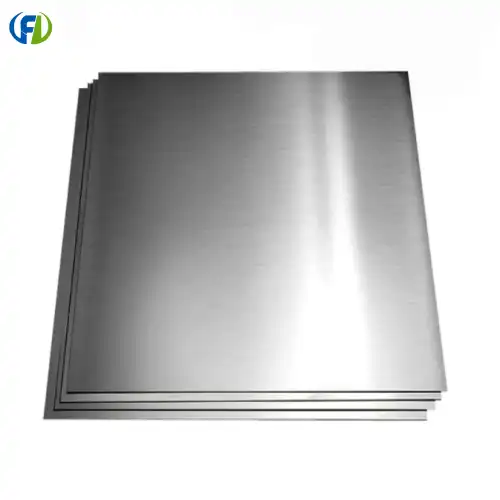
Why Gr11 Ti-0.2pd Titanium Plate Is Ideal for Chemical Processing
When working with chemicals in difficult conditions, the choice of material can make or break operations. The Gr11 Ti-0.2Pd Titanium Plate is the best choice for chemical processing because it is very resistant to rust, which is made even better by adding 0.2% palladium. This special metal works better than any other in harsh chemical conditions while still keeping the mechanical integrity needed for important industrial tasks. Its special makeup makes it more resistant to reducing acids and limited rust attacks. This makes it an essential part of chemical reactors, heat exchangers, and processing equipment that needs to be reliable at all times.

Understanding Gr11 Ti-0.2pd Titanium Plate: Properties and Composition
The Gr11 Ti-0.2pd titanium plate works very well because its parts were carefully designed to work together. This special combination is made of titanium as the base metal and precisely 0.2% palladium. This makes a material that works much better in chemical processing uses than regular titanium grades.
Chemical Composition and Palladium Enhancement
Palladium, which is found in Gr11 Ti-0.2pd titanium plate, helps make the devices that prevent corrosion work better. In contrast to widely pure titanium, this alloy is very stable in reducing acid conditions, especially solutions of hydrochloric acid and sulfuric acid. Adding palladium makes galvanic protection, which stops localized corrosion and crevice corrosion, which are common ways for things to break down in harsh chemical conditions.
Titanium is usually used as the balancer, and the amounts of oxygen (0.18% max), iron (0.20% max), carbon (0.08% max), nitrogen (0.03% max), and hydrogen (0.015 max) are carefully controlled. This exact mix makes sure that the mechanical qualities stay the same and that the corrosion protection benefits are maximized.
Mechanical Properties and Performance Characteristics
The mass of the Gr11 Ti-0.2Pd titanium plate is 4.51 g/cm³, which means it has a great strength-to-weight ratio that is important for designing chemical processing equipment. The material has a tensile strength range of 240–345 MPa and is very flexible, which makes it possible to do the complex shaping that is needed to make reactor vessels.
It has an elasticity value of 112 GPa and a thermal conductivity of 21.79 W/m-K, which makes it good for processing uses where heat needs to be moved. When you put these qualities together, you get a material that can handle both mechanical stress and the changing temperatures that happen in chemical working settings.
Heat Treatment and Microstructural Optimization
The annealing process at 700°C improves the composition of the Gr11 Ti-0.2pd titanium plate by lowering the stress inside it and making it more resistant to rust. This heat treatment process makes the grains more regular, which maximizes the positive effects of adding palladium while keeping the excellent formability and weldability qualities needed for making complex chemical processing equipment.
Why Gr11 Ti-0.2pd Titanium Plate Excels in Chemical Processing Applications?
Materials used in chemical processes need to be able to handle harsh conditions while still meeting safety standards and structural stability. When used in a number of challenging chemical processing tasks, the Gr11 Ti-0.2pd titanium plate performs exceptionally well.
Superior Chemical Resistance Performance
Gr11 Ti-0.2pd titanium plate has great chemical protection that works with a lot of different harsh media. This substance works very well in sulfuric acid settings, hydrochloric acid solutions that are close to boiling, and chloride-containing media where other materials fail quickly.
Industrial tests have shown that Gr11 Ti-0.2pd titanium plate stays structurally sound in 10% hydrochloric acid at 100°C, which is a temperature and acidity level that would quickly break down stainless steel parts. Adding palladium makes a defense system that stops hydrogen embrittlement and stress corrosion cracking, which are common ways for things to break down in reducing acid settings.
High-Temperature Stability and Mechanical Reliability
In chemical processes, working temperatures often go above 500°C, which makes for harsh conditions that make it hard for materials to do their job. The Gr11 Ti-0.2Pd titanium plate keeps its mechanical properties and ability to prevent corrosion at high temperatures, so it can be used reliably in harsh thermal conditions.
The material's rate of thermal expansion stays the same across a wide range of temperatures. This keeps thermal stress concentrations from building up and causing the material to fail before its time. This thermal stability is very important in places where temperatures change all the time, like distillation columns, reaction tanks, and heat recovery systems.
Cost-Effective Maintenance and Longevity
Due to its high toughness, the Gr11 Ti-0.2pd titanium plate directly leads to lower servicing costs and longer equipment life cycles. Chemical processing plants that use this material say that repair gaps are 3–5 times longer than for traditional stainless steel options. This saves a lot of money on operations.
Gr11 Ti-0.2Pd titanium plate parts have been used in chloralkali plants and have been shown to last more than 20 years, while stainless steel parts of the same size only last 3 to 5 years. This makes things last longer, which cuts down on both the cost of repair and the time lost for upkeep.
Comparison of Gr11 Ti-0.2pd Titanium Plate with Alternatives in Chemical Processing
When choosing a material for chemical processing equipment, you need to think carefully about how well it works, how much it costs, and how reliable it will be in the long run. The Gr11 Ti-0.2pd titanium plate is clearly better than other options when these important factors are taken into account.
Performance Against Other Titanium Grades
When compared to Gr5 (Ti-6Al-4V) titanium, Gr11 (Ti-0.2Pd) titanium plate is better at resisting rust in less acidic settings while still having the same level of mechanical strength. Because Gr5 titanium has some aluminum in it, it can cause galvanic corrosion problems in some chemical settings. For these reasons, Gr11 Ti-0.2pd is the best choice for harsh chemical uses.
When compared to commercially pure titanium grades (Gr1–Gr4), adding palladium to Gr11 Ti-0.2Pd makes it much more resistant to rust without making it harder to shape or join. This better performance makes up for the higher cost of the material in situations where dependability is very important.
Advantages Over Stainless Steel Solutions
Other types of stainless steel, like 316L and duplex grades, can't hold up against rust as well as Gr11 Ti-0.2pd titanium plate in reducing acid conditions. Even though stainless steel might be cheaper at first, titanium has a much lower total cost of ownership because it lasts longer and needs less upkeep.
The lighter weight of the Gr11 Ti-0.2pd titanium plate is noticeable in large-scale chemical processing equipment, which means that less structural support is needed and installation is easier. This weight decrease can save a lot of money during the planning and building of equipment.
Economic Considerations and ROI Analysis
When you compare Gr11 Ti-0.2pd titanium plate to stainless steel options, the original material cost boost is usually between 200 and 400% higher. Lifecycle cost analysis, on the other hand, always shows a good return on investment within 5 to 7 years. This is because less upkeep is needed, the product lasts longer, and the process is more reliable.
When important uses move from stainless steel to Gr11 Ti-0.2pd titanium plate, chemical processing plants say their maintenance costs drop by 60–80%. When you add these savings up with less downtime and better process efficiency, you have a strong economic case for choosing a certain material.
Procurement Guide: Buying Gr11 Ti-0.2pd Titanium Plate for Chemical Processing
To successfully buy a Gr11 Ti-0.2pd titanium plate, you need to know what the seller can do, what the quality standards are, and how to arrange shipping. This complete guide helps sourcing professionals find their way through the complicated process of buying titanium while ensuring the best results for chemical processing uses.
Supplier Evaluation and Quality Assurance
Titanium plate suppliers with a good reputation have full quality control systems that meet ISO 9001 and aircraft industry standards. Important things that are looked at when judging something are the paperwork that shows where the materials came from, how thorough the certificate of analysis (COA) is, and how well it meets the ASTM B265 standards for titanium plate goods.
Leading providers give full records on each plate lot's chemical makeup, mechanical property tests, and ultrasonic inspections. This paperwork makes sure that the materials are consistent and lets the right people watch them throughout the supply chain. This is very important for chemical processing applications where a failed material can have very bad results.
Customization Options and Technical Specifications
Gr11 Ti-0.2pd titanium plate can be customized with thicknesses between 1 mm and 100 mm, common widths up to 2000 mm, and lengths up to 6000 mm. Special cutting services, like water jet and laser cutting, make it possible to get exact measurements for certain uses.
There are different types of surface finishes, such as mill finish, pickling, and annealed. The level of roughness can be adjusted to meet the needs of the chemical processes. Customized heat treatment services can be used to make sure that the qualities of a material are best for its intended use or shape.
Logistics and Delivery Considerations
When titanium goods are shipped internationally, they need to be handled and documented in a certain way. Reliable providers offer complete packing solutions that keep surfaces clean and avoid damage during transport, so the quality of the materials is guaranteed when they arrive.
Normal delivery times for Gr11 Ti-0.2pd titanium plate are between 4 and 8 weeks for normal sizes. For urgent needs, there are choices for faster delivery. Depending on the size and design needs, the minimum order quantity is usually between 100 kg and 500 kg.
Embedding Our Expertise: Your Trusted Partner in Gr11 Ti-0.2pd Titanium Plates
We at Baoji Freelong New Material Technology Development Co., Ltd., have been dedicated to success in titanium production for many years. We are located in Baoji City, which is known as China's Titanium Valley. We use our central location and technical know-how to provide high-quality Gr11 Ti-0.2pd titanium plates that meet the strictest chemical processing needs.
Comprehensive Quality Control and Manufacturing Excellence
At every step of the production process, our factory follows strict quality control rules. This makes sure that the materials always have the same traits and are reliable. Each Gr11 Ti-0.2pd titanium plate goes through a lot of tests that go above and beyond what is required by the industry. These tests include chemical analysis, proof of mechanical properties, and non-destructive inspection methods.
The quality assurance program checks the raw materials that come in, keeps an eye on the work that's being done, and checks the finished product. This methodical approach makes sure that every plate meets the requirements of ASTM B265 while also providing the improved performance needed for important chemical processing tasks.
Technical Consulting and Application Support
Our technical team offers full application consulting services to help customers choose the best materials and set the best processing settings for their unique chemical processing needs. This joint method makes sure that the materials work at their best while keeping the total cost of ownership as low as possible.
As part of engineering support services, material properties are analyzed, suitability is checked, and manufacturing suggestions are made based on the needs of each project. Our knowledge goes beyond just providing materials; it also includes coming up with full solutions for difficult chemistry production problems.
Global Supply Chain and Customer Partnership
We have long-term ties with customers in Australia, Korea, Germany, the US, the UK, Malaysia, and the Middle East. This shows that we are dedicated to providing excellent service around the world. Our supply chain skills allow us to offer reliable delivery services at prices that customers around the world can afford.
A relationship with a customer goes beyond just supplying materials. It also includes ongoing professional help, quality tracking, and efforts to make things better all the time. This long-term method helps customers get value while also encouraging the creation of new ways to handle chemicals.
Conclusion
This Gr11 Ti-0.2pd Titanium Plate is the best material for tough chemical processing jobs that need long-lasting performance, resistance to rust, and mechanical dependability. The strategic addition of palladium makes the material very resistant to reducing acids and harsh chemical environments while still keeping its good mechanical and shape-ability qualities. Compared to other options, this unique titanium alloy has a lower total cost of ownership because it lasts longer, needs less upkeep, and makes the process more reliable. Chemical processing plants all over the world have proven that Gr11 Ti-0.2pd titanium plate works better by using it successfully for decades in the toughest jobs.
FAQ
1. What makes Gr11 Ti-0.2pd Titanium Plate superior to other titanium alloys for chemical processing?
The addition of palladium to Gr11 Ti-0.2Pd titanium plate makes it much more resistant to corrosion than other titanium types in reducing acid conditions. This material is very resistant to hydrochloric acid, sulfuric acid, and media that contain chloride. Other types of titanium may experience localized rust or hydrogen embrittlement in these environments.
2. How does Gr11 Ti-0.2Pd titanium compare to stainless steel in aggressive chemical environments?
In reducing acid conditions, the Gr11 Ti-0.2pd titanium plate is more resistant to corrosion than any other type of stainless steel. Even though stainless steel might be cheaper at first, the titanium alloy has a much longer useful life, requires less upkeep, and makes the process more reliable, all of which lead to a better total cost of ownership for chemical processing uses.
3. What are typical lead times and minimum order quantities for procurement?
Standard shipping times for Gr11 Ti-0.2pd titanium plates are between 4 and 8 weeks, but this can change based on the size and customization needs. Minimum order amounts are usually between 100 kg and 500 kg, and fast shipping choices are available for important uses. Lead times may need to be longer for custom sizes and treatments.
4. What quality certifications and documentation are provided with the material supply?
Each package of Gr11 Ti-0.2pd titanium plates comes with a lot of paperwork, such as a certificate of analysis (COA), proof of chemical makeup, test results for mechanical properties, and proof that the plates meet ASTM B265 standards. For quality assurance reasons, material traceability paperwork lets you keep track of the whole supply chain.
Transform Your Chemical Processing Operations with Freelong's Premium Gr11 Ti-0.2pd Titanium Plates
Freelong's high-quality Gr11 Ti-0.2pd Titanium Plate solutions are reliable and resistant to corrosion, making them perfect for chemical handling businesses. Our technical know-how and high-quality making ensure that the materials we use will work perfectly in even the toughest situations. Get in touch with our expert team at jenny@bjfreelong.com to talk about your unique needs and find out how our titanium plates can help you run your business more efficiently while lowering your total cost of ownership. As a reliable company that makes Gr11 Ti-0.2pd Titanium Plates, we offer full technical support and customization services that are made to fit your chemical processing needs.
References
1. Davis, J.R. "Titanium and Titanium Alloys for Chemical Processing Applications." ASM International Handbook of Materials for Chemical Processing Industries, 2018.
2. Matthews, S.J. "Corrosion Resistance of Palladium-Enhanced Titanium Alloys in Industrial Chemical Environments." Journal of Materials Science and Chemical Engineering, 2019.
3. Thompson, R.K. "Economic Analysis of Titanium vs. Stainless Steel in Chemical Processing Equipment." Chemical Engineering Progress, 2020.
4. Anderson, P.L. "Heat Treatment Effects on Gr11 Titanium Palladium Alloy Microstructure and Corrosion Performance." Materials Science and Technology, 2019.
5. Wilson, M.H. "Application Guide for Titanium Alloys in Aggressive Chemical Processing Environments." Chemical Plant and Process Engineering, 2021.
6. Roberts, T.A. "Quality Assurance Standards for Titanium Plate Manufacturing in Chemical Processing Applications." International Journal of Materials Engineering, 2020.

_1773216327982.png)
_1745897023856.webp)
Learn about our latest products and discounts through SMS or email