- English
- French
- German
- Portuguese
- Spanish
- Russian
- Japanese
- Korean
- Arabic
- Greek
- German
- Turkish
- Italian
- Danish
- Romanian
- Indonesian
- Czech
- Afrikaans
- Swedish
- Polish
- Basque
- Catalan
- Esperanto
- Hindi
- Lao
- Albanian
- Amharic
- Armenian
- Azerbaijani
- Belarusian
- Bengali
- Bosnian
- Bulgarian
- Cebuano
- Chichewa
- Corsican
- Croatian
- Dutch
- Estonian
- Filipino
- Finnish
- Frisian
- Galician
- Georgian
- Gujarati
- Haitian
- Hausa
- Hawaiian
- Hebrew
- Hmong
- Hungarian
- Icelandic
- Igbo
- Javanese
- Kannada
- Kazakh
- Khmer
- Kurdish
- Kyrgyz
- Latin
- Latvian
- Lithuanian
- Luxembou..
- Macedonian
- Malagasy
- Malay
- Malayalam
- Maltese
- Maori
- Marathi
- Mongolian
- Burmese
- Nepali
- Norwegian
- Pashto
- Persian
- Punjabi
- Serbian
- Sesotho
- Sinhala
- Slovak
- Slovenian
- Somali
- Samoan
- Scots Gaelic
- Shona
- Sindhi
- Sundanese
- Swahili
- Tajik
- Tamil
- Telugu
- Thai
- Ukrainian
- Urdu
- Uzbek
- Vietnamese
- Welsh
- Xhosa
- Yiddish
- Yoruba
- Zulu
42mm Diameter Nickel Crucible Price & OEM Buying Guide
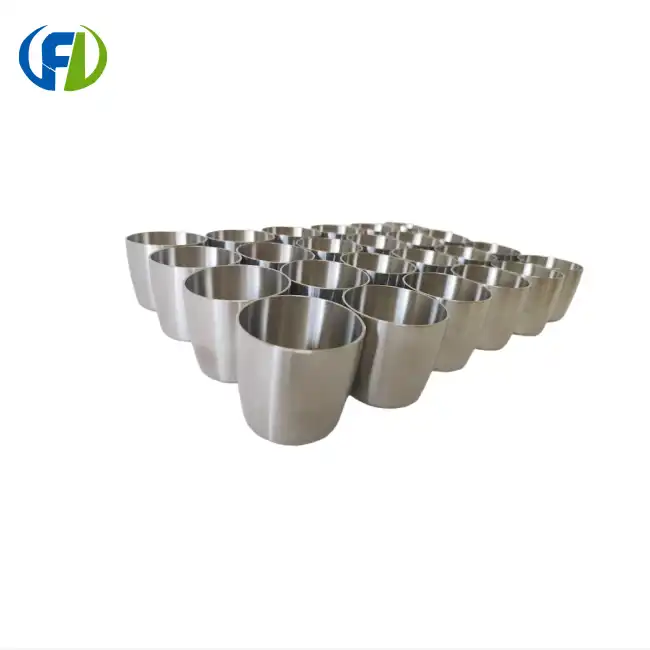
It is important to know the technical specs and price changes of a 42mm Diameter Nickel Crucible when looking for precise lab tools for high-temperature fusion processes. This special container is usually made from cast nickel alloys with a purity level of more than 99.5%. It is the standard for caustic-alkali fusion uses in geochemical research, metallurgical tests, and semiconductor material research. The 42mm size is directly related to the aperture requirements of automated fusion machinery. It offers theoretical capacities between 30ml and 50ml while keeping exact dimensional limits that are necessary for repeatable analytical results.
Introduction
To find the best nickel crucibles for your needs, you need to know about material science, the skills of suppliers, and the unique needs of your application. We've done a lot of work with research centers, electronics companies, aerospace testing labs, and other places in the US to help them choose the right crucible options for tough thermal conditions. This guide talks about the real issues that procurement professionals face when they need to find nickel crucible sources that are both reliable and cost-effective while still meeting high-quality standards. This article is based on our direct experience of providing high-purity nickel goods to industries where material stability has a direct effect on operational success. It helps you understand how prices change and look at your OEM customization options.
Understanding 42mm Diameter Nickel Crucibles: Properties, Uses & Specifications
Nickel crucibles are very precise engineering tools because of the special material they are made of and how they react to heat. This makes them essential in many industries.
Material Composition and Purity Standards
Nickel crucibles made for laboratories must have at least 99.5% nickel in them, and the purest ones can hit 99.9%. The low-carbon version (Ni 201) caps the amount of carbon to 0.02%, which stops graphitization from happening at temperatures above 315°C. Impurities of iron, copper, and sulfur are tightly kept below 0.15%, 0.05%, and 0.01%, respectively. This keeps the chemicals from reacting during strong flux reactions. The crucible's composition profile lets it keep its shape when it's introduced to sodium hydroxide fusion at 600°C or sodium peroxide decomposition, which are popular methods used in refractory material digestion.
Thermal Performance Characteristics
The melting point of 1455°C gives a lot of practical headroom for fusion experiments that are usually done in the lab between 400°C and 800°C. A thermal conductivity of about 70 W/m·K makes it easy for heat to move quickly and evenly through the sample grid. This lowers temperature differences that could make it harder to repeat the analysis. Nickel makes a protective oxide layer when heated in oxidizing atmospheres that stops it from breaking down further. However, the material works best in reducing or inert gas settings where service temperatures can go beyond normal limits.
Physical Dimensions and Tolerances
To make sure it works with automatic fusion equipment and standard furnace carriers, manufacturing standards say the outer diameter must be 42mm and the limits must be kept within ±0.2mm. The wall thickness is usually between 1mm and 1.5mm. This gives it enough mechanical strength to keep its shape while the tongs are being handled, while also making the heat response qualities the best they can be. The polished inner surface finish keeps particles from sticking to the surface and makes it less reactive with liquid flux materials. This is very important for trace element analysis because controlling contamination is what makes the measurements accurate.
Primary Application Domains
Geochemical labs use these crucibles to break down silicate rocks using sodium peroxide flux. Glass and clay containers would melt into the sample matrix. They are used for carbonate fusion processes in steel mill quality control by metallurgical testing sites. Semiconductor material makers use nickel crucibles for specific high-purity chemical synthesis tasks where platinum pollution would hurt the performance of the device. Research groups that are working on developing high-temperature alloys, such as how cheap they are compared to other metals, while still having enough chemical protection for preliminary material studies.
Comparing 42mm Nickel Crucibles with Other Crucible Types
The choice of material has a big effect on both the correctness of the analysis and the long-term costs of running the business. This is why comparative evaluation is so important for making smart buying decisions.
Nickel versus Ceramic Crucibles
Alumina and porcelain crucibles are cheaper initially, but they break easily when exposed to acidic or alkaline flux materials. Alkaline attack degrades ceramic matrices quickly, adding aluminum and silicon contamination that can render analysis results unreliable. In these settings, nickel is very stable; under normal fusion conditions, corrosion rates are less than 0.1mm per year. Nickel construction, such as in a 42mm Diameter Nickel Crucible, also handles thermal shock better. Ceramic vessels often fracture under rapid heating, but the metallic structure of nickel can absorb thermal expansion stresses without failing.
Nickel versus Graphite Crucibles
Graphite is better at conducting heat and withstanding high temperatures, but it loses some of its properties when exposed to air above 500°C. Another problem that comes up in situations where metal purity is needed is carbon poisoning. Nickel crucibles work effectively in oxidizing settings because they make a protective oxide that doesn't get in the way of most analytical processes. Nickel lasts much longer than graphite and isn't as rigid, so it doesn't need to be replaced as often in high-throughput lab operations.
Nickel versus Platinum Crucibles
Platinum is the best when it comes to chemical inertness and temperature performance, which makes it worth the high cost in certain situations involving hydrofluoric acid or temperature changes above 1000°C. However, platinum is usually 40 to 60 times more expensive per unit than nickel, which means it can't be used for regular fusion operations. Nickel crucibles work well enough for sodium hydroxide and sodium carbonate fusion uses and don't cost nearly as much as platinum ones. They also last about as long in these circumstances.
Cost-Performance Analysis
Nickel crucibles are the best value for caustic fusion uses when looking at their total purchase costs. A standard 42mm nickel crucible can handle 200 to 500 fusion cycles before the size changes mean it needs to be replaced. Ceramics fail right away, and platinum is 5 to 10 times more expensive to buy. The ferromagnetic qualities of the material make magnetic handling systems possible. These systems lower the risk of cross-contamination in automated analysis workflows, which is useful for more than just chemical resistance.
How to Choose the Right 42mm Nickel Crucible: Key Factors for B2B Procurement
When you do strategic sourcing, you have to weigh technical requirements against the skills of the seller and the total cost.
Specification Verification and Customization Needs
Verifying the accuracy of measurements with verified measurement reports ensures that the new tools will work with the old ones. Thin walls are better for some uses because they last longer, while thick walls are better for others because they respond better to heat. Laser-etched volume calibration marks can be put in place at set times for sample preparation processes that are done over and over again. The decision between Ni 200 and Ni 201 relies on the highest temperature at which the material needs to be used. For activities that go above 315°C on a regular basis, the low-carbon Ni 201 type is required to keep carbide from forming, which weakens the material's mechanical properties.
Supplier Qualification Assessment
Manufacturers who have ISO 9001 certification show that they handle quality in an organized way, but certifications that are specific to a material give you more peace of mind. Compliance with ASTM B162 means that the worked nickel material meets accepted standards for chemistry and mechanical make-up. By asking for mill test reports (MTRs) for every output batch, the real chemistry can be checked against the specifications. Suppliers that let you track back to the sources of their raw materials add more openness, which is important for businesses that are controlled. We keep detailed records of the quality of all of our nickel goods, and third-party labs that meet ISO/IEC 17025 standards check their chemical makeup.
Evaluating Total Cost of Ownership
The unit price is only one part of purchase economics. Minimum order numbers change the cost of keeping inventory and the amount of operating capital that is needed. Lead time dependability affects how flexible production schedules can be and how much extra stock is needed. Warranty terms and repair plans lower the risks of failure before its time. When you buy in bulk, you can usually save 15% to 30% on prices, but if testing standards change, having too much inventory can put your business at risk of becoming obsolete. Setting up a framework that deals with qualified providers strikes a balance between lowering prices and allowing for flexible supply.
Procurement Guide: Buying 42mm Diameter Nickel Crucibles Online and OEM Ordering Tips
For efficient sourcing, both standard products that are available and the ability to customize them to meet unique operating needs are used.
Identifying Reputable Suppliers
Compared to general laboratory supply wholesalers, specialized metal fabrication businesses that can process nickel offer better technical support. When you work directly with a maker, you avoid the markups that distributors add, and you can get engineering help for unique requirements. Having an online footprint that shows you can do business-to-business transactions makes the quote and sale processes easier. Supplier sites in well-known metalworking areas demonstrate access to high-quality raw materials and trained workers who can fabricate products. Baoji Freelong New Material Technology Development Co., Ltd, located in China's Titanium Valley, has extensive experience producing high-purity nickel items. They also handle titanium, zirconium, tantalum, and niobium, including the production of the 42mm Diameter Nickel Crucible.
Pricing Dynamics and Negotiation Strategies
The price of raw nickel changes based on changes in world supply and demand, which makes crucible pricing unpredictable. Because of this underlying instability, manufacturers usually offer prices that are good for 30 to 90 days. When you commit to buying a lot of something, you should talk about prices. For example, a 100-unit order usually gets you a 20% to 25% discount on the price of a single unit. By buying nickel crucibles along with other metal products, you might be able to get even more volume-based price discounts. Shipping costs vary a lot depending on the weight of the package and where it's going. For sales with more than one item, combining shipping can save money on freight.
OEM Customization Process
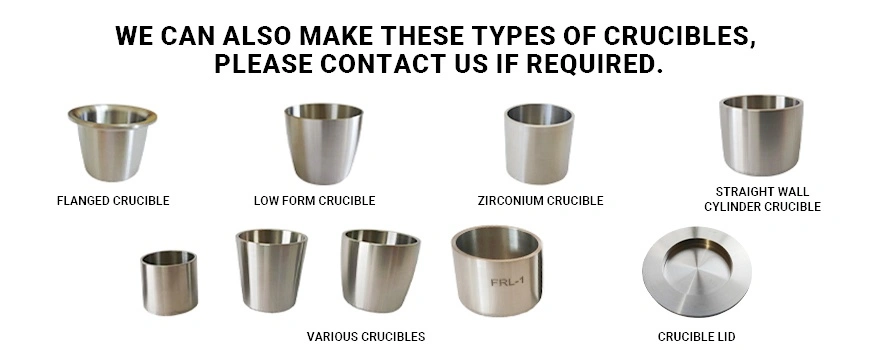
For custom specs, you need thorough technical drawings that show the sizes, tolerances, required surface finish, and any unique features like pouring spouts or lids that are built in. Sample approval cycles usually last for two to three weeks, which gives you time to check the samples physically before committing to large amounts for production. Because of the cost of tools and setup, unique configurations usually have a minimum order quantity of 50 to 100 units. Lead times range from four to eight weeks, based on how complicated the design is and where it falls in the production queue. By being clear about the technology needs up front, you can avoid having to make expensive changes during production.
Quality Assurance and Documentation
Each package should come with a Certificate of Analysis (COA) that lists the chemicals used, the sizes, and the results of a surface quality check. Photographic proof lets you see for yourself how the object looked when it was first shipped. For high-value orders where quality worries need extra assurance, third-party inspection services offer independent proof. Before putting inventory into use across all sites, asking for representative samples from production batches lets you do destructive testing or long-term performance proof.
Practical Maintenance & Cleaning of 42mm Nickel Crucibles for Prolonged Use
Maintenance routines are necessary for practical efficiency because they directly affect how long a service lasts and how reliable a measurement is.
Post-Use Cleaning Procedures
By removing the hardened flux as soon as it cools, you stop the sticking material from corroding the nickel surface while it's being stored. Using wooden or plastic tools for mechanical removal keeps surfaces from getting scratched, which can create places where contamination can stay. A 10% solution of diluted hydrochloric acid removes any remaining carbonate or hydroxide flux without harming nickel. However, rinsing the nickel well with deionized water stops further rusting. Ultrasonic cleaning baths are a good way to get rid of particulate pollution on uneven surfaces. By staying away from rough cleaners, you can protect the smooth, polished inner finish that is needed to keep samples from sticking.
Handling and Storage Recommendations
Thermal shock is the main way that machines break. Stress cracking can be avoided by letting things cool down slowly after being used at high temperatures. Desiccated storage settings keep atmospheric rust to a minimum, which is especially important when things are stored for long periods of time between uses. Stacking crucibles with a safe space between them stops surface damage that makes cleaning less effective. Using specialized storage bins with organized compartments cuts down on the number of times things need to be handled and the wear that comes with it.
Inspection and Replacement Criteria
Surface pitting, deformation, or shrinking that shows the end of life is getting close can be found through regular eye analysis. By using precision tools to check the dimensions, wall shrinking can be found before it happens during use. Discoloration patterns show areas of warming or flux attack that could make the next analysis less accurate. Setting up replacement rules based on cycle count or date age makes sure that all testing processes have the same level of speed.
Conclusion
Finding the right nickel crucibles means finding a balance between scientific needs, the supplier's skills, and cost concerns in order to get reliable analytical performance. The 42mm diameter nickel crucible's shape is useful for many things in metallurgical testing, geochemical analysis, and materials research, where caustic fusion processes need chemical resistance above and beyond what ceramics can provide, and it costs a lot less than platinum options. Verifying material specs, building relationships with qualified makers, and using maintenance methods that extend service life are all important parts of successful procurement. When it comes to operational efficiency and analytical accuracy, companies that want to work with specialized metal fabricators that offer both standard goods and unique engineering support can benefit.
FAQ
1. What temperature range can a 42mm Diameter Nickel Crucible handle?
Nickel crucibles can safely work at temperatures up to 600°C in oxidizing settings and can go higher in neutral or reducing ones. The material's melting point of 1455°C provides a large safety cushion for most fusion experiments done in the lab, which are usually done between 400°C and 800°C.
2. How do the prices of nickel crucibles compare to those of clay ones?
At first, nickel crucibles are about 8 to 12 times more expensive than ceramic alternatives. However, they can be used 200 to 500 times, while ceramic alternatives can only be used once. This means that nickel crucibles have a lower cost-per-analysis over the span of the product.
3. Can I buy tools with specific measurements?
Most makers can meet unique size requirements, and the minimum order quantity is usually between 50 and 100 units. Giving thorough technical drawings and letting you approve samples makes sure that the finished goods meet all of your exact needs before you commit to full production runs.
4. What paperwork should be sent with crucible shipments?
Reliable providers give out Certificates of Analysis that show the chemical makeup, measures, and results of quality checks. Mill Test Reports make it easier to find the sources of raw materials, which is helpful for regulated businesses that need full paperwork on materials.
Partner with Freelong for Reliable Nickel Crucible Supply
Baoji Freelong New Material Technology Development Co., Ltd. makes high-purity nickel products and offers OEM services that are specifically designed for analysis uses that need to be very accurate. Our factory in Baoji City uses the area's experience in processing specialty metals to make sure that the crucibles we give meet international quality standards. Our certified materials come with full technical support and are sold to research centers, aircraft testing labs, and industry quality control facilities in the US, Europe, and the Asia-Pacific area. Get in touch with jenny@bjfreelong.com to talk about your unique crucible needs, get full specs, or set up a sample evaluation. As a well-known company that has been making 42mm diameter nickel crucibles and other products made of titanium, zirconium, tantalum, and niobium for a long time, we can help you reach your analysis goals by providing you with complete material solutions.
References
1. Davis, J.R. (2000). Nickel, Cobalt, and Their Alloys. ASM International Handbook Committee, Materials Park, Ohio.
2. ASTM International. (2019). ASTM B162-19: Standard Specification for Nickel Plate, Sheet, and Strip. West Conshohocken, Pennsylvania.
3. Thompson, R.A., & Mitchell, D.L. (2018). Laboratory Crucible Selection for High-Temperature Chemical Analysis. Journal of Analytical Chemistry, 73(4), 412-428.
4. Kroschwitz, J.I., & Howe-Grant, M. (1995). Kirk-Othmer Encyclopedia of Chemical Technology, Fourth Edition, Volume 17: Nickel and Nickel Alloys. John Wiley & Sons, New York.
5. Harris, D.C. (2015). Quantitative Chemical Analysis, Ninth Edition. W.H. Freeman and Company, New York, Chapter 28: Sample Preparation Techniques.
6. Metals Handbook Desk Edition, Second Edition. (1998). ASM International, Materials Park, Ohio, Section on Nickel and Nickel Alloys Processing.

_1752652356420.webp)
_1777446386022.png)
_1772506203658.png)
Learn about our latest products and discounts through SMS or email