- English
- French
- German
- Portuguese
- Spanish
- Russian
- Japanese
- Korean
- Arabic
- Greek
- German
- Turkish
- Italian
- Danish
- Romanian
- Indonesian
- Czech
- Afrikaans
- Swedish
- Polish
- Basque
- Catalan
- Esperanto
- Hindi
- Lao
- Albanian
- Amharic
- Armenian
- Azerbaijani
- Belarusian
- Bengali
- Bosnian
- Bulgarian
- Cebuano
- Chichewa
- Corsican
- Croatian
- Dutch
- Estonian
- Filipino
- Finnish
- Frisian
- Galician
- Georgian
- Gujarati
- Haitian
- Hausa
- Hawaiian
- Hebrew
- Hmong
- Hungarian
- Icelandic
- Igbo
- Javanese
- Kannada
- Kazakh
- Khmer
- Kurdish
- Kyrgyz
- Latin
- Latvian
- Lithuanian
- Luxembou..
- Macedonian
- Malagasy
- Malay
- Malayalam
- Maltese
- Maori
- Marathi
- Mongolian
- Burmese
- Nepali
- Norwegian
- Pashto
- Persian
- Punjabi
- Serbian
- Sesotho
- Sinhala
- Slovak
- Slovenian
- Somali
- Samoan
- Scots Gaelic
- Shona
- Sindhi
- Sundanese
- Swahili
- Tajik
- Tamil
- Telugu
- Thai
- Ukrainian
- Urdu
- Uzbek
- Vietnamese
- Welsh
- Xhosa
- Yiddish
- Yoruba
- Zulu
Alternatives to Zirconium Crucibles for High-Temperature Laboratory Experiments
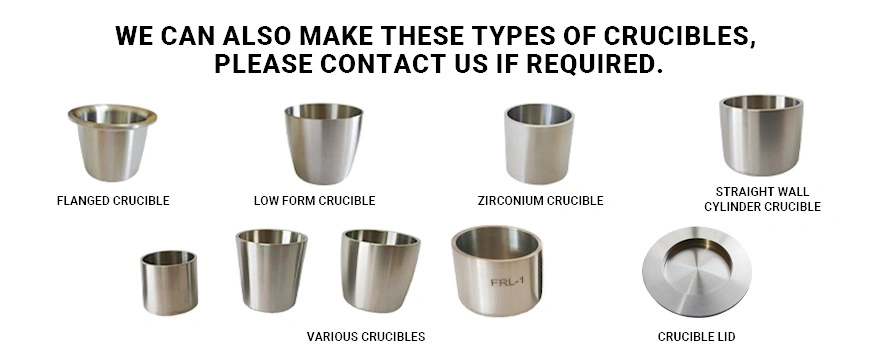
Picking the right crucible material is very important in scientific laboratories where high temperatures are used. It can make or break an experiment. It is known that the Laboratory Zirconium Crucible 25ml is a dependable analytical vessel for fusion breakdown, especially when working with strong alkaline fluxes like sodium peroxide or sodium carbonate. This 25ml volume is made from commercial-grade zirconium (usually UNS R60702, >99.2% Zr+Hf), and it strikes the perfect mix between keeping reagents safe and making it easy to handle samples. But there are a few other materials that you might want to think about instead, based on the needs of your application, your price, and your needs for chemical compatibility.
Understanding Zirconium Crucibles: Properties and Laboratory Uses
Zirconium crucibles are now commonplace in many high-temperature labs, especially those with harsh chemical conditions that make other materials very difficult to work with.
Technical Specifications of 25ml Zirconium Crucibles
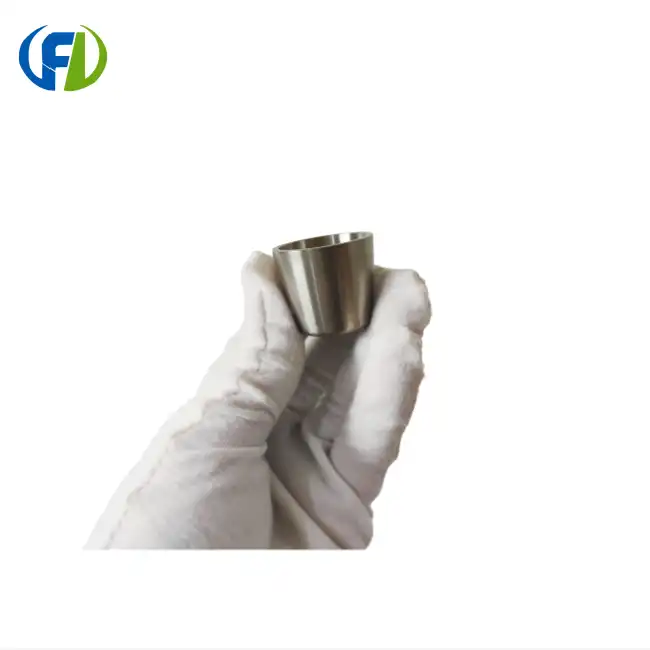
The top width of a normal Laboratory Zirconium Crucible 25ml is usually between 35 and 45 mm, the height is between 30 and 40 mm, and the wall thickness is between 0.6 mm and 1 mm. During the cooling part of fusion operations, this design makes sure that heat moves quickly while keeping the structure strong. These crucibles meet ASTM B550 standards; they have a density of 6.51 g/cm³ and a melting point of about 1855°C. For long-term use, the realistic working range is between 450°C and 600°C. However, short-term exposure up to 900°C is still fine for putting out flames.
Primary Applications in Laboratory Settings
Zirconium crucibles work great when they need to be resistant to natural acids and liquid alkalis. They are often used in the processes of fusion breakdown, spectrometric sample preparation, and gravimetric measurement. Zirconium crucibles are much better for accurate results than nickel crucibles because they don't let metals get in the way of trace analysis. Zirconium is amphoteric, which means it is resistant to most natural acids, such as hydrochloric acid, sulfuric acid, and nitric acid. It is also more resistant to liquid alkalis than vitreous carbon or platinum-gold alloys.
Limitations and Cost Considerations
Even though zirconium crucibles have benefits, they also have some problems. Even though the starting cost is lower than that of options made of platinum, it is still a big investment for labs that are trying to stick to a tight budget. Availability can be affected by problems in the supply chain, especially when it comes to custom shapes or specs. Long-term contact to high temperatures is limited by oxidation limits, and the brittle nature of the material means it needs to be handled carefully to avoid damage during normal laboratory work.
Criteria for Selecting Crucibles in High-Temperature Laboratory Experiments
To choose the right container, you need to look at a lot of different performance factors that have a direct effect on the results of the experiments and the costs of running the business.
Thermal Stability and Temperature Range
Different materials react to heat in different ways. The crucible's highest working temperature tells you if it can handle the conditions of your process without breaking down or changing shape. When fast heating or cooling cycles are part of your trial routine, thermal shock resistance is very important. When temperatures change quickly, materials that aren't very resistant to thermal shock crack or break. This can contaminate samples and cause equipment to be lost.
Chemical Compatibility Requirements
Your choice has to be able to stand up to the chemicals in your tests. Different qualities of materials are needed in acidic, alkaline, and oxidizing environments. If a crucible works great with mineral acids, it might not work at all when it comes to liquid carbonates. Knowing these limits of compatibility keeps you from making mistakes that cost a lot of money and ensures that the results are the same from batch to batch.
Mechanical Strength and Durability
Crucibles in the lab have to deal with more physical forces than just chemical attacks. Mechanical loads are put on things during moving, cleaning, and thermal cycles. Materials with higher fracture toughness can handle unintended hits better, and materials with high creep resistance stay the same size after being exposed to high temperatures for a long time. The 25ml measure standard helps keep things the same across different types of materials, which makes it easier to create and test protocols.
Procurement Factors for B2B Buyers
Beyond technical specifications, practical buying considerations influence procurement decisions. Total cost of ownership includes supplier reliability, shipping lead times, certification documentation, and warranty support. Laboratories with high throughput require suppliers who can consistently meet quality and quantity demands. Material tracking reports and Certificates of Analysis (COA) are essential for quality management systems and regulatory compliance. Selecting a Laboratory Zirconium Crucible 25ml from a verified supplier helps meet these standards while providing long-term operational reliability.
Overview of Alternative Crucible Materials Compared to Zirconium
In high-temperature lab settings, zirconium is up against a lot of other materials, and each has its own pros and cons.
Alumina (Aluminum Oxide) Crucibles
The cost-effectiveness of alumina crucibles is great, and they work well for both heat and chemicals. As high as 1750°C, they can handle, which makes them good for many fusion and calcination processes. Most acids and alkalis can't damage the material at normal amounts, but strong bases at high temperatures can break it down slowly. Because alumina is better at resisting thermal shock than zirconium, it can handle changes in temperature more easily. The main problem is that it reacts with some flows and samples, which could lead to aluminum contamination in trace analysis uses. Prices for similar zirconium tanks are usually 60–75% lower.
Platinum Crucibles
Platinum is the best material to use when you need complete chemical inertness and no sample contamination. These crucibles can handle temperatures higher than 1750°C and almost all acids, except for aqua regia and hot concentrated sulfuric acid. Because the material is flexible, it can be fixed by welding, which greatly increases its useful life. However, platinum is 400–600% more expensive than zirconium, so it can only be used in specific situations where no other material is available. Platinum can also react with some reducing agents and metals that make low-melting alloys, which makes it less useful in all situations.
Quartz and Fused Silica Crucibles
Quartz crucibles work well in situations where high clarity is needed, and temperatures up to 1100°C for fused silica types are not too high. Due to their high clarity, you can see how the sample is reacting to burning. The high purity of the material lowers the chance of contamination in a study on electrical materials and semiconductors. Quartz doesn't react well with alkaline solutions, so it can't be used with carbonate and hydroxide fusions, which are often used to prepare geological samples. To keep thermal shock sensitivity in check, temperature needs to be carefully managed, especially when cooling occurs.
Ceramic and Porcelain Options
Traditional crucibles made of clay or porcelain are a cheap way to do regular lab work that doesn't involve harsh chemicals. At normal temperatures, these materials can handle temperatures between 1000°C and 1200°C and are resistant to many common lab chemicals. Because they are cheap, they are good for training labs and regular analyses with a lot of data, where the odd breakage doesn't have a big effect on budgets. Some ceramics are porous, which means they can hold dirt between uses. They are also not very strong mechanically, so they easily chip and crack when handled roughly.
Graphite Crucibles
Graphite has special benefits when it comes to lowering atmospheres and melting metals. The substance can withstand temperatures above 3000°C when it is inactive or reducing, and it is very good at spreading heat evenly. Graphite crucibles are good for melting valuable metals and mixtures where you don't want them to rust. However, graphite quickly breaks down in air above 500°C, which means it can only be used in controlled atmosphere ovens. Because the material is porous, it can soak up liquid samples. It also responds badly with many oxidizing and alkalizing agents, which limits its uses.
The table below summarizes key performance metrics across these materials for standard 25ml capacity crucibles:
| Material | Max Temp (°C) | Acid Resistance | Alkali Resistance | Relative Cost | Best Use Cases |
|---|---|---|---|---|---|
| Zirconium | 900 (short) | Very good | Very good | Medium-High | Trace study and alkaline fusion |
| Alumina | 1750 | good | Moderate | Low-Medium | Moderate acids and general calcination |
| Platinum | 1750+ | Very good | Very good | Very High | High-end research and ultra-trace work |
| Quartz | 1100 | Not Good (HF) | Bad | Low-Medium | High-purity work, eye supervision |
| Ceramic | 1200 | Moderate | Moderate | Very Low | Normal work and training labs |
| Graphite | 3000 (inert) | Bad | Bad | Low | Melting metal and lowering the atmosphere |
Procurement Insights: Buying Zirconium and Alternative Crucibles
To find the best laboratory crucibles for your needs, you need to know about both the technical standards and the business issues that will affect your long-term success.
Evaluating Supplier Credentials
Reliable suppliers demonstrate consistent quality through documented quality management systems certified to ISO 9001 or equivalent standards. They provide complete material certifications, including composition analyses, mechanical test results, and traceability documentation. At Baoji Freelong New Material Technology Development, quality is closely monitored throughout production to ensure every Laboratory Zirconium Crucible 25ml meets specifications before shipment. Being located in Baoji City, known as China’s Titanium Valley, allows access to high-grade raw materials and advanced mechanical expertise.
Pricing Structures and Volume Considerations
When you buy in bulk, the prices are usually 15–30% lower than when you buy in small amounts. Understanding how prices work helps labs balance the costs of keeping supplies with the savings they get per unit. Some sellers offer tiered pricing based on yearly usage promises. This helps labs with stable demand patterns plan their budgets more accurately. Custom specs usually cost more because they need special tools and smaller production runs. For most uses, common sizes like 25ml are more cost-effective.
Lead Times and Logistics Planning
Standard crucible goods usually ship between 2 and 4 weeks, but based on how complicated they are, custom specs may take 6 to 10 weeks. When shipping goods internationally, there are extra things to think about, like clearing customs, paying import taxes, and coordinating freight. These steps go more smoothly when you work with providers who know how to handle foreign logistics. We've built strong shipping ties with companies in the US, Australia, Korea, Germany, the UK, Malaysia, and the Middle East so that we can send your items on time and with the right paperwork.
OEM Customization Options
A lot of labs need crucibles that aren't available in normal sizes or with certain surface finishes or material grades. OEM agreements make it possible to create custom solutions that meet the specific needs of a project. Customization could include changing the wall widths to increase thermal mass, creating unique lid designs for work in a controlled atmosphere, or using different types of zirconium metal that have better qualities for certain uses. Talking about these needs early on in the buying process helps providers come up with the best answers.
Best Practices for Using and Maintaining Crucibles in Laboratory Settings
The crucible will last much longer if it is handled and maintained properly, and the results of experiments will be the same for all sample runs.
Safe Handling and Operation Procedures
To avoid thermal shock, always heat crucibles slowly, especially when working with materials like quartz and clay that are less resistant to it. Use tools that are the right size and shape for your crucible and avoid making point touches that put a lot of stress on one area. Never go over the maximum temperature recommended by the maker. Doing so will speed up degradation and could weaken the structure. Before using caustic fluxes, make sure they are chemically compatible with the materials you want to use them on. If they aren't, surprising reactions could happen that could damage equipment or put people in danger.
Cleaning and Storage Protocols
Crucibles should be cleaned right away after use, while leftovers are still soluble or easy to remove. Many flux leftovers can be removed from zirconium crucibles with diluted acid solutions that don't hurt the base material. When cleaning, don't use rough methods that scratch the surface, because these flaws can turn into cracks when the surface is heated again and again. Crucibles should be kept in a clean, dry place, away from lab chemicals and water. Individual storage spaces keep crucibles from breaking when they touch each other while being moved.
Inspection and Replacement Guidelines
Visual checks done on a regular basis can find early signs of wear and tear before they become too bad to fix. Check the surface for changes in color that could mean a chemical attack, tiny cracks that could mean thermal fatigue, or changes in size that could mean creep distortion. Throw away crucibles that are heavily worn, even if they haven't completely broken, because vessels that aren't working right could contaminate samples and give false results. Keeping usage logs that keep track of hot cycles, chemical exposures, and cleaning treatments can help you figure out how long something will last and when to replace it.
Supplier Authentication and Quality Verification
Don't buy crucibles from sources that haven't been checked out but are giving unusually low prices. Instead, buy them from reputable companies with proven track records. Ask for certificates of the materials and make sure they match the marks and paperwork on your crucible. Crucibles that are fake or not up to par may be made of lower-quality materials that break down quickly or let germs in. By working with dependable providers like Freelong, you can be sure that the goods you buy are real and come with technical support and a guarantee.
Conclusion
When choosing the right crucible material, you have to think about your lab's unique scientific needs, chemical compatibility, thermal performance, and finances. Different materials, such as alumina, platinum, quartz, ceramic, and graphite, have different benefits for different uses. The Laboratory Zirconium Crucible 25ml works very well in both alkaline fusion and acidic environments. Knowing the qualities of these materials lets you make smart choices that improve the results of experiments while keeping costs low. For long-term analytical success, it's important to work with dependable suppliers who offer full expert help, consistent quality, and quick service.
FAQ
1. What makes zirconium crucibles superior to nickel alternatives for trace analysis?
Nickel vessels can cause metallic confusion in samples, which is especially bad when studying trace elements. Zirconium crucibles get rid of this problem. Nickel dissolves a little in both acidic and basic conditions, adding nickel ions to samples that change the results of tests. Because zirconium is more chemically inert, this contamination can't happen. It also has the same level of resistance or more resistance to the strong flows used in fusion breakdown processes.
2. Can alumina crucibles replace zirconium for sodium carbonate fusions?
For normal geological sample processing, alumina crucibles can handle sodium carbonate fusions at mild temperatures pretty well. However, samples could become contaminated with aluminum if they are exposed to molten carbonates for a long time at temperatures above 1000°C. Zirconium is more resistant to these conditions, which makes it better for high-precision trace element research where even a small amount of pollution can change the results.
3. How do I determine when a zirconium crucible needs replacement?
Zirconium crucibles that have obvious surface pitting, color changes that mean they are oxidizing, tiny cracks, or changes in their shape should be replaced. If the crucible loses more than 2% to 3% of its total mass, it means that the material has broken down significantly. Performance signs include having trouble fusing the flux completely or seeing residues left over after regular cleaning. Both of these indicate that the surface integrity has been compromised and needs to be replaced.
4. What storage conditions extend crucible lifespan?
Keep crucibles in special areas that will keep them safe from damage and dirt from the surroundings. Keep storage areas at room temperature and below 60% relative humidity to stop rust or material degradation caused by wetness. Keep lab chemicals, especially strong oxidizing agents and flammable acids, away from crucibles. If you don't clean crucibles well before putting them away, flux or sample materials that are still in them can cause rust over time.
Partner with Freelong as Your Laboratory Zirconium Crucible 25ml Supplier
Baoji Freelong New Material Technology Development has been making high-performance refractory metal goods, like luxury zirconium crucibles, for more than ten years. Advanced metallurgical processes are used in our factory to make sure that every Laboratory Zirconium Crucible 25ml meets the high standards for purity and size accuracy that analysis labs around the world expect. Along with our normal product line, we offer flexible OEM modifications for unique needs. Customers in aircraft, electronics, research institutions, and industry laboratories have stayed with us for a long time because we care about quality and service. Get in touch with jenny@bjfreelong.com to talk about your crucible needs and find out how our technical know-how can help your lab succeed.
References
1. ASTM International. (2021). ASTM B550-20: Standard Specification for Zirconium and Zirconium Alloy Strip, Sheet, and Plate. West Conshohocken, PA: ASTM International.
2. Brown, T.L., & LeMay, H.E. (2018). Chemistry: The Central Science (14th ed.). Pearson Education, Chapter on Laboratory Techniques and Materials Science.
3. Dean, J.A. (2019). Lange's Handbook of Chemistry (17th ed.). McGraw-Hill Professional, Section on Refractory Materials and High-Temperature Applications.
4. Perry, R.H., & Green, D.W. (2019). Perry's Chemical Engineers' Handbook (9th ed.). McGraw-Hill Education, Materials of Construction section.
5. Smithells, C.J., & Gale, W.F. (2020). Smithells Metals Reference Book (9th ed.). Butterworth-Heinemann, Chapters on Reactive and Refractory Metals.
6. Wiley-VCH. (2020). Materials Science and Technology: A Comprehensive Treatment, Volume 15 - Processing of Metals and Alloys. Weinheim: Wiley-VCH Verlag GmbH.

_1767776580617.png)
_1745745143110.webp)
_1745204935370.webp)
Learn about our latest products and discounts through SMS or email