- English
- French
- German
- Portuguese
- Spanish
- Russian
- Japanese
- Korean
- Arabic
- Greek
- German
- Turkish
- Italian
- Danish
- Romanian
- Indonesian
- Czech
- Afrikaans
- Swedish
- Polish
- Basque
- Catalan
- Esperanto
- Hindi
- Lao
- Albanian
- Amharic
- Armenian
- Azerbaijani
- Belarusian
- Bengali
- Bosnian
- Bulgarian
- Cebuano
- Chichewa
- Corsican
- Croatian
- Dutch
- Estonian
- Filipino
- Finnish
- Frisian
- Galician
- Georgian
- Gujarati
- Haitian
- Hausa
- Hawaiian
- Hebrew
- Hmong
- Hungarian
- Icelandic
- Igbo
- Javanese
- Kannada
- Kazakh
- Khmer
- Kurdish
- Kyrgyz
- Latin
- Latvian
- Lithuanian
- Luxembou..
- Macedonian
- Malagasy
- Malay
- Malayalam
- Maltese
- Maori
- Marathi
- Mongolian
- Burmese
- Nepali
- Norwegian
- Pashto
- Persian
- Punjabi
- Serbian
- Sesotho
- Sinhala
- Slovak
- Slovenian
- Somali
- Samoan
- Scots Gaelic
- Shona
- Sindhi
- Sundanese
- Swahili
- Tajik
- Tamil
- Telugu
- Thai
- Ukrainian
- Urdu
- Uzbek
- Vietnamese
- Welsh
- Xhosa
- Yiddish
- Yoruba
- Zulu
Best Zirconium Crucible for Chemical Experiments: Features and Buying Tips
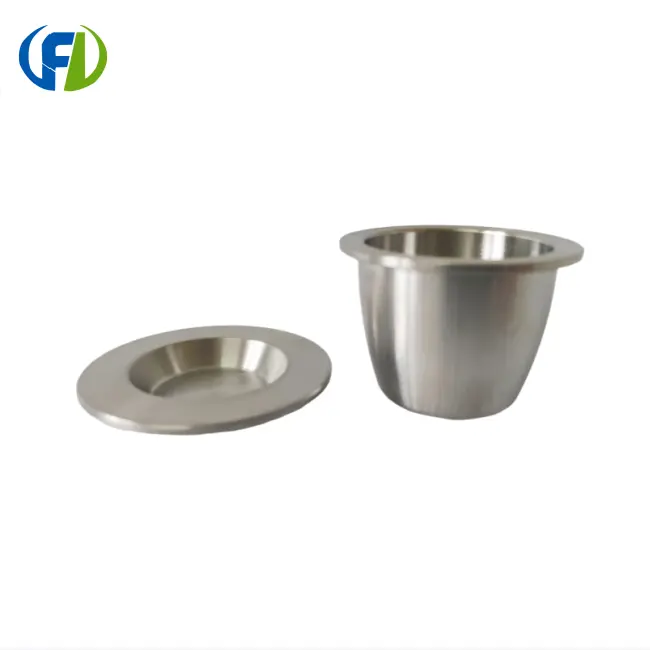
The Zirconium Crucible With Rim ( Zirconium Crucible ) is the best piece of lab tools for difficult analytical work. It is perfect for chemical studies that involve strong alkali fusions and sample preparation at high temperatures. Its reinforced edges keep it from deforming when it's being handled, and its rust resistance is on par with platinum's at a fraction of the cost. This makes it an essential tool for mine labs, nuclear material analysis labs, and geochemical research facilities all over the world.
 |
 |
 |
 |
WhatsApp&Wechat: +86 13571190943
E-mail:Jenny@bjfreelong.com

Introduction
Choosing the right zirconium labware can make or break your work as an analyst. I've worked in materials labs for years in the chemical, nuclear, and aircraft industries. I've seen what happens when the wrong crucible is used: samples get messed up, fusions fail, and money is lost. It's not enough to just find a container that can handle heat; you also need to find one that can handle 600°C sodium peroxide without letting any impurities into your samples.
A well-made zirconium melting pot with a solid rim can fix more than one issue at the same time. The strengthened edge makes it stable when using hands to hold on to it, keeps the oval shape after thermal cycling, and makes sure it stays in place in automatic fusion equipment. Chemical companies that work with harmful substances need containers that don't lose their shape after being heated hundreds of times. When geological samples are being studied by researchers, they need to be in clean areas where even small amounts of metal leaching would throw off the results. These problems can be solved by the self-healing oxide layer and high alkali resistance of the zirconium crucible for lab use. It offers dependability that ceramic options can't match.
Understanding Why Zirconium Outperforms Traditional Crucible Materials
Usually, clay crucibles break when they are heated quickly. Even though platinum ships cost more than $3,000, some flows can still damage them. Samples get iron and chromium on them when they are made of stainless steel. Because of these problems, I looked for better ways to help battery makers and chemistry research sites when I was a consultant.
Zirconium metal crucibles are in a special place in the order of elements. When the metal is exposed to oxygen, it forms a thick layer of zirconium oxide (ZrO₂). This layer acts as a shield and can grow back if it gets scratched. This inactive film can stand up to hydrochloric acid, sulphuric acid, and, most importantly, strong alkaline solutions that break down other metals, such as sodium hydroxide and potassium carbonate.
A normal 50mL Zirconium Crucible With Rim costs between $200 and $400, based on the thickness of the walls and the shape of the rim. Platinum versions cost more than $2,000. When you compare zirconium's 20–50 fusion cycles to platinum's endless lifespan but susceptibility to certain reactions, it's easy to see which metal is better for some uses.
Selection Criteria for Choosing the Best Zirconium Chemical-Resistant Crucibles
My evaluation framework prioritizes five critical factors that matter in real-world laboratory environments.
- Purity and Makeup of the Material: Grade 702 zirconium (which meets ASTM B550 standards) is made up of at least 99.2% zirconium and hafnium, with the hafnium content usually being less than 4.5%. This mix makes sure that rust will behave in an expected way. Companies that make medical devices and semiconductors need material certificates that show the amounts of oxygen, nitrogen, carbon, and iron impurities.
- Rim Design and Mechanical Strength: The main difference between regular crucibles and ringed ones is how well they hold up under stress. When the rim is machined correctly, it adds 2 to 4 mm of strengthened material around the hole. This spreads the pressure from the tongs over a larger area. This keeps the mouth from getting oval, which is a typical way for non-rimmed designs to break after only 10 to 15 rounds.
- Thermal Performance Parameters: Zirconium melts at 1852°C, but it can only be exposed to air for long amounts of time at 500–600°C because of oxidation issues. For 5 to 10-minute rounds, zirconium does a great job of handling sodium peroxide fusions that quickly reach 900°C. Thermal shock protection is the most important factor. This means that the material can go from room temperature to fusion temperature without breaking.
- Size and Capacity Options: Analytical labs typically require 30-100mL capacities. Larger 150-250mL vessels serve industrial quality control. The height-to-diameter ratio affects heat distribution during fusion. I recommend ratios between 1:1 and 1.5:1 for optimal performance.
- Manufacturing Quality and Certification: Ultrasonic testing should verify uniform wall thickness. Surface finish matters—rough interiors promote sample adhesion while polished surfaces facilitate cleaning. Reputable zirconium crucible manufacturers provide mill test reports documenting composition, mechanical properties, and surface quality metrics.
Top Zirconium Crucible With Rim Options for Different Applications
Standard 50mL Grade 702 Zirconium Furnace Crucible With Reinforced Rim
This workhorse configuration dominates geological sample preparation labs worldwide. Dimensions typically measure 45mm outer diameter, 40mm inner diameter, 50mm height, with 1.5-2.0mm wall thickness. The rim extends 3mm outward, providing a secure grip point.
Key advantages include universal compatibility with most fusion equipment, optimal capacity for single-sample analysis, and balanced thermal mass that prevents overheating while maintaining fusion temperatures. The reinforced rim withstands repeated handling with standard crucible tongs without visible deformation after 30+ cycles. Chemical resistance covers the full spectrum of alkali flux options—sodium peroxide, lithium metaborate, sodium carbonate, and mixed flux systems.
Performance characteristics: Thermal conductivity of 22.6 W/m·K ensures even heat distribution, eliminating cold spots that cause incomplete fusion. The self-healing zirconium oxide layer maintains corrosion protection even when scratched, though deep gouges should be avoided. Typical lifespan ranges from 25-40 fusion cycles, depending on maximum temperature and flux aggressiveness.
Ideal users: Mining laboratories conducting XRF sample preparation, environmental testing facilities analyzing soil samples, university research departments teaching analytical chemistry methods, and quality control labs in the cement and ceramics industries.
High-Capacity 100mL Zirconium Crucible With Extended Rim and Pouring Spout
Larger sample volumes demand proportionally scaled vessels. This variant measures approximately 60mm outer diameter with 55mm internal diameter, 75mm height, and maintains 2.0-2.5mm wall thickness for structural integrity. The extended rim spans 4-5mm, accommodating heavier tongs designed for larger crucibles. A precisely machined pouring spout facilitates melt transfer without drips.
Key advantages encompass batch efficiency for high-throughput laboratories, reduced per-sample cost when processing multiple specimens simultaneously, and superior melt handling through the integrated spout design. The increased thermal mass stabilizes temperature fluctuations during extended fusion protocols.
Performance characteristics: Heat capacity increases proportionally with volume, requiring 15-20% longer heating times to reach fusion temperature compared to 50mL variants. The pouring spout—typically a 10-15mm wide channel machined into the rim—enables controlled melt transfer into solution beakers without the mess and sample loss associated with pouring from round-rimmed vessels. This feature alone reduces sample loss from 5-8% down to under 2% in experienced hands.
Ideal users: Commercial analytical laboratories processing 20+ samples daily, industrial quality control departments in steel and alloy manufacturing, nuclear fuel cycle facilities handling radioactive sample preparation, and research institutions studying rare earth element extraction.
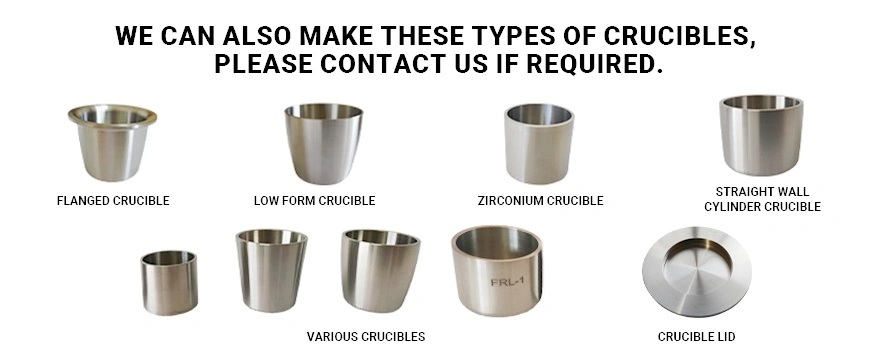
Premium 75mL Thick-Wall Zirconium Crucible With Lid for Extended Service Life
Durability-focused designs sacrifice some weight efficiency for dramatically improved longevity. Wall thickness increases to 3.0-3.5mm, nearly doubling the metal volume compared to standard variants. A matching lid (sold separately or as a set) features a recessed design that nests securely atop the crucible, reducing vapor loss during fusion and protecting contents during cooling.
Key advantages include service life extending 50-70 cycles before replacement becomes necessary, enhanced resistance to mechanical damage from drops or impacts, reduced vapor escape during high-temperature operations, and improved safety through contained reactions. The additional metal mass provides a buffer against localized overheating that can cause premature failure in thinner crucibles.
Performance characteristics: The 3mm+ walls distribute thermal stress more effectively, virtually eliminating stress-crack formation at the crucible base—a common failure point in thin-wall designs subjected to rapid heating. Heat retention improves by approximately 30%, maintaining fusion temperatures with less energy input. The fitted lid reduces sodium peroxide vapor release, protecting furnace heating elements and improving laboratory air quality.
Ideal users: Aerospace material testing labs requiring maximum reliability, medical device manufacturers processing biocompatible titanium samples, defense contractors analyzing specialized alloys, and any facility where a Zirconium Crucible With Rim crucible failure mid-fusion would compromise expensive or irreplaceable samples.
Market Characteristics and Regulatory Considerations for Global Buyers
The foreign market for high-temperature crucibles shows the strengths and weaknesses of each region's industries and laws. European chemistry companies put a high priority on REACH compliance paperwork, which makes sure that zirconium sources follow the rules about conflict minerals. North American aerospace and defence companies need materials that are DFARS-compliant and can be fully tracked back to the foundry where they were made.
Asian electronics makers, especially in South Korea, Taiwan, and Japan, need semiconductors to meet very strict quality standards. These buyers usually ask zirconium crucible suppliers to show proof that the crucible has less than 3% hafnium and less than 1400 ppm oxygen. All markets for pharmaceuticals and medical devices need production processes that are in line with ISO 13485 and cleaning procedures that have been tested and proven to work.
Trade issues affect choices about where to get goods. Zirconium handling is centred in Baoji City in China's Shaanxi Province, which is home to more than 60% of the world's production capacity. A lot of experts and easy access to raw materials are used by businesses like Baoji Freelong New Material Technology Development Co., Ltd. But buyers in some places have to deal with trade restrictions or tariffs that make buying from within the country or an allied country more appealing, even if the unit costs are higher.
Cultural tastes affect what people buy. German engineering companies like to work directly with manufacturers and have a lot of specialised information available. American companies usually use well-known ways to get their products to customers in other countries. Facilities in the Middle East put a high value on long-term supply deals that include price stability terms.
Purchasing Recommendations and Critical Considerations
Match crucible specifications to your specific fusion protocol. Sodium peroxide fusions at 480°C for lithium-ion battery cathode analysis require different parameters than 600°C potassium pyrosulfate fusions for refractory metal dissolution. Verify your maximum operating temperature falls within the crucible's rated performance envelope.
Invest in Zirconium Crucible With Rim rim-reinforced designs from the start. The marginal cost increase (typically 15-25% over standard crucibles) pays for itself within the first 10 cycles through reduced handling damage and extended service life. I've witnessed too many labs attempt to economize with non-rimmed variants, only to replace them prematurely when the mouths deform.
Request material certifications for critical applications. Reputable zirconium crucible manufacturers provide mill test reports documenting chemical composition per ASTM B551 standards. These certificates prove essential for audits in regulated industries and troubleshooting unexpected corrosion issues.
Consider the total cost of ownership rather than the unit price. A $250 premium crucible lasting 45 cycles costs $5.56 per use. A $180 economy version failing after 20 cycles costs $9.00 per use. Factor in labor for sample re-preparation when fusion failures occur.
Establish supplier relationships emphasizing technical support. The best zirconium crucible price means little if the vendor cannot advise on proper preconditioning, cleaning protocols, or troubleshoot premature failures. Manufacturers with metallurgical expertise add substantial value beyond the physical product.
Stock appropriate cleaning supplies and handling tools. Zirconium's chemical resistance means aggressive cleaning agents are rarely necessary. Dilute hydrochloric acid removes flux residues effectively. Dedicated tongs prevent cross-contamination and ensure proper grip on the reinforced rim.
Industry Trends and Summary
Zirconium is becoming more and more popular as an option to platinum in some high-temperature uses in analytical chemistry. Alkali-resistant tanks are in high demand because battery companies are doing more studies on lithium-ion cathodes. Around the world, projects to decommission nuclear power plants need sample preparation tools that are resistant to radiation. Environmental laws that require lower detection levels push labs to make sure that materials are free of contamination. These trends make the long-lasting and low-cost nature of zirconium crucibles an advantage for buying managers who are looking to the future. The rim-reinforced design has gone from being a one-of-a-kind item to an industry standard as labs focus on making tools last longer and work more efficiently.
FAQ
Q1: How long does a zirconium crucible with rim typically last?
Service life varies between 20 and 50 fusion cycles, depending on flux type, maximum temperature, and handling care. Sodium peroxide fusions at 480°C typically yield 35-45 cycles. More aggressive lithium metaborate fusions at 600°C reduce lifespan to 25-35 cycles. Thick-wall variants extend these ranges by 40-60%. Proper preconditioning and avoiding thermal shock significantly impact durability.
Q2: Can zirconium crucibles handle platinum-compatible fusion protocols?
Zirconium excels with alkali fluxes where platinum struggles—sodium peroxide, sodium hydroxide, and potassium carbonate. However, zirconium fails rapidly in acidic environments above 200°C, where platinum performs well. The metals complement rather than substitute for each other. Hydrofluoric acid attacks zirconium aggressively, making it unsuitable for silicate dissolution protocols requiring HF.
Q3: What maintenance extends the zirconium crucible's lifespan?
Allow gradual cooling after fusion—never quench in water. Clean promptly using dilute (10%) hydrochloric acid to dissolve flux residues, followed by a distilled water rinse. Store in protective containers, preventing scratches. Avoid dropping or impacts that stress the metal structure. Periodic inspection under magnification identifies stress cracks before catastrophic failure. Discard crucibles showing visible cracks, deep gouges, or significant rim deformation.
Source Your Zirconium Laboratory Equipment From Experienced Manufacturers
Baoji Freelong New Material Technology Development supplies precision-engineered zirconium crucibles with rim configurations to analytical laboratories, aerospace testing facilities, and chemical manufacturers across six continents. Our manufacturing facility in China's Titanium Valley combines decades of rare metal processing expertise with rigorous quality control protocols meeting international standards. Each crucible undergoes ultrasonic inspection and comes with complete material traceability documentation. Whether you need standard 50mL analytical vessels or custom-sized zirconium melting pot solutions for specialized applications, our technical team provides application-specific recommendations ensuring optimal performance. Contact jenny@bjfreelong.com WhatsApp&Wechat: +86 13571190943to discuss your requirements with our materials engineers and receive detailed quotations from a trusted zirconium crucible supplier.
References
1. Davis, J.R. (2000). ASM Specialty Handbook: Nickel, Cobalt, and Their Alloys. ASM International Materials Park, Ohio.
2. Lütjering, G. & Williams, J.C. (2007). Titanium: Engineering Materials and Processes, Second Edition. Springer-Verlag Berlin Heidelberg.
3. Ganesh, A., Ramanathan, S., Sundaram, C.V. (1995). "Corrosion of Zirconium in Alkaline Solutions," Journal of Nuclear Materials, Vol. 226, Issue 3, pp. 289-294.
4. ASTM International (2019). ASTM B550-18: Standard Specification for Zirconium and Zirconium Alloy Bar, Rod, and Wire for Nuclear Application. West Conshohocken, Pennsylvania.
5. Peng, D.Q., Bai, X.D., Chen, B.S. (2012). "High Temperature Oxidation Behavior of Zirconium Alloys," Materials Science Forum, Vols. 706-709, pp. 1177-1182.
6. Rickover, H.G., Geiger, L.D., Lustman, B. (1975). History of the Development of Zirconium Alloys for Use in Nuclear Reactors. U.S. Energy Research and Development Administration Technical Information Center, Oak Ridge, Tennessee.
WhatsApp&Wechat: +86 13571190943
E-mail: Jenny@bjfreelong.com
Address: No.188. Gaoxin Ave, Baoji City, Shannxi, China.

_1751336881360.webp)
_1744351107138.webp)
_1753860711940.webp)
_1745891534440.webp)
Learn about our latest products and discounts through SMS or email