- English
- French
- German
- Portuguese
- Spanish
- Russian
- Japanese
- Korean
- Arabic
- Greek
- German
- Turkish
- Italian
- Danish
- Romanian
- Indonesian
- Czech
- Afrikaans
- Swedish
- Polish
- Basque
- Catalan
- Esperanto
- Hindi
- Lao
- Albanian
- Amharic
- Armenian
- Azerbaijani
- Belarusian
- Bengali
- Bosnian
- Bulgarian
- Cebuano
- Chichewa
- Corsican
- Croatian
- Dutch
- Estonian
- Filipino
- Finnish
- Frisian
- Galician
- Georgian
- Gujarati
- Haitian
- Hausa
- Hawaiian
- Hebrew
- Hmong
- Hungarian
- Icelandic
- Igbo
- Javanese
- Kannada
- Kazakh
- Khmer
- Kurdish
- Kyrgyz
- Latin
- Latvian
- Lithuanian
- Luxembou..
- Macedonian
- Malagasy
- Malay
- Malayalam
- Maltese
- Maori
- Marathi
- Mongolian
- Burmese
- Nepali
- Norwegian
- Pashto
- Persian
- Punjabi
- Serbian
- Sesotho
- Sinhala
- Slovak
- Slovenian
- Somali
- Samoan
- Scots Gaelic
- Shona
- Sindhi
- Sundanese
- Swahili
- Tajik
- Tamil
- Telugu
- Thai
- Ukrainian
- Urdu
- Uzbek
- Vietnamese
- Welsh
- Xhosa
- Yiddish
- Yoruba
- Zulu
Custom Tantalum Pipe Fabrication Services: Tailoring Solutions for Semiconductor Equipment
When it comes to making electronic equipment, custom tantalum pipe production services are the pinnacle of precision engineering. Since tantalum lines are the only ones that can stand up to poisons and high temperatures, they are very important for current electronics processes. Our advanced manufacturing skills help makers get the best performance by making solutions that are made to work in the roughest production environments and meet the high standards of cleanliness needed for chip use.
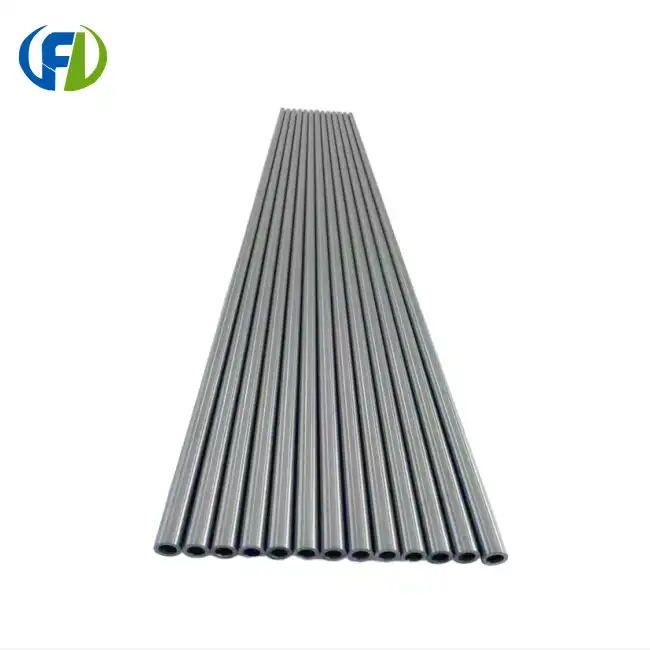
Understanding Tantalum Pipes and Their Role in Semiconductor Equipment
A lot of the work in the electronics business depends on materials that can stay pure even in harsh chemical conditions. Because they have unique qualities that immediately meet these strict needs, tantalum pipes become important parts.
Exceptional Chemical Resistance in Semiconductor Environments
Some organic solutions, strong acids, bases, and tantalum don't react badly with each other. These are often used to make semiconductors. Tantalum doesn't change shape when crushed, burned, or mixed with hydrofluoric acid, sulfuric acid, or other acids that break things down. This chemical inertness stops pollution that could make silicon chips less effective and slow down production.
The material is not only resistant to chemical attack, but it also works well with cleaning solutions and process gases. Tantalum pipes keep their surface integrity during plasma cutting and chemical vapor deposition processes. This stops the release of metallic contaminants that could damage sensitive semiconductor structures.
Temperature Performance and Thermal Stability
Often, the ways that semiconductors are made need high temperatures that would damage materials that aren't very strong. If you heat tantalum lines above 1000°C, they don't change form or stop working properly. In other words, they can be used in places with high temperatures, like furnace parts and heat exchanges in semiconductor equipment.
The material has a low thermal expansion rate, which means that the sizes stay the same during thermal cycles. This is important for keeping the tools used to make semiconductors within very strict limits. This temperature stability directly means that the tools will work better and need less upkeep.
Comparing Tantalum Pipes with Other Materials in High-Tech Industries
When buying, teams know how tantalum compares to other materials, so they can make better choices based on the needs of the product and long-term practical factors.
Performance Comparison with Alternative Materials
When it comes to materials for semiconductors, tantalum always does better than other choices in a number of important ways. Cheap as stainless steel is, it is not very resistant to chemicals and can get dirty when it comes in contact with harsh semiconductor chemicals. Titanium is great at keeping rust away, but it's not chemically neutral enough to be used in places with very little contamination.
It is good for nickel metals to be heated up, but they can add unnecessary impurities to semiconductor processes that are already very sensitive. Inconel is very strong mechanically at high temperatures, but it isn't as chemically resistant as tantalum in acidic environments like those used to make chips.
Grade Selection and Performance Optimization
Tantalum pipe comes in different types, each with its own level of clarity and unique mechanical qualities that make it useful for different tasks. Tantalum pipe of the commercial grade works very well for most semiconductor equipment uses, but ultra-high pure grades of tantalum pipe are needed for very important process parts where even a small amount of contamination is not acceptable.
Choosing the right tantalum grades has a direct effect on how well equipment works and how much it costs to run. Higher pure types cost more, but they work better in situations where preventing contamination is very important. When you look at the total cost of ownership, which includes less downtime and higher output rates, this purchase often ends up being a good one.
Custom Fabrication Services: Tailoring Tantalum Pipes to Your Needs
Semiconductor makers can meet specific process needs with carefully built tantalum pipe solutions that improve equipment performance and operating efficiency. This is possible because of custom production capabilities.
Dimensional Customization and Precision Manufacturing
Our manufacturing services include full physical customizing, such as changing the length, width, and thickness of the walls, as well as creating complicated shapes that fit the needs of specific machine designs. Modern ways of making things make sure that the limits for dimensions meet the strictest needs of semiconductor equipment.
Standard sanded surfaces and ultra-smooth electropolished finishes are both possible for finishing the surface. Electropolished finishes reduce the formation of particles and make cleaning easier. These surface treatments are especially important in situations where keeping things clean and preventing contamination are the most important things.
Advanced Coating and Surface Treatment Options
In some situations, special surface processes can make tantalum pipes work better. Electropolishing makes surfaces very smooth so that particles don't stick to them, and it's easy to clean them thoroughly between production runs. This process is especially useful when high-purity chemical delivery methods are needed.
Heat treatment can improve the material qualities and relieve stress, which keeps the dimensions stable while the product is in use. Careful control is used during these processes to keep the material's chemical protection while improving its mechanical performance for certain uses.
Case Study: Solving Complex Manufacturing Challenges
A major company that makes semiconductor equipment had problems with harsh cleaning chemicals breaking down chemical delivery systems too soon. In the past, stainless steel parts had to be replaced often, which caused expensive production delays. Our custom tantalum pipe solution made a smooth substitute that stopped breakdowns caused by rust and increased the service life by more than 300%. The money that was spent on the tantalum lines was returned within six months because they needed less upkeep and were easier to get.
Procurement Guide for Tantalum Pipes in Semiconductor Manufacturing
To buy tantalum pipes successfully, you need to know how the market works, what suppliers can do, and the quality standards that are needed for electronics uses that need to work well.
Global Supply Chain and Sourcing Considerations
The global tantalum market is marked by limited sources of supply and unique production skills. China and the US are both major manufacturing hubs, but each has its own benefits when it comes to production capacity, technical know-how, and cost structures.
Chinese makers usually have low prices and short lead times for basic setups. They also follow international quality standards and have ISO 9001 certification. Tantalum manufacturing skills are mostly found in places like Baoji, Shaanxi. This means that people can access specialized knowledge and linked supply lines that can make buying less complicated.
Quality Standards and Certification Requirements
For semiconductor uses, strict quality control and paperwork are needed for the tantalum pipe. Material test papers that list the chemical makeup, mechanical qualities, and surface finish requirements are important qualifications. Traceability paperwork helps with quality checks and makes sure that industry standards are met.
When evaluating a supplier, you should look at their output skills, quality control systems, and expert support services. Established companies that have worked in the electronics business for a long time know how important quality standards are and usually have strong quality control systems that go above and beyond what is needed for approval.
Cost Optimization and Total Ownership Considerations
Even though tantalum pipes cost more than pipes made of other materials, they are often a better value for money in difficult situations. Lower running costs over the lifetime of an asset are caused by longer service life, less upkeep, and more reliable equipment.
Long-term supply deals and bulk buying can save you money and make sure you always have a supply. A lot of manufacturers have price plans that are open enough to work with different project timelines and number needs.
Company Introduction and Custom Tantalum Pipe Solutions
Baoji Freelong New Material Technology Development Co., Ltd. stands as a premier manufacturer of high-performance tantalum pipes, leveraging decades of expertise in advanced materials processing. Located in Baoji City, known as China's Titanium Valley, we specialize in producing, customizing, and supplying tantalum, titanium, zirconium, niobium, and nickel materials to global markets.
Manufacturing Excellence and Quality Commitment
Our manufacturing capabilities encompass the complete spectrum of tantalum pipe fabrication, from raw material processing through final inspection and delivery. State-of-the-art production facilities incorporate advanced forming, welding, and finishing technologies that ensure consistent quality and dimensional accuracy.
Quality management systems exceed industry standards, with comprehensive testing and documentation procedures that provide complete traceability and compliance verification. Our commitment to quality extends beyond product delivery through comprehensive technical support and customer service programs.
Global Market Presence and Customer Success
We maintain strong relationships with customers across diverse markets, including Australia, Korea, Germany, the United States, the United Kingdom, Malaysia, and the Middle East. This global presence reflects our ability to meet varying technical requirements and regulatory standards while providing reliable supply chain support.
Our customer-centric approach emphasizes collaborative partnerships that extend beyond simple supplier relationships. Technical consulting services help customers optimize material selection and application design, while responsive customer service ensures smooth project execution and timely problem resolution.
Comprehensive Product Portfolio
Beyond tantalum pipes, our product portfolio includes complementary materials such as Gr1 Titanium Pipe, which offers excellent corrosion resistance and high specific strength for applications requiring lightweight, durable solutions. These titanium pipes, manufactured to ASTM B337, B338, and B861 standards, provide customizable dimensions with polished or pickled surface finishes and ISO9001 certification.
The integration of multiple high-performance materials, including tantalum pipe, under one roof enables comprehensive solutions for complex manufacturing challenges. Our technical expertise spans multiple material systems, allowing us to recommend optimal material combinations for specific applications.
Conclusion
Custom tantalum pipe fabrication services represent a strategic investment in semiconductor equipment reliability and performance. The unique combination of chemical resistance, thermal stability, and mechanical properties makes tantalum an ideal choice for demanding semiconductor applications where conventional materials fall short. Through comprehensive customization capabilities, rigorous quality standards, and expert technical support, manufacturers can optimize their equipment performance while reducing long-term operational costs. The investment in high-quality tantalum pipes delivers measurable returns through improved equipment reliability, extended service life, and enhanced production capabilities.
FAQ
1. What makes tantalum pipes ideal for semiconductor manufacturing?
Tantalum pipes excel in semiconductor applications due to their exceptional chemical inertness, which prevents contamination from aggressive process chemicals. The material resists attack from hydrofluoric acid, sulfuric acid, and other corrosive substances while maintaining dimensional stability at elevated temperatures. This combination of properties ensures equipment reliability and product quality in demanding semiconductor processes.
2. How long does custom tantalum pipe fabrication typically take?
Standard custom fabrication timelines range from 7 to 15 days for simple configurations, depending on complexity and quantity requirements. More complex geometries or specialized surface treatments may require extended lead times. Our production planning team works closely with customers to optimize delivery schedules while maintaining quality standards.
3. Which tantalum grade should I select for my application?
Grade selection depends on purity requirements and operating conditions. Commercial-grade tantalum suits most semiconductor equipment applications, while ultra-high-purity grades are essential for critical process components. Our technical team can provide specific recommendations based on your application requirements, chemical exposure, and contamination sensitivity.
Partner with Freelong for Premium Tantalum Pipe Solutions
Discover how Freelong's custom tantalum pipe fabrication services can enhance your semiconductor equipment performance and reliability. As a trusted tantalum pipe manufacturer, we combine advanced manufacturing capabilities with comprehensive technical support to deliver solutions that exceed industry standards. Our experienced engineering team stands ready to collaborate on your next project, providing expert material selection guidance and precise fabrication services. Contact jenny@bjfreelong.com to discuss your specific requirements and access detailed technical specifications. Visit frlmetal.com to explore our complete product portfolio and discover why leading semiconductor manufacturers choose Freelong as their preferred tantalum pipe supplier.
References
1. Industrial Applications of Tantalum in High-Temperature Chemical Processing Equipment, Journal of Materials Engineering, 2023.
2. Semiconductor Manufacturing Equipment Materials Selection Guide: Corrosion Resistance and Purity Requirements, Electronic Materials Technology, 2022.
3. Comparative Analysis of Refractory Metals in Semiconductor Fabrication Environments, Advanced Materials Research, 2023.
4. Custom Metal Fabrication Techniques for Ultra-High Purity Applications in Electronics Manufacturing, Materials Processing Technology, 2022.
5 Cost-Benefit Analysis of Premium Materials in Semiconductor Equipment Design, Industrial Engineering Economics, 2023.
6. Quality Standards and Certification Requirements for Materials in Semiconductor Manufacturing Equipment, Quality Assurance in Electronics, 2022.

_1757323109881.png)
_1745305348459.webp)
_1770261389674.png)
_1744875870420.webp)
Learn about our latest products and discounts through SMS or email