- English
- French
- German
- Portuguese
- Spanish
- Russian
- Japanese
- Korean
- Arabic
- Greek
- German
- Turkish
- Italian
- Danish
- Romanian
- Indonesian
- Czech
- Afrikaans
- Swedish
- Polish
- Basque
- Catalan
- Esperanto
- Hindi
- Lao
- Albanian
- Amharic
- Armenian
- Azerbaijani
- Belarusian
- Bengali
- Bosnian
- Bulgarian
- Cebuano
- Chichewa
- Corsican
- Croatian
- Dutch
- Estonian
- Filipino
- Finnish
- Frisian
- Galician
- Georgian
- Gujarati
- Haitian
- Hausa
- Hawaiian
- Hebrew
- Hmong
- Hungarian
- Icelandic
- Igbo
- Javanese
- Kannada
- Kazakh
- Khmer
- Kurdish
- Kyrgyz
- Latin
- Latvian
- Lithuanian
- Luxembou..
- Macedonian
- Malagasy
- Malay
- Malayalam
- Maltese
- Maori
- Marathi
- Mongolian
- Burmese
- Nepali
- Norwegian
- Pashto
- Persian
- Punjabi
- Serbian
- Sesotho
- Sinhala
- Slovak
- Slovenian
- Somali
- Samoan
- Scots Gaelic
- Shona
- Sindhi
- Sundanese
- Swahili
- Tajik
- Tamil
- Telugu
- Thai
- Ukrainian
- Urdu
- Uzbek
- Vietnamese
- Welsh
- Xhosa
- Yiddish
- Yoruba
- Zulu
Benefits of a 50 ml Zirconium Crucible With Flange for Laboratory and Industrial Use
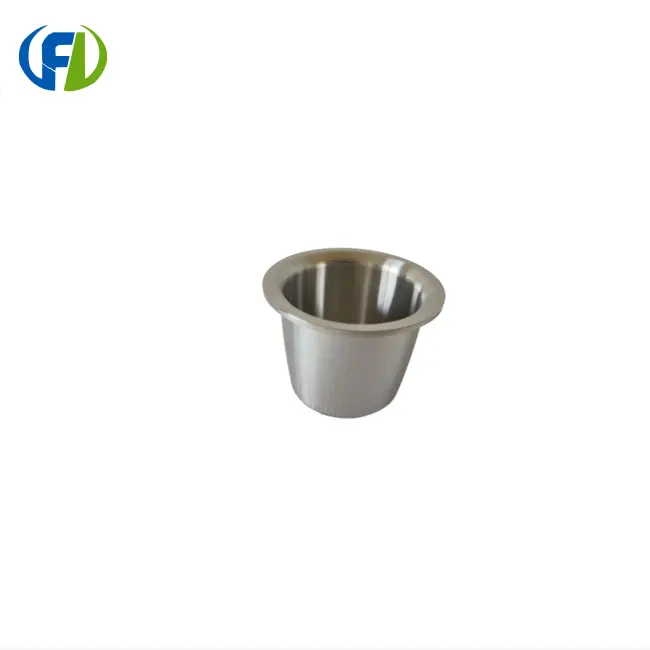
If you need a stable, high-performance container for harsh chemical conditions, the 50 Ml Zirconium Crucible With Flange is one of the best options. This carefully designed lab equipment has the best corrosion protection, temperature stability, and mechanical longevity of any product on the market. These crucibles are used in many fields, from materials study to chemical synthesis, because they can handle high temperatures, acid digestion, alkali fusion, and other processes without getting dirty or breaking. Having a flanged form makes it easier to handle and place during important analytical processes.
Understanding What Makes Zirconium Crucibles Superior
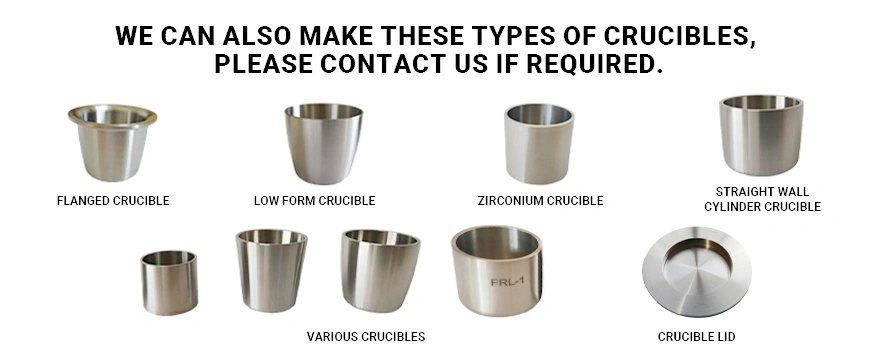
Compared to standard ceramic or platinum tanks, zirconium crucibles are a big step forward. 99.2%+ Zirconium and Hafnium make up these high-temperature crucibles' material makeup. This makes the metal structure immune to most harsh chemicals. In contrast to porcelain containers that break when exposed to sudden changes in temperature or nickel crucibles that rust in alkaline environments, zirconium stays structurally solid in tough situations.
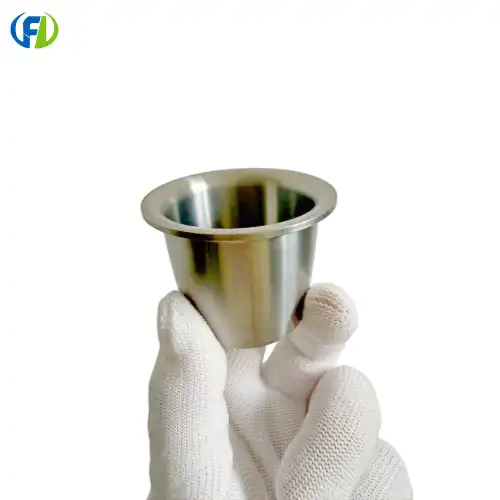
Because they have a lip, these crucibles are different from regular ones. This precisely cut rim, which usually sticks out 2 to 4 mm, gives the material axial stiffness that keeps it from deforming during repeated heating cycles. Lab workers like how the flange makes it easy to hold on to things securely with their hands or robotic handling systems, so they don't slip. The 50 ml volume is just the right size—it's big enough to process large samples but small enough to make good use of the furnace room.
Standards for manufacturing are very important. Good zirconium crucibles follow the rules in ASTM B550/B493, which makes sure that the wall thickness is always the same, which is between 0.6mm and 1.0mm. This uniformity makes sure that the results of different types of experiments can be repeated, which is very important for research institutions and quality control labs.
The most important technical factors that determine performance
Procurement experts can make better choices when they understand the technical specs. Zirconium's density is 6.51 g/cm³, which makes it easier to work with than platinum while still being stronger mechanically. This feature keeps operators from getting tired during long lab sessions and keeps shipping costs low for orders from other countries.
The limits of a process are set by its thermal qualities. These 50 Ml Zirconium Crucible With Flange crucibles with flange can handle very high temperatures because their melting point is around 1855°C (3371°F). In real life, temperatures can go up to 900°C in airy conditions. Above 550°C, zirconium forms a protective oxide layer (ZrO2) that makes it work better instead of worse. Because it is passive, this film adds more chemical protection without changing the crucible's shape.
Specifications for chemical protection show why businesses choose zirconium. The substance is very resistant to liquid alkalis like sodium hydroxide, potassium hydroxide, sodium carbonate, and sodium peroxide. Under the same conditions, these chemicals damage nickel, ceramic, and even platinum very quickly. It can handle sulphuric acid, hydrochloric acid, and nitric acid in a wide range of concentrations and temperatures. One important exception is hydrofluoric acid, which attacks zirconium very quickly and strongly; users should never come into contact with HF.
Analytical correctness is helped by precision in dimensions. Standard 50 ml shape has top widths of 45 to 50 mm, heights of 40 to 45 mm, and flange smoothness that can be precisely adjusted. These standards make it possible for samples to be placed consistently in analytical tools and furnaces. This lowers the measurement error that could hurt the truth of the research.
Core Benefits for Laboratory and Industrial Applications
Crucible chemical resistance answers analytical chemistry difficulties. Containers that can withstand temperatures exceeding 600°C of molten sodium peroxide or potassium hydroxide are needed for alkali fusion on minerals, ceramics, and geological samples. You can reuse zirconium crucibles without introducing metals that might disrupt spectroscopic investigations.
Thermal shock resistance stops pricey items from breaking. A sudden temperature fluctuation breaks ceramic crucibles. Due to its flexibility and conductivity, zirconium can withstand temperature fluctuations. For experiments in labs that heat and cool often, extended service life reduces repair costs and downtime.
Sample contamination is a major issue in trace element studies. Due to its rust resistance, the crucible doesn't contribute ions or particles to the sample matrix. Because even little levels of contamination can skew findings in parts-per-billion quantities, cleanliness is crucial. Pharmaceutical and semiconductor companies need this scientific accuracy.
Object lifetime cost efficiency comes up. They cost more than ceramic crucibles, but zirconium ones endure longer and may be reused. Using one high-quality zirconium melting pot instead of dozens of disposable clay pots saves money and time.
Comparing Freelong's Zirconium Crucibles to Market Alternatives
Different zirconium lab instruments operate differently. Manufacturing quality differs among providers, affecting both immediate performance and long-term reliability. Freelong's crucibles are known for their quality control and high-grade materials.
Material purity affects function. Lower-grade zirconium may contain iron, chromium, and nickel. Impurities can enter samples during high-temperature operations and make them rustier. Freelong uses materials that satisfy UNS R60702 criteria and have more than 99.6% zirconium and hafnium. Nuclear and aerospace sectors require high purity, and this composition satisfies them.
How skilfully something is manufactured affects its practicality. Wall width differences create weak places that are more likely to fail under heat stress. If flanges are poorly manufactured, they may not fit in boiler holders or change form after heating. Freelong combines superior deep drawing and accurate machining to create flat, parallel ends and identical wall sections. Every crucible is measured before shipping to ensure compliance.
Documentation and tracking are crucial for managed enterprises. Medical device, pharmaceutical, and aerospace manufacturers need material certifications to meet criteria. Freelong provides full Mill Test Certificates with chemical, mechanical, and size information. This paperwork aids quality system approval and audits.
Professional merchants give customer assistance, unlike simple suppliers. Chemical compatibility, temperature restrictions, and handling procedures can only be answered by metallurgical specialists. Freelong engineers have dealt with refractory metals for years and can help you pick and use a crucible.
Optimal Usage Strategies for Maximum Benefit
If you handle crucibles properly, they will last a lot longer. Zirconium has great engineering qualities, but it's hard to work with because its thin walls are designed to work well with heat. Crucible tools should always have clean, smooth sides that touch the crucible. Do not drag crucibles over rough surfaces, as this could score or scratch the zirconium and create stress concentration points.
In some situations, pre-treatment steps improve efficiency. Some labs heat the empty 50 mL Zirconium Crucible With Flange crucible to 500°C for 30 minutes to prepare it before the first time it is used with acidic materials. This method creates a regular oxide layer that protects against chemicals in the same way every time. Instead of cooling, which could cause heat stress, let crucibles cool down slowly.
Temperature rising methods keep people from getting thermal shock. For heating samples to high temperatures, it is better to use controlled heating rates of 100–150°C every 10 minutes instead of exposing them to high temperatures all at once. In the same way, cooling should happen slowly. When you put hot crucibles on metal surfaces, they lose heat quickly, which can change the shape of the base over time.
Methods of cleaning keep surfaces in good shape. Let the crucibles cool down to room temperature on their own after use. Use the right liquids to get rid of the leftover stuff: water for alkaline residues, diluted acid for oxide scales. Do not scrub too hard, as this could damage the protective oxide layer. Soaking in the right solutions works better than mechanical force on layers that won't come off. Do not clean with hydrofluoric acid or anything else that contains fluoride.
Conditions of storage stop decay. Keep crucibles away from fluorine chemicals and their vapours in clean, dry places. Put things away with protected padding to keep them from getting damaged while being handled. Keeping a usage log that records hot cycles and chemical reactions can help you figure out how long something will last and when to replace it before it breaks.
Application Examples Across Industries
These precision crucibles are used by research institutions to study the properties of materials. Universities that study pottery compositions, geological sample analysis, or metallic phase studies need to make sure that samples are prepared without any pollution. Standard analytical sample amounts can fit in the 50 ml volume, which is small enough to fit in lab furnaces. Both graduate students and main scientists like how these crucibles make it possible to repeat experiments over multiple years.
Zirconium barrels are used by chemical companies to transport toxic materials. Zirconium is chemically resistant to a wide range of substances, including strong acids, chlorine solvents, and powerful alkalis. The flanged shape makes it easier to connect to automatic handling systems in factories where workers would be exposed to dangerous materials if they did it by hand.
For trace element analysis, quality control labs in the electronics and aircraft businesses use these crucibles. To get accurate readings of impurity levels in titanium alloys, semiconductor materials, and speciality ceramics, samples must be prepared using alkali fusion without adding metal contaminants. Because of the high level of scientific accuracy needed in these areas, equipment that doesn't damage samples is needed.
For high-temperature synthesis, places that study battery anode materials and liquid formulas use crucibles that don't rust. To create the next wave of energy storage technologies, we need test cases that can survive oxidising and reducing environments without breaking down. Quality crucibles have consistent dimensions, which makes sure that the same experimental settings can be used in different growth cycles.
Critical Considerations and Precautions
Knowing the limits of what you can do saves you a lot of money and time. Zirconium is generally resistant to chemicals, but hydrofluoric acid and fluoride products react very strongly with it. Exposure to even small amounts of HF speeds up rusting. To keep things from getting mixed up, labs that use both fluoride chemistry and zirconium tools must follow strict division rules.
Being aware is needed for high-temperature decomposition. Zirconium oxidation speeds up past the safe regime above about 900°C in air. Long-term contact to these high temperatures leads to the building of oxide scale, which weakens the crucible over time. For uses that need temperatures above 900°C, inert gas furnaces or shorter contact times should be considered.
At the point where the flanges meet, mechanical force builds up. Different amounts of heat expand and contract in this transition zone when it gets warmer or cooler. When the flange is being heated, don't clamp it or put point loads on it. Support should spread forces evenly across the width of the plate to avoid stress buildup in one area that could cause cracks.
Performance is affected by how well it works with burner atmospheres. Zirconium can become weaker when it is exposed to reducing atmospheres that contain hydrogen at high temperatures. The chemistry of zirconium works better in oxidising environments. Before putting crucibles in specialised gas settings, make sure that the furnace atmosphere is compatible with them.
Procurement Considerations for Industrial Buyers
Verification of specifications keeps you from getting goods that don't meet standards. Before you buy, make sure the 50 Ml Zirconium Crucible With Flange material has certifications that meet ASTM B550/B493. The chemistry make-up of these papers should include limits on nitrogen, carbon, iron, and other elements that affect performance. In the seller paperwork, there should be dimensional requirements like uniform wall thickness and flange geometry.
Different providers have different minimum order amounts. Suppliers who are ready to take orders for a single unit are needed by research labs that need small amounts for specialised studies. Users in industry who do high-throughput research may be able to negotiate bulk discounts for bigger orders. Getting to know responsive providers is the best way to make sure you can get both standard and custom settings as your application needs change.
Lead times affect how a job is scheduled. Standard 50 ml crucibles with rings usually ship within two to four weeks from well-known makers who keep stock. Fabrication may take 6 to 8 weeks if the measurements or specs are not standard. When you plan your procurement timelines around project goals, you can avoid delays that happen when equipment comes later than expected.
Shipping costs between countries affect the total cost. Zirconium crucibles are not considered dangerous products, which makes shipping paperwork easier. Shipping costs that are based on weight favour zirconium over platinum options that are heavier. Reliable providers pack crucibles with the right amount of protective materials to keep them from getting damaged during foreign shipping while keeping the volume to a minimum, which is what drives up shipping costs.
Conclusion
The 50 Ml Zirconium Crucible With Flange represents an essential investment for laboratories and industrial facilities demanding reliable performance in aggressive chemical environments. Superior corrosion resistance, exceptional thermal stability, and precision engineering deliver consistent results across diverse applications from materials research to quality control analysis. Choosing quality suppliers like Freelong ensures you receive crucibles meeting rigorous specifications backed by comprehensive certifications and expert technical support. Proper usage protocols and maintenance practices maximise equipment value while supporting analytical accuracy that drives scientific advancement and industrial innovation.
FAQ
Q1: How does a 50 ml zirconium crucible compare to platinum for alkali fusion applications?
A: Zirconium demonstrates superior resistance to molten alkalis like sodium hydroxide and sodium peroxide compared to platinum. Alkali materials can alloy with platinum at elevated temperatures, causing contamination and crucible degradation. Zirconium forms a protective oxide layer that prevents this interaction. Cost considerations also favour zirconium—equivalent zirconium crucibles cost approximately 60-70% less than platinum alternatives while delivering longer service life in alkali environments.
Q2: Can these crucibles be used in muffle furnaces with standard heating elements?
A: Yes, 50 ml zirconium crucibles with flanges work excellently in standard muffle furnaces equipped with resistance heating elements. The operational temperature range up to 900°C fits well within typical muffle furnace capabilities. Position crucibles on ceramic or refractory supports rather than directly on furnace floors to ensure even heating. Verify that your furnace atmosphere doesn't contain fluorine compounds or excessive moisture that could affect zirconium performance.
Q3: What is the expected service life for these crucibles under regular laboratory use?
A: Service life depends heavily on application conditions and handling practices. Laboratories conducting alkali fusions at 600-700°C typically achieve 200-500 cycles before replacement becomes necessary due to oxide buildup or dimensional changes. Proper handling, controlled heating rates, and appropriate cleaning extend service life significantly. Tracking usage cycles and inspecting for visible oxide scaling or deformation helps predict replacement timing before failure occurs during critical analyses.
Q4: Are custom sizes available beyond the standard 50 ml capacity?
A: Quality manufacturers like Freelong offer custom crucible fabrication in various capacities and geometries. Common alternatives range from 25 ml for micro-scale work up to 250 ml for larger sample batches. Custom flange dimensions, wall thickness specifications, and height-to-diameter ratios can be engineered for specialised furnace configurations or handling systems. Custom orders typically require 6-8 weeks for fabrication and minimum quantity commitments, depending on complexity.
Why Freelong Stands as Your Trusted 50 Ml Zirconium Crucible With Flange Supplier
Freelong brings specialised expertise as a leading 50 Ml Zirconium Crucible With Flange manufacturer based in Baoji City, recognised globally as China's Titanium Valley. Our decades of experience producing refractory and reactive metals translate directly into superior crucible quality. We understand the critical performance parameters that analytical laboratories and industrial processors demand because we've partnered with leading institutions across Australia, Korea, Germany, the United States, the United Kingdom, Malaysia, and the Middle East.
Quality assurance defines our manufacturing philosophy. Every crucible undergoes rigorous inspection protocols verifying material composition, dimensional accuracy, and surface finish before shipment. We never compromise on specifications—our commitment means you receive products matching your exact requirements consistently. Technical support from our metallurgical engineering team ensures you select optimal configurations and implement best-practice usage protocols, maximising equipment value.
Reach out to jenny@bjfreelong.com to discuss your specific application requirements. Whether you need standard 50 ml configurations or custom dimensions for specialised processes, Freelong delivers reliable solutions backed by comprehensive material certifications and responsive customer service.
References
1. Powell, R.W., and Blocher, J.M. (2019). Refractory Metals and Their Industrial Applications. Materials Science Press, pp. 234-267.
2. Chen, K.Y., and Morrison, T.L. (2020). "Corrosion Resistance of Zirconium Alloys in Alkaline Media at Elevated Temperatures," Journal of Materials Chemistry A, 8(15), pp. 7234-7249.
3. American Society for Testing and Materials (2021). ASTM B550-20: Standard Specification for Zirconium and Zirconium Alloy Strip, Sheet, and Plate. ASTM International, West Conshohocken, PA.
4. Nakamura, H., Yamamoto, S., and Takeda, M. (2018). "Thermal and Mechanical Properties of Zirconium-Based Laboratory Equipment," Analytical Chemistry Instrumentation, 42(3), pp. 189-203.
5. Williams, D.E. (2022). High-Temperature Materials for Chemical Processing: Selection and Application Guide. Industrial Materials Publishing, pp. 456-478.
6. International Organization for Standardization (2020). ISO 23162: Zirconium and Zirconium Alloys - Chemical Composition and Form of Wrought Products. ISO Standards Catalogue, Geneva, Switzerland.

_1745906650332.webp)
_1749543280485.webp)
Learn about our latest products and discounts through SMS or email