- English
- French
- German
- Portuguese
- Spanish
- Russian
- Japanese
- Korean
- Arabic
- Greek
- German
- Turkish
- Italian
- Danish
- Romanian
- Indonesian
- Czech
- Afrikaans
- Swedish
- Polish
- Basque
- Catalan
- Esperanto
- Hindi
- Lao
- Albanian
- Amharic
- Armenian
- Azerbaijani
- Belarusian
- Bengali
- Bosnian
- Bulgarian
- Cebuano
- Chichewa
- Corsican
- Croatian
- Dutch
- Estonian
- Filipino
- Finnish
- Frisian
- Galician
- Georgian
- Gujarati
- Haitian
- Hausa
- Hawaiian
- Hebrew
- Hmong
- Hungarian
- Icelandic
- Igbo
- Javanese
- Kannada
- Kazakh
- Khmer
- Kurdish
- Kyrgyz
- Latin
- Latvian
- Lithuanian
- Luxembou..
- Macedonian
- Malagasy
- Malay
- Malayalam
- Maltese
- Maori
- Marathi
- Mongolian
- Burmese
- Nepali
- Norwegian
- Pashto
- Persian
- Punjabi
- Serbian
- Sesotho
- Sinhala
- Slovak
- Slovenian
- Somali
- Samoan
- Scots Gaelic
- Shona
- Sindhi
- Sundanese
- Swahili
- Tajik
- Tamil
- Telugu
- Thai
- Ukrainian
- Urdu
- Uzbek
- Vietnamese
- Welsh
- Xhosa
- Yiddish
- Yoruba
- Zulu
Everything You Need to Know About Nitinol Wire
When sourcing advanced materials for precision engineering, understanding the capabilities of specialty alloys can transform product performance. Nitinol wire stands out as a shape memory alloy combining nickel and titanium in near-equal proportions, offering remarkable superelasticity and thermal memory characteristics. Nitinol Wire 0.1 Mm represents an ultra-fine gauge solution particularly valued in medical device manufacturing, micro-robotics, and precision electronics where space constraints demand exceptional mechanical properties without sacrificing durability or biocompatibility.
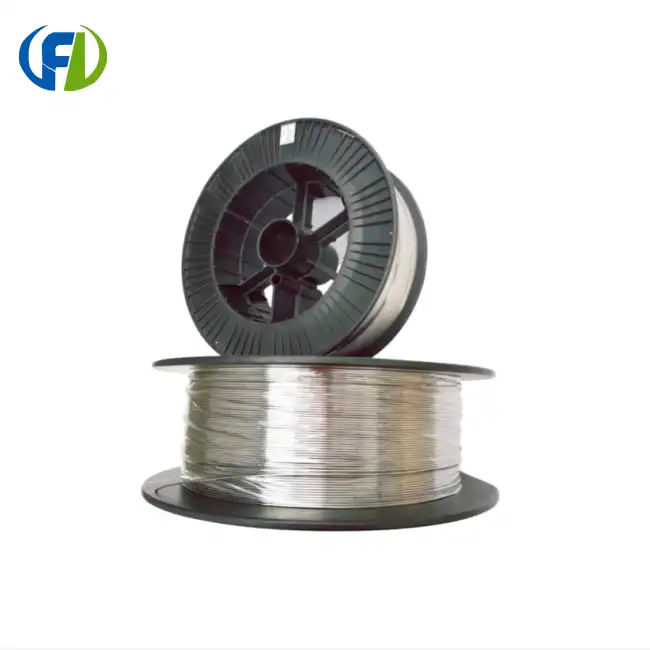

Understanding Nitinol Wire 0.1 mm: Properties and Manufacturing
Core Material Properties
Nitinol Wire 0.1 Mm has special physical properties that help engineers solve important problems. The metal is usually made up of 55.8% nickel and the rest titanium. The purity levels are very strict, and trace elements like carbon, oxygen, and nitrogen are counted in parts per million. This exact recipe makes a substance with a density of 6.45 g/cm³ and a melting point of 1310°C, which makes it thermally stable for use in tough situations.
The wire has a maximum tensile strength of more than 1300 MPa when it is cold-worked, but its exact performance depends on how it is heated. This material is unique because it can rebound from strains of up to 8% without permanently changing shape. This is something that regular metals can't do. The superelastic behavior shows up as a non-linear stress-strain curve with clear loading and unloading plateaus. This makes it work like a constant-force spring in situations where consistent pressure is needed.
Manufacturing Process Excellence
Making Nitinol Wire 0.1 Mm needs expert metalworking. Keep makeup with Hoover induction melting. Hot and cold drawing with smaller dies follows. Draw-hardening requires careful annealing between stages.
Heat is needed for manufacturing. By maintaining particular temperatures, engineers "set" the form in memory while shaping wire. Shape affects Active Af (Austenite end temp). At this temperature, the material entirely austenitizes. Procurement teams must verify the Active Af, which assesses wire thermal performance after processing, not the Ingot Af, which is measured in raw materials.
Surface coatings affect product durability. Electropolished wire eliminates microcracks and extends fatigue life, making it ideal for medical implants that are bent and twisted. The oxide layers on as-drawn wire remain from manufacturing.
Dimensional Precision Standards
To keep the diameter at 0.1 mm, you need to use advanced quality control. Manufacturers use dual-axis laser micrometers for non-contact size checking because contact measurement methods could bend the fine wire. Specifications for tolerances usually call for accuracy of ±0.002 mm, and reliable providers will show process capability indices (Cpk) higher than 1.33 to ensure statistical control. This consistency in dimensions has a direct effect on how predictable the mechanical response is in precision assemblies.
Nitinol Wire 0.1 mm vs Other Materials: Making the Right Choice
Comparative Material Analysis
When creating small devices, engineers often compare Nitinol Wire 0.1 Mm to options made of stainless steel, copper, and pure titanium. When tight bend radii are put on 0.1 mm diameter stainless steel, it deforms plastically, which causes permanent kinking that makes it less useful. Copper is a great conductor of electricity, but it is not strong enough to withstand multiple activation cycles. Pure titanium is biocompatible, but it can't compare to Nitinol when it comes to its superelastic rebound or shape memory.
When space is limited, the mechanical benefit becomes clear. Nitinol Wire 0.1 Mm can stretch back to its original shape after being stretched by about 8%, while stainless steel wire permanently changes shape when stretched by 2% to 3%. This difference directly affects the stability of the product: Nitinol-based devices keep working even when they are put under loads that would stop other materials from working. The material is also very resistant to kinks, which is important for guidewires and steerable catheters that have to go through complicated anatomical pathways.
Gauge Selection Considerations
There are important trade-offs between Nitinol Wire 0.1 Mm and 0.2 mm Nitinol wire. The finer gauge gives you more options for how to move through tighter curves and smaller openings, which are very helpful for neurovascular interventions. Because thinner wire goes through heating and cooling cycles more quickly, the smaller cross-sectional area also lets it respond faster to temperature when used as actuator elements.
The Nitinol Wire 0.1 Mm specification, on the other hand, generates a proportionally lower amount of absolute force. The 0.2 mm diameter may be better for applications that need a lot of actuation force, even though it is less flexible. Because of the higher failure rates during quality checking and the fact that they are harder to make, finer gauges usually have higher prices. When making a procurement choice, these factors should be weighed against the needs of the individual application, and the buyer should decide whether flexibility or force generation is more important.
Regulatory and Certification Requirements
Material compliance rules are very strict for companies that make medical devices. ASTM F2063 is the primary standard that controls Nitinol for surgical implants. It sets limits on its composition, its mechanical properties, and the temperature ranges where it can change form. Under ISO 5832-11, which talks about nickel release and corrosion protection in physiological settings, devices meant for cardiovascular use need extra testing.
Different specifications may be used for industrial and electronic applications. However, AMS standards are often required for aerospace applications to make sure that materials can be tracked and are always the same. Teams in charge of buying things should make sure that sellers give them the right Certificates of Conformance (CoC) and material test results that list the properties of each batch, such as the temperature at which it changes, its tensile strength, and its dimensions.
How to Procure Nitinol Wire 0.1 mm: A B2B Buyer's Guide
Supplier Qualification Criteria
Verification of certification is the first step in finding qualified suppliers for Nitinol Wire 0.1 Mm. Manufacturers with a good reputation have quality management systems that are at least ISO 9001 certified. Medical-grade suppliers have ISO 13485 registration, which is only for medical devices. Factory surveys give buyers more confidence because they let them check directly the factory's production skills, quality control procedures, and tracking systems.
Geographical factors affect the dependability of the supply chain. Titanium Valley in Baoji City, China, has become a center for making specialty metals like Nitinol. It is close to places where you can get raw materials, and there is a lot of technical knowledge in one place. Manufacturers in this area usually offer reasonable prices while still meeting international quality standards. However, buyers should check the capabilities of each facility instead of depending only on the area's image.
Pricing Structure and MOQ Expectations
The price of Nitinol Wire 0.1 Mm is based on the special handling that is needed for very small gauges. Rates on the market depend on the size of the order, the surface finish requirements, and the transformation temperature needs. For normal specs, the minimum order quantity is usually between 100 and 500 meters. For custom Active Af temperatures or special surface treatments, you might need to make a bigger commitment to cover the costs of tooling and process approval.
Lead times are usually 4 to 8 weeks for stock items, but 10 to 16 weeks may be needed for special orders that need specific heat treatment methods from the time the order is confirmed until it is delivered. These dates should be taken into account in procurement strategies, especially when coordinating with the development cycles of new products or setting up safety stocks to keep production going.
OEM Partnership Opportunities
Custom line specs give companies that are making their own products a competitive edge. OEM partnerships make it possible to fine-tune Active Af to get the best performance at certain working temperatures. This is very important when building actuators with small activation windows or superelastic parts that work across set temperature ranges.
Shape-setting services can be part of working together with wire suppliers; manufacturers can provide mandrels or fixtures, and suppliers can deliver parts that are already formed and ready to be put together. This processing that adds value cuts down on steps later in the manufacturing process and makes the dimensions more consistent. Talking about these options during the first stages of sourcing helps find providers who can support creativity beyond just providing basic wire.
Advantages and Application Scenarios of Nitinol Wire 0.1 mm
Mechanical Performance Benefits
Because of the way its crystalline phases change, Nitinol Wire 0.1 Mm has a lot of benefits. When engineers work on difficult projects, they use these core success traits:
- Superelastic Recovery: The wire may stretch considerably during deployment and return to its original shape without setting. This lets electronics weave complex routes and grow into useful forms.
- The loading stress peak provides a constant force during deflections. This prevents linear elastic materials from springing and maintains vascular stent and dental archwire pressure.
- Fatigue Resistance: Fully handled and electropolished Nitinol Wire 0.1 Mm can withstand millions of bending cycles. This is especially true when surface finishing reduces stress concentrations that propagate cracks in other materials.
- Biocompatibility: Years of use in heart and bone implants have proved that the inactive titanium oxide coating on exposed surfaces prevents physiological corrosion and is tissue compatible.
- Direct mechanical advantages differentiate the product. Nitinol wire devices are smaller, improve patient care, and need less maintenance.
Medical Device Applications
Neurovascular procedures employ 0.1 Mm Nitinol Wire. Brain aneurysm flow is restricted by braided Nitinol wire meshes of this gauge. Their porous structures open arteries and modify blood flow. The tiny wire diameter allows complex braiding patterns that manage porosity. Superelasticity lets the device fit inside microcatheters for transit and self-expand to the vessel diameter when deployed.
Nitinol wire cores' torque-transfer capabilities allow steerable cardiac catheterisation guidewires. Pulled nitinol guidewires bend readily over vascular curvature but maintain column strength. In tight corners, stainless steel alternatives flap and kink. Thin Nitinol Wire 0.1 Mm allows tiny devices to enter peripheral and coronary arteries.
In orthodontics, nitinol archwires provide constant pressure. Automatic force maintenance with superelastic Nitinol cuts patient visits and treatment time. Moving teeth needs stainless steel adjustment. Long-term oral usage of non-rusting surface.
Industrial and Robotics Solutions
Micro-actuators convert electrical energy into mechanical motion using shape memory. When electricity runs through Nitinol Wire 0.1 Mm, resistive heating changes martensite to austenite. This strongly contracts the wire. The tiny diameter enables the gauge to cool down rapidly once power is switched off, making it quicker than bigger gauges. Auto-focus camera devices and accurate valve control benefit from this.
Roboticists utilise Nitinol wire to construct soft robots and muscle-like prostheses. They outperform ordinary motors for biomimetic motion and tiny packaging due to their excellent power-to-weight ratio and silent operation. Because it makes ordinary motors smaller, the Nitinol Wire 0.1 Mm gauge is helpful in small spaces.
In electronics production, fine Nitinol wire controls temperature and forms flexible connections for deployable structures. It resists corrosion and absorbs mechanical stress vibrations, making it dependable in damp or chemically hostile circumstances.
Ensuring Quality and Trust When Choosing Nitinol Wire 0.1 mm Suppliers
Certification Verification Protocols
Reviewing the supplier's paperwork is the first step in establishing trustworthiness for Nitinol Wire 0.1 Mm. Ask for up-to-date copies of your ISO certifications and check your registration through the records of approved certification bodies. Instead of corporate-level certifications that might not apply to all production locations, medical device suppliers should give you ISO 13485 certificates that cover the specific factory that makes your wire.
Each batch should come with a material test record that lists the transformation temperatures (measured using Differential Scanning Calorimetry, or DSC), tensile qualities from representative samples, and data for verifying the sizes. These reports make it possible to track back to specific production lots, which lets you connect device performance during validation testing and backs up regulatory submissions.
Continuous Quality Monitoring
Quality assurance includes more than just the initial inspection; it also includes ongoing checks of the material that is provided. Eddy current testing finds flaws on the surface of fine wire, and some advanced providers use continuous inline checking to get rid of parts of the wire that have inclusions or die marks that are bigger than 10% of its diameter. This "detect and cut" method keeps customers from getting defective goods, but buyers should ask about rejection rates and how sensitive the defect detection is when evaluating suppliers of Nitinol Wire 0.1 Mm.
Consistency in transformation temperature across production runs has a huge impact on how well the gadget works. Changes of just 5°C in Active Af can change plateau stress levels, making wire either too stiff or too flexible for its intended use. Suppliers who can tightly control the temperature properties—usually within ±3°C of batch-to-batch variation—should be chosen for uses where reliable mechanical behavior is important.
Long-term Partnership Value
When you deal directly with makers, you get more benefits than just lower prices. When application problems come up, direct communication speeds up the process of solving technical issues. Suppliers who care about their customers' success often offer support for material analysis, application engineering advice, and joint development help that you can't get from dealers who are only interested in making transactions go as smoothly as possible.
Look at how responsive the supplier was to your first questions as a sign of how good the partnership will be in the future. When it comes to ongoing support, manufacturers who answer technical questions fully, give detailed quotes that address your specific needs, and show they understand your application usually do a better job than vendors who offer generic pricing without engagement.
Conclusion
Nitinol Wire 0.1 Mm is a unique material that can solve problems that other materials can't in precision engineering settings. Superelasticity, shape memory, and biocompatibility all work together to make new devices possible in the medical, industrial, and technology fields. To do good sourcing, you need to know the properties of the materials you're buying, check the records of your suppliers, and build relationships with makers who can consistently show quality and technical knowledge. When businesses choose the right suppliers and specifications, they set themselves up to make unique products that give them measurable performance advantages in competitive markets.
FAQ
1. Can Nitinol Wire 0.1 Mm Be Welded Easily?
Titanium oxide builds up and makes traditional bonding useless. Laser welding or mechanical crimping is the normal way to join things in the business. When aggressive flux is used, hydrogen embrittlement can happen in small cross-sections, which weakens the mechanical properties of Nitinol Wire 0.1 Mm.
2. What Affects Fatigue Life in This Wire Gauge?
The surface finish has a big effect on how long something lasts. Electropolished surfaces get rid of the tiny cracks that form when wire is drawn, making it much more resistant to fatigue than wire that hasn't been electropolished—this is necessary for medical implants that are constantly bending.
3. What Is the Minimum Bend Radius?
Nitinol recovers from approximately 8% strain. For Nitinol Wire 0.1 Mm in a superelastic state, this means that it can be wrapped around mandrels with diameters as small as 1.5–2.0 mm without permanently changing shape. This shows that it is much more flexible than other materials.
4. Why Does Spooling Tension Matter?
When there is a lot of winding tension, the martensite phase changes because of the stress. Long-term storage under tension can speed up the aging process or permanently change the shape of something. Layer-wound, low-tension spooling keeps the qualities of the material stable while it is being stored and shipped.
Partner with Freelong for Premium Nitinol Wire Solutions
Certified Nitinol Wire 0.1 Mm is made to strict standards in China's Titanium Valley by Baoji Freelong New Material Technology Development Co., Ltd. Our factory follows strict quality control procedures that include laser micrometry, DSC transformation temperature verification, and continual eddy current testing to make sure that the dimensions are always the same and the surface finish is free of flaws. Aerospace, medical device, and technology companies in the US, Europe, and Asia all come to us for ASTM F2063-compliant materials and unique Active Af specifications that meet your exact application needs.
Our technical team works with OEM partners to create custom heat treatment protocols, offer shape-setting services, and help with application engineering. We offer factory-direct prices, clear certification paperwork, and reliable delivery schedules, whether you need small amounts for study or large amounts for production with strict batch consistency. You can talk to our procurement specialists about your Nitinol wire needs, get material test reports, or set up sample shipments by emailing jenny@bjfreelong.com. As a well-known Nitinol Wire 0.1 Mm supplier to manufacturers around the world, we're dedicated to providing materials that improve the performance of your products and shorten the time it takes to develop them.
References
1. Duerig, T., Pelton, A., and Stöckel, D. (1999). An Overview of Nitinol Medical Applications. Materials Science and Engineering: A, 273-275, 149-160.
2. Morgan, N. B. (2004). Medical Shape Memory Alloy Applications—The Market and Its Products. Materials Science and Engineering: A, 378(1-2), 16-23.
3. Shabalovskaya, S. A. (2002). Surface, Corrosion and Biocompatibility Aspects of Nitinol as an Implant Material. Bio-Medical Materials and Engineering, 12(1), 69-109.
4. ASTM International. (2018). ASTM F2063-18: Standard Specification for Wrought Nickel-Titanium Shape Memory Alloys for Medical Devices and Surgical Implants. West Conshohocken, PA: ASTM International.
5. Pelton, A. R., Schroeder, V., Mitchell, M. R., Gong, X. Y., Barney, M., and Robertson, S. W. (2008). Fatigue and Durability of Nitinol Stents. Journal of the Mechanical Behavior of Biomedical Materials, 1(2), 153-164.
6. Machado, L. G., and Savi, M. A. (2003). Medical Applications of Shape Memory Alloys. Brazilian Journal of Medical and Biological Research, 36(6), 683-691.

_1767949635209.png)
_1773909267232.png)
_1748930645200.webp)
_1763520346907.png)
Learn about our latest products and discounts through SMS or email