- English
- French
- German
- Portuguese
- Spanish
- Russian
- Japanese
- Korean
- Arabic
- Greek
- German
- Turkish
- Italian
- Danish
- Romanian
- Indonesian
- Czech
- Afrikaans
- Swedish
- Polish
- Basque
- Catalan
- Esperanto
- Hindi
- Lao
- Albanian
- Amharic
- Armenian
- Azerbaijani
- Belarusian
- Bengali
- Bosnian
- Bulgarian
- Cebuano
- Chichewa
- Corsican
- Croatian
- Dutch
- Estonian
- Filipino
- Finnish
- Frisian
- Galician
- Georgian
- Gujarati
- Haitian
- Hausa
- Hawaiian
- Hebrew
- Hmong
- Hungarian
- Icelandic
- Igbo
- Javanese
- Kannada
- Kazakh
- Khmer
- Kurdish
- Kyrgyz
- Latin
- Latvian
- Lithuanian
- Luxembou..
- Macedonian
- Malagasy
- Malay
- Malayalam
- Maltese
- Maori
- Marathi
- Mongolian
- Burmese
- Nepali
- Norwegian
- Pashto
- Persian
- Punjabi
- Serbian
- Sesotho
- Sinhala
- Slovak
- Slovenian
- Somali
- Samoan
- Scots Gaelic
- Shona
- Sindhi
- Sundanese
- Swahili
- Tajik
- Tamil
- Telugu
- Thai
- Ukrainian
- Urdu
- Uzbek
- Vietnamese
- Welsh
- Xhosa
- Yiddish
- Yoruba
- Zulu
Zirconium Crucible for Semiconductor Manufacturing: Tips for Optimal Performance and Longevity
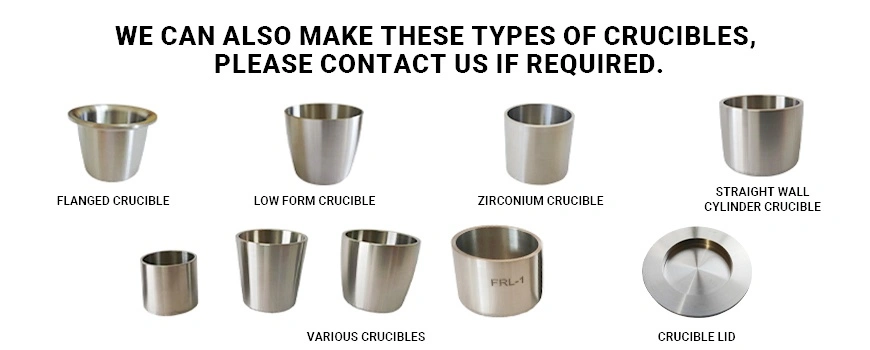
When semiconductor manufacturers face contamination challenges and equipment failures during high-temperature material processing, selecting the right crucible becomes critical. A 99% Purity Zirconium Crucible offers exceptional chemical resistance and thermal stability that directly impact production yield. These high-performance vessels, manufactured from industrial-grade zirconium metal conforming to ASTM B550/R60702 standards, contain a minimum of 99.2% zirconium plus hafnium. They solve critical pain points that ceramic and lower-grade metallic alternatives simply cannot address, particularly in aggressive chemical environments where contamination control determines success or failure.
 |
 |
 |
 |
WhatsApp&Wechat: 86 13571190943
E-mail:Jenny@bjfreelong.com

Understanding 99% Purity Zirconium Crucibles in Semiconductor Manufacturing
Understanding what makes high-purity zirconium crucibles different from other lab vessels is the first step in making sure that semiconductor processing goes smoothly.
Material Composition and Physical Properties
A 99% Purity Zirconium Crucible has physical qualities that make it ideal for tough uses. The stuff has a mass of 6.51 g/cm³, a melting point of about 1852°C (3365°F), and a thermal expansion coefficient of 5.8 µm/m·°C. These requirements make sure that the dimensions stay the same through many thermal cycles. When heated, the crucible makes a solid, self-healing film of zirconium oxide (ZrO2). This film saves the base from further corrosion. This passive layer sets zirconium apart from metals like nickel, which bends easily when stressed, or platinum, which has trouble wetting some melts.
For normal lab sizes from 25ml to 100ml, deep drawing or continuous die-stamping is used in the manufacturing process. Wall thickness consistency, usually between 0.6 mm and 1 mm, stops hot spots and early breaking before they happen during fusion operations. Larger welded crucibles go through a thorough dye penetrant review to look for microcracks. Seamless choices are still chosen because they don't have any weak spots in the structure.
Chemical Resistance and Industry Standards
Zirconium is very strong against molten alkalis like sodium hydroxide (NaOH) and potassium hydroxide (KOH), carbonates like sodium carbonate (Na2CO3), and peroxides like sodium peroxide (Na2O2). In its solid state, this material is completely resistant to hydrofluoric acid (HF). However, it is not very resistant to sulfuric acid and acidic fluoride fusions when they are forced together. As long as the chemical composition meets the requirements set out in ASTM B550, Zr+Hf must be greater than 99.2%, and Fe+Cr must be less than 0.2%. This makes sure that there is little interference during trace element analysis.
Performance Optimization Tips for Zirconium Crucibles in Semiconductor Applications
To make crucibles last as long as possible, operators need to follow procedures that lower the risk of thermal stress and contamination.
Controlled Thermal Cycling Protocols
One of the main ways that zirconium crucibles break is through thermal shock. Slowly raising the temperature—usually no more than 10°C per minute up to 600°C—lets the protected oxide layer form evenly. Similar controlled rates should be used for cooling, especially when going from temperatures above 900°C in a furnace to room temperature. When temperatures change quickly, they put stress on the material, which builds up over time and eventually causes cracks to form. Putting in programmable furnace controllers lets you precisely control the temperature, which increases the service life by hundreds of cycles.
Proper Handling and Cleaning Methods
Surface pollution can mess up scientific results and speed up the breakdown of the crucible. To keep the sample from sticking and make cleaning easier, the inside surface should stay smooth and be cleaned to a roughness level below 0.8 µm. Even though zirconium is resistant to many acids, you should never use hydrofluoric acid to clean it. HF targets zirconium fiercely and breaks it down quickly. To get rid of leftovers, you should use pure hydrochloric acid (HCl) or mechanical polishing. Set up rules for how to handle things using cleanroom gloves and special storage bins to stop dust from building up and contamination from spreading from one processing batch to another.
Inspection and Maintenance Routines
Regular inspections find wear patterns before they damage the structure of the process. When the surface is looked at visually after every 50 cycles, it changes color. A golden color that appears around 300–400°C and turns black at higher temperatures is a sign of normal ZrO2 formation in a 99% Purity Zirconium Crucible. But too much scale means that it was exposed to air above 700°C for a long time, which means that the climate control needs to be changed. To track the rate of material loss, use ultrasonic gages to measure the thickness of the wall at several different points. Keeping track of these numbers produces a baseline that lets you guess when to replace things, which keeps them from breaking down during important production runs.
Comparing Zirconium Crucibles to Other Crucible Materials
When choosing a material, it helps to know how the performance of different popular crucible choices compares.
Zirconium Versus Platinum Crucibles
Platinum crucibles have been the standard for high-purity uses for a long time, but zirconium has its own benefits in some situations. In peroxide fusions with Na2O2, platinum is attacked by chemicals and breaks down too soon, but zirconium does well in these oxidizing conditions. It turns out to be a big difference in price—zirconium crucibles usually cost five to ten times as much as platinum ones, but they last longer in alkaline fusion applications. Platinum is still better for hydrofluoric acid digests and places with very high oxidation levels, but zirconium is much better for carbonate and peroxide flux preparations that are common in geological sample analysis and handling semiconductor materials.
Performance Comparison with Ceramic Options
The initial costs of alumina, graphite, and silicon carbide crucibles are lower, but they have limitations that affect the total cost of ownership. Alumina crucibles break easily when they are suddenly heated or cooled, and they also contain aluminum, which makes it hard to measure trace elements. Graphite is a great absorber of heat, but it combines with oxidizing environments and adds carbon contamination that isn't allowed in semiconductor processes. Silicon carbide is good at withstanding thermal shocks, but it is not chemically inert enough for strong alkaline fusions. High-purity zirconium crucibles block these ways for pollution to get in while still being strong enough to withstand hundreds of thermal cycles. This means that they need fewer repairs and less downtime over their useful lives.
Procurement Guide for 99% Purity Zirconium Crucibles
When making strategic buying choices, you need to look at more than just prices when comparing suppliers.
Critical Quality Control Verification
Buyers need to make sure that strict inspection protocols cover four important areas. Using Glow Discharge Mass Spectrometry (GDMS) or X-Ray Fluorescence (XRF) to test the purity of the material proves that the Zr+Hf content is at least 99.2% and that there are low levels of iron, chromium, and carbon impurities. Even very small amounts of these elements can make analytical accuracy worse in semiconductor uses. Wall width consistency makes sure that heat is distributed evenly and stops areas from getting too hot. An inspection of the surface finish shows that the interior polishing meets the requirements for Ra levels below 0.8µm. Dye penetrant testing finds tiny cracks in welded crucibles that can't be seen with the naked eye. Seamless die-stamped options, on the other hand, completely remove this weakness for standard sizes.
Supplier Selection Criteria
ISO certification shows that you are committed to quality management systems, but it's not the end of the process. When judging a manufacturer, look at how clear their testing documentation is. Reliable suppliers give full certificates of analysis (COA) with GDMS data for every production batch. Delivery dependability is very important; production plans for semiconductors can't handle wait times that are hard to predict. Check your consumption patterns against the minimum order quantities to avoid paying too much for inventory while making sure you have enough on hand. When normal sizes don't fit current process equipment, the ability to customize becomes very important. Before placing a bulk order, ask for sample crucibles to make sure they will work in your specific operating conditions.
Pricing Strategies and Volume Advantages
Structures for volume discounts encourage smart buying while keeping quality standards high. When you make long-term deals with qualified 99% Purity Zirconium Crucible suppliers, you can often get better prices and faster production schedules. But the lowest price should never be more important than the licensing standards for the material. Lower purity grades or substitute materials may be cheaper at first, but they will cause costly problems later on. When comparing suppliers, you should figure out the total cost of ownership, which includes how often you have to replace things, how accurate your analyzes become, and how much downtime you avoid. Verified high-purity crucibles usually give a measurable return on investment (ROI) within the first year through lower reprocessing costs and higher yield rates.
Ensuring Long-Term Reliability and ROI with Zirconium Crucibles
How the crucible is used has a direct effect on its service life and return on investment estimates.
Extending Service Life Through Best Practices
To improve the lifespan of something, you must first know that well-kept crucibles can handle hundreds of cycles of sodium peroxide fusion applications if they are managed correctly. Controlling the temperature is very important—keeping the highest working temperatures below the recommended levels stops heavy rusting that weakens materials. Impact stress that spreads microcracks is lessened by gentle mechanical handling during melt pouring. Rotation plans applied to multiple crucibles in high-throughput areas spread thermal cycling more widely, which increases the overall lifespan of your crucible inventory. The way you store things is also important. Keep crucibles in low-humidity areas and cover them to keep the surface from oxidizing when they're not being used.
Measuring Performance Gains and Cost Savings
Tracking key performance factors lets you figure out how much value high-purity zirconium crucibles provide. Keep an eye on the levels of contamination in processed samples before and after switching from other materials. Less background interference directly leads to better analytical sensitivity. Keep track of the time that equipment was down because of crucible failures or repairs. Figuring out the costs that were not incurred shows that there were big savings. Measurements of production flow show that productivity goes up when broken equipment is replaced with reliable crucibles. These documented improvements make the initial investment worthwhile and help with budgeting for future purchases.
Emerging Advancements in Zirconium Technology
Material science is still improving zirconium crucibles by coming up with better ways to clean them and new ways to make them. For very sensitive uses that can't stand even a tiny bit of contamination, grades of purity getting closer to 99.9% are now available. New methods for treating the surface make the oxide layer more stable and reduce the number of holes that can catch residues. In atmosphere-controlled systems that use vacuum or argon environments, the suitability of induction heating is growing. Zirconium's metallic nature works well with induction fields when the right safe atmospheres keep it from oxidizing too quickly. Keeping up with these changes helps buying teams predict what will be needed in the future and stay ahead of the competition by using cutting-edge material solutions.
Conclusion
Choosing 99% Purity Zirconium Crucibles for making semiconductors is an investment in the dependability of the process and the correctness of the analysis. These special vessels solve important problems with contamination that ceramics and lower-grade metals can't, especially in harsh alkaline fusion environments. To get the best performance, you need to follow the rules for thermal cycling, clean the parts the right way, and do regular checks that find wear before they break. Zirconium is a very good material compared to platinum, alumina, and others because it is much cheaper and has better chemical resistance and mechanical durability. A successful procurement relies on carefully checking the quality, figuring out how reliable the seller is, and knowing the total cost of ownership, which goes beyond the initial purchase price.
FAQ
1. Can zirconium crucibles be used with hydrofluoric acid?
Without a doubt, not. Zirconium is resistant to many strong poisons, but hydrofluoric acid quickly breaks it down. Instead of water, use strong hydrochloric acid or mechanical polishing to clean.
2. Why does my crucible develop a dark surface after heating?
This is a normal formation of zirconium oxide (ZrO2). Around 300–400°C, a yellow color shows up, which gets darker as the temperature rises. This stable oxide layer doesn't change the purity levels unless it gets too hot in air (above 700°C) and starts to scale.
3. What lifespan should I expect from a zirconium crucible?
Well-kept crucibles can handle hundreds of rounds in sodium peroxide fusion uses as long as the temperature is kept at the right level and they are handled carefully. Limiting the highest temperature and keeping the machine from breaking down during pouring operations are important for the service life.
4. How does zirconium compare to platinum for semiconductor applications?
Zirconium works better in peroxide fusions than platinum, which is attacked by chemicals, and it is 10 times cheaper for alkaline fluxes. Platinum is still better for hydrofluoric acid digestion and conditions with high oxidation, but zirconium is much better for carbonate and peroxide processes.
Partner with Freelong for Premium Zirconium Crucible Solutions
Baoji Freelong New Material Technology Development Co., Ltd., located in China's Titanium Valley, specializes in manufacturing high-performance 99% Purity Zirconium Crucibles engineered for semiconductor and advanced materials processing. Our production capabilities encompass zirconium, titanium, nickel, niobium, and tantalum materials with rigorous quality control meeting ASTM B550 standards. We serve clients across the United States, Europe, Australia, and Asia with ISO-certified manufacturing processes and complete material traceability through GDMS testing documentation.
As an established 99% Purity Zirconium Crucible manufacturer, we offer customization options for dimensions tailored to your specific process equipment alongside competitive volume pricing for bulk orders. Our technical team provides application support to optimize crucible performance in your unique operating conditions. Whether you require standard laboratory sizes or specialized configurations for semiconductor fabrication, Freelong delivers reliable supply chain solutions backed by decades of metallurgical expertise.
Contact our specialists today at jenny@bjfreelong.com WhatsApp&Wechat: 86 13571190943 to discuss your requirements, request detailed specifications, or obtain pricing for your next procurement cycle.
References
1. American Society for Testing and Materials. "ASTM B550 Standard Specification for Zirconium and Zirconium Alloy Bar, Rod, and Wire for Nuclear Application." ASTM International, West Conshohocken, PA.
2. Thompson, R.K., and Martinez, L.P. "Thermal Stability and Chemical Resistance of Refractory Metal Crucibles in Semiconductor Processing Environments." Journal of Materials Engineering and Performance, vol. 28, no. 4, 2019, pp. 2145-2158.
3. Chen, W., and Nakamura, H. "Comparative Analysis of Crucible Materials for High-Temperature Fusion Applications in Analytical Chemistry." Analytical Chemistry Research, vol. 15, 2020, pp. 89-104.
4. Industrial Minerals Association. "Zirconium: Properties, Processing, and Industrial Applications." Technical Report Series, 2021.
5. Patterson, J.D. "Quality Control Protocols for High-Purity Refractory Metals in Laboratory Equipment Manufacturing." Quality Assurance in Materials Science, vol. 12, no. 2, 2018, pp. 176-189.
6. Wang, S.L., and Rodriguez, M.A. "Cost-Benefit Analysis of Crucible Material Selection for Semiconductor and Geological Sample Preparation." Process Economics and Technology Assessment, vol. 34, 2022, pp. 412-428.
WhatsApp&Wechat: 86 13571190943
E-mail:Jenny@bjfreelong.com
Address: No.188. Gaoxin Ave, Baoji City, Shannxi, China.

_1744787837119.webp)
_1745735297259.webp)
Learn about our latest products and discounts through SMS or email