- English
- French
- German
- Portuguese
- Spanish
- Russian
- Japanese
- Korean
- Arabic
- Greek
- German
- Turkish
- Italian
- Danish
- Romanian
- Indonesian
- Czech
- Afrikaans
- Swedish
- Polish
- Basque
- Catalan
- Esperanto
- Hindi
- Lao
- Albanian
- Amharic
- Armenian
- Azerbaijani
- Belarusian
- Bengali
- Bosnian
- Bulgarian
- Cebuano
- Chichewa
- Corsican
- Croatian
- Dutch
- Estonian
- Filipino
- Finnish
- Frisian
- Galician
- Georgian
- Gujarati
- Haitian
- Hausa
- Hawaiian
- Hebrew
- Hmong
- Hungarian
- Icelandic
- Igbo
- Javanese
- Kannada
- Kazakh
- Khmer
- Kurdish
- Kyrgyz
- Latin
- Latvian
- Lithuanian
- Luxembou..
- Macedonian
- Malagasy
- Malay
- Malayalam
- Maltese
- Maori
- Marathi
- Mongolian
- Burmese
- Nepali
- Norwegian
- Pashto
- Persian
- Punjabi
- Serbian
- Sesotho
- Sinhala
- Slovak
- Slovenian
- Somali
- Samoan
- Scots Gaelic
- Shona
- Sindhi
- Sundanese
- Swahili
- Tajik
- Tamil
- Telugu
- Thai
- Ukrainian
- Urdu
- Uzbek
- Vietnamese
- Welsh
- Xhosa
- Yiddish
- Yoruba
- Zulu
Fabrication Methods for TA1 Titanium Plates: Best Practices
Specialized processes are used to make TA1 titanium plates that take advantage of the material's high purity and excellent mechanical qualities. To keep their natural rust resistance, great formability, and biocompatibility, these commercially pure titanium plates need to be processed in very specific ways. Advanced manufacturing techniques improve the performance of materials in chemical processing, medical devices, and aircraft uses, making sure they meet strict industry standards and increasing operating efficiency and part reliability.
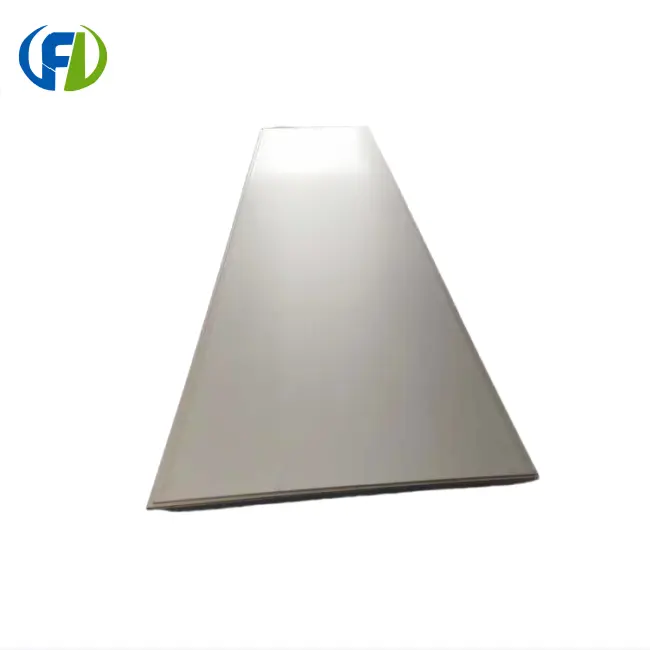
Understanding TA1 Titanium Plate: Properties and Specifications
Industrially pure titanium is one of the most useful materials in modern industry. The TA1 grade stands out because of how pure it is and how well it can be processed. This economically pure titanium has very few alloying elements, usually less than 0.18% oxygen, 0.20% iron, and 0.03% nitrogen. This gives it the best qualities for resistance to corrosion and shapeability.
Chemical Composition and Purity Standards
The chemicals that make up TA1 titanium plates have a direct effect on how they are made and how well they work in real life. These plates are very tough at low temps because the iron content is kept below 0.095% and the oxygen level is kept to 0.08%. They can be used in situations where the temperature is as low as -259°C. Controlled amounts of impurities make sure that the mechanical qualities stay the same throughout the fabrication process. This lets makers get consistent results when they shape, weld, and machine the metal.
To make sure that the products meet the standards set by ASTM B265 during production, they are subject to strict chemical analysis using spectroscopic methods. This standardization makes sure that people who buy things get materials with approved chemical makeup. This lowers the amount of variation in the steps that come after, which makes the products more reliable in serious situations.
Mechanical Properties and Performance Characteristics
Because TA1 titanium plates are both very flexible and moderately strong, they are perfect for complicated shaping tasks. The material's yield strength is usually between 170 and 310 MPa, and its stretch values stay above 24%. This gives makers a lot of freedom when they are making things. This mix of strength and flexibility makes it possible to make complex parts without affecting the structure's stability.
It is because these plates can make protective oxide layers when they are exposed to air that they are very resistant to rusting. This dormant film development happens naturally and protects against corrosive conditions like seawater, chlorine compounds, and oxidizing acids for a long time. Knowing these traits helps fabrication teams choose the right working settings and methods that keep the material's qualities intact during the whole manufacturing process.
Traditional Fabrication Methods and Their Limitations
Using standard processing methods has made it possible for many businesses to use titanium for production, but these methods have problems when used with very pure titanium materials. To keep the qualities of the material and stop pollution during rolling, machining, and traditional welding, it is important to carefully control the parameters.
Rolling and Forming Challenges
During the hot rolling process for TA1 titanium plates, temperatures are usually kept between 850°C and 950°C to get the best formability and stop too much grain growth. Traditional rolling methods, on the other hand, can leave uneven surfaces and differences in thickness that affect the next steps in the process. Due to its tendency to work-harden during cold pressing, the material needs to be annealed in between steps, which adds to the working time and energy use.
Titanium tends to spring back and gall when it comes into contact with tool steels, which makes cold forming processes more difficult. Because of these restrictions, production speeds are often slowed down, and tool wear goes up, which affects the accuracy and efficiency of production. To get the shapes they want while keeping the quality of the surface and the limits for size, manufacturers must carefully balance the forming factors.
Machining Limitations and Tool Wear
There are big problems with traditional machining of TA1 titanium plates because the material doesn't conduct heat well and reacts chemically with cutting tools. When you machine something, a lot of heat is created at the point where the tool meets the workpiece. This causes the tool to wear out quickly and could contaminate the workpiece. When working with titanium, traditional carbide tools wear out faster, which means they need to be replaced more often, which affects the costs of production.
When grinding, choosing the right cutting fluid is very important because the wrong lubricants can introduce contaminants that lower the quality of the material. Cutting fluids that are based on water may absorb hydrogen, and some chemicals can leave behind residues that make the surface less clean. Because of these limitations, machine speeds and feed rates are limited, which makes production take longer and costs more.
Advanced Fabrication Techniques for TA1 Titanium Plates
Modern ways of making things use improvements in technology to get around old problems and make things more precise and efficient. These new techniques take into account the special properties of TA1 titanium while also achieving the higher performance standards needed in a wide range of situations.
Incremental Sheet Forming and Precision Techniques
Incremental sheet making is a revolutionary way to work with TA1 titanium plates because it lets you make complicated shapes without using special tools. This method uses limited touch to control deformation, which lowers forming forces and gets rid of the need for costly die sets. Through controlled pressure distribution, the process keeps the material's qualities while keeping the dimensions very accurate.
Single-point incremental forming gives companies more freedom and shorter wait times when making samples and small batches of parts. This method is especially helpful for medical device makers who need to make custom implant shapes because it lets them make designs that are specific to each patient quickly. The width of the plate and the finish you want on the surface must be taken into account when optimizing process factors like tool diameter, step-down distance, and forming speed.
Two-point incremental forming adds more support, which makes these skills even broader. It makes it possible to make parts with better surface quality and more accurate dimensions. This method lowers the effects of springback and makes it possible to make parts with tighter tolerances, which meet the strict needs of aircraft and electronics uses.
Laser Processing and Advanced Cutting Methods
Laser cutting has changed the way TA1 titanium plates are made by removing material precisely and leaving few heat-affected areas. When fiber laser systems are set to the best settings, they can make clean cuts with great edge quality without the thermal damage that happens with other cutting methods. The managed energy input keeps the qualities of the material near the cut edges, so there's no need for a lot of post-processing work.
Laser welding methods give you better control over the amount of heat that goes in and how deep it goes. This means that you can join TA1 titanium parts without affecting their functional or corrosion resistance. Pulsed laser welding systems are great for thin-section materials because they let you precisely control the fusion zone features and reduce warping effects.
Modern methods for shaping beams help producers get the best energy spread during laser processing, so they can get the same results for materials of different thicknesses. These changes are especially helpful for companies that make chemical handling equipment that needs parts that don't leak and don't rust.
Quality Assurance and Chemical Composition Control
To keep the properties of materials the same during the whole fabrication process, you need quality control tools that cover every step of the production process. Protocols for dimensional checking, chemical composition proof, and testing of mechanical properties make sure that the product meets industry standards and customer requirements.
Testing Protocols and Certification Requirements
Using X-ray fluorescence spectroscopy and inductively coupled plasma methods for chemical analysis makes sure that the elements are correctly mixed during the manufacturing process. These scientific methods find small impurities that might change how well a material works, which lets the process be changed in real time to keep up with specifications. Certified reference materials make sure that measurements are correct and can be traced back to international standards.
To make sure that manufacturing methods keep the desired material properties, mechanical property verification tests include tensile testing, hardness measurements, and impact testing. Protocols for testing at room temperature and higher temperatures confirm performance in a range of expected working conditions, giving you faith in the reliability of the component. Non-destructive testing methods, such as penetrant testing and ultrasound screening, find possible flaws without damaging the material.
Contamination Prevention and Clean Room Practices
Fabrication settings need to be carefully managed to keep them clean so that contaminants don't get into the TA1 titanium and change its features. Protocols for clean rooms keep people from coming into contact with particles and chemicals that are harmful during important steps in the handling process. Air filter systems get rid of dangerous particles and keep the humidity level just right to stop oxidation and surface contamination.
Cleaning and preparing tools gets rid of sources of iron contamination that could weaken their resistance to rust. Using tools that are only made for making titanium keeps it from getting contaminated by other materials, and following the right storage and handling steps keeps the surface clean during manufacturing cycles. These steps make sure that the very high purity of TA1 titanium plates is maintained from the time the raw material is delivered until the finished part is sent out.
Procurement Considerations: Sourcing and Custom Orders
To make sure that you can always get high-quality TA1 titanium plates, you need to make sure that your buying strategies are thorough in their reviews of suppliers' skills, quality systems, and delivery performance. In demanding applications, choices about where to get materials affect project timelines, the performance of parts, and the general success of the program.
Supplier Evaluation and Quality Credentials
Evaluation of suppliers is based on many factors, such as approval of quality management systems, professional skills, and past success in important tasks. ISO 9001 certification is a basic level of quality assurance, while AS9100 certification shows that the company can work in aircraft uses that need stricter quality controls. For medical device uses, ISO 13485 certification may be needed to make sure they meet legal standards.
The review of manufacturing potential looks at the abilities of the tools, the controls for the process, and the inspection systems. Suppliers who have cutting-edge manufacturing tools and full measurement services show that they care about quality and accuracy. Site checks let you see how things are made and how well they're being checked, which helps you choose a seller.
Because handling titanium is so specialized, financial security and the ability of the supply chain to keep going are becoming more and more important. Suppliers with a wide range of customers and strong financial bases are more likely to be available and help you in the long run. Total cost of ownership estimates are affected by things like lead times and the cost of shipping.
Custom Specification and Order Management
For custom orders, it's important to be clear about the technical requirements, such as the required surface finish, measurement limits, and certification needs. Detailed sketches and material specs get rid of confusion and make sure that the right materials are chosen and processed. If you need to control the grain size or make sure the material has certain mechanical qualities, you may have to change the process, which could affect the price and the delivery plan.
Order number factors weigh the costs of keeping inventory against the benefits of volume prices and supply security. Different sellers have different minimum order amounts, which can affect how you buy things for both prototypes and mass production. Lead time management is the process of coordinating the supply of materials, the plans for fabrication, and the needs for delivery in order to get projects done on time.
Conclusion
The ways that TA1 titanium plates are made are always changing because of new technologies and better ways to do things. This lets producers use the great qualities of this commercially pure material. Modern methods like incremental forming, laser processing, and precision cutting get around the problems that used to exist. These plates are still very useful in aircraft, medical, and chemical processing uses because they are very resistant to corrosion and easy to shape. To get the best results in tough service settings, execution needs to include thorough quality control systems, careful supplier selection, and a deep understanding of how materials work.
FAQ
Q1: What makes TA1 titanium plates superior to other titanium grades?
Because they are very pure and don't contain many alloys, TA1 titanium plates are very easy to shape and don't rust. The low amounts of oxygen and iron make the material very flexible, which is great for difficult shaping tasks, and it is also very biocompatible, which is great for medical uses. Because of this, they are perfect for uses that need both mechanical strength and chemical protection.
Q2: How do fabrication temperatures affect TA1 titanium plate properties?
Controlling the temperature during manufacturing has a big effect on the finished properties of the material. For example, hot forming is usually done between 850°C and 950°C to get the best results. Too high temperatures can make grains grow and lower the material's mechanical properties. On the other hand, not enough heat can make it hard to shape and may leave behind stresses. Keeping the temperature just right keeps the great resistance to rust and mechanical properties.
Q3: What quality certifications are essential for aerospace applications?
For aerospace uses, ASTM B265 must be followed along with tracking paperwork like chemical makeup certificates and mechanical property reports. Certification of an AS9100 quality management system makes sure that a provider can meet the quality standards for aircraft. Some other certifications that may be needed are NACE MR0175 for uses that need to be resistant to corrosion and customer licenses for important parts.
Q4: How can makers prevent contamination during fabrication?
To keep things from getting contaminated, you need special tools for working with titanium, limited work areas, and the right way to handle materials. Clean room rules limit the exposure to particles, and using the right cutting fluids keeps chemicals from getting dirty. Cleaning and storing tools properly gets rid of sources of iron contamination that could weaken their rust resistance.
Partner with Freelong for Superior TA1 Titanium Plate Solutions
Baoji Freelong New Material Technology Development Co., Ltd has been making titanium products for decades and can help you with your most difficult projects. Our advanced production skills and location in China's Titanium Valley ensure stable quality and precision for the aerospace, medical, and chemical processing industries when they make TA1 titanium plates. Our certified methods and thorough quality control systems allow us to provide products that are better than international standards at prices that are competitive and on time. Email our technical team at jenny@bjfreelong.com to talk about your unique needs and find out how our experience as a TA1 titanium plate maker can help your next project succeed.
References
1. Donachie, Matthew J. "Titanium: A Technical Guide, Second Edition." ASM International, 2000.
2. Peters, Manfred, et al. "Titanium Alloys for Aerospace Applications." Advanced Engineering Materials, Vol. 5, No. 6, 2003.
3. Boyer, Rodney, Gerhard Welsch, and E.W. Collings. "Materials Properties Handbook: Titanium Alloys." ASM International, 1994.
4. Lutjering, Gerd and James C. Williams. "Titanium: Engineering Materials and Processes." Springer-Verlag Berlin Heidelberg, 2007.
5. American Society for Testing and Materials. "ASTM B265-15: Standard Specification for Titanium and Titanium Alloy Strip, Sheet, and Plate." ASTM International, 2015.
6. Rack, Henry J. and John I. Qazi. "Titanium Alloys for Biomedical Applications." Materials Science and Engineering C, Vol. 26, No. 8, 2006.

_1745392624503.webp)
_1774941963706.png)
Learn about our latest products and discounts through SMS or email