- English
- French
- German
- Portuguese
- Spanish
- Russian
- Japanese
- Korean
- Arabic
- Greek
- German
- Turkish
- Italian
- Danish
- Romanian
- Indonesian
- Czech
- Afrikaans
- Swedish
- Polish
- Basque
- Catalan
- Esperanto
- Hindi
- Lao
- Albanian
- Amharic
- Armenian
- Azerbaijani
- Belarusian
- Bengali
- Bosnian
- Bulgarian
- Cebuano
- Chichewa
- Corsican
- Croatian
- Dutch
- Estonian
- Filipino
- Finnish
- Frisian
- Galician
- Georgian
- Gujarati
- Haitian
- Hausa
- Hawaiian
- Hebrew
- Hmong
- Hungarian
- Icelandic
- Igbo
- Javanese
- Kannada
- Kazakh
- Khmer
- Kurdish
- Kyrgyz
- Latin
- Latvian
- Lithuanian
- Luxembou..
- Macedonian
- Malagasy
- Malay
- Malayalam
- Maltese
- Maori
- Marathi
- Mongolian
- Burmese
- Nepali
- Norwegian
- Pashto
- Persian
- Punjabi
- Serbian
- Sesotho
- Sinhala
- Slovak
- Slovenian
- Somali
- Samoan
- Scots Gaelic
- Shona
- Sindhi
- Sundanese
- Swahili
- Tajik
- Tamil
- Telugu
- Thai
- Ukrainian
- Urdu
- Uzbek
- Vietnamese
- Welsh
- Xhosa
- Yiddish
- Yoruba
- Zulu
Gr5 ELI Titanium Plate for Medical and Aerospace Applications
The Gr5 ELI Titanium Plate is the latest and greatest in advanced materials engineering. It was made to meet the exact needs of medical implants and spacecraft structures. This Extra Low Interstitial grade is the best for important uses where the performance of the material can mean the difference between success and failure because it is biocompatible, has a high strength-to-weight ratio, and is highly resistant to corrosion. The high purity standards and improved mechanical qualities of this titanium alloy make it work reliably in places where regular materials just can't provide the safety margins and durability needed.
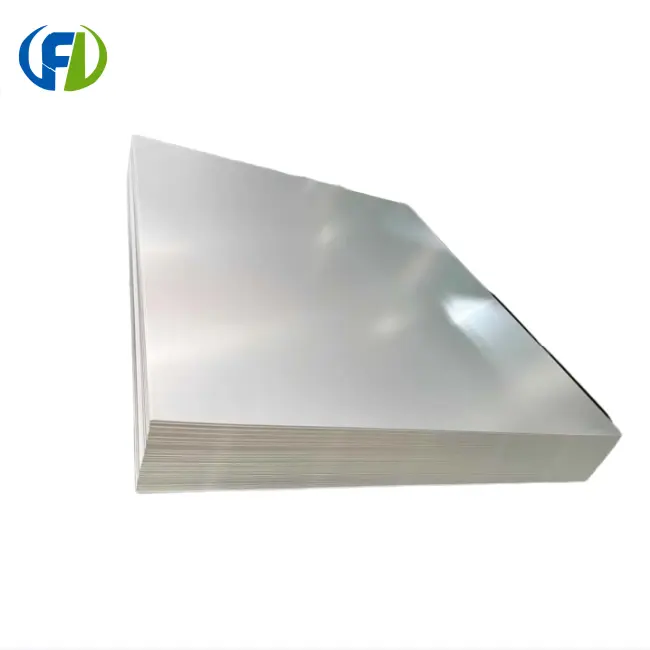
Understanding Gr5 ELI Titanium Plate: Properties and Production
If you want to use titanium in challenging situations, Gr5 ELI (Extra Low Interstitial) is a better version of the normal Ti-6Al-4V alloy that was made to give better performance. The letter "ELI" means that the material has less oxygen, nitrogen, and carbon in its intermediate elements. This makes the material much more flexible and difficult to break at room temperature and below.
Chemical Composition and Microstructural Excellence
A Gr5 ELI titanium plate is mostly made up of titanium, with about 6% aluminum and 4% vanadium making up the rest. The important difference is in the limits for the interstitial content: oxygen levels must stay below 0.13%, while nitrogen and carbon levels must stay below 0.05% and 0.08%, respectively. These lower interstitial levels make the microstructure more polished, which greatly improves the mechanical qualities.
Vacuum arc remelting and electron beam melting are used to make high-quality titanium plates. These methods make sure that the material is very pure and uniform throughout. The controlled oxygen processing gets rid of the risk of contamination and makes the regular grain structure that is needed for knowing how the material will behave mechanically.
Heat Treatment and Property Optimization
Heat treatment methods are very important for getting the best material qualities. The normal mill-annealed state is a great mix of strength and ductility. Solution treatment and aging can improve certain properties even more, depending on the needs of the application. When you precisely cycle the temperature, you can control the microstructure of a material. This gives it better resistance to wear and crack development than standard-grade materials.
Comparison and Selection: Evaluating Gr5 ELI Against Alternatives
When choosing materials for important projects, it's important to know how the Gr5 ELI Titanium Plate performs better so that you can make smart purchasing choices. There are clear advantages over other types of titanium and standard metals that this material offers.
Gr5 ELI vs. Standard Grade 5 Titanium
Standard Grade 5 titanium is very strong, but the ELI version is more flexible and less likely to break. Because ELI grade has less intermediate material, its elongation values are about 15% better and its impact resistance is much better. These changes are especially useful in medical settings, where the dependability of the materials has a direct effect on the safety of the patients.
Performance Against Stainless Steel Options
While 316L stainless steel is less expensive and has good corrosion protection, titanium metals work better in a number of important ways. The strength-to-weight ratio of Gr5 ELI titanium is about 40% higher than that of stainless steel. This means that weight can be cut without affecting the structure's strength. Also, titanium's biocompatibility takes away worries about nickel sensitivity, which can happen in some patient groups.
Cost-Benefit Analysis for Long-Term Applications
The original cost of materials for titanium plates is higher than that for stainless steel plates, but the overall value over time often makes titanium the better choice. Due to its high resistance to corrosion, it doesn't need to be maintained, and its light weight lowers running costs in aircraft uses by making fuel use more efficient. Due to better biocompatibility and life, medical uses have lower rates of revision surgery.
Procurement Guide: How to Source High-Quality GR5 ELI Titanium Plates?
To successfully buy high-quality titanium products, you need to pay close attention to the skills of the suppliers, the standards for certification, and the quality control procedures. Due to the unique nature of these products, great care must be taken during the whole finding process.
Supplier Evaluation and Certification Requirements
Suppliers of high-quality titanium keep a lot of different licenses, such as ISO 9001 quality management systems and AS9100 aircraft standards. For medical uses, you need to follow more rules than just the ISO 13485 medical device standards. If needed, you may also need to get FDA approval. For each lot of material, suppliers should give full mill test certificates that list the chemical makeup, mechanical qualities, and details on how the material can be tracked.
Global Supply Chain Considerations
The US, China, Japan, and Russia are some of the main places where titanium goods are made. Each has its own benefits when it comes to capacity, price, and scientific know-how. Chinese providers, like those in Baoji City, have a lot of experience handling titanium and can offer low prices while still meeting international quality standards. Production capacity, delivery dependability, and expert help skills should all be taken into account when judging a company.
Order Specification and Quality Assurance
By clearly stating the required surface finish, dimensional limits, and mechanical property goals for the Gr5 ELI titanium plate, you can be sure that the material will work well in the intended uses. Depending on the size needs and the supplier's ability to meet them, the minimum order quantity is usually between 100 and 1000 kilograms. Protocols for quality assurance should include steps for inspecting new items and standards for keeping records to meet legal requirements.
Application Spotlight: Why Gr5 ELI Titanium Plate Excels in Medical and Aerospace Fields?
Gr5 ELI titanium has a special mix of qualities that make it very useful in situations where the performance of the material has a direct effect on safety, dependability, and operating efficiency.
Medical Device Applications and Biocompatibility
Medical uses take advantage of titanium metals' great biocompatibility, which means they work well with tissues without causing any negative biological reactions. Orthopedic implants made from ELI-grade materials have better osseointegration properties, which means they work better for patients and cause fewer problems. Because the material doesn't react with body fluids, it stays stable over time without breaking down or releasing ions.
Titanium is nonmagnetic, which makes it useful in cardiovascular uses and allows patients with implantable devices to go through MRIs. The wear strength of ELI grade material is very important for devices that are loaded and unloaded many times, like heart valve parts and vascular stents.
Aerospace Structural Applications
Titanium metals are used in aerospace because they are very strong for their weight and don't change much when heated or cooled. The structural stability of engine parts that work at high temperatures is maintained while also helping to reach weight reduction goals. The ability to prevent corrosion is very useful in marine settings and high altitudes, where other materials break down quickly.
Advanced manufacturing methods, such as additive manufacturing, make it possible to create complicated shapes that improve the spread of materials and lower the number of parts needed. These features help make the next generation of planes, which need to be better at both speed and fuel economy.
Choosing Gr5 ELI Titanium Plate: Key Criteria for B2B Buyers
To get the most value out of a material choice like Gr5 ELI Titanium Plate, you need to carefully look at technical standards, supplier skills, and lifecycle issues.
Technical Performance Requirements
Different uses have very different mechanical quality needs, so it's important to be very detailed about strength, ductility, and fatigue. Biocompatibility and wear resistance are usually the most important factors in medical applications, while strength-to-weight optimization and temperature stability are the most important factors in aircraft applications. Knowing these goals helps you choose the right grade and set the right procedure requirements.
Supplier Partnership Considerations
Long-term ties with suppliers are helpful because they make it easier to get materials, offer professional support, and keep prices stable. Value-added services like custom processing, inventory management, and technical advice from suppliers can make buying much easier and lower operational risks by a large amount.
Conclusion
Because it is so strong, biocompatible, and resistant to rust, Gr5 ELI Titanium Plate performs better than any other material for important medical and military uses. The material's improved makeup and processing make its mechanical features better, which lets designers come up with new ideas and make things run more smoothly. Pay close attention to the skills of the suppliers, the technical requirements, and the quality assurance procedures for successful buying. Investing in high-quality titanium materials pays off in the long run by requiring less upkeep, performing better, and increasing safety. These benefits make up for the higher starting cost compared to other materials.
FAQ
1. What distinguishes Gr5 ELI from standard Grade 5 titanium plate?
In contrast to regular Grade 5 titanium, Gr5 ELI has lower amounts of oxygen, nitrogen, and carbon in its intermediate elements. This leads to better flexibility, better fracture toughness, and better formability while still keeping the great strength properties.
2. How does heat treatment affect Gr5 ELI titanium plate properties?
The mechanical qualities and composition are greatly changed by heat treatment. Mill-annealed state gives the best flexibility, while solution treatment and age can make it stronger. The right heat treatment makes sure that the qualities stay the same and gets rid of any leftover stresses from the manufacturing process.
3. What certifications should suppliers provide for medical-grade titanium plates?
As a supplier, you should ask for mill test certificates that show the chemical make-up and mechanical qualities of the product, as well as ISO 13485 medical device certification, ASTM F136 compliance for medical uses, and full material traceability paperwork that goes from the raw material to the finished product.
Partner with Freelong: Your Trusted Gr5 ELI Titanium Plate Supplier
You can trust Baoji Freelong New Material Technology Development Co., Ltd. to provide you with high-quality titanium options. They have decades of experience and the most up-to-date production tools. We make high-quality Gr5 ELI titanium plates that meet the strictest worldwide standards for medical and aircraft uses. Our factory is in Baoji City, which is known as China's Titanium Valley.
Through strict testing and licensing processes, our full quality assurance system makes sure that every plate meets all of the requirements. We keep a large stock of regular sizes and can also make custom sizes to fit the needs of any job. Customers in North America, Europe, and the Asia-Pacific regions can easily get their orders from us thanks to our global transportation network.
Our research team helps customers choose the right materials and come up with new uses for them by using their technical knowledge. To make sure projects go well, we offer thorough mill test records, paperwork for material tracking, and ongoing expert support. Get in touch with jenny@bjfreelong.com to talk about your titanium plate needs and find out how our solutions can help your products work better and your business run more smoothly.
References
1. Boyer, R., Welsch, G., & Collings, E.W. (2019). Materials Properties Handbook: Titanium Alloys. ASM International Press.
2. Donachie, M.J. (2018). Titanium: A Technical Guide, 3rd Edition. ASM International Materials Handbook.
3. Lutjering, G. & Williams, J.C. (2020). Titanium Engineering Materials and Processes. Springer Advanced Materials Series.
4. Peters, M., Hemptenmacher, J., Kumpfert, J., & Leyens, C. (2017). Titanium and Titanium Alloys: Fundamentals and Applications. Wiley-VCH Materials Science.
5. Rack, H.J. & Qazi, J.I. (2019). Titanium Alloys for Biomedical Applications. Advanced Engineering Materials Journal.
6. Veiga, C., Davim, J.P., & Loureiro, A.J. (2021). Review on Machinability of Titanium Alloys: The Process Perspective. Manufacturing Science and Engineering Reviews.

_1745742946705.webp)
_1775717085210.png)
Learn about our latest products and discounts through SMS or email