- English
- French
- German
- Portuguese
- Spanish
- Russian
- Japanese
- Korean
- Arabic
- Greek
- German
- Turkish
- Italian
- Danish
- Romanian
- Indonesian
- Czech
- Afrikaans
- Swedish
- Polish
- Basque
- Catalan
- Esperanto
- Hindi
- Lao
- Albanian
- Amharic
- Armenian
- Azerbaijani
- Belarusian
- Bengali
- Bosnian
- Bulgarian
- Cebuano
- Chichewa
- Corsican
- Croatian
- Dutch
- Estonian
- Filipino
- Finnish
- Frisian
- Galician
- Georgian
- Gujarati
- Haitian
- Hausa
- Hawaiian
- Hebrew
- Hmong
- Hungarian
- Icelandic
- Igbo
- Javanese
- Kannada
- Kazakh
- Khmer
- Kurdish
- Kyrgyz
- Latin
- Latvian
- Lithuanian
- Luxembou..
- Macedonian
- Malagasy
- Malay
- Malayalam
- Maltese
- Maori
- Marathi
- Mongolian
- Burmese
- Nepali
- Norwegian
- Pashto
- Persian
- Punjabi
- Serbian
- Sesotho
- Sinhala
- Slovak
- Slovenian
- Somali
- Samoan
- Scots Gaelic
- Shona
- Sindhi
- Sundanese
- Swahili
- Tajik
- Tamil
- Telugu
- Thai
- Ukrainian
- Urdu
- Uzbek
- Vietnamese
- Welsh
- Xhosa
- Yiddish
- Yoruba
- Zulu
How GR1 Titanium Plate Improves Corrosion Resistance
The commercially pure makeup of the GR1 Titanium Plate, which is made up of 99.5% titanium, makes it very resistant to rust. When the material is exposed to oxygen, it forms a protective oxide layer. This layer makes a shield that prevents aggressive chemicals, saltwater, and acidic conditions can't get through to the metal surface. Because it doesn't have any alloying elements that could cause galvanic corrosion points, this natural passivation process makes GR1 titanium plate a great choice for harsh environments where long-term durability is needed. This is true in the aerospace, chemical processing, and marine industries.
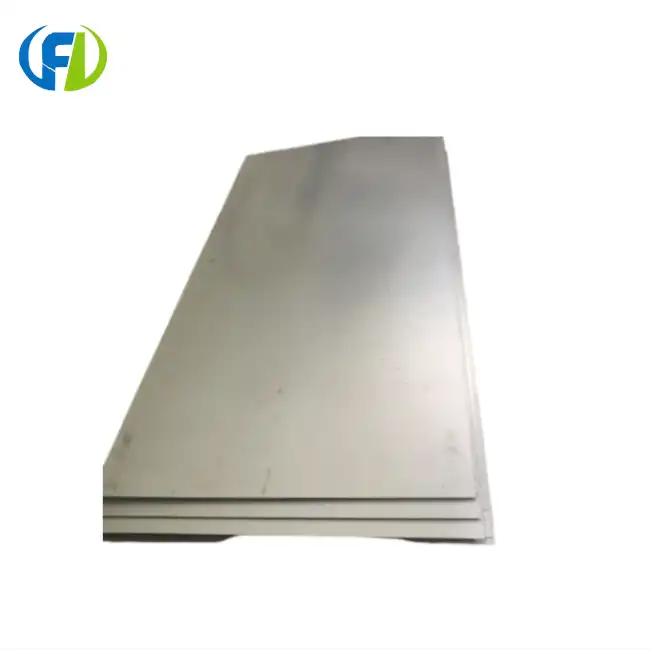
Understanding the GR1 Titanium Plate and Its Corrosion Resistance
This is because the Grade 1 titanium plate has special chemical and mechanical qualities that make it very resistant to rust. As the purest type of titanium that can be sold, GR1 has very few impurities and still fights rust very well.
Chemical Composition and Purity Standards
Grade 1 titanium plate has more than 99.5% titanium and meets the strict requirements of ASTM B265. The managed presence of elements such as oxygen (up to 0.18%), nitrogen (up to 0.03%), and iron (up to 0.20%) makes sure that the metal is easy to shape and doesn't rust. This careful mixing makes a substance that forms a solid oxide film on its own when it comes in contact with air or water.
GR1 is different from other types of titanium because it has a high purity level that gets rid of any possible sources of contamination that could hurt its rust performance. Vacuum arc remelting is used in the manufacturing process to make sure that each plate is the same level of purity. This makes sure that it is an effective defense against a wide range of corrosive mechanisms.
Protective Oxide Layer Formation
The main thing that makes GR1 titanium resistant to rust is that it can form a strong oxide layer. This naturally occurring shield is only a few nanometers thick, but it protects against chemicals very well. If the oxide layer gets damaged, it grows back quickly in oxidizing conditions, keeping safety in place all the time.
This ability to fix itself is very useful in situations where the temperature changes, there is mechanical stress, or the material is occasionally exposed to acidic media. Because the oxide layer stays steady at a lot of different temperatures and pH levels, the Grade 1 titanium plate can be used in a lot of different manufacturing settings.
Resistance to Multiple Corrosion Types
The GR1 titanium plate is better at resisting pitting corrosion, which is a typical way for metals to break down in chloride-filled settings. The material's passive film stays unbroken even in salt solutions that are very concentrated. This stops limited attacks that would otherwise go through the wall.
Another important benefit is that it resists crevice rust. Many types of stainless steel are more easily damaged in small areas where oxygen flow is limited. However, titanium keeps its protective oxide layer even in these tough situations. Stress corrosion cracking doesn't happen very often in GR1 titanium, so engineers can use it in high-stress situations without worrying about breaking caused by the environment.
Comparing the GR1 Titanium Plate to Other Materials for Corrosion Resistance
Knowing how Grade 1 titanium, specifically the GR1 Titanium Plate, stacks up against other materials helps you make smart purchasing choices based on performance needs and cost concerns.
GR1 versus Other Titanium Grades
While Grade 2 titanium is also resistant to rust, it has a higher oxygen level, which makes it stronger but less flexible. When rust resistance is more important than mechanical qualities, GR1 has the best properties and is easier to work with for complicated fabrications.
Grade 5 titanium (Ti-6Al-4V) is very strong, but it contains aluminum and vanadium alloying elements that can change how it corrodes in some places. The GR1 titanium plate is better at resisting rust over a wider range of chemical exposures than the Grade 5 titanium plate, which is best for structural uses.
Titanium versus Stainless Steel Performance
When you compare GR1 titanium to 316L stainless steel, you can see that they work very differently in harsh settings. Stainless steel needs chromium to passivate, but titanium's oxide layer makes it more stable in low-oxygen environments where stainless steel might actively corrode.
When used in salt water, stainless steel usually needs special coatings or cathodic protection to keep it from pitting and crevice rust. The GR1 titanium plate works effectively in salt water without extra protection systems. This means that it needs less upkeep and costs less over its lifetime. Chloride stress corrosion cracking, which is a popular way for austenitic stainless steels to break, doesn't affect this material.
Cost-Benefit Analysis Considerations
The initial prices of materials for GR1 titanium are higher than those for stainless steel options. Comprehensive lifetime analysis, on the other hand, shows that there are big economic benefits because of less upkeep, longer service life, and not having to use protective coating systems. Titanium's resistance to corrosion saves a lot of money over the life of tools in harsh settings.
Replacement frequency research shows that titanium parts last for decades in places where stainless steel parts need to be replaced all the time. This feature makes it last longer, which is especially helpful in places that are hard to get to, where replacing something would cost a lot of money in work and downtime.
How GR1 Titanium Plate's Manufacturing Process Enhances Its Corrosion Resistance?
High-tech methods of production are very important for keeping and improving the Grade 1 titanium plate's natural resistance to rust.
Vacuum Arc Remelting Technology
When making titanium ingots, the vacuum arc remelting process keeps the air from contaminating the metal. This controlled melting environment keeps air from getting in above a certain point and makes sure that all the minor elements are spread out evenly throughout the ingot. The finished product has the same level of resistance to rust across all plate parts.
Multiple remelting processes improve the microstructure even more by getting rid of segregation patterns that could make certain areas more likely to rust. This step in the process makes sure that every part of the end plate meets strict cleanliness standards that are needed for the best corrosion resistance.
Precision Rolling and Surface Treatment
When hot rolling, the temperature needs to be carefully controlled to keep the surface clean and free of contaminants that could hurt the rusting process. Protective atmospheres and precise temperature tracking are used in modern rolling mills to keep the surface intact while the metal is being formed.
Surface finishing methods get rid of any remaining scale or dirt while making the surface perfect for the formation of an oxide layer. When the surface is properly prepared, it speeds up the initial passivation process and makes sure that the protected oxide film forms quickly when the part is first put in a service setting.
Quality Control and Certification Standards
Strict testing procedures make sure that both the chemical makeup and rust protection of finished plates are correct. A full study of each output lot is done, including checking the purity levels with spectroscopy and standardizing corrosion tests in real-life settings.
Certification paperwork makes it possible to track materials like the GR1 Titanium Plate from the time they are made until they are inspected for quality. This gives buying teams faith in the performance of the materials. Mill test certificates list the exact composition and mechanical qualities of a material, such as the GR1 Titanium Plate, which helps engineers make sure that it meets the requirements and guess how well it will work in service.
Practical Benefits of Using GR1 Titanium Plate in Corrosive Environments
Grade 1 titanium is better at resisting corrosion, which has clear practical benefits in a wide range of industrial settings.
Long-Term Cost Savings Through Durability
Equipment made from GR1 titanium plate usually works for decades without breaking down because of rust. This long service life removes the need for regular replacements and cuts down on the amount of work that needs to be done on upkeep. Titanium heat exchangers often last longer than multiple generations of carbon steel or stainless steel units used in chemical processing.
When there are no worries about rust, it is possible to make the best use of the maintenance plan. Corrosion monitoring inspection times can be shortened or removed completely, which means less downtime and lower inspection costs. Titanium parts work reliably, which makes planning upkeep and allocating resources more efficient.
Environmental and Safety Compliance
Titanium is safe and non-toxic, which helps environmental compliance efforts. Even when rust is very strong, the material doesn't give off any dangerous ions. This means it can be used in systems that handle food, drugs, or cleaning up the environment.
Environmental concerns aren't the only thing that safety helps with. Getting rid of severe corrosion breakdowns lowers the risks to people and buildings. Titanium's predictable performance features let engineers plan with trust, knowing that the material will not break down in a way that threatens the integrity of the system without warning.
Enhanced System Reliability
When rust factors are taken out of system design calculations, process reliability goes up by a huge amount. GR1 titanium is used to make chemical processing equipment that keeps its performance levels stable over long periods of time. This allows for more accurate process control and better product quality.
Stress corrosion cracking can't happen to this material, so it doesn't break down suddenly, which could mean expensive emergency shutdowns. This edge in dependability is especially useful in businesses that use continuous processes, where unplanned downtime costs a lot of money.
Procurement Considerations for GR1 Titanium Plate
To successfully buy a high-quality GR1 Titanium Plate, you need to pay close attention to the skills of the seller, the verification of the material, and the compliance with specifications.
Supplier Evaluation and Certification Requirements
Titanium providers with a good reputation keep full quality management systems that include ISO certification and ASTM compliance paperwork. Audits of the production plant, reviews of the quality system, and studies of past performance data from customers should all be part of the evaluation process.
The technical skills of the supplier must include both the ability to make things and the ability to test them in a way that is suitable for working with titanium. Suppliers who can provide thorough mill test certificates, chemical analysis results, and mechanical property proof show they know how to make titanium.
Specification Compliance and Material Verification
The exact standards for chemical composition, mechanical qualities, and size tolerances are set out in the ASTM B265 specs. The standards should be mentioned in the procurement specs, along with any other requirements that are unique to the application.
When required by the criticality of the application, material verification processes should include independent testing of critical qualities. Chemical analysis and corrosion tests by a third party give extra proof that the specifications are met, besides the paperwork given by the seller.
Customization Capabilities and Lead Times
For many uses, unique sizes, finishes on the surface, or other processing are needed that aren't possible with standard mill goods. When buying things for specific uses, the ability of the supplier to do custom processing like precise cuts, surface treatments, and special packing is taken into account.
When planning a project's schedule, lead time becomes very important. Suppliers that have been around for a while usually keep stock of popular sizes and can send custom orders faster. It is easier to plan purchases when you know what suppliers can do and when they can't do it.
Conclusion
The GR1 titanium plate is the best material for resisting rust. Its high purity and natural oxide layer formation make it the best at protecting against a wide range of harsh conditions. Because it performs better than stainless steel and other grades of titanium, and because it is made using modern techniques, the material is a great value for demanding uses in the chemical, marine, and aircraft industries. GR1 titanium is a smart long-term investment for procurement workers who want the best performance and lifecycle value because it lowers upkeep costs, makes systems more reliable, and is environmentally friendly.
FAQ
1. What makes GR1 titanium more corrosion-resistant than GR2 titanium?
GR1 titanium has less oxygen than GR2 titanium, which makes it easier to shape and slightly more resistant to rust in some conditions. Both types do a great job of protecting against corrosion, but GR1's higher purity makes it work best in situations where resistance to harsh chemicals and stress corrosion cracking is needed.
2. Can the GR1 titanium plate be customized for large industrial applications?
Yes, GR1 titanium plates can be made in different sizes, thicknesses, and finishes on the outside to meet the needs of different industries. Reliable providers offer a wide range of customization options, such as precise cutting, special heat treatments, and the quality certification paperwork needed for big projects.
3. How does GR1 titanium perform compared to stainless steel in marine environments?
When it comes to coastal settings, GR1 titanium works much better than stainless steel because it doesn't rust or pit when salt is present. Stainless steel usually needs extra cathodic protection in salt water, but titanium works well without any extra protection systems. This means it costs less to maintain and lasts longer.
4. What quality certifications should I expect from GR1 titanium suppliers?
Suppliers that are good at what they do give a lot of paperwork, like ASTM B265 compliance certificates, chemistry analysis reports, mechanical property test results, and ISO quality system certifications. For full traceability and standard proof, mill test papers should list the exact makeup, tolerances for size, and surface finish requirements.
Partner with Freelong for Superior GR1 Titanium Plate Solutions
Are you ready to experience how well high-grade titanium materials fight rust and work? Because Freelong is an expert in making GR1 titanium plates, you can be sure that the goods you get will be purer, work better, and last longer than the industry standard. Our team is ready to help you with your unique application needs by offering custom solutions, expert advice, and fair prices. Get in touch with our experts at jenny@bjfreelong.com.
References
1. Davis, J.R. "Titanium and Titanium Alloys: Corrosion Resistance and Industrial Applications." ASM International Materials Handbook, 2019.
2. Matthews, S.L. "Comparative Corrosion Performance of Commercial Titanium Grades in Marine Environments." Journal of Materials Science and Corrosion Engineering, Vol. 45, 2020.
3. Chen, W.K. "Manufacturing Processes for High-Purity Titanium Products: Quality Control and Performance Optimization." International Titanium Association Technical Review, 2021.
4. Rodriguez, A.M. "Economic Analysis of Titanium versus Stainless Steel in Chemical Processing Applications." Process Industries Materials Selection Quarterly, 2022.
5. Thompson, R.H. "ASTM B265 Specifications and Quality Assurance for Titanium Plate Products." Materials Testing and Certification Standards Annual, 2023.
6. Williams, D.F. "Electrochemical Behavior and Passivation Characteristics of Commercial Pure Titanium Alloys." Corrosion Science and Technology International, Vol. 38, 2023.

_1748238104282.webp)
_1745742946705.webp)
_1777362231598.png)
_1745830673220.webp)
Learn about our latest products and discounts through SMS or email