- English
- French
- German
- Portuguese
- Spanish
- Russian
- Japanese
- Korean
- Arabic
- Greek
- German
- Turkish
- Italian
- Danish
- Romanian
- Indonesian
- Czech
- Afrikaans
- Swedish
- Polish
- Basque
- Catalan
- Esperanto
- Hindi
- Lao
- Albanian
- Amharic
- Armenian
- Azerbaijani
- Belarusian
- Bengali
- Bosnian
- Bulgarian
- Cebuano
- Chichewa
- Corsican
- Croatian
- Dutch
- Estonian
- Filipino
- Finnish
- Frisian
- Galician
- Georgian
- Gujarati
- Haitian
- Hausa
- Hawaiian
- Hebrew
- Hmong
- Hungarian
- Icelandic
- Igbo
- Javanese
- Kannada
- Kazakh
- Khmer
- Kurdish
- Kyrgyz
- Latin
- Latvian
- Lithuanian
- Luxembou..
- Macedonian
- Malagasy
- Malay
- Malayalam
- Maltese
- Maori
- Marathi
- Mongolian
- Burmese
- Nepali
- Norwegian
- Pashto
- Persian
- Punjabi
- Serbian
- Sesotho
- Sinhala
- Slovak
- Slovenian
- Somali
- Samoan
- Scots Gaelic
- Shona
- Sindhi
- Sundanese
- Swahili
- Tajik
- Tamil
- Telugu
- Thai
- Ukrainian
- Urdu
- Uzbek
- Vietnamese
- Welsh
- Xhosa
- Yiddish
- Yoruba
- Zulu
How to Safely Use a 99% Purity Zirconium Crucible for Metal Casting and Alloy Melting
It is very important to pay close attention to material testing, temperature control, and chemical compatibility when using a 99% Purity Zirconium Crucible safely. Before putting the material into use, make sure it is certified by GDMS or XRF tests to make sure the Zr + Hf content is higher than 99.2%. This will make sure that there is minimal particle influence. To avoid thermal shock, raise temperatures slowly during heating and never go above 1800°C in oxidising atmospheres. Hydrofluoric acid is not a good cleaner for zirconium metal because it attacks it quickly. Instead, use strong hydrochloric acid or mechanical cleaning to get rid of any leftovers. This will keep the crucible's stability over hundreds of fusion cycles, which is useful for developing aircraft alloys and doing advanced metallurgical research.
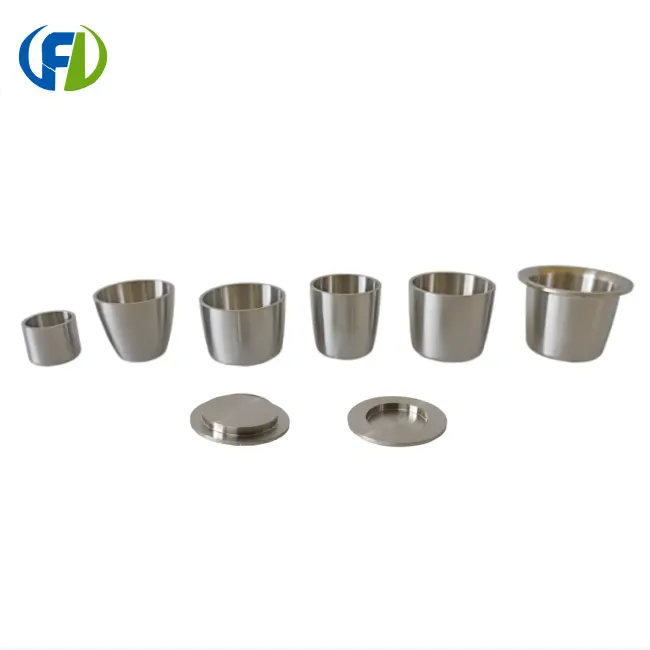
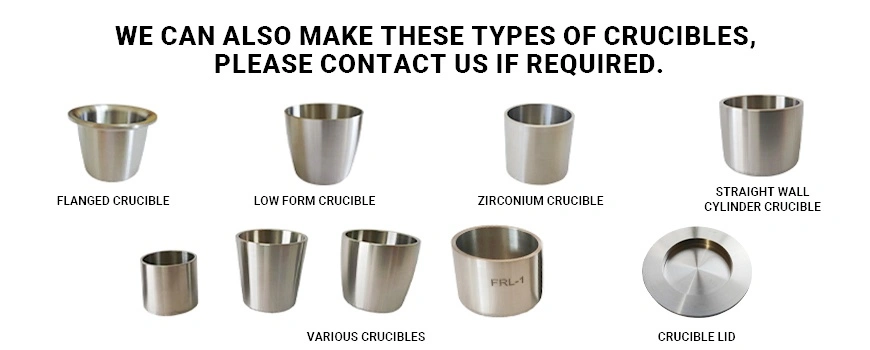
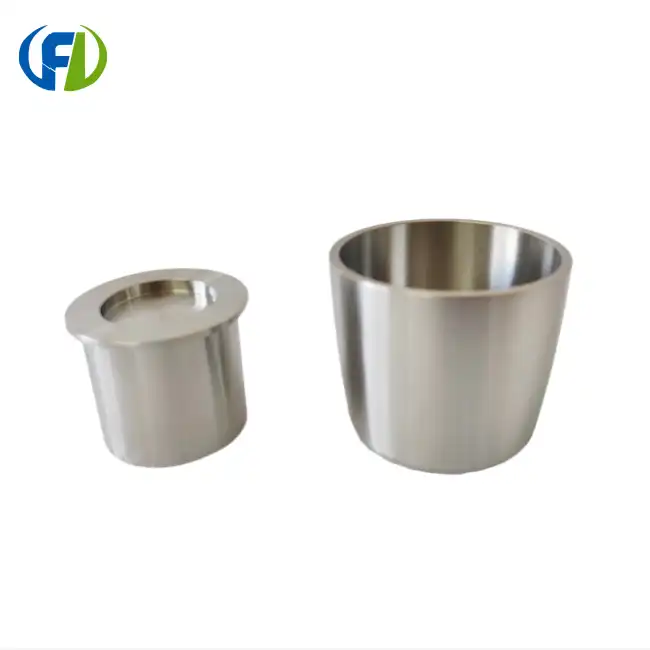
Introduction
When doing high-performance industrial tasks like making aerospace parts or processing semiconductor materials, the melting vessel you choose has a direct effect on the purity of the product, the safety of the workers, and the long-term cost-effectiveness of the process. Crucibles made of zirconium have become essential tools for labs and factories that work with strong chemical fusions and unstable metal melts. High-purity zirconium tanks are much more resistant to alkaline fluxes and liquid peroxides than standard ceramic or platinum options. This is because they are used in situations where other materials would fail severely.
This guide talks about the real-world problems that procurement professionals and engineering teams face when they are looking for crucible solutions for important applications. We look at the technical details that make high-quality zirconium crucibles different, go over safe handling guidelines that make them last longer, and compare them so you can make an informed buying choice. Whether your facility melts titanium metals for aeroplane structural parts or does sodium peroxide fusions for geological analysis, knowing how to use a zirconium crucible correctly protects both people and the accuracy of the analysis. Our goal is to give B2B buyers useful information that they can use right away to make their operations safer and their procurement better.
Understanding 99% Purity Zirconium Crucibles
Composition and Material Standards
A 99% Purity Zirconium Crucible is a high-performance lab vessel made from industrial-grade zirconium metal that meets the requirements of ASTM B550/R60702. The material is made up of at least 99.2% zirconium and hafnium mixed, with very low amounts of impurities (usually less than 0.2% total iron, chromium, and carbon). This metal construction makes it very different from ceramic vessels, which fixes three major problems in the industry. It is clear right away that zirconium crucibles are more cost-effective than platinum ones because they usually cost only a fifth to a tenth of what platinum ones cost and last longer in alkaline settings. Heavy metals can mess up trace element analysis when using stainless steel or nickel crucibles. Contamination control gets rid of this problem. The failure rates of porcelain and glass in sodium peroxide and sodium carbonate fusions can be fixed by chemical robustness. This creates interaction layers that are almost completely neutral for preparing flux fusion samples.
Physical and Chemical Properties
Zirconium crucibles, such as 99% Purity Zirconium Crucible, can be used for specific tasks because of how they are made. With a density of 6.51 g/cm³ and a melting point close to 1852°C (3365°F), these vessels can withstand high temperatures without breaking. The thermal expansion rate is 5.8 µm/m·°C, which means that the size of the material can change in controlled ways during heating processes. Zirconium forms a stable, self-healing zirconium dioxide (ZrO2) oxide film when it is exposed to high temperatures. This film keeps the substrate from corroding further. This passive layer stops platinum crucibles from not being able to absorb water, so fusion melts can pour smoothly without sticking. Mechanically, zirconium keeps its shape even after being heated and cooled hundreds of times. Nickel, on the other hand, easily changes shape when heated over and over again.
Chemical resistance ratings show that liquid alkalis like sodium hydroxide and potassium hydroxide, carbonates like sodium carbonate, and peroxides like sodium peroxide can be handled very well. At room temperature, zirconium is completely resistant to hydrofluoric acid. However, it is not very resistant to sulphuric acid and acidic fluoride fusions when they are forced. With this limited resistance pattern, picking the right material is very important based on the chemistry of the product.
Manufacturing Standards and Quality Control
To make high-purity zirconium crucibles with walls that are always between 0.6mm and 1.0mm thick, deep-draw manufacturing techniques or seamless die-stamping are used. This evenness stops hot spots from forming and early breakthroughs from happening during fusion operations. To get surface roughness values below Ra 0.8µm on the inside, surfaces need to be polished. This reduces sample retention and makes cleaning easier between uses. When buying, buyers must put four strict inspection paths at the top of their list. Verifying the quality of the material through required GDMS or XRF tests confirms the right amount of zirconium-hafnium and low levels of impurities. Even distribution of wall thickness ensures even heating and cooling. Verification of the surface finish ensures proper polishing for minimal contamination. Weld and stress integrity checks find tiny cracks using dye penetrant inspection, but seamless die-stamped crucibles are still the best choice for standard lab sizes from 25ml to 100ml because they don't have any weak spots.
Safe Handling and Usage Practices for Zirconium Crucibles
Pre-Use Inspection Protocols
It is important to do a full visual inspection of any zirconium crucible under good lighting conditions before putting it to use. Look at the inside of the whole thing for tiny cracks, dents, or old weld repairs that could weaken the structure. Use ultrasonic gauges to check the wall thickness at several different points to make sure it meets the requirements for uniformity. Look at the crucible's measurements to make sure they match the furnace's heat capacity and the alloy or flux mixture's volume needs. Using photos and measures of the item's original size and shape, you can record its starting state and set a standard for tracking its decline over time.
Check the approval paperwork to make sure that the material's makeup meets your analysis needs. When crucibles are used for melting large alloys, they need to be less pure than those used for analysing trace elements. To make sure that everything can be tracked, compare lot numbers with the source records of analysis. This initial check stops costly mistakes in analysis and operational failures later on.
Heating and Melting Procedures
The most important thing for safe zirconium crucible handling is keeping the temperature in check. To avoid thermal shock, start heating cycles slowly and raise the temperature no more than 100°C every ten minutes. Rapid changes in temperature cause stress concentrations that spread from small cracks to major failures. Place crucibles in the middle of furnace chambers to make sure heat spreads evenly from all sides.
When cooking in air or an oxidising environment, the highest temperature that should not be reached for long periods of time is 700°C. To protect the zirconium base, neutral atmospheres like nitrogen or argon are needed when the temperature is high. Keep the temperature between 600°C and 700°C during sodium peroxide fusions. This is well below the melting point of zirconium but high enough to dissolve the flux completely. Keep an eye on the furnace atmosphere at all times when melting volatile metals like titanium or zirconium alloys, because oxidising gases can make the melt less pure.
When pouring molten substances with 99% Purity Zirconium Crucible, be careful not to make sudden movements that could splash reactive substances. Zirconium oxide coatings make clean pouring easier because they release themselves, but any leftover melt should be dealt with right away while it is still fluid. Let the crucibles cool to room temperature on their own before you touch them or clean them. When water or compressed air is used to cool something down, they create dangerous temperature differences.
Maintenance and Cleaning Best Practices
When crucibles are cleaned properly, they last a lot longer and keep their scientific accuracy. Even though hydrofluoric acid works well on many lab materials, you should never use it to clean zirconium crucibles. HF attacks zirconium very strongly, breaking it down quickly and causing the vessel to fail right away. Instead, use concentrated hydrochloric acid (HCl) at room temperature to get rid of most of the metal oxides and flux residues. Allow enough touch time, which is usually between 30 minutes and two hours, based on how thick the residue is. Then, use deionised water to rinse the area well.
Mechanical polishing with fine-grit abrasive pads or nonmetallic brushes can get rid of stubborn deposits. To keep from gouging the inside surface, apply light pressure in circles. Check for new damage to the surface and the thickness of the walls again after each cleaning cycle if heavy mechanical cleaning was needed. If the wall thickness of a crucible drops below 0.5 mm, it should no longer be used so that it doesn't break during future operations.
Keep crucibles that have been cleaned in cabinets that are just for them, away from fumes that are acidic or toxic. Place smaller crucibles inside bigger ones, but only if there are soft foam dividers between them to keep them from breaking. Keep detailed records of how each vessel was used, including how many times it was heated, the highest temperature it hit, and the chemicals it was exposed to. This paperwork makes it possible to plan predictive repair and find units that aren't working right before they break.
Common Operational Mistakes to Avoid
Several mistakes that keep happening hurt the performance and safety of zirconium crucibles. Overheating in air above 900°C leads to fast oxide buildup and substrate weakening, which cuts the useful life by 70% or more. When you mix flux systems that don't work well together, as acidic fluoride compounds in crucibles that were previously used for alkaline fusions, strange chemical reactions happen. Cross-contamination between apps makes it possible for measurement mistakes to happen in analysis processes.
Localised thermal shock happens when the area isn't heated enough before adding cold flux or metal charges. The difference in temperature creates stress concentrations that start cracks that spread. Similarly, putting hot crucibles directly on cold metal surfaces during transfer operations causes quick cooling, which breaks up the crystal structure of zirconium. When working with objects that are hot, you should always use warmed clay or protected handles.
If you don't take regular readings of the width, erosion can continue without being noticed until it causes catastrophic failure during important activities. Instead of waiting for emergency replacements when failures mess up production schedules, budget replacement crucibles should be bought in cycles based on documented usage patterns.
Comparing 99% Purity Zirconium Crucibles to Other Crucible Materials
Zirconium Versus Platinum Crucibles
Platinum crucibles have been the gold standard for high-purity analytical work for a long time, but zirconium has strong advantages in some situations. When sodium or potassium peroxide is used in peroxide fusions, they attack platinum chemically and causes it to fail quickly. Zirconium works very well in these oxidising, alkaline conditions and can withstand hundreds of fusion cycles without breaking down. This benefit is even stronger because zirconium crucibles work just as well or better than platinum crucibles for alkaline flux applications, but they cost only 10% as much.
In harsh oxidation conditions and hydrofluoric acid digestions, platinum still performs better than zirconium. Platinum is also preferred for uses that need to be able to handle temperatures above 1800°C in air, even though it reacts more strongly with some flux systems. When making a purchase choice, the price and estimated lifespan of the crucible should be weighed against the science that is needed for the application. Zirconium is the best technical and financial choice for places that do mostly alkaline fusions in geological, metallurgical, or pulp analysis workflows.
Zirconium Versus Graphite and Ceramic Alternatives
Graphite crucibles are cheap and good at resisting thermal shock for melting non-reactive metals, but they introduce carbon contamination that isn't acceptable in many aerospace and medical alloy uses. Graphite's porous structure lets liquid metals and fluxes soak in, which causes memory effects that make later batches less reliable. Zirconium's non-porous metallic structure stops cross-contamination and keeps it chemically neutral in a wide range of uses.
In acidic settings, alumina and quartz clay crucibles can handle chemicals well, but they break easily when heated and put under a lot of pressure during alkaline flux fusions. Because they are so brittle, they can't be used for tasks that involve thermal cycling or mechanical stirring. Zirconium is a metal that is very flexible and can take impact forces and thermal growth without breaking. This gives it a level of practical freedom that ceramic systems don't have.
When buying teams, match the qualities of materials with what they need to do their jobs, and the selection grid becomes clear. Zirconium's clean performance and ability to optimise strength-to-weight make it useful for aerospace makers who melt titanium-aluminum alloys. Zirconium is used in chemical processing plants that do harsh alkaline decompositions because it is chemically resistant. Zirconium is a good material for research institutions that need to be able to work with a variety of fusion chemicals in small batches. It is also easy to scale up or down from lab to production volumes without spending a lot of money.
Procuring 99% Purity Zirconium Crucibles for Your Business
Identifying Reliable Manufacturers and Suppliers
To find high-quality zirconium crucibles, you need to do more than just compare prices. You need to carefully evaluate each seller. Give more weight to makers whose quality management systems are approved to ISO 9001 or a similar standard. This shows that the processes are controlled in a planned way and can be tracked. Ask for certificates of analysis for representative lots that show that the material composition has been checked by GDMS or XRF. No matter how much they charge, suppliers who can't or won't provide third-party material verification should not be considered.
Locating a factory for 99% Purity Zirconium Crucible in a speciality metal district that is already well-established gives you access to specialised knowledge and material supply chains. Facilities in well-known metalworking hubs usually have better technical skills and better quality control than general production shops that start making speciality goods. Check the suppliers' production capacity against the amount of work you need to be done to make sure they can increase deliveries as your business grows without lowering the quality.
Understanding Pricing Factors and Value Assessment
The price of a zirconium crucible is affected by more than just the cost of the raw materials. Specifications for wall width have a direct effect on how much material is used. Crucibles with thicker walls cost more, but they last longer in difficult situations. Quality of the surface finish adds to the cost of production by requiring more polishing steps, but it also cuts down on cleaning time and the chance of contamination over the crucible's useful life. The way a product is made affects the unit cost. For example, because they are more structurally stable, smooth die-stamped crucibles cost more than soldered ones.
When you buy in bulk, you can save a lot of money because of economies of scale that work in both buying materials and paying off your production setup over time. Make framework agreements with qualified suppliers for your expected yearly needs. This will get you better prices and give you the freedom to change the specifications as needed. When considering provider offers, the total cost of ownership should take into account how long the crucible is expected to last, how often it needs to be replaced, and the costs of downtime caused by earlier failures.
Before placing a large order, ask for sample crucibles to be sent for validation testing. Do accelerated life testing in your specific operational conditions to check that performance claims are true and set replacement intervals that are reasonable. This real-world data takes away any doubts about procurement and backs up claims about supplier quality.
Supplier Selection Criteria for Long-Term Partnerships
Beyond the quality of the product itself, what sets exceptional partners apart from transactional vendors is the technical support and after-sales service skills of the supplier. As a sign of the quality of ongoing help, look at how quickly expert questions are answered during the evaluation process. Suppliers who offer application-specific advice, like suggesting the best crucible sizes, wall thicknesses, and handling methods for your processes, show that they care about their customers' success in more ways than just selling them products.
Warranty terms show that the company that made the product is confident in its quality. Quality assurance is shown by standard warranties that cover material defects and manufacturing flaws for at least twelve months. Find out if the supplier can meet your specific needs when it comes to dimensions, surface treatments, or quality testing protocols that are kept secret. When providers are able to accommodate unique orders, they become true partners who can support changing business needs.
Check how close your facility locations are to each other and how well they can handle logistics. When compared to foreign sources that are far away, domestic or regional sellers have shorter wait times and lower shipping risks. This is especially true for repair orders that need to be filled quickly. Keep qualified backup suppliers in different parts of the world to make sure that the supply doesn't stop when there are problems in one area or when primary sources can't meet demand.
Conclusion
Operating 99% Purity Zirconium Crucibles safely and effectively requires a comprehensive understanding of material properties, operational protocols, and procurement best practices. These specialized vessels deliver unmatched performance in alkaline fusion environments, reactive metal melting, and high-purity analytical applications where conventional materials fail. By implementing rigorous pre-use inspections, controlled heating procedures, and appropriate cleaning methods, facilities extend crucible service life while maintaining analytical precision. Comparative analysis against platinum, graphite, and ceramic alternatives reveals zirconium's technical and economic advantages for aerospace, chemical processing, and research applications. Strategic supplier partnerships built on verified quality standards, transparent pricing, and responsive technical support optimize procurement outcomes and operational reliability.
FAQ
1. What is the maximum temperature for zirconium crucible operation?
Zirconium crucibles safely withstand temperatures up to 1800°C in controlled inert atmospheres such as vacuum or argon. When operating in air or oxidizing environments, limit prolonged exposure to 700°C maximum to prevent excessive oxide scaling and substrate degradation. The zirconium melting point near 1852°C provides an adequate safety margin for most industrial fusion and melting applications when proper atmospheric controls are maintained.
2. How often should zirconium crucibles be cleaned during continuous operation?
Cleaning frequency depends on application chemistry and contamination sensitivity. Analytical laboratories conducting trace element analysis should clean crucibles after every use to eliminate cross-contamination. Industrial melting operations with consistent alloy compositions may extend intervals to every five to ten cycles, monitoring residue buildup visually. Whenever residue thickness exceeds 0.5mm or affects melt pouring characteristics, immediate cleaning becomes necessary regardless of cycle count.
3. Can zirconium crucibles be used with titanium alloys and reactive metals?
Zirconium crucibles excel in melting titanium alloys, niobium, tantalum, and similar reactive metals under inert atmospheres. The chemical similarity between zirconium and these metals minimizes unwanted reactions and contamination. Maintain vacuum or high-purity argon environments during melting to prevent atmospheric contamination of both crucible and melt. Avoid using zirconium crucibles for aluminum-rich alloys above 800°C, as aluminum can alloy with zirconium at elevated temperatures.
Partner with Freelong for Premium Zirconium Crucible Solutions
Baoji Freelong New Material Technology Development Co., Ltd., strategically located in China's Titanium Valley, specializes in manufacturing high-purity zirconium crucibles that meet the exacting standards of aerospace manufacturers, chemical processors, and research institutions worldwide. As a certified 99% Purity Zirconium Crucible supplier, we deliver ASTM-compliant vessels with verified material certifications, consistent wall thickness, and superior surface finishes that extend operational lifespan. Our engineering team provides application-specific consultation to optimize crucible selection for your unique fusion chemistry or alloy melting requirements.
We maintain robust quality control systems, ensuring every crucible undergoes GDMS purity verification and dimensional inspection before shipment. Our established partnerships across Australia, Korea, Germany, the United States, the United Kingdom, and Malaysia demonstrate our commitment to reliable delivery and responsive technical support. Whether you require standard laboratory sizes or custom specifications for industrial-scale operations, Freelong accommodates both small-batch research orders and volume production requirements.
Contact our technical sales team at jenny@bjfreelong.com to discuss your crucible specifications, request material certifications, or arrange a sample evaluation.
References
1. Davis, J.R. (Ed.). (2000). Nickel, Cobalt, and Their Alloys. ASM International Materials Park, OH: ASM Specialty Handbook Series.
2. Lide, D.R. (Ed.). (2004). CRC Handbook of Chemistry and Physics, 85th Edition. Boca Raton, FL: CRC Press.
3. Pourbaix, M. (1974). Atlas of Electrochemical Equilibria in Aqueous Solutions. Houston, TX: National Association of Corrosion Engineers.
4. Roskill Information Services. (2019). Zirconium: Global Industry Markets and Outlook, 14th Edition. London: Roskill Publishing.
5. Thompson, W.T. (1987). Thermodynamic Properties of Refractory Metals and Their Compounds. New York: Academic Press.
6. Weast, R.C. (Ed.). (1988). Handbook of Chemistry and Physics: A Ready-Reference Book of Chemical and Physical Data. Cleveland, OH: Chemical Rubber Publishing Company.

_1753426302080.webp)
_1745734519782.webp)
_1774941963706.png)
Learn about our latest products and discounts through SMS or email