- English
- French
- German
- Portuguese
- Spanish
- Russian
- Japanese
- Korean
- Arabic
- Greek
- German
- Turkish
- Italian
- Danish
- Romanian
- Indonesian
- Czech
- Afrikaans
- Swedish
- Polish
- Basque
- Catalan
- Esperanto
- Hindi
- Lao
- Albanian
- Amharic
- Armenian
- Azerbaijani
- Belarusian
- Bengali
- Bosnian
- Bulgarian
- Cebuano
- Chichewa
- Corsican
- Croatian
- Dutch
- Estonian
- Filipino
- Finnish
- Frisian
- Galician
- Georgian
- Gujarati
- Haitian
- Hausa
- Hawaiian
- Hebrew
- Hmong
- Hungarian
- Icelandic
- Igbo
- Javanese
- Kannada
- Kazakh
- Khmer
- Kurdish
- Kyrgyz
- Latin
- Latvian
- Lithuanian
- Luxembou..
- Macedonian
- Malagasy
- Malay
- Malayalam
- Maltese
- Maori
- Marathi
- Mongolian
- Burmese
- Nepali
- Norwegian
- Pashto
- Persian
- Punjabi
- Serbian
- Sesotho
- Sinhala
- Slovak
- Slovenian
- Somali
- Samoan
- Scots Gaelic
- Shona
- Sindhi
- Sundanese
- Swahili
- Tajik
- Tamil
- Telugu
- Thai
- Ukrainian
- Urdu
- Uzbek
- Vietnamese
- Welsh
- Xhosa
- Yiddish
- Yoruba
- Zulu
Where Can I Buy TA1 Titanium Plates? Top Retailers and Distributors
To find high-quality TA1 Titanium Plate, you need to find manufacturers and distributors with reliable delivery networks and technical know-how. Factory-direct makers in Baoji City, China, which is a hub for titanium production, specialised metal wholesalers that serve the chemical and aircraft industries in North America and Europe, and approved B2B platforms that check seller qualifications are your most reliable choices. When you work directly with manufacturers like Baoji Freelong New Material Technology Development Co., Ltd., you can get better prices and make changes to the products. On the other hand, well-known regional distributors can help you with local issues and speed up shipping for urgent needs in many different industries.
Understanding TA1 Titanium Plates: Properties and Applications
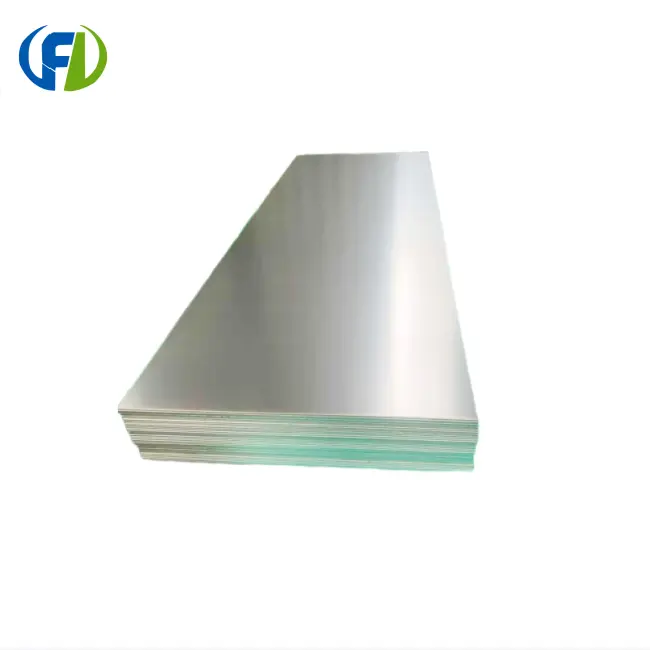
TA1 Titanium Plate is the purest titanium product that can be bought, meeting ASTM Grade 1 guidelines and having a minimum of 99.5% titanium content. This high-purity, alpha-phase titanium material stands out because it is very easy to shape and doesn't react with chemicals. This makes it essential for uses where complicated shapes are more important than high tensile strength.
What Defines TA1 Titanium Material?
Unlike alloyed titanium grades, TA1 is designed to solve the problems that come up with cold forming in industrial manufacturing. The material keeps very low levels of intermediate elements, with an iron content below 0.20% and an oxygen content below 0.18%. This is very important because higher oxygen levels make the material rigid, which makes the manufacturing processes less effective. This mix gives titanium metal the most ductility possible, keeping the structure strong during aggressive deformation processes and providing better corrosion resistance in oxidising environments like nitric acid and wet chlorine.
Mechanical and Chemical Performance Profile
The technical details of commercially pure titanium Grade 1 show that its shape is geared toward being easy to shape rather than being strong enough to hold weight. Tensile strength is at least 240 MPa, which stops spring-back while the metal is being formed. The yield strength is between 138 and 310 MPa, and the elongation is more than 24%, which means that it can be deformed in a very plastic way. It is the softest grade of titanium that can be used in industry because its hardness stays below 120 HB. This mix of qualities gives it great impact, hardness even at cold temperatures, better weldability without the need for post-weld heat treatment, and the ability to form stable, continuous oxide films that protect it from ocean rust and metallic chlorides.
Industrial Applications Across Critical Sectors
The TA1 Titanium Plate can be used in a number of different B2B situations where resistance to the climate and physical complexity are important. Plate heat exchangers are used in heavy industry, marine, and HVAC systems. The material is stamped into heat transfer plates with complex corrugated patterns. Its high ductility lets it bend tightly without micro-cracking, which keeps media like seawater and coolants from getting mixed up. It is used as an anode material in chlor-alkali electrolysers to make chlorine and caustic soda. In these environments, it can handle very corrosive wet chlorine environments that would destroy stainless steel in hours. Aerospace uses it for non-structural parts because of its high strength-to-weight ratio, and medical device makers use it for vascular tubes and orthopaedic implants because it is biocompatible. Explosive cladding uses TA1 as the cladding layer in composite vessels because it is shock-absorbing and flexible, so it can be bonded explosively to carbon steel frames without breaking. This makes it a cost-effective way to protect big chemical reactors from rust.
Criteria to Consider When Choosing Where to Buy TA1 Titanium Plates
Choosing the right source for pure titanium plates affects not only the quality of the materials but also how reliable they will be over time and how much they cost. Before agreeing to a provider agreement, you should carefully consider a number of factors.
Quality Certifications and Compliance Standards
Your buying ethics is protected by giving priority to suppliers with full quality certifications. Check for ISO 9001 quality management certification, which shows that the process is being controlled in a planned way. Pressure Equipment Directive (PED) compliance shows that the equipment is suitable for chemical handling, but FDA permission is needed to make medical devices. Every package should come with a material test record that shows the chemical makeup, mechanical properties, and heat treatment approval. These papers show where the raw materials come from and how the finished product is delivered. This lets your quality control team check that the specifications match the needs of your application.
Supplier Reputation and Industry Experience
To figure out how trustworthy a supplier is, you need to look at their history, customer feedback, and how present they are in the market. Manufacturers who have been working with titanium for decades usually have more stable quality control systems and more technical knowledge. Look over case studies that show projects that worked well in your industry. Customer reviews from companies that make aircraft, chemicals, or medical devices can help you understand how well a product or service works in real life. Being open about how you get materials shows that your business is ethical and lowers the risks in the supply chain that come from not knowing where the materials come from or how they were processed.
Direct Manufacturing vs. Distribution Channels
Knowing the difference between factory-direct sales and third-party distributors has a big effect on how prices are set and what kind of service is offered. When you deal directly with makers in Baoji City, China's titanium production center, you can usually save 15 to 25 percent on costs compared to dealing with wholesalers. You can also make more changes to the product to fit your needs, such as changing the size or finish. Manufacturers can handle smaller minimum order quantities for research labs or prototype development. They can also handle large production runs for battery makers or aerospace contractors. On the other hand, regional distributors add value by keeping inventory close to home, speeding up delivery times for buyers in North America or Europe, and making logistics coordination easier. Often, they keep common sizes in store so that they can be shipped right away. This cuts wait times from weeks to days for projects that need to be done quickly.
Customization Capabilities and Technical Support
Your supplier should be able to show that they can meet your specific needs for dimensional tolerances, surface finish, and material condition. Find out what plate thicknesses, widths, lengths, and edge preparation methods are available. Different suppliers have very different minimum order quantities. For example, some manufacturers need at least 500 kg, while others can handle research quantities as low as 10 kg. Lead times for delivery are usually between 4 and 8 weeks for normal specs and between 10 and 14 weeks for custom rolling or special treatments. When there are problems with an application, having access to technical help is very important. This is especially true for complicated tasks or questions about rust resistance in new chemical conditions.
Top Trusted Retailers and Distributors for TA1 Titanium Plates
There are different types of suppliers in the global market, and each one has its own benefits depending on your buying needs and where your business is located.
Leading Direct Manufacturers
Baoji Freelong New Material Technology Development Co., Ltd is one of the most well-known titanium manufacturers in China. It is based in Baoji City, which is known around the world as China's Titanium Valley. The business focuses on making TA1 Titanium Plate, zirconium, titanium, nickel, niobium, and tantalum products. It also has a lot of experience with OEM work and exporting. They have established relationships with clients in Australia, Korea, Germany, the United States, the United Kingdom, Malaysia, and the Middle East. One of the quality standards they are certified to is ISO. Their production infrastructure can handle special sizes, different surface processes, and a range of order sizes, from small study batches to big commercial amounts. As part of quality assurance processes, all materials can be tracked back to their source, and if needed, third-party testing can confirm the quality.
North American Specialty Distributors
The US and Canadian markets are served by a number of well-known distributors who offer localised inventory and technical sales support. These businesses usually keep ASTM B265 Grade 1 plates in standard sizes in stock and can deliver standard sizes the same week or the week after. Their main selling point is that they make it easier to import things, give mill test reports that can be checked in the United States, and let you buy smaller amounts that are good for making prototypes or doing maintenance. Prices include markups for marketing, but they are made up for by lower transportation costs and quick access.
European Regional Suppliers
European sellers of titanium mostly work with companies that make aircraft parts, chemicals, and medical devices all over the EU. They make sure to follow European standards for materials and can provide both ASTM and EN certificates. Their technical teams offer application engineering help, which is especially helpful for businesses that are new to handling titanium or switching from stainless steel alternatives. With warehouses in Germany, the UK, and France, goods can be quickly sent across Europe because the paperwork for customs is already done.
Price and Cost Considerations When Purchasing TA1 Titanium Plates
Knowing the economic factors that affect the price of commercially pure titanium helps you make better decisions about what to buy and how much to spend on a project.
Current Market Pricing Structure
Prices for standard commercial quantities of TA1 titanium plate range from $28 to $45 per kilogram, but this can change depending on a number of factors. Costs of raw materials make up about 60% of the end price of plates. These costs are directly linked to titanium sponge market rates, which change based on the amount of ore mined and processed around the world. Processing that is hard to do adds a lot to the cost. For example, cold rolling thin gauges needs several passes and intermediate heating processes, and keeping the dimensions within 0.1 mm requires precise tools and skilled workers. The amount of an order has a big effect on the price per unit. Buying more than 1,000 kg often gets you 12–18% off the price of 100 kg. Surface finish needs also affect prices, as pickled and annealed surfaces need more work and cost 8–12% more than mill finish.
Comparative Analysis with Alternative Materials
When comparing TA1 to other grades of titanium, TA2 (Grade 2) has a slightly higher strength but costs 10-15% more and is less flexible. The strength of Grade 5 titanium alloy (Ti-6Al-4V) is much higher, but it costs 60–80% more and is much less resistant to corrosion in chemical environments. When compared to alternatives made of stainless steel, 316L stainless steel has some interesting trade-offs. For example, it only costs $4–7 per kilogram, but it weighs 75% more than titanium and fails catastrophically in chloride-rich environments, where TA1 works perfectly. Lifecycle costs, such as maintenance, replacement frequency, and system weight penalties, must be taken into account in the strength-to-cost efficiency calculation. This is especially important in aerospace applications, where every kilogram has operational cost implications.
Strategic Procurement Approaches
To get good terms, you need to know how the supplier's business works and how the market works. Setting up yearly purchase agreements with delivery schedules every three months can often save you 8 to 15 percent on prices while keeping your supply steady. When you don't have to pay in advance, flexible payment terms like 30-day net arrangements help you build relationships with suppliers and better manage your cash flow. Putting together orders for different grades or types of products, like buying TA1 plates and TA2 bars at the same time, raises the total value of the order and makes it easier to negotiate. Buying when the market is weak, which is usually in the second and fourth quarters, can save you money in the short term when the price of titanium sponge goes down.
How to Verify and Identify Genuine TA1 Titanium Plates
To protect the security of buying TA1 Titanium Plate, strict checking methods must be used to make sure that materials are real and meet specifications before signing contracts with suppliers or taking packages.
Essential Testing Protocols
Chemical composition analysis using optical emission spectroscopy or X-ray fluorescence testing shows that the titanium is pure and the levels of interstitial elements meet the requirements of ASTM B265 Grade 1. Ask for certified analysis reports that show the amount of iron, oxygen, nitrogen, carbon, and hydrogen is less than 0.20%, 0.18%, 0.03%, 0.08%, and 0.015 %, respectively. Tensile tests should show that the mechanical properties are correct by showing that the final tensile strength is at least 240 MPa, the yield strength is between 138 and 310 MPa, and the extension is more than 24%. When using the Brinell method to test hardness, the result should be less than 120 HB. The heat treatment license lists the melting temperatures and times, which are very important for getting the best flexibility and resistance to rust. When sellers test their own goods, there are conflicts of interest that can happen. Independent third-party laboratory testing gets rid of these problems.
Visual Identification and Traceability
Genuine items have identification codes or stamps from the manufacturer etched or stamped on the plate's surface or edges. These codes or stamps usually include heat lot numbers, grade designations, and the date the product was made. These codes can be used to link physical items to test reports and production records from the mill. The look of the surface can give you a rough idea of the quality. For example, commercially pure titanium Grade 1 has a silver-gray metallic sheen when it is pickled, the same thickness all over the plate surface, and smooth edges that don't delaminate or crack. Oxide patterns that show up after welding or being exposed to heat can mean that there is too much oxygen in the material, which makes it harder to shape.
Counterfeit Risk Mitigation Strategies
Sometimes, low-quality goods are sold in unregulated markets under the guise of high-purity commercially pure titanium. Fraud often involves using Grade 2 or lower-purity materials while claiming to be Grade 1 or giving materials with too many interstitial elements that make them less resistant to corrosion and less easy to shape. When you do supplier audits before making big commitments, you can look at the factories, quality control systems, and ways of getting raw materials. Costly mistakes can be avoided by requiring samples of the material to be tested by a third party before bulk orders are placed. Building partnerships with makers whose operations are clear and whose export records can be checked by customers in aircraft, medicine, or chemical processing gives you peace of mind about their legal operations and quality commitment.
Conclusion
Identifying reliable sources for TA1 Titanium Plate requires balancing quality assurance, cost efficiency, and logistical convenience. Direct engagement with manufacturers in Baoji City offers optimal pricing and customization for substantial orders, while regional distributors provide localized support and faster delivery. Rigorous supplier evaluation focusing on certifications, industry reputation, and verification protocols protects procurement integrity across aerospace, chemical processing, medical device, and research applications. Understanding the material's unique formability advantages, appropriate testing methods, and market pricing dynamics empowers informed sourcing decisions that ensure long-term supply chain reliability and operational success.
FAQ
1. What distinguishes TA1 from TA2 titanium grades?
TA1 represents the highest purity commercially pure titanium (ASTM Grade 1) with a minimum 99.5% titanium content, offering maximum ductility and formability. TA2 (ASTM Grade 2) contains slightly higher interstitial elements, providing approximately 15% greater strength but reduced formability. TA1 proves superior for complex stamping, deep drawing, and explosive cladding applications, while TA2 suits structural applications requiring moderate strength with good corrosion resistance.
2. Can I order custom-sized plates for prototype development?
Many manufacturers accommodate custom dimensions and small quantities for research institutions and prototype projects. Minimum order quantities vary from 10kg to 500kg, depending on the supplier. Custom rolling for non-standard thicknesses or widths typically requires higher minimums and extended lead times of 10-14 weeks. Specify exact dimensional tolerances, surface finish requirements, and material condition preferences when requesting quotations to ensure accurate pricing and feasibility assessment.
3. Which certifications should I request from suppliers?
Essential documentation includes ISO 9001 quality management certification, mill test reports documenting chemical composition and mechanical properties, ASTM B265 compliance verification, and heat treatment records. Medical device applications require FDA approval or ISO 13485 certification. Aerospace applications demand AS9100 certification and material traceability to raw material sources. Request third-party laboratory verification for critical applications to ensure independent validation of supplier claims.
Partner with Freelong for Your TA1 Titanium Plate Requirements
Baoji Freelong New Material Technology Development Co., Ltd delivers comprehensive solutions as a trusted TA1 Titanium Plate manufacturer serving aerospace, chemical processing, medical device, and research sectors worldwide. Located in China's Titanium Valley with decades of metallurgical expertise, we maintain rigorous quality control systems aligned with international standards and provide complete material traceability from raw material sourcing through final delivery. Our customization capabilities accommodate everything from small research quantities to large production volumes, with flexible MOQs and competitive factory-direct pricing that eliminates distributor markups. Contact our technical sales team at jenny@bjfreelong.com to discuss your specific dimensional requirements, delivery schedules, and application challenges—we provide personalized engineering support and reliable supply chain solutions backed by our commitment that quality concerns receive immediate resolution without exception.
References
1. American Society for Testing and Materials. (2020). ASTM B265: Standard Specification for Titanium and Titanium Alloy Strip, Sheet, and Plate. ASTM International.
2. Boyer, R., Welsch, G., & Collings, E.W. (2019). Materials Properties Handbook: Titanium Alloys. ASM International.
3. Lütjering, G., & Williams, J.C. (2018). Titanium: Engineering Materials and Processes. Springer-Verlag.
4. Peters, M., Kumpfert, J., Ward, C.H., & Leyens, C. (2021). Titanium and Titanium Alloys: Fundamentals and Applications. Wiley-VCH.
5. Schutz, R.W. & Watkins, H.B. (2017). "Recent developments in titanium alloy application in the energy industry." Materials Science and Engineering A, 243(1-2), 305-315.
6. Zhang, L.C. & Chen, L.Y. (2019). "A review on biomedical titanium alloys: recent progress and prospect." Advanced Engineering Materials, 21(4), 1801215.

_1745290796744.webp)
_1767862696518.png)
Learn about our latest products and discounts through SMS or email