- English
- French
- German
- Portuguese
- Spanish
- Russian
- Japanese
- Korean
- Arabic
- Greek
- German
- Turkish
- Italian
- Danish
- Romanian
- Indonesian
- Czech
- Afrikaans
- Swedish
- Polish
- Basque
- Catalan
- Esperanto
- Hindi
- Lao
- Albanian
- Amharic
- Armenian
- Azerbaijani
- Belarusian
- Bengali
- Bosnian
- Bulgarian
- Cebuano
- Chichewa
- Corsican
- Croatian
- Dutch
- Estonian
- Filipino
- Finnish
- Frisian
- Galician
- Georgian
- Gujarati
- Haitian
- Hausa
- Hawaiian
- Hebrew
- Hmong
- Hungarian
- Icelandic
- Igbo
- Javanese
- Kannada
- Kazakh
- Khmer
- Kurdish
- Kyrgyz
- Latin
- Latvian
- Lithuanian
- Luxembou..
- Macedonian
- Malagasy
- Malay
- Malayalam
- Maltese
- Maori
- Marathi
- Mongolian
- Burmese
- Nepali
- Norwegian
- Pashto
- Persian
- Punjabi
- Serbian
- Sesotho
- Sinhala
- Slovak
- Slovenian
- Somali
- Samoan
- Scots Gaelic
- Shona
- Sindhi
- Sundanese
- Swahili
- Tajik
- Tamil
- Telugu
- Thai
- Ukrainian
- Urdu
- Uzbek
- Vietnamese
- Welsh
- Xhosa
- Yiddish
- Yoruba
- Zulu
How to Use a 10ml Zirconium Crucible Safely in High Heat
To use a 10 ml Zirconium crucible safely in high-heat areas, you must first understand how it is designed and how to handle it properly. For alkaline fusion processes in analytical chemistry and metallurgical testing, these precision-engineered tanks made from high-purity zirconium (usually Grade 702, with Zr + Hf content topping 99.2%) are a must. For safe operation, the crucible must be slowly heated up, kept at a temperature between 500°C and 600°C to make it last as long as possible, kept away from hydrofluoric acid or bisulfate fluxes, and cooled in a planned way. The right way to clean and check before using something is to make sure that the products are clean after many fusion rounds.
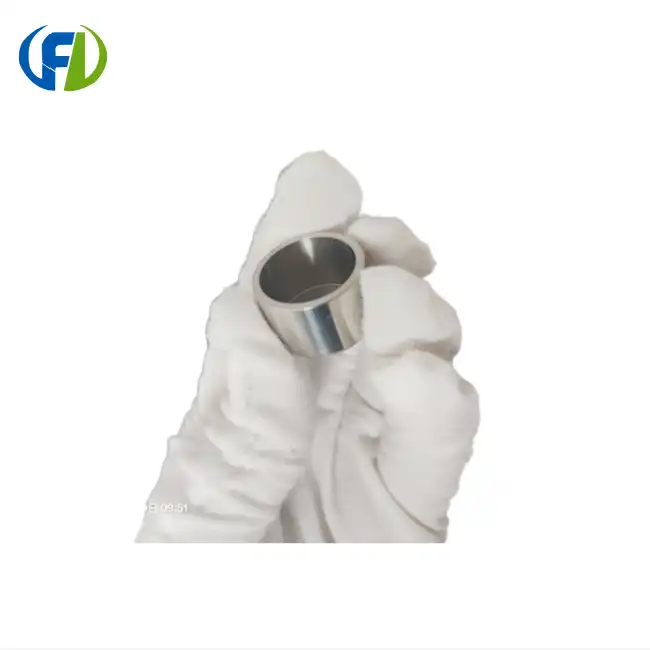
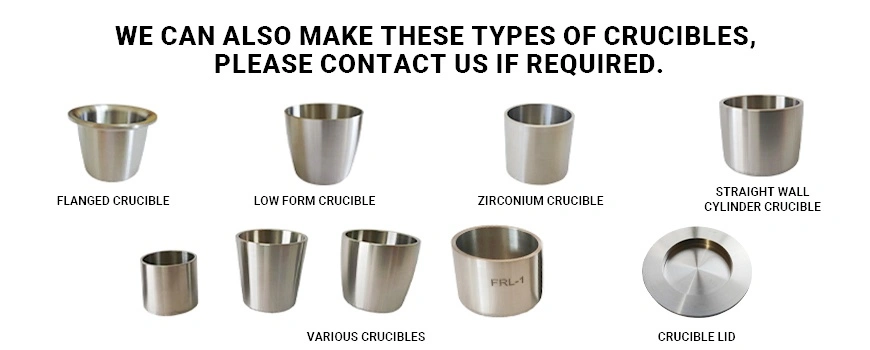
Understanding the 10ml Zirconium Crucible: Composition, Specifications, and Benefits
Manufacturing Standards and Material Composition
The quality of the material and the way it was built are the most important parts of an effective 10 ml Zirconium Crucible. Vessels that meet the requirements of ASTM B550/B551 Grade R60702 make sure that there is little trace metal background interference. This is very important when using ICP-MS, ICP-OES, or atomic absorption spectroscopy to analyse trace elements. The one-piece stamped design doesn't have any welded parts that could fail during temperature cycles, so the structure will stay strong for the whole time the tank is in use.
A zirconium concentration of more than 99.2% (including hafnium) makes a chemically inert material that can handle harsh alkaline conditions without contaminating your samples. This trait is especially useful when studying rocks or metals, since even small amounts of pollution can throw off the results of an analysis. Because of its natural features, the material can keep its shape even after being heated and cooled many times, which is hard for ceramic options to do.
Thermal and Mechanical Performance Characteristics
Keeping the temperature under control is very important when working with these unique tanks. The melting point of zirconium is about 1855°C, but in real life, the conditions for use are very different. Laboratory experience shows that keeping fusion temperatures between 500°C and 600°C makes the crucible last longer and fully digests the sample. Exposure to air temperatures above 700°C speeds up the formation of oxide layers, which cause scaling and eventually fraying that weakens the structure.
With a 10ml volume, the height and top diameter are usually 25–30 mm, and the wall thickness is between 0.6 mm and 1 mm. This makes it perfect for normal sample masses of 0.5 g to 1 g. This small size works well in both labs with limited room and field research situations. Because the vessel has a high tensile strength, it can go through repeated thermal cycles without warping. This means that it can be used for 20 to 100 fusions, depending on the flux used and how well the temperature is controlled. When compared to single-use options, this longevity directly leads to lower costs for consumables.
Chemical Resistance and Application Advantages
Zirconium crucibles are unique in analytical processes because they are very resistant to alkaline fusion conditions. When dealing with sodium peroxide, sodium carbonate, or sodium hydroxide fluxes, these tanks are almost completely chemically inert, making them better than platinum in these situations. This resistance lets all resistant minerals dissolve that don't dissolve easily with acidic methods, which makes it possible to analyse complex materials.
When you compare prices, the economic benefit is clear right away. Around one-tenth the price of platinum versions, zirconium crucibles work better in alkaline conditions and cost about the same. Because of this difference in cost, labs can keep various jars for different types of samples, which eliminates the risk of cross-contamination without having to spend a lot of money. Because they are resistant to chemicals, stable at high temperatures, and easy to get, these tanks are now standard in geological, metallurgical, and advanced materials research labs all over the world.
Challenges of Using Crucibles in High Heat and How Zirconium Addresses Them
Common Failure Modes in Traditional Crucible Materials
In both business and study settings, normal crucible materials fail in predictable ways when they are put through extreme conditions. Because exothermic reactions cause heat shock, porcelain and clay vessels often crack or break during strong peroxide fusions. Even though alumina crucibles are stronger than porcelain, they slowly break down in strongly alkaline settings, which could cause aluminium, silicon, and trace elements to leak into samples. This pollution makes the analysis less accurate, especially when figuring out trace elements, where the limits of discovery are getting close to parts-per-billion.
The problems that come up with nickel and iron crucibles are different. Even though these metal options are strong and good at conducting heat, they pose a big risk of contamination. When these vessels are used, they can't be used for any study that needs to find Fe, Ni, or similar transition metals. Quartz crucibles are very pure, but they don't stand up well to alkaline fluxes. When molten sodium peroxide or carbonate touches them, they dissolve quickly. Each material limitation leads to practical limitations that make it harder to do different kinds of analyses and raise the cost of the project by requiring multiple tank replacements, and a 10 ml zirconium crucible is added.
How Zirconium Construction Overcomes Thermal Stress?
Zirconium's special mix of physical qualities directly solves the problems that come up when working with high-heat fusion. The material's rate of thermal expansion stays low and stable across a wide range of working temperatures. This means that it doesn't change much in size when heated and cooled. This steadiness keeps the stress from building up, which is what causes ceramics to crack. When sodium peroxide fusion causes rapid temperature jumps of up to 600–700°C, the zirconium matrix receives and spreads the heat energy without breaking.
The protective oxide layer that appears on zirconium surfaces when they are heated is useful in two ways. Because it is thin and sticks to the metal, this ZrO₂ film stops further oxidation and keeps the metal's basic features. If you keep the temperature just right, you can keep the crucible's heat conductivity and mechanical strength. By using the right heating and cooling methods and understanding how this rusting process works, workers can make vessels last as long as possible.
Step-by-Step Guide: How to Use a 10 ml Zirconium Crucible Safely in High Heat
Pre-Use Inspection and Preparation Protocol
When you start any fusion process with a thorough review, you set yourself up for success. Hold the 10 ml Zirconium Crucible up to a bright light and look at the whole surface for cracks, deep scratches, or changes in colour that could mean it was overheated in the past. Pay close attention to the rim and base, as these are the places where stress builds up during thermal cycles. If you see any damage, the tank should be taken out of service because it could break while it's being heated, which could lose samples and pose safety risks.
Cleaning and checking make sure that old results don't get on the new samples. Even crucibles that look clean may still have small amounts of dust from previous fusions. Potential interferences are removed by letting the material soak for a short time in a 10% hydrochloric acid solution and then rinsing it three times with deionised water. Some labs do a blank fusion process on a regular basis. They heat the crucible all the way through with flux, but no sample. After that, they test the solution to make sure the pollution levels stay below the limits of detection for the elements they're interested in.
Equipment Selection and Temperature Control
Choosing the right hot tools has a big effect on how well fusion works and how long the 10 ml Zirconium Crucible lasts. Open-flame burners aren't as good at controlling temperature as muffle furnaces with adjustable temperature controls. Using slow heating ramps keeps you from getting thermal shock and makes sure that all of the flux melts and all of the sample dissolves. Place the crucibles on stable, heat-resistant frames inside the furnace, making sure there is enough space between them to allow air to flow and heat them evenly.
Programming the temperature should take into account the unique flow and sample mix. A common procedure starts with a slow rise from room temperature to 300°C over 10 to 15 minutes. This lets the moisture escape without severe spattering. The temperature then rises slowly until it reaches the 500–600°C range that is needed for fusion. Temperatures between 480°C and 500°C are common for sodium peroxide fusions. For sodium carbonate, temperatures between 600°C and 650°C may be needed for a full reaction. Depending on the sample's mass and make-up, hold times at the highest temperature are usually between 5 and 15 minutes. By looking through the windows of the furnace, workers can see how fluid and full the melt is without having to open the room too soon.
Safe Handling During and After Heating
Please fight the urge to remove the crucibles as soon as the fusion is done. By letting the boiler cool down naturally to about 200°C before opening it, thermal shock from quick temperature changes can be avoided, and workers can avoid getting burnt. When taking out hot crucibles, you should always use high-temperature tools made for lab vessels and keep a tight grip on the crucible's body instead of its edge. Move to a heat-resistant surface that is meant for cooling tasks and is away from air and materials that can catch fire.
You have to be patient during the cooling part of a 10 ml zirconium crucible. When water quenching or forced air movement is used to cool something quickly, it creates temperature differences that can cause cracks to form, even in strong zirconium construction. When crucibles are cooled by air at room temperature, it usually takes 30 to 45 minutes before they reach a safe temperature for handling. To reduce thermal stress, some operators use a stepped cooling procedure that moves vessels to environments that are increasingly cooler. This method works especially well when working with expensive or precious samples, since a failed crucible could mean losing the whole sample.
Procurement Insights: Buying and Sourcing 10ml Zirconium Crucibles
Identifying Reliable Global Suppliers and Manufacturers
To find high-quality lab vessels, you need to check out suppliers' manufacturing skills, quality control methods, and scientific know-how. Well-known companies usually have factories with controlled production settings that make sure materials always have the same qualities and measurements are correct. Systematic quality management is shown by certifications like ISO 9001, and analytical proof comes from material test results that show how pure the zirconium is and how much trace element it contains. Asking for sample crucibles to test their performance before placing a large order lets you see for yourself how well they are made and whether they will work for your needs.
Lead times, shipping prices, and how well people can communicate are all affected by where they are located. Suppliers in industrialised areas often have access to supply lines that are already well-established for raw materials and specialised production tools. Businesses in China's Titanium Valley, like Baoji, have access to a lot of experts who know how to handle hard and reactive metals. This grouping of industries gives them price and technology benefits over their competitors. If you judge sellers by how much they can produce, you can be sure that they can keep up with demand without lowering quality as they grow.
Negotiating Terms and Managing Supply Chain Logistics
Bulk buying deals usually lower the cost per unit by a lot while making sure that high-volume labs can always get what they need. When discussing contracts, make sure that all of the details are clear, such as the grade of the material, the allowed tolerances for size, the required surface finish, and the quality of paperwork. Setting up blanket buy orders with planned deliveries is a good way to handle inventory and get better prices on large orders. Payment terms, which are usually a deposit and a balance for foreign deals, should be set up in a way that protects both parties and makes order handling go smoothly.
When shipping zirconium goods, you need to be careful about how you package them so they don't get damaged in transit. To keep them from getting damaged by touch, crucibles should be individually packed and cushioned inside shipping cases. The paperwork for international shipping must correctly label the goods and follow customs rules. Lead times depend on the size of the order and the schedule for production. For normal setups, they are usually between 2 and 6 weeks. Custom specs may make delivery times longer, but they also make sure that the vessels are perfect for the job, which could improve the results of the analysis enough to support the longer delivery times.
Evaluating Supplier Reputation and After-Sales Support
Long-term relationships with suppliers based on reliable performance and quick help offer value that goes beyond transactional cost savings. Suppliers who give expert advice help labs improve fusion processes, figure out why some results aren't expected, and start using new analytical methods. Having access to application experts who are familiar with a range of sample types and fusion techniques speeds up the development of new methods and cuts down on the need for expensive trial-and-error testing. Documentation tools, such as working rules, upkeep routines, and safety information, can help your organisation's 10 ml Zirconium Crucible rollout go smoothly.
After-sales help includes things like warranties, policies for replacing broken items, and responding to complaints about quality, such as adding a 10 ml Zirconium Crucible. Reputable makers stand behind the performance of their products and offer replacements when vessels fail early because of flaws in the production process, instead of being misused in the field, like adding a 10 ml Zirconium Crucible. Operations that focus on customers have clear ways to communicate and acceptable wait times for technical questions, for instance, adding 10 ml of Zirconium Crucible. Creating partnerships with sellers who care about your success, as well as just making sales, leads to long-lasting purchasing relationships that support business excellence over the long run, including adding a 10 ml Zirconium Crucible.
Conclusion
To use 10 ml zirconium crucibles successfully in high-heat situations, you need to know about the material's properties, follow the right working procedures, and build a stable supply chain. These special tanks work very well in alkaline fusion settings because they are chemically inert and can withstand high temperatures at a reasonable price. Total cost of ownership analysis, matching material choice to specific uses, and working with manufacturers who offer technical support along with high-quality goods are all things that procurement workers, lab managers, and analytical chemists can benefit from. The crucible will last longer and work more accurately if it is inspected, maintained, and kept at the right temperature. These tanks are important tools for modern analytical labs that work with the aerospace, electronics, metallurgy, and geological industries around the world because they allow for contamination-free sample preparation and cost-effective high-throughput operations.
FAQ
1. What temperature range ensures safe operation of zirconium crucibles?
The best performance happens between 500°C and 600°C, which is the sweet spot between full fusion and long crucible life. Zirconium melts at about 1855°C, but being exposed to temperatures above 700°C for a long time speeds up oxidation, which leads to scaling and weakening that shortens its useful life. Keeping the temperature in the recommended ranges usually gets 20 to 100 fusion cycles per jar.
2. How does chemical resistance compare to alumina alternatives?
Zirconium is very good at withstanding alkaline environments like those that contain sodium peroxide, carbonate, and hydroxide flows. Zirconium doesn't break down chemically during fusion cycles like alumina does, which allows pollution to spread over time. This inertness is very important for trace element research, because even small amounts of pollution can throw off the results.
3. What cleaning methods preserve crucible integrity?
Most leftovers can be removed by leaching with warm 10–20% hydrochloric acid and then rinsed with deionised water. For stubborn formations, a short sodium bisulfate fusing may be needed, but this should be done as little as possible. Do not use rough mechanical cleaning because it hurts the protective oxide layers. Cross-contamination can be avoided by cleaning vessels properly between uses, which also makes them last longer.
Partner with Freelong for Premium Zirconium Crucible Solutions
Baoji Freelong New Material Technology Development Co., Ltd. makes high-purity zirconium crucibles that are designed for tough commercial and scientific uses. We are in China's Titanium Valley and have decades of experience working with refractory metals. We also have strict quality control measures in place to make sure that the tanks we give meet ASTM standards and perform better than expected. The aerospace, electronics, metallurgy, and geological businesses around the world use our 10ml Zirconium Crucible in their labs and production sites. We offer customised specifications, full material certifications, and expert help to make sure that your products work best in your particular situations. Whether you need small amounts to test a method or large amounts to support high-throughput operations, our team can help you quickly and at a price that doesn't skimp on quality. You can talk to our procurement experts about your crucible needs, get performance data, or set up sample orders by emailing jenny@bjfreelong.com.
References
1. ASTM International. (2021). ASTM B550/B551: Standard Specifications for Zirconium and Zirconium Alloy Bar, Rod, and Wire for Nuclear Application. West Conshohocken: ASTM International.
2. Thompson, M., & Walsh, J.N. (2020). Handbook of Inductively Coupled Plasma Mass Spectrometry (5th Edition). London: Blackwell Scientific Publications.
3. Skoog, D.A., Holler, F.J., & Crouch, S.R. (2018). Principles of Instrumental Analysis (7th Edition). Boston: Cengage Learning.
4. Sulcek, Z., & Povondra, P. (2019). Methods of Decomposition in Inorganic Analysis. Boca Raton: CRC Press.
5. Lide, D.R. (2022). CRC Handbook of Chemistry and Physics (103rd Edition). Boca Raton: CRC Press.
6. Ingamells, C.O., & Pitard, F.F. (2017). Applied Geochemical Analysis: Refractory Sample Preparation Techniques. New York: Wiley-Interscience.
_1776238513804.png)
_1745307335633.webp)
_1751438453544.webp)
Learn about our latest products and discounts through SMS or email