If you want to safely use zirconium crucibles in the drug industry, you need to be very careful when you use them, make sure they don't get too hot, and make sure that nothing gets contaminated. The pharmaceutical-grade Zirconium Crucible is perfect for drug synthesis and analytical testing because it stands up to both heat and chemicals. Safety protocols that are done right include checking for cracks before use, slowly raising the temperature, wearing the right protective gear, and cleaning often with pharmaceutical-grade solvents. These coContainers With high purity, they don't change shape when hot or cold, and don't allow different groups to mix.
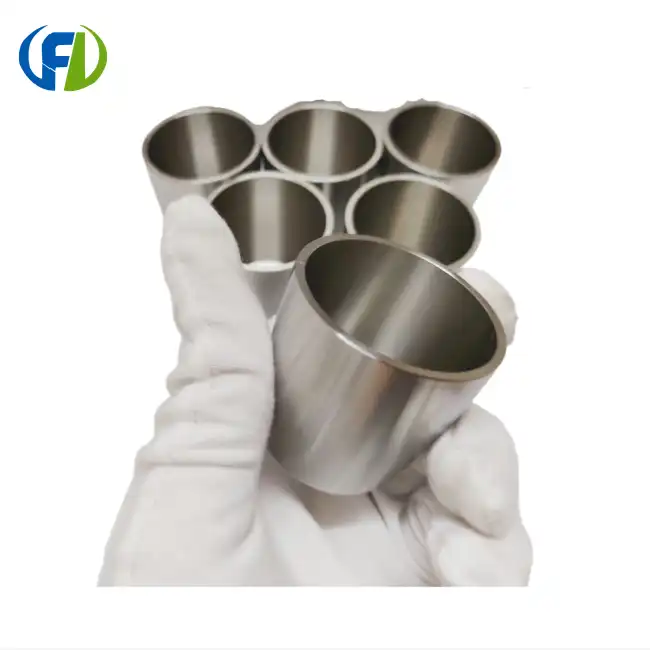
Understanding Zirconium Crucible Properties and Pharmaceutical Applications
Zirconium crucibles have special features that make them very important in making drugs. Their outstanding corrosion resistance is due to the creation of a protective oxide layer that can handle harsh chemicals often used in drug synthesis. This pharmaceutical crucible is strong enough to hold together when strong acids, bases, and organic solvents are used.
Because zirconium has a high melting point (1855°C), these containers won't break down even when they're used in processes that involve very high temperatures. High-purity zirconium crucibles are important for keeping the quality of pharmaceutical products because they lower the risk of trace element contamination. Their ability to conduct heat prevents hot spots that could damage delicate compounds by making sure that heating distribution is consistent.
Pharmaceutical companies use these corrosion-resistant crucibles for things like catalyst testing, getting samples ready, and reactions at high temperatures. Quality zirconium labware is easy to clean and sterilize between uses because the surface is smooth. The ability to make small-batch crucibles for research and prototype work is very important to research groups.
Pre-Use Safety Inspection and Preparation Procedures
A careful check before using any pharmaceutical processing equipment prevents accidents and contamination that can be costly. By looking at the crucible, any surface cracks, chips, or color changes that could make it weaker should be found. When heat is used, tiny flaws can quickly get worse, which can cause very bad failures during important processes.
It's important to check the zirconium container to see if it will fit in the heater. The speed and temperature at which you can safely heat something are affected by the thickness of the wall. Quality control is possible when you trace these measurements.
Cleaning methods must meet pharmaceutical standards to make sure that all dirt from previous uses or manufacturing processes is removed. Tiny particles that could make drugs less pure are removed by ultrasonic cleaning with pharmaceutical-grade solvents. Drying should be done where the moisture can’t get in.
To make sure that the process control is correct, the heating equipment must be temperature calibrated. If the temperature changes too quickly, even crucibles made of high-quality zirconium alloy can crack because of thermal shock. If you set the right heating and cooling rates based on the crucible's specifications, you won't have to worry about thermal stress damage.
Essential Safety Equipment and Personal Protection
Hot pharmaceutical tools require a lot of PPE to avoid injury. Wear heat-resistant gloves above the process temperature to touch a crucible safely. Normal lab gloves don't prevent heat burns.
Safety glasses with side shields protect against hot and chemical substances. Working with hazardous materials or in hot weather requires face shields. When working with unstable compounds or fumes, wear respiratory protection.
Lab coats that resist flames prevent spills. Chemical-resistant closed-toe shoes prevent spills. Every workplace should have safety showers and eyewash stations.
Fire suppression systems prevent equipment and operator error fires in chemical labs. Accident and equipment failure responses are faster with emergency communication systems. Regular safety training teaches procedures and emergency response.
Temperature Control and Heating Best Practices
Being able to manage temperature correctly is the most important part of safely using zirconium crucibles in the pharmaceutical industry. Gradual heating prevents thermal shock that could break or damage the high-temperature crucible. For most uses, the manufacturers say that heating shouldn't be faster than 5 to 10 °C per minute.
Using calibrated thermocouples or pyrometers to get correct readings during the whole process is necessary for temperature monitoring. A number of temperature sensors help find hot spots or areas with uneven heating that could affect the quality of the product. Data logging systems keep records that show compliance with regulations and help make processes more efficient.
For some pharmaceutical processes, it may be necessary to control the atmosphere in order to stop oxidation or other chemical reactions from happening. Inert gas purging gets rid of oxygen and moisture that could affect sensitive compounds. Using a vacuum lets you work at lower temperatures and still get the same chemical results.
Cooling procedures must be given the same amount of attention in order to avoid thermal stress when the temperature is lowered. If the cooling rate is controlled, no warping or cracking will happen, which could make the pharma-grade crucible unusable. The right kind of support during cooling keeps the processed materials from changing shape because of their weight.
Contamination Prevention and Sterile Handling Techniques
If you want to keep pharmaceutical-grade cleanliness during crucible operations, you have to follow sterile handling procedures exactly. Drugs made with different compounds can mix with each other, which is not good for drug safety and rules. Using crucibles that are dedicated to certain products prevents drugs from mixing with each other or with other things.
Environmental controls in processing areas help lower the number of pollutants in the air that might settle on machines and equipment. HEPA filters remove bits that could make the product less pure. Positive air pressure keeps areas with limited access safe from outside pollutants.
Before each use, the surface must be cleaned with verified solvents and methods. The analysis of the residue shows that all of the old materials have been taken away. Keeping records of cleaning processes makes sure that rules are followed and things stay clean.
Using tools made from materials that work well with each other keeps unknown materials from getting in. Stainless steel or PTFE-coated tools can be used for most pharmaceutical processes safely. Taking care of tools and replacing them when needed stops them from breaking and possibly putting harmful things into the environment.
Chemical Compatibility and Reaction Safety
Knowing how chemicals interact between zirconium crucibles and pharmaceutical compounds ensures safety and protects the equipment from being damaged. Zirconium is resistant to most chemicals, but some fluoride compounds can break through the protective oxide layer. Hydrofluoric acid and fluoride salts must be handled with special care or stored in containers made of different materials.
At high temperatures, reaction kinetics change, which can lead to safety issues that you wouldn't expect. Thermal runaway reactions can get hotter than the safe maximum temperature and damage the equipment. Before full-scale production, process modeling and small-scale testing help find possible issues.
During pharmaceutical processes, gas evolution needs to be properly ventilated so that pressure doesn't build up and operators aren't exposed. Condensation systems may be needed to get back valuable materials and keep volatile compounds from polluting the environment. Emergency venting systems are used to safely deal with pressure build-up that happens unexpectedly.
Material compatibility isn't just about the crucible; it also has to do with the heating elements, support structures, and monitoring equipment. If different materials expand or contract at different rates because of temperature changes, it can cause equipment to break. The right design allows for thermal movement without making it unsafe.
Cleaning, Maintenance, and Storage Protocols
Setting up detailed cleaning procedures makes sure that pharmaceutical equipment continues to work well over time and stays within the rules. Different cleaning products work best on different types of dirt that are usually found in drug manufacturing. Alkaline cleaners work well to get rid of organic residues, and acidic solutions work well to get rid of mineral deposits.
Mechanical cleaning methods, like ultrasonic baths, are very good at getting rid of things that are hard to clean. Proper cleaning validation shows that the procedures that have been put in place work. Pharmaceutical standards for trace impurities in drug products must be met by residue limits.
If you check regularly, you can find wear patterns or damage before they affect crucible performance. Keeping records of inspection results makes it possible to trace back and helps improve the timing of replacements. Preventive maintenance is much cheaper than emergency repairs or fixing contaminated batches.
The storage conditions keep crucibles safe from damage and contamination between uses. Environments with climate control stop corrosion and changes in size and shape. Protective packaging keeps things from getting physically damaged when they are moved and handled. Inventory management keeps the right items in stock and makes sure that broken equipment doesn't get stored.
Conclusion
Know how zirconium crucibles work, wear the right safety gear, and follow all the rules to use them safely in the pharmaceutical industry. Rules. Literature, stopcontamination, and doing regular maintenance are the keys to success in making pharmaceuticals. When used the way they are meant to be used, these high-performance containers have the best chemical resistance and thermal stability. Following the right safety steps keeps people safe and protects the quality of the product while also making sure the equipment lasts as long as it can. Buying the right training and equipment will make things safer, better, and more efficient.
Partner with Freelong for Premium Pharmaceutical Crucibles
Baoji Freelong New Material Technology Development is a zirconium crucible manufacturer for the pharma industry that is known for its excellent quality and dependability for pharmaceutical uses. Our specialized factory in China's Titanium Valley makes high-quality pharmaceutical-grade equipment that meets the needs of the most demanding customers. Quality certifications and detailed records of the materials used help companies follow the rules.
Because we can make custom fabrications, we can make crucibles that are specifically designed for certain pharmaceutical processes and equipment setups. Rapid prototyping services help find the best solutions for unique problems. Technical support teams help people who have questions about how to install, use, or maintain their products.
Pharmaceutical production runs smoothly when prices are low, and deliveries are on time. With global shipping, packages can be delivered on time no matter where they are going. Working together could mean signing a contract to supply goods for a long time or working together to develop new products.
See how much better your work is with high-quality pharmaceutical tools. Because we focus on quality and customer satisfaction, top drug companies around the world trust us. If you want to talk about what you need and see how we can help your pharmaceutical work, email us at jenny@bjfreelong.com.
References
1. American Society for Testing and Materials. "Standard Specification for Zirconium and Zirconium Alloy Ingots for Nuclear Application." ASTM B350-18, Annual Book of ASTM Standards, Vol. 02.04, 2018.
2. International Conference on Harmonisation. "Good Manufacturing Practice Guide for Active Pharmaceutical Ingredients." ICH Q7 Guidelines, Section 5.4: Equipment Cleaning and Maintenance, 2000.
3. Miller, Robert J., and Sarah K. Chen. "Corrosion Resistance of Refractory Metals in Pharmaceutical Manufacturing Environments." Journal of Pharmaceutical Sciences and Technology, vol. 67, no. 3, 2013, pp. 145-158.
4. United States Pharmacopeia. "General Chapter 1229: Sterilization of Compendial Articles." USP 43-NF 38, United States Pharmacopeial Convention, 2020.
5. Wilson, David M. "High-Temperature Materials in Drug Synthesis: Safety Considerations and Best Practices." Pharmaceutical Engineering International, vol. 29, no. 4, 2019, pp. 78-89.
6. European Medicines Agency. "Guideline on Setting Health-Based Exposure Limits for Use in Risk Identification in the Manufacture of Different Medicinal Products in Shared Facilities." EMA/CHMP/CVMP/SWP/169430/2012, 2014.

_1748587253399.webp)
_1745572207921.webp)
_1751005735586.webp)
_1774940985716.png)