- English
- French
- German
- Portuguese
- Spanish
- Russian
- Japanese
- Korean
- Arabic
- Greek
- German
- Turkish
- Italian
- Danish
- Romanian
- Indonesian
- Czech
- Afrikaans
- Swedish
- Polish
- Basque
- Catalan
- Esperanto
- Hindi
- Lao
- Albanian
- Amharic
- Armenian
- Azerbaijani
- Belarusian
- Bengali
- Bosnian
- Bulgarian
- Cebuano
- Chichewa
- Corsican
- Croatian
- Dutch
- Estonian
- Filipino
- Finnish
- Frisian
- Galician
- Georgian
- Gujarati
- Haitian
- Hausa
- Hawaiian
- Hebrew
- Hmong
- Hungarian
- Icelandic
- Igbo
- Javanese
- Kannada
- Kazakh
- Khmer
- Kurdish
- Kyrgyz
- Latin
- Latvian
- Lithuanian
- Luxembou..
- Macedonian
- Malagasy
- Malay
- Malayalam
- Maltese
- Maori
- Marathi
- Mongolian
- Burmese
- Nepali
- Norwegian
- Pashto
- Persian
- Punjabi
- Serbian
- Sesotho
- Sinhala
- Slovak
- Slovenian
- Somali
- Samoan
- Scots Gaelic
- Shona
- Sindhi
- Sundanese
- Swahili
- Tajik
- Tamil
- Telugu
- Thai
- Ukrainian
- Urdu
- Uzbek
- Vietnamese
- Welsh
- Xhosa
- Yiddish
- Yoruba
- Zulu
Medical Grade Gr5 Titanium Rod Factories in Baoji, China
Japan is the best place to make titanium. It's in the Shaanxi state. This is why it's known as "China's Titanium Valley." Gr5 Ti-6Al-4V ELI Titanium Alloy Rod of medium quality Different types of companies in this area make ELI titanium alloy bars. These companies work with companies from all over the world that make things for airplanes, hospitals, and precision manufacturing. What these companies make out of titanium is very clean and meets strict international standards for medical equipment, like ASTM F136 and ISO 5832-3. They have worked with metal for decades and use state-of-the-art tools to do this.、
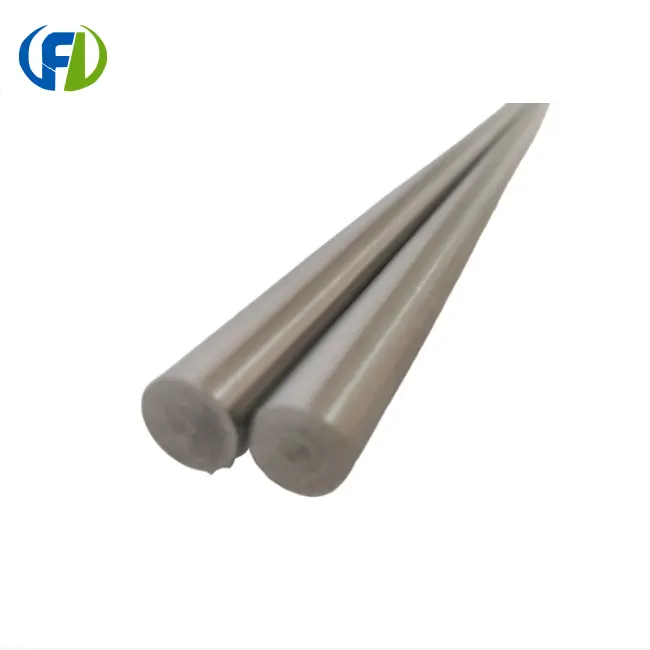
Understanding Medical Grade Gr5 Ti-6Al-4V ELI Titanium Alloy Rods
When it comes to safe materials engineering, medical grade titanium is the best. It combines precision and performance. The Gr5 Ti-6Al-4V ELI (Extra Low Interstitial) version stands out because its chemical makeup is very carefully controlled. It has titanium as its base element and about 6% aluminum and 4% vanadium. The name "ELI" means that there are fewer interstitial elements, mostly oxygen, nitrogen, and carbon. This makes the metal more flexible and resistant to wear compared to regular Ti-6Al-4V alloys.
Superior Mechanical Properties for Medical Applications
The better mechanical properties of ELI grade titanium directly lead to longer-lasting implants and safer patients. This metal has tensile forces above 860 MPa and is biocompatible, which makes it perfect for medical devices that hold weight. Compared to normal grade titanium, the lower interstitial percentage makes the material about 15-20% less likely to break. This is very important for devices that will be exposed to repeated stress over many years of use.
Chemical Composition and Biocompatibility Standards
Oxygen levels must stay below 0.13%, nitrogen levels must stay below 0.05%, and carbon levels must stay below 0.08%. These lower amounts keep the alloy's natural resistance to rust in living settings while also stopping it from becoming weak. The exact balance of alloying elements makes a substance that can easily blend into human flesh without causing harmful immune reactions.
The Medical and Aerospace Applications of Gr5 Ti-6Al-4V ELI Titanium Rods
Medical grade titanium bars, such as Gr5 Ti-6Al-4V ELI Titanium Alloy Rod, can be used in a lot of different fields, from healthcare to high-performance flight. This shows how reliable the material is in even the most demanding industries. In medicine, these rods are the base for physical implants like knee and hip replacements, spine fusion hardware, and oral implant systems. The unique mix of strength, light weight, and biocompatibility makes the material indispensable in modern medicine.
Critical Medical Device Applications
Ti-6Al-4V ELI rods are used by orthopedic doctors for complicated repair surgeries. The longevity of the implant has a direct effect on the patient's quality of life. The core construction of these rods is what makes up mechanical joints that are made to last millions of loads over 20 to 30 years. Because the material doesn't wear down easily, implants stay strong even when they're put under a lot of stress from daily tasks.
Another big market area is dental uses, where titanium bars are used as implant posts that fuse with jawbone tissue through a process called osseointegration. The biodegradable surface of the material helps bones grow in a healthy way and gives it the strength to withstand pressure of up to 200 pounds per square inch.
Aerospace Industry Utilization
Aerospace companies like these titanium bars because they can be used to make structure parts that are lighter, which directly leads to better fuel economy. Titanium has a very high strength-to-weight ratio of 4.51 g/cm³, which makes it useful for aircraft engine parts, landing gear systems, and airframe structures. The material's ability to prevent rust makes it very useful in salty seas and high altitudes, where other materials would break down quickly.
Comparing Gr5 Ti-6Al-4V ELI Titanium Rods with Alternative Materials
The type of material used has a big impact on how well important uses work in the short and long run. One big difference between titanium and other metals, like stainless steel 316L or cobalt-chromium metals, is that titanium technology is worth the extra money.
Mechanical Performance Comparison
Stainless steel has a much higher amount of elasticity (200 GPa), while titanium's is about 114 GPa, which is similar to human bone (15–30 GPa). This fit lowers the stress-shielding effects of hip implants, which helps the bone grow better around the implant. Because ELI grade titanium has a higher wear strength, it is possible to make implants that are smaller without lowering their longevity.
Corrosion Resistance and Longevity
The passive oxide layer that forms naturally on titanium surfaces protects against rusting very well in biological settings.Titanium is chemically stable for decades after it is inserted, but over time, stainless steel can give off iron ions. Because of this stability, fewer people will need to have surgery again, and those who do will have better results.
Cost-Effectiveness Analysis
Even though titanium costs more to buy at first, it usually ends up being cheaper in the long run. Less need for revisions, better patient results, and longer service life more than make up for the higher cost of the materials. When manufacturing, legal compliance, and risk factors are taken into account, B2B buying teams are becoming more aware that the cost of materials is only a small part of the total cost of a system.
Procuring Medical Grade Gr5 Titanium Rods from Baoji Factories
Baoji's titanium manufacturing environment gives buyers around the world access to top-notch production facilities and reasonable prices. Because there are so many specialized makers in the area, economies of scale help foreign purchasing teams while still meeting the high quality standards needed for medical uses.
Supplier Verification and Quality Standards
For purchases to go well, suppliers must first go through thorough screening processes that check their ISO 13485 medical device certifications and, if necessary, their FDA registration status. Leading Baoji makers have thorough quality control systems that keep track of where materials come from from the time they receive raw materials to the time they send finished goods. Each package comes with a Certificate of Analysis (COA) that lists the chemical makeup and mechanical properties in great detail.
Customization Capabilities and Lead Times
When it comes to making unique titanium rods that meet the needs of medical devices, Baoji companies are the best. Diameters range from φ4mm to 200mm to meet a wide range of application needs. Lengths can be made up to 6000mm for specialized medical tools. Surface processes like sanding, pickling, and anodizing can be done based on what the customer wants.
Standard wait times for stock materials like Gr5 Ti-6Al-4V ELI Titanium Alloy Rod are between 4 and 8 weeks, while special specs usually take between 6 and 12 weeks, based on how complicated they are. Different manufacturers have different minimum order numbers, but for normal grades, they usually start at 100 kg. For medical grades that are more specialized, smaller amounts are available at higher prices.
Processing and Quality Assurance of Gr5 Ti-6Al-4V ELI Titanium Rods
Advanced manufacturing processes distinguish premium titanium producers from commodity suppliers. The production of medical grade titanium rods demands sophisticated metallurgical controls at every stage, from initial melting through final inspection and packaging.
Advanced Manufacturing Technologies
Vacuum arc remelting (VAR) and electron beam melting processes ensure exceptional material purity and homogeneity. These controlled atmosphere techniques eliminate contamination risks while achieving the precise chemical composition required for medical applications. Subsequent hot working and heat treatment operations optimize grain structure and mechanical properties according to ASTM F136 specifications.
Heat Treatment and Surface Processing
Proper heat treatment cycles develop optimal microstructures that balance strength and ductility requirements. Solution treatment followed by aging creates fine precipitate distributions that enhance fatigue resistance while maintaining biocompatibility. Surface treatments remove machining residues and create consistent surface finishes that promote osseointegration in implant applications.
Quality Control Protocols
Comprehensive testing protocols verify both chemical composition and mechanical properties throughout production. Tensile testing, hardness evaluation, and microstructural analysis ensure conformance to medical device standards. Non-destructive testing methods including ultrasonic inspection detect internal defects that could compromise implant performance.
Freelong: Your Trusted Partner for Medical Grade Titanium Solutions
Baoji Freelong New Material Technology Development Co., Ltd. represents the pinnacle of titanium manufacturing excellence in China's Titanium Valley. Our company specializes in producing premium medical grade Gr5 Ti-6Al-4V ELI titanium alloy rods that meet the most stringent international quality standards for critical medical and aerospace applications.
Comprehensive Product Portfolio
Our medical grade titanium rod offerings encompass the complete range of specifications required by modern medical device manufacturers. We produce rods in grades TA3, TC4, TC4ELI, GR3, GR5, and GR5ELI with diameters ranging from φ4mm to 200mm and lengths up to 6000mm. Each product undergoes rigorous quality control processes to ensure compliance with ASTM F136 and ISO 5832-3 standards.
Global Partnership Network
Our established relationships with clients across Australia, Korea, Germany, the United States, United Kingdom, Malaysia, and the Middle East demonstrate our commitment to international quality standards and reliable service delivery. We understand the complexities of global supply chain management and provide comprehensive documentation support for customs clearance and regulatory compliance.
Technical Support and Customization Services
Beyond standard product offerings, our engineering team collaborates with customers to develop customized solutions for unique medical device applications using materials such as Gr5 Ti-6Al-4V ELI Titanium Alloy Rod. We provide technical consultation on material selection, processing parameters, and application-specific requirements. Our quality assurance team ensures that every shipment meets customer specifications through detailed testing and documentation.
Conclusion
The medical grade titanium manufacturing capabilities concentrated in Baoji represent a strategic advantage for global medical device companies seeking reliable, high-quality titanium rod suppliers. The combination of advanced metallurgical expertise, competitive pricing, and established quality systems makes Baoji an attractive sourcing destination for critical medical applications. Companies like Freelong demonstrate the region's commitment to international quality standards while providing the technical support and customization capabilities that modern medical device manufacturers require.
FAQ
1. What makes Ti-6Al-4V ELI superior for medical implants?
The Extra Low Interstitial designation reduces oxygen, nitrogen, and carbon content below standard Ti-6Al-4V levels, improving ductility and fatigue resistance by 15-20%. This enhancement proves critical for implants subjected to millions of loading cycles over decades of service. The improved fracture toughness reduces crack propagation risks while maintaining excellent biocompatibility and corrosion resistance in biological environments.
2. How does the corrosion resistance of medical grade titanium compare to stainless steel?
Medical grade titanium forms a stable passive oxide layer that provides superior corrosion protection compared to stainless steel 316L. While stainless steel can release iron ions in biological environments, titanium maintains chemical inertness throughout implantation periods. This stability eliminates metal ion toxicity concerns and reduces inflammatory responses that could compromise implant integration.
3. What are typical lead times for custom medical grade titanium rod orders from Baoji?
Standard medical grade specifications typically require 4-6 weeks for production and delivery, while custom specifications range from 6-12 weeks depending on complexity. Rush orders can be accommodated with expedited processing for critical applications. Our production planning team coordinates closely with customers to ensure delivery schedules align with manufacturing requirements and regulatory timelines.
Partner with Freelong for Superior Medical Grade Titanium Solutions
Discover how Freelong's advanced Gr5 Ti-6Al-4V ELI titanium alloy rod manufacturing capabilities can enhance your medical device development projects. Our experienced team provides comprehensive technical support from initial material selection through final product delivery, ensuring optimal performance for your critical applications. Contact jenny@bjfreelong.com to discuss your specific requirements and receive detailed quotations for your medical grade titanium rod procurement needs.
References
1. American Society for Testing and Materials. "Standard Specification for Wrought Titanium-6Aluminum-4Vanadium ELI (Extra Low Interstitial) Alloy for Surgical Implant Applications." ASTM F136-13.
2. International Organization for Standardization. "Implants for Surgery - Metallic Materials - Part 3: Wrought Titanium 6-Aluminum 4-Vanadium Alloy." ISO 5832-3:2016.
3. Rack, Henry J., and Quesnel, Damon J. "Titanium Alloys for Biomedical Applications." Materials Science and Engineering C, Vol. 26, No. 8, 2006.
4. Niinomi, Mitsuo. "Mechanical Biocompatibilities of Titanium Alloys for Biomedical Applications." Journal of the Mechanical Behavior of Biomedical Materials, Vol. 1, No. 1, 2008.
5. Wang, Kailun. "The Use of Titanium for Medical Applications in the USA." Materials Science and Engineering A, Vol. 213, No. 1-2, 1996.
6. Boyer, Rodney R. "An Overview on the Use of Titanium in the Aerospace Industry." Materials Science and Engineering A, Vol. 213, No. 1-2, 1996.

_1745306227022.webp)
_1758006755987.png)
_1745546029429.webp)
Learn about our latest products and discounts through SMS or email