- English
- French
- German
- Portuguese
- Spanish
- Russian
- Japanese
- Korean
- Arabic
- Greek
- German
- Turkish
- Italian
- Danish
- Romanian
- Indonesian
- Czech
- Afrikaans
- Swedish
- Polish
- Basque
- Catalan
- Esperanto
- Hindi
- Lao
- Albanian
- Amharic
- Armenian
- Azerbaijani
- Belarusian
- Bengali
- Bosnian
- Bulgarian
- Cebuano
- Chichewa
- Corsican
- Croatian
- Dutch
- Estonian
- Filipino
- Finnish
- Frisian
- Galician
- Georgian
- Gujarati
- Haitian
- Hausa
- Hawaiian
- Hebrew
- Hmong
- Hungarian
- Icelandic
- Igbo
- Javanese
- Kannada
- Kazakh
- Khmer
- Kurdish
- Kyrgyz
- Latin
- Latvian
- Lithuanian
- Luxembou..
- Macedonian
- Malagasy
- Malay
- Malayalam
- Maltese
- Maori
- Marathi
- Mongolian
- Burmese
- Nepali
- Norwegian
- Pashto
- Persian
- Punjabi
- Serbian
- Sesotho
- Sinhala
- Slovak
- Slovenian
- Somali
- Samoan
- Scots Gaelic
- Shona
- Sindhi
- Sundanese
- Swahili
- Tajik
- Tamil
- Telugu
- Thai
- Ukrainian
- Urdu
- Uzbek
- Vietnamese
- Welsh
- Xhosa
- Yiddish
- Yoruba
- Zulu
Nickel and Nickel Alloy Rod Creation & Applications
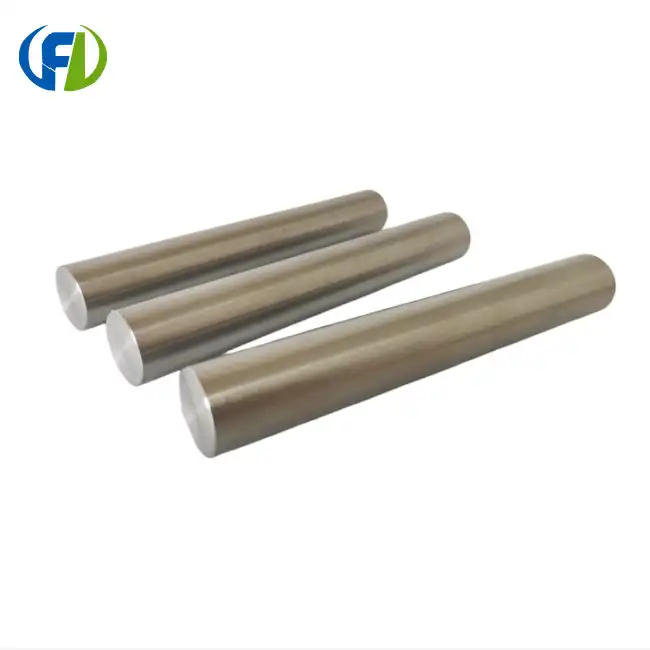
When we think about the materials that keep modern industry running, nickel-based solutions are behind some of the most difficult tasks in the world. Solid, cylinder-shaped metal bars made from commercially pure nickel grades like Nickel 200 or high-performance superalloys like the Inconel, Monel, and Hastelloy series are what Nickel and Nickel Alloy Rod products are. These engineered materials solve important problems that come up when materials fail in harsh environments, like when they are attacked by chemicals or when they get too hot and break down. Because they have a special mix of being flexible, strong, and stable at high temperatures, they are needed for parts that regular materials just can't handle.
WhatsApp&Wechat: 86 13571190943
E-mail:jenny@bjfreelong.com

Understanding Nickel and Nickel Alloy RodsWhat Distinguishes Pure Nickel from Nickel Alloys
Pure nickel bars, like Nickel 200 and 201, are made up of at least 99% nickel and are very resistant to harsh alkalis and reducing conditions. These materials stay flexible over a wide range of temperatures and don't crack when exposed to anhydrous ammonia. Nickel and Nickel Alloy Rods, on the other hand, have chromium, molybdenum, iron, copper, or niobium added to them in specific ways to improve their qualities. The Inconel family has great high-temperature strength thanks to precipitation hardening, and the different types of Monel are very resistant to hydrofluoric acid and seawater. Different types of Hastelloy work really well with highly acidic substances like sulphuric and hydrochloric acids.
Core Mechanical Properties and Performance Characteristics
By looking at these pieces' physical features, we can see that they are metallurgically stable. Density usually falls between 8.19 and 8.90 g/cm³, which gives a lot of mass without adding too much weight. Their structure stays the same from very cold temperatures to temperatures above 980°C. Chemically, these materials don't rust, pit, attack in cracks, or undergo stress-corrosion cracking, especially in places with a lot of salt. Through precipitation hardening, grades like Inconel 718 can reach tensile strengths of over 1375 MPa. On the other hand, solid-solution strengthened Monel 400 keeps its impressive mechanical properties and better corrosion protection. By knowing about these traits, procurement teams can perfectly match material specs to practical needs.
Industry Grades and Quality Standards
Material specifications set by ASTM standards make sure that all supply chains around the world are consistent and can be tracked. ASTM B160 talks about pure nickel bars, ASTM B164 talks about Monel grades, ASTM B166 talks about Inconel products, and ASTM B574 talks about Hastelloy standards. These standards require exact control over the chemicals used, the size of the grains (based on ASTM E112), and the factors for hardenability. It's helpful for procurement workers to know these names because they give them a way to talk about technical issues with sellers and make it easy to compare different products. The certification paperwork that comes with every batch of goods makes sure that the rules are followed and helps with quality control later on.
Comparing Nickel Alloy Rods with Other Materials
Performance Advantages Over Stainless Steel
It is true that austenitic stainless steels like 316L are pretty good at resisting corrosion in many situations, but Nickel and Nickel Alloy Rods work better in harsher conditions. Chloride stress-corrosion cracking is a common way for stainless steel to break at high temperatures, but it doesn't happen very often with nickel alloys that have been chosen correctly. The higher nickel content makes it more resistant to reducing acids and keeps its mechanical qualities at temperatures where stainless steel loses a lot of strength. But this better performance comes at a higher cost, so careful application study is needed to make choices about what to buy that are both cost-effective and good.
Thermal Stability Compared to Copper Alloys
Copper metals are great at conducting heat and electricity, but they don't stay strong at high temperatures as nickel-based materials do. Most copper alloys lose their structural stability above 400°C. Nickel superalloys, on the other hand, can still hold loads well up to 900°C. Because of this, nickel alloy rods are the best choice for turbine parts, heat exchanger tubes that need to be in harsh conditions, and fasteners that will be used in combustion environments. The cost and bulk of the material are higher, which procurement managers have to weigh against the benefits of longer service life and less upkeep.
Strength-to-Weight Considerations Against Titanium
Titanium metals are particularly strong for their weight and don't rust, which makes them appealing for use in aircraft. However, nickel metals work better in oxidising high-temperature conditions and keep their creep strength better. Titanium also has problems in places with a lot of hydrogen and needs special welding techniques. Nickel alloy bars are easier to machine in many types and come in a wider range of product forms. In the end, the choice of material relies on how it will be used. For example, titanium is often used in aerospace structures, while nickel superalloys are needed in gas engine hot sections.
Creation Process of Nickel and Nickel Alloy Rods
Raw Material Selection and Composition Control
Finding ultra-high-purity nickel and carefully chosen alloying elements is the first step in making high-quality Nickel and Nickel Alloy Rods. Trace elements like sulphur, phosphorus, and lead must stay below certain levels to keep the material from hot-cracking during processing and to make sure it has the best mechanical qualities. Suppliers use advanced refining methods to get the required levels of purity, and spectroscopic analysis is done on all incoming material before it is accepted. This first step decides how well the end product works, so qualification of suppliers and tracking of materials are very important for procurement professionals looking for long-term partnerships they can trust.
Melting, Casting, and Primary Forming
Vacuum induction melting or vacuum arc remelting is usually the first step in the production process to keep the chemicals from mixing and prevent contamination. Depending on the size and shape of the parts being made, molten metal is poured into ingot moulds or continuous casting systems. The first step in hot working, like forging or extrusion, breaks down the cast structure, fine-tunes the grain size, and sets the linear properties. Controlling the temperature during these processes is very important. If the temperature is too low, the material could crack, and if it gets too hot, the grains will get bigger, which hurts the mechanical performance.
Secondary Processing and Precision Finishing
After initial forming, rods are hot-rolled or drawn to get close to their finished sizes. Between-stage annealing processes stop work hardening and make the material flexible again so that it can be used in later stages of processing. Tighter tolerances on dimensions and a better surface finish are achieved by cold drawing through precise dies. Centerless grinding is needed in some situations to get the H9 or H11 accuracy grades needed for automatic feeds in CNC machining. At the end of the finishing process, solution annealing or precipitation hardening heat treatments are used, depending on the grade requirements.
Quality Control and Certification
Strict testing protocols make sure that the product meets the requirements of the specification. Optical emission spectroscopy checks the chemical make-up to make sure that each element is within certain limits. Ultrasonic testing according to ASTM B594 finds cracks, holes, or other problems below the surface that could cause the material to fail when it's put under service loads. Yield strength, tensile strength, elongation, and hardness values are set by mechanical testing. Grain size research according to ASTM E112 confirms microstructural features that affect how well the material resists wear and creep. From the heat number to the final delivery, everything can be tracked thanks to documentation packages that include material test results and certificates of approval.
Applications and Advantages of Nickel Alloy Rods in Industry
Aerospace and Gas Turbine Components
Gas turbine engines have to work in very tough conditions. Parts in the hot section have to withstand temperatures close to melting points while also having to withstand heavy centrifugal loads. Nickel and Nickel Alloy Rods are used to make turbine blade forgings, fasteners, and shaft parts that have to be able to withstand heat, wear, and creep deformation over thousands of cycles of use. Due to its great strength, good weldability, and stability over long periods of time at high temperatures, Inconel 718 has become the standard for turbine discs and cases. These materials allow for higher operating temperatures, which directly lead to better fuel efficiency and lower emissions, two very important factors in the development of modern aerospace.
Chemical Processing Equipment
Some of the meanest media that the chemical and petroleum industries deal with are sent there. Nickel metal rods are used to make pump shafts, valve stems, and mixing agitators that can withstand strong acids, caustic alkalis, and chloride-containing solutions that quickly break down other materials. Hastelloy C-276 rods are very resistant to hydrochloric acid, chlorine gas, and wet chlorine, which is why they are essential for equipment used to make chlor-alkalis. The purity of the material keeps the product from getting contaminated, which is very important in the pharmaceutical and speciality chemical industries where picking up trace metals can ruin batch quality.
Oil and Gas Exploration Components
High pressure, high temperatures, and hydrogen sulphide exposure are some of the unique problems that come up when you're digging underground. When nickel alloy bars are used to make drill collars, mandrels, and instrumentation housings, they have to be able to fight sulphide stress cracking and keep their structural integrity under heavy mechanical loads. The grades 625 and 725 of Inconel meet the requirements set by NACE MR0175 and ISO 15156 for sour gas service. This means they can be used reliably in reservoirs where carbon and low-alloy steels would break quickly. The longer service life and less frequent maintenance more than make up for the higher initial material costs, especially in offshore applications where the costs of intervention go up a lot.
Power Generation and Nuclear Applications
Materials that can keep their properties for decades of high-temperature use are needed for steam turbines, heat exchangers, and reactor parts in power plants. Rods made of nickel metal are used to make important wear-resistant parts that don't rust or break down when heated. Because they don't absorb neutrons very well, some types can be used inside nuclear reactors, while others are used in superheater tubes that work at the highest steam temperatures and pressures. The dependability of these materials has a direct effect on the safety and usability of the business.
Before we talk about strategic buying issues, it's clear that the choice of materials has a huge impact on practical results in many different industries. The wide range of successful uses shows how nickel alloy rods solve specific technical problems that would otherwise make equipment less useful or shorten its life.
Procurement Guide for Nickel Alloy Rods
Evaluating Supplier Capabilities and Certifications
When looking for approved providers, you need to do more than just compare prices. The reliability of the supply chain is affected by things like production capacity, quality management systems, and the ability to provide technical support. If you're looking for suppliers, make sure they have at least ISO 9001 certification. For flight uses, you need AS9100 compliance, and for nuclear service, you need 10CFR50 Appendix B compliance. Vertical integration should be shown by manufacturing facilities from melting to final inspection. This allows for process control and tracking. Ask for facility checks when setting up relationships for important applications, because seeing things for yourself shows practical maturity that written information alone can't.
Understanding Price Drivers and Total Cost of Ownership
Nickel and Nickel Alloy Rods are priced based on the cost of their raw materials. Nickel and molybdenum are two important inputs whose prices are affected by changes in the market. Unit prices are also affected by the complexity of the alloy, the amount that is made, and the limits on size. Minimum order quantities are often matched with heat sizes or production runs. This means that you can get volume discounts when planning your needs across multiple projects. For normal grades and sizes, lead times are a few weeks. For special formulas or large diameters that need custom melting campaigns, they are a few months. It takes a lot of planning to find the right balance between the costs of keeping stockpiles and the supply of materials and stable prices. This is especially true when supporting project-based manufacturing.
Customization Options and OEM Partnerships
Customised solutions that go beyond standard product offerings are helpful for many uses. Custom chemical mixtures that work best in certain corrosive environments, non-standard diameters that fit the needs of the finished part, or special heat treatments can lower the costs of further processing and make better use of the material. Forming relationships with sellers who can help with product development speeds up the innovation process and lets you stand out from the competition. Technical teamwork during the planning process can often find ways to make manufacturing easier or improve performance by choosing the right materials in a smart way.
Logistics and Quality Verification Upon Receipt
When you source goods from other countries, you have to think about things like shipping methods, customs paperwork, and inspection rules. Sea freight is cheaper for large amounts, but it takes longer to get there, and air freight costs more but can meet immediate needs. When handling and transporting, packaging must protect the finish and straightness of the surface. When you get the materials, make sure that the certifications match the requirements in the buy order and the markings on the goods. When possible, use portable spectrometry to positively identify materials and do dimensional checks as part of the receiving checking process. Set up clear steps for dealing with non-conforming material, such as how to notify the supplier, decide what to do with it, and keep track of corrective actions.
Conclusion
Nickel and Nickel Alloy Rods are designed solutions that solve problems with materials in many demanding fields, such as aircraft, chemical processing, energy generation, and more. Because they don't rust, keep their power at high temperatures, and are mechanically reliable, they can be used in situations where other materials would fail quickly. To be good at buying, you need to know about the properties of materials, how they are made, and the unique needs of each application. Procurement professionals make sure that supply chains support operational excellence and competitive advantage by working with qualified suppliers who offer consistent quality, technical expertise, and quick service. The money spent on high-quality materials pays off in a clear way: the equipment lasts longer, needs less maintenance, and the process is more reliable.
FAQ
1. What differentiates solution annealed from precipitation hardened conditions?
Solution-annealed rods are heated to break down the strengthening stages. This makes them as flexible and resistant to rust as possible, making them perfect for shaping. Materials that have been precipitation hardened go through extra ageing processes that create small precipitates that make them much stronger for high-stress situations. There is less ductility, and it is harder to machine than other materials.
2. Why does machining nickel alloy rods present difficulties?
When these materials are cut, they quickly become harder, and layers of strain-hardened material form before the cutting tools. Low thermal conductivity focuses heat at the points where the tool and workpiece meet, which speeds up wear. To engrave accurately, you need rigid setups, sharp carbide tools with positive rake geometry, and controlled feed rates that keep the work from hardening.
3. Can you supply rods meeting NACE MR0175 requirements?
Yes, materials that don't crack under sulphide stress in sour service environments are needed for oil and gas applications. We offer grades that have been heat-treated to controlled hardness levels, usually below 35 HRC, through precipitation hardening. We also provide full paperwork that supports the material's fitness for H2S-containing atmospheres according to NACE standards.
4. What standard dimensions and tolerances are available?
Standard production lengths are between 3 and 6 meters, and the straightness must meet h9 or h11 standards, depending on the diameter and the needs of the application. Through extra preparation, custom lengths and better tolerances can be made possible. The range of diameters available includes small rounds that can be used to make fasteners and big bars that can be used to make forging stock.
Partner with Freelong for Your Nickel and Nickel Alloy Rod Requirements
We at Baoji Freelong New Material Technology Development Co., Ltd. have been making Nickel and nickel alloy rods for the aircraft, chemical processing, and energy businesses around the world for many years and are trusted to do so. Our combined production sites are in Baoji City, which is known as China's Titanium Valley. They follow strict quality standards at every stage of the manufacturing process. We offer commercially pure nickel grades as well as high-performance Inconel, Monel, and Hastelloy alloys. All of our materials are thoroughly tested and certified to meet the needs of your most demanding applications. Our clients come from all over the world, including Australia, the US, Germany, and more. They know that we are committed to consistent quality and quick technical support. To talk about your needs, email our team at jenny@bjfreelong.com. WhatsApp&Wechat: 86 13571190943We give you detailed quotes, suggestions on materials, and supply chain solutions that are specific to your business needs. This way, you can be sure that you'll always have access to high-quality nickel alloy rod products that help you compete.
References
1. Davis, J.R. (Ed.). (2000). Nickel, Cobalt, and Their Alloys. ASM International Handbook Series.
2. Donachie, M.J., & Donachie, S.J. (2002). Superalloys: A Technical Guide (2nd ed.). ASM International.
3. ASTM International. (2021). ASTM B160: Standard Specification for Nickel Rod and Bar. West Conshohocken, PA.
4. Decker, R.F., & Sims, C.T. (1996). The Metallurgy of Nickel-Base Alloys. In The Superalloys Volume II. John Wiley & Sons.
5. Craig, B.D., & Anderson, D.S. (Eds.). (1995). Handbook of Corrosion Data (2nd ed.). ASM International Materials Park.
6. Reed, R.C. (2006). The Superalloys: Fundamentals and Applications. Cambridge University Press.
WhatsApp&Wechat: 86 13571190943
E-mail:jenny@bjfreelong.com
Address: No.188. Gaoxin Ave, Baoji City, Shannxi, China.

_1759116067090.png)
_1744962465567.webp)
_1744958552825.webp)
Learn about our latest products and discounts through SMS or email