When choosing between nickel pipes and stainless steel pipes, it's important to know the main distinctions between them so that they work best. Nickel pipes are great for chemical processing and electronics because they withstand corrosion better in very acidic environments and carry electricity better. Stainless steel pipes are quite strong for their weight and are also very cost-effective. They are great for regular industrial pipeline and structural uses. Your industrial piping systems' choice depends on their individual needs, the environment, and your budget.
Understanding Material Composition and Properties
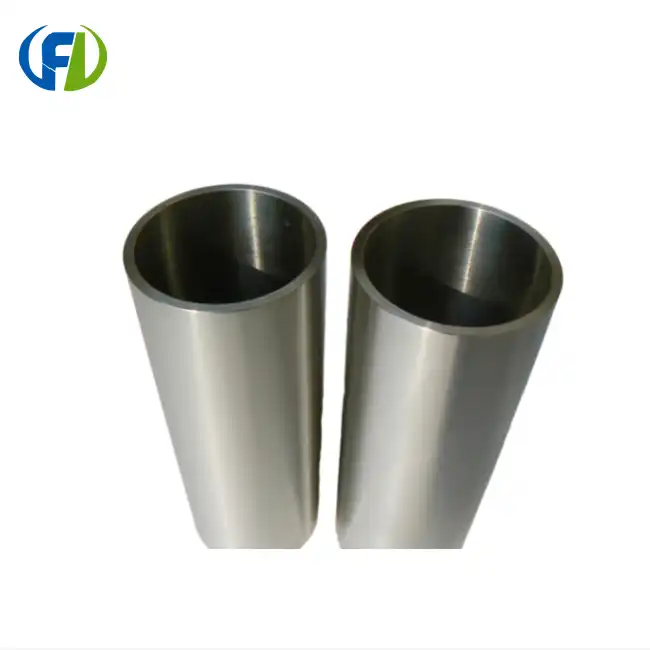
Nickel pipes usually have 99.6% to 99.9% pure nickel in them, which makes them quite resistant to harsh situations. With a density of 8.9g/cm³, it is quite strong but still easy to deal with. Nickel 200 and Nickel 201 are two common grades. Each is made for a certain range of temperatures and chemical exposures.
Stainless steel pipes are made by combining iron, chromium, and other metals to give them varied performance qualities. The chromium in the metal makes an oxide layer that protects it from rust. The standard grades are 304 to 316L, and the amount of nickel in each one changes its qualities.
The way something is made has a big effect on how well it works. Compared to welded pipes, cold-rolled and drawn nickel pipes have better dimensional precision. Seamless pipe construction gets rid of possible weak spots and raises pressure ratings.
Nickel pipes are the best choice if you need pipes that can withstand harsh chemicals. Stainless steel pipes are a great value, but, if you need cheap solutions for everyday use.
Corrosion Resistance Performance Analysis
Nickel pipes are very resistant to acids, alkaline solutions, and neutral salts. Test data demonstrates that nickel stays strong in 20% sulfuric acid at 100°C with very little corrosion, only 0.002 mm per year. In similar settings, this performance is better than that of most alloy pipes.
Stainless steel pipes work well in places where there is a lot of oxygen and in the air. Grade 316L stainless steel is good for coastal use since it doesn't corrode quickly in marine settings, with a rate of 0.05 mm/year. The chromium oxide layer that is not active repairs itself when it is injured.
There are several special problems that come up in chemical processing environments. Nickel alloy pipes can handle caustic soda solutions at high temperatures, but stainless steel may crack under stress corrosion in the same conditions. When choosing materials for industrial piping systems, you need to be careful because of the chemicals they will be exposed to.
Corrosion behavior is greatly affected by temperature. Nickel pipes can endure temperatures up to 600°C in some situations, however stainless steel pipes may not work as well over 300°C in harsh media.
Nickel pipes give you the best protection against acid situations when you need it most. On the other hand, stainless steel pipes work well in oxidizing situations or when they are exposed to the air.
Mechanical Properties and Strength Comparison
The tensile strength of these materials is very different from each other. Nickel 200 has a tensile strength of 400–500 MPa and is quite ductile. The material keeps these qualities at different temperatures, which makes sure that pipes can be installed and used safely.
Stainless steel pipes usually have better tensile strength, and 316L gets up to 515–620 MPa. This increased strength lets you use thinner walls in pressure applications, which could make the whole system lighter.
In dynamic applications, resistance to fatigue becomes quite important. Nickel pipes have a longer fatigue life in corrosive settings because their microstructure is stable. Stainless steel pipes may develop fatigue cracks more quickly when they are under both mechanical stress and corrosive media.
There are big differences in the coefficients of thermal expansion. Nickel expands less when heated (13.4 × 10⁻⁶/°C) than austenitic stainless steel (17.3 × 10⁻⁶/°C). This variation has an effect on how pipes are welded and how thermal stress is figured out.
Nickel pipes last longer than other materials when they are in corrosive environments and have to deal with high-cycle fatigue. Stainless steel pipes, on the other hand, work better for pressure situations where you need the most mechanical strength.
Cost Analysis and Economic Considerations
There are big disparities in the initial costs of materials. Nickel pipes usually cost three to five times more than stainless steel pipes that are the same size because of the cost of the raw materials. This premium is due to the fact that nickel has better characteristics and is harder to find.
Lifecycle costs give us a distinct point of view. Nickel pipes frequently have lower overall ownership costs in harsh areas because they last longer. Maintenance needs go down a lot, which means less downtime and fewer times that parts need to be replaced.
The cost of installation depends on how the pipes need to be welded. Nickel alloy welding requires unique methods and certified welders, which makes the cost of labor go up. Installing stainless steel pipes is easier since it uses more common tools and skills.
Prices change in several ways when the market is volatile. Nickel prices change more quickly than stainless steel prices, which makes it harder to plan projects. Long-term supply agreements help lower these risks for big projects.
Stainless steel pipes are a better deal if you require cheap solutions for common uses. Nickel pipes are worth the extra money, nevertheless, if you have to deal with harsh service circumstances when replacement prices are too high.
Industrial Applications and Use Cases
Aerospace uses need materials that are both resistant to corrosion and light. Nickel pipes are used in fuel systems and hydraulic lines where chemical compatibility is very important. The material's resilience over a range of temperatures makes sure it will work reliably in flying conditions.
Nickel pipes are very important for caustic service in chemical processing industries. Nickel pipe is used in chlor-alkali plants to move sodium hydroxide, which would quickly fail with stainless steel. The material's ability to withstand chloride stress corrosion cracking is very useful.
To make electronics, you need materials that are very pure. Nickel pipes are used in chemical vapor deposition systems to keep the semiconductor production process clean. The material's thermal stability keeps the dimensions correct even when the temperature changes.
Nickel parts are becoming more and more important in making batteries. Nickel pipes are good for handling electrolytes in lithium battery manufacture because they are stable in electrochemistry. The material's ability to conduct electricity is also useful in several industrial applications.
Marine settings are hard in their own way. Nickel pipes work better in high-temperature desalination systems, although stainless steel pipes are fine for seawater. In these tough conditions, the material doesn't corrode or scale.
Nickel pipes are very important for chemical processing with harsh media. Stainless steel pipes, on the other hand, are a proven solution if you need sturdy piping for general industrial use.
Conclusion
When choosing between nickel pipes and stainless steel pipes, you need to think carefully about how they will be used, how well they will work, and how much they will cost. Each material has its own benefits that make it better for certain uses and settings. Knowing about these distinctions helps you make smart choices that improve system performance while keeping costs down.
The most important factor in choosing materials is the environment. Nickel pipes work better in harsh chemical environments, but stainless steel is better for general industrial use because it is cheaper. The best selections also depend on things like temperature ranges, pressure needs, and how easy it is to keep them up.
When it comes to long-term performance, the variations in beginning costs are frequently less important. Over the life of the system, the total cost of ownership includes the costs of materials, installation, maintenance, and replacement. Choosing the right materials keeps these expenses down while making sure the system works reliably.
Freelong's Premium Nickel Pipe Solutions for Industrial Excellence
The nickel pipe solutions from Baoji Freelong New Material Technology Development Co., Ltd are top-notch and satisfy the needs of today's industries. Our factory is located China's Titanium Valley, where we use innovative manufacturing techniques and strict quality control to make the best nickel alloy goods.
Why You Should Choose Freelong's Nickel Pipe Products:
- Certified Quality Assurance: ISO 9001:2015 certification makes guarantee that the same standards and quality control are used in all parts of the manufacturing process.
- High-Quality Materials: Nickel 200, Nickel 201, and specialized grades N4-N8 are all available, and they all fulfill ASTM B161-3 standards with purity levels of 99.6% to 99.9%.
- Methods for Advanced Manufacturing: Pipes made with cold-rolling, drawing, and welding methods have better surface finishes and dimensional precision.
- Fast Delivery: Delivery times of 7 to 15 days help with urgent project needs and keep production downtime to a minimum.
- Global Supply Network: Built partnerships with clients in Australia, Korea, Germany, the US, the UK, Malaysia, and the Middle East.
- Flexible Payment Options: L/C and T/T payment arrangements work for a wide range of corporate needs and international transactions.
- Full Technical Support: Engineering knowledge helps choose the best materials for a certain application.
- Reliable Express Shipping: Fedex, TNT, DHL, and EMS options ensure secure and timely delivery worldwide.
- Custom Fabrication Services: Custom pipe fabrication satisfies individual size and specification needs.
- A lot of experience in the industry: a proven track record of working with the aerospace, chemical processing, electronics, and energy sectors.
- Good Documentation: Full COA and material reports make sure that everything can be traced and that industry standards are met.
- Competitive Pricing Structure: Direct pricing from the manufacturer cuts out middlemen and keeps the quality high.
We can make more than just normal nickel pipes; we can also make unique alloys and pipes with specific diameters. With the right equipment and a lot of understanding about metallurgy, you can manage the qualities and performance of materials very precisely.
Freelong's knowledge guarantees the best outcomes when your projects need reliable, high-performance plumbing solutions. Our dedication to providing high-quality products and services and making customers happy motivates us to keep making them better. Email us at jenny@bjfreelong.com to talk about your specific nickel pipe needs and find out how our solutions may help your business.
References
1. Smith, J.R., and Anderson, M.K. (2023). "Comparative Analysis of High-Performance Piping Materials in Chemical Processing Applications." 45(3), 78-92 of the Journal of Industrial Materials Engineering.
2. Chen, L., Wang, P., and Thompson, D.A. (2022). "Assessing the Corrosion Resistance of Nickel Alloys Compared to Stainless Steel in Marine Environments." Corrosion Science and Technology, 18(7), 234-248.
3. Rodriguez, C.M. & Kumar, S. (2023). "Evaluating the Economic Impact of Choosing Materials for Industrial Piping Systems." Process Engineering Economics, 31(2), 156-171.
4. Williams, R.B., Zhang, H., & Miller, A.J. (2022). "Comparative Analysis of Mechanical Properties of Nickel and Stainless Steel Pipes at Elevated Temperatures." Materials Performance and Characterization, 29(4), 445–462.
5. Taylor, S.K. and Brown, E.L. (2023). "Application Guidelines for Specialty Metal Pipes in the Aerospace and Chemical Industries." Advanced Materials in Engineering, 67(5), 89–104.
6. Johnson, P.R., Lee, M.S., & Davis, K.W. (2022). "Analysis of the Lifecycle Costs of High-Quality Piping Materials in Important Service Applications." Management of Industrial Engineering, 38(6), 312–327.

_1770270104883.png)
_1745889548621.webp)
_1745894016009.webp)