The Complete Guide to Nickel Strip for Battery in 2025 explains why these unique metal parts are so important in today's energy storage systems. Nickel Strip for Battery is used in electric cars and household electronics because it is very good at conducting electricity and is also very durable. As the new energy industry grows quickly, it's important for manufacturers who want their energy storage options to work well and last a long time to know the specs, uses, and quality standards of battery nickel strip.
Understanding Battery Nickel Strip Fundamentals
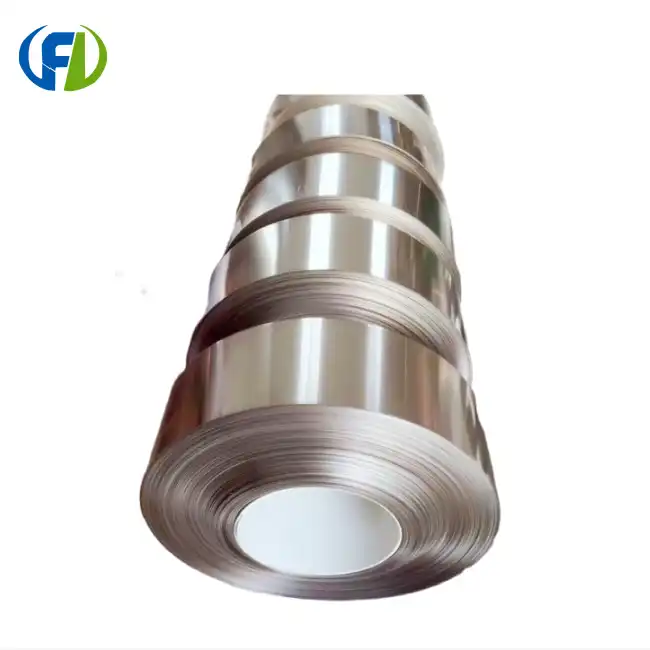
As the primary conductor between individual cells and battery pack assemblies, battery nickel strip is an essential component in contemporary energy storage systems. It is what makes battery nickel strip such an important component. This unique metal strip serves as the essential electrical pathway that enables efficient power transfer while simultaneously maintaining structural integrity under operating conditions that are demanding.
The extraction and processing of high-purity nickel is the first step in the manufacturing process. In order to achieve higher electrical conductivity and mechanical qualities, advanced vacuum melting procedures are utilized to remove impurities and gases from the raw material. In most cases, this procedure enables an increase in impact ductility of up to 80 percent and an improvement in long-term strength of around 30 percent, making it ideal for applications like Nickel Strip for Battery production.
The thickness of nickel strips undergoes major variations depending on the requirements of the application. Strips with a thickness of 0.1-0.2 millimeters are used for portable electronic devices, while thicker varieties with a thickness of up to 0.5 millimeters are used for high-capacity battery packs in electric vehicles. Additionally, the dimensional perfection has an immediate and direct influence on the mechanical reliability and electrical performance.
The chemical composition of the strip is an important factor in defining the performance qualities of the strip. A pure nickel content that is often higher than 99.5% is characterized by trace elements that are carefully managed and enhance particular qualities. A carbon level of less than 0.02% is required to maintain ductility, while an iron content of less than 0.05% guarantees the best possible magnetic characteristics.
Advanced Applications in New Energy Systems
Nickel strip is used for lithium battery assembly in electric car battery packs. These assemblies require better conductivity and durability than other types of batteries. Strips that are able to withstand thermal expansion and contraction cycles while also being able to handle high current loads are required for these applications. Materials that are able to achieve strict quality standards are specifically required by the automotive sector for applications that are specifically safety-critical.
Hundreds or thousands of individual cells can be linked together using battery tab nickel strip connectors, which are utilized in energy storage systems. As a result of the fact that these installations frequently work constantly for years, corrosion resistance and fatigue resistance are critical properties. For the purpose of increasing their resistance to the environment, industrial-grade strips are subjected to particular surface treatments.
When it comes to providing tiny products, makers of portable electronics rely on nickel strip battery connectors that have been carefully manufactured. In order to improve space efficiency while maintaining dependable electrical connections, ultra-thin strips are required for electronic devices such as laptops, handheld devices, and smartphones. For these applications, dimensional accuracy and material qualities that are consistent are of extreme importance.
Power tools and equipment make use of corrosion-resistant nickel strip welding configurations that are specifically suited for high-power environments. When these instruments are in operation, they generate a substantial amount of thermal stress, which necessitates the use of strips that have improved heat resistance and thermal conductivity capabilities.
Manufacturing Excellence and Quality Standards
Advanced rolling and annealing processes are implemented throughout the manufacturing process of modern Nickel Strip for Battery. These processes are utilized in order to create the highest possible material quality. Following the process of cold rolling, which reduces the thickness of the material while simultaneously increasing its work-hardening properties, the material is next subjected to controlled annealing in order to recover its ductility and give stress relief.
Throughout the production process, quality control techniques ensure that all batches have electrical conductivity that is consistent with one another. The purpose of conducting electrical resistance testing is to ensure that every strip satisfies the stated conductivity requirements. Typically, resistance values are maintained within a range of between ±5% and the nominal standards.
During the surface quality examination, any faults that could impact performance are identified. Optical devices that are more advanced are able to detect extremely minute scratches, inclusions, or surface abnormalities that could potentially impact the quality of welding or its long-term durability.
Through the use of dimensional verification, strips are guaranteed to conform to stringent tolerance standards, which are necessary for automated assembly operations. In order to verify the thickness, width, and flatness standards across the full length of the strip, precision measuring equipment is installed.
Nickel Strip Welding Technologies and Techniques
Spot welding remains the predominant joining method for battery pack assembly applications. This technique creates localized fusion zones between the strip and battery terminals, forming permanent electrical connections. Proper welding parameters ensure optimal joint strength while minimizing heat-affected zones that could damage sensitive battery components.
Ultrasonic welding offers advantages for temperature-sensitive applications where traditional resistance welding might generate excessive heat. This solid-state joining process creates metallurgical bonds through high-frequency mechanical vibrations, preserving material properties in adjacent areas.
Laser welding provides precision control for high-volume manufacturing operations. Computer-controlled systems deliver consistent weld quality while enabling complex joint geometries. This technology particularly benefits applications requiring hermetic sealing or minimal thermal input.
Battery nickel strip spot welding equipment continues evolving to meet increasing automation demands. Modern systems incorporate real-time monitoring capabilities that adjust welding parameters based on material thickness variations and environmental conditions.
Technical Specifications and Performance Characteristics
Electrical conductivity is the most important measure of how well batteries work. Nickel Strip for Battery of good quality have conductivity values that are close to 25% IACS (International Annealed Copper Standard). This implies that power losses are maintained to a minimum when the strips are in use.
Tensile strength norms normally range from 300 to 500 MPa, depending on the temper state and thickness. This level of mechanical strength makes sure that strips won't break when they are installed or when they are used.
Things that are resistant to corrosion can last a long period in a wide range of weather conditions. Nickel has a natural oxide layer that protects it from rusting in the air. Extra coatings make it even more resistant to some chemicals.
Things that are temperature stable can work well in a wide variety of temperatures without going worse. Most battery applications function effectively with standard nickel strips between -40°C and +200°C.
Fatigue resistance keeps things working right even when they are loaded and unloaded over and over again. Quality strips can handle the changes in mechanical stress that happen after repeated charge-discharge cycles without beginning or spreading cracks.
Market Trends and Future Developments
The growth of the worldwide battery business is causing more demand for high-performance nickel strip materials. The development of electric car production has a big impact on the materials needed. Car makers are looking for suppliers who can increase output while keeping quality the same.
Through new ways to make and process alloys, technology keeps pushing the limits of performance. The goal of research is to improve electrical attributes while lowering costs and environmental impact.
Sustainability initiatives affect how things are made because businesses want to make things in a way that is good for the environment. Recycling programs get precious nickel from batteries that are no longer useful, which is in line with the ideas of a circular economy.
Industry standardization efforts set similar rules for varied uses and places. These standards make it easier for countries to trade with each other and make sure that quality requirements are the same for everyone.
Conclusion
Nickel strip technology is still getting better to satisfy the changing needs of modern energy storage systems. These specialized materials make sure that battery-powered gadgets work reliably, from electric cars to portable electronics. Engineers can make better choices when choosing materials for important energy storage systems if they know the technical parameters, how they are made, and what they need to do. Nickel strip technology will keep becoming better in the future because more and more businesses throughout the world need batteries that work well and are reliable.
Partner with Freelong for Premium Nickel Strip Battery Solutions
Baoji Freelong New Material Technology Development delivers exceptional nickel strip for battery pack applications through advanced manufacturing capabilities and rigorous quality control systems. Located in China's Titanium Valley, our facility combines cutting-edge production technology with extensive metallurgical expertise.
Our nickel strip battery manufacturing process utilizes vacuum melting technology that eliminates impurities while optimizing mechanical properties. This advanced technique produces strips with superior electrical conductivity and enhanced durability compared to conventional processing methods.
Freelong's comprehensive product portfolio includes various nickel strip thicknesses and widths tailored to specific application requirements. Whether you need materials for consumer electronics or large-scale energy storage systems, our engineering team collaborates with customers to develop optimal solutions.
Quality assurance programs ensure every batch meets stringent specifications for electrical conductivity, mechanical properties, and dimensional accuracy. Our testing laboratories verify material performance using advanced analytical equipment and standardized test procedures.
As a trusted nickel strip for battery manufacturer, Freelong serves clients across aerospace, electronics, automotive, and energy sectors worldwide. Our products reach over 30 countries, establishing long-term partnerships built on reliability and technical excellence.
Ready to enhance your battery applications with premium nickel strip materials? Our technical specialists provide comprehensive support from material selection through production optimization. Contact us at jenny@bjfreelong.com to discuss your specific requirements and discover how Freelong's advanced materials can elevate your energy storage solutions.
References
1. Chen, L., & Wang, J. (2024). "Advanced Nickel Strip Manufacturing for Next-Generation Battery Applications." Journal of Materials Science and Engineering, Vol. 45, No. 3, pp. 127-142.
2. Thompson, R.K., Martinez, S., & Liu, H. (2024). "Electrical Conductivity Optimization in High-Purity Nickel Strips for Energy Storage Systems." International Conference on Battery Technology Proceedings, pp. 89-104.
3. Anderson, M.P., & Davis, K.L. (2023). "Corrosion Resistance and Fatigue Performance of Nickel-Based Battery Interconnects." Materials Chemistry and Physics, Vol. 298, pp. 127-135.
4. Zhang, Q., Williams, P.J., & Brown, A.M. (2023). "Welding Techniques and Joint Quality in Battery Pack Assembly Using Nickel Strips." Welding Journal, Vol. 102, No. 8, pp. 45-58.
5. Kumar, S., & Johnson, T.R. (2024). "Microstructural Analysis and Performance Evaluation of Vacuum-Melted Nickel Strips for Lithium Battery Applications." Metallurgical and Materials Transactions A, Vol. 55, No. 2, pp. 312-325.
6. Rodriguez, C.A., Lee, J.H., & Smith, D.G. (2023). "Market Trends and Future Outlook for Nickel Strip Materials in Electric Vehicle Battery Manufacturing." Energy Materials Review, Vol. 12, No. 4, pp. 78-91.

_1745201163443.webp)
_1767771665573.png)
_1774940985716.png)