- English
- French
- German
- Portuguese
- Spanish
- Russian
- Japanese
- Korean
- Arabic
- Greek
- German
- Turkish
- Italian
- Danish
- Romanian
- Indonesian
- Czech
- Afrikaans
- Swedish
- Polish
- Basque
- Catalan
- Esperanto
- Hindi
- Lao
- Albanian
- Amharic
- Armenian
- Azerbaijani
- Belarusian
- Bengali
- Bosnian
- Bulgarian
- Cebuano
- Chichewa
- Corsican
- Croatian
- Dutch
- Estonian
- Filipino
- Finnish
- Frisian
- Galician
- Georgian
- Gujarati
- Haitian
- Hausa
- Hawaiian
- Hebrew
- Hmong
- Hungarian
- Icelandic
- Igbo
- Javanese
- Kannada
- Kazakh
- Khmer
- Kurdish
- Kyrgyz
- Latin
- Latvian
- Lithuanian
- Luxembou..
- Macedonian
- Malagasy
- Malay
- Malayalam
- Maltese
- Maori
- Marathi
- Mongolian
- Burmese
- Nepali
- Norwegian
- Pashto
- Persian
- Punjabi
- Serbian
- Sesotho
- Sinhala
- Slovak
- Slovenian
- Somali
- Samoan
- Scots Gaelic
- Shona
- Sindhi
- Sundanese
- Swahili
- Tajik
- Tamil
- Telugu
- Thai
- Ukrainian
- Urdu
- Uzbek
- Vietnamese
- Welsh
- Xhosa
- Yiddish
- Yoruba
- Zulu
What Is a High-Density Zirconium Crucible Used For?
It is very important to pick the right crucible when working with dangerous chemicals or metal alloys that melt at high temperatures. High-density Zirconium Crucibles are useful in fields where chemicals need to be kept clean, when temperatures are high, and contamination needs to be kept under control. Special container tanks like High-density Zirconium Crucible are made of Grade 702 zirconium metal, which has a Zr+Hf percentage of more than 99.2%. Advanced cold-working or flow-forming techniques are used to make them so dense that they are almost theoretical and have almost no holes. The name "high-density" means that the microstructural grain orientation is better than in standard cast or welded forms. This makes them much more chemically neutral and mechanically stable, which is important for hard fusion processes, improving metal alloys, and researching new materials.
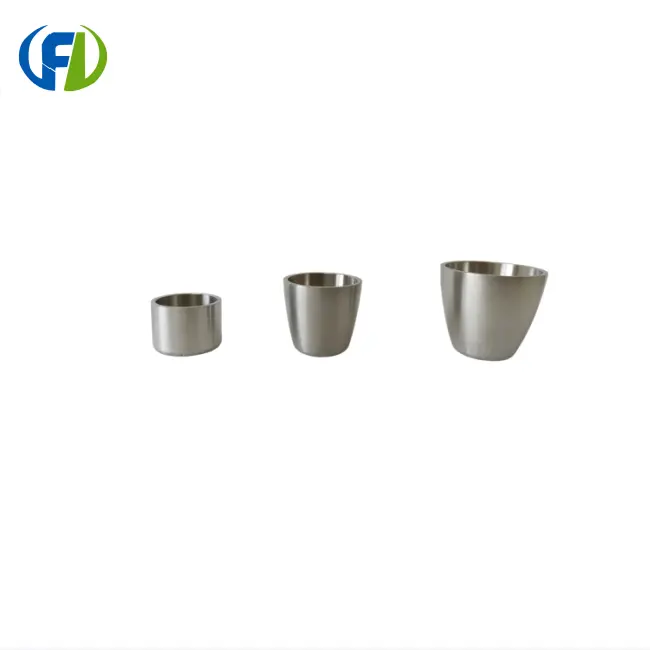
Understanding High-Density Zirconium Crucibles
High-density Zirconium Crucibles are the only way to keep things enclosed in labs and workshops where other materials won't work. The word "high-density" only refers to ways of making microstructures that are very thick and don't have many empty spaces. The products are better at their job and last longer because of this.
Material Composition and Manufacturing Standards
It is possible to buy zirconium that is commercially pure and meets ASTM B550 guidelines. This makes sure that each batch of materials is of the same high standard. Complex techniques, such as deep-drawing, flow-forming, or isostatic pressing, are used to make them, and then they are heated and sinterized in a controlled way. This keeps the wall thickness even, usually within 0.05 mm, which keeps hot spots from forming when the temperature changes. The high-density structure weighs about 6.51 g/cm³. This means that there are a lot fewer holes that could let pollution in or make the structure weaker. They are one of a kind because when heated, they can form a thick layer of zirconium dioxide on the outside. Chemicals can't hurt this layer, and it keeps its shape even after being heated and iced many times.
Key Physical and Chemical Properties
Because they are made specially, High-density Zirconium Crucibles work really well. Based on how long they need to last, these tanks can work in air temperatures between 600°C and 900°C because the metal is able to melt at 1852°C. Liquid alkalis like sodium peroxide, sodium carbonate, and lithium acids quickly break down platinum, porcelain, and glass replacements, but these don't damage them at all. A smooth, high-density surface finish is often achieved through high-density manufacturing. This has a big impact on "memory effects" from previous samples, which is a big problem in trace analysis applications. They are good for advanced metallurgical research where cross-contamination could ruin results or make products less good because they are chemically neutral and physically strong. For example, they are used to test airplane parts and process semiconductor materials.
Manufacturing Quality Control Protocols
Suppliers that you can trust stand out in the High-density Zirconium Crucible market because they have strict quality control measures in place. Reliable manufacturers use Glow Discharge Mass Spectrometry to check that the Zr+Hf content meets the needs while keeping the hafnium levels below 4.5%, which is usually the limit. For checking the quality of a surface, like making sure it is smooth and free of pits, an optical lens and profilometry are used. This is necessary to avoid using samples more than once. Ultrasound tests show that the wall thickness is regular, and tests using water or dye to look through random samples find small cracks that could get bigger when heated. These thorough checking steps make sure that every crucible that is sent meets the high standards that study centers, companies that make airplanes, and companies that work with chemicals need. If the high-density zirconium crucible breaks down in these places, it can have big effects on operations and finances.
Applications and Benefits of High-Density Zirconium Crucibles
This type of High-density Zirconium Crucible is useful in many areas because it can handle acids, stays stable at high temperatures, and has a strong structure. Each of these solves a different kind of real problem with its own unique set of traits.
Aerospace Superalloy Production
Vacuum arc remelting and induction melting need very good pollution control for superalloys made of nickel and cobalt. When making jet engine turbine blades, you need materials that don't have any clay flaws, since those flaws can wear down parts that are important for flying. The High-density Zirconium Crucibles keep the refractory from getting dirty, which would make these special metals less strong. This directly makes planes safer and better at what they do. This is because they can keep their shape under electromagnetic moving forces and stop slag line erosion. This makes them very useful for making advanced materials that are used in current defense and flight systems.
Chemical Processing and Fusion Analysis
They quickly break down when geology labs use bad materials for alkaline fusion digestions. It is best to use High-density Zirconium Crucibles for these jobs because they can handle high-temperature sodium peroxide fusions without the risk of poisoning that comes with platinum tanks. Because the surface is smooth and doesn't have any pores, samples don't stick, so the research results are always right. Because these crucibles last longer, chemical companies that make acidic intermediates don't have to spend as much money changing equipment and don't have to stop production as often. It is better for process prices and scientific stability when the equipment is resistant to chemicals and lasts a long time.
Platinum Group Metal Refining
When rhodium, platinum, and palladium are processed, they need to be kept in tanks that can handle temperatures above 1800°C and keep impurities from getting into the melt. Silica from lower-grade refractories makes the pure amounts of these valuable metals lower. When materials are being refined, High-density Zirconium Crucibles keep them from colliding with each other. This lets them usually reach their goals of 99.99% pure. This type of making doesn't have many holes, so hot metal can't get inside. Both of these things are very important in processes that use expensive metals, where even a small amount of pollution can cost a lot of money.
Semiconductor and Electronics Manufacturing
To make sputtering targets and special coats, High-density Zirconium Crucibles are needed. This is because the electronics industry needs very pure materials. When you work with reacting precursor materials, these containers keep the chemicals steady, and their exact measures help keep the quality of the thin film the same. Manufacturers like these crucibles because they make the process more consistent from batch to batch. This keeps process variation from hurting the performance of semiconductor devices. They work well in situations where ionic pollution would make electronic parts less reliable because they are electrically stable and have a controlled surface chemistry. Buying teams can choose the right materials if they know how these specific High-density Zirconium Crucibles work better than other choices. It may be cheaper to buy carbon crucibles at first, but they are not chemically strong enough to be used with alkaline materials. Ceramics and alumina are stable at high temperatures, but they can cause pollution in processes that need to be very clean. High-density Zirconium Crucibles are a good mix of performance, longevity, and cost-effectiveness when they are used in ways that directly affect product quality and working efficiency.
How to Choose the Right Zirconium Crucible for Your Business
You need to carefully look at the process factors, operating conditions, High-density Zirconium Crucible, and quality standards that are specific to your production setting in order to choose the right High-density Zirconium Crucible specs.
Critical Selection Factors
The expected service life and grade of the material are based on how the temperature changes during use. When something is kept at temperatures above 800°C for a long time, it's important to think about how fast it might oxidize and how its size might change over time. Because chemicals can change over time, it's important to look at both the main reactants and any secondary reactants that may form during processing. Mechanical stress analysis looks at both thermal shock, which happens when something is heated or cooled, and moving or stirring forces that happen during operation. Not only is the volume important, but so are the wall thickness, base shape, and lip design. These all affect how the container is moved, poured, and linked to other machines.
Comparing High-Density Versus Standard Variants
When things get tough, it's easy to see how High-density Zirconium Crucibles and standard zirconium crucibles work differently. Some standard density containers may have small holes in them that let germs in and make them less resistant to chemicals over time. This is fixed by high-density manufacturing, which also makes the product last longer, which makes up for the higher cost at first. Procurement professionals should look at the total cost of ownership when considering options. This includes how often the item needs to be changed, how much it costs to break, and how much it costs to make sure it works right. Even though High-density Zirconium Crucibles cost more, they are worth it because they work better and are less likely to get dirty in fields like making airplanes, medical devices, and high-purity chemicals.
Practical Procurement Considerations
You need to know the standard business terms and technology needs for your area in order to work with providers. Minimum order amounts vary on the maker and the amount of change. Most of the time, standard sizes come in smaller quantities than unique forms. In some cases, you can get it right away, but in others, it might take a few weeks if you need exact measures or paperwork to approve the production. When doing business with another country, the payment terms should spell out things like whether a letter of credit is needed, when payments need to be made ahead of time, and how long the goods need to be kept until they pass quality control. Setting clear requirements ahead of time, like approved materials, size limits, surface finish requirements, and acceptance criteria, can help you avoid costly mistakes and make sure the goods you receive are useful.
Trusted Suppliers and Quality Assurance in Zirconium Crucibles
Choosing a provider of High-density Zirconium Crucibles is an important part of buying because it affects the long-term quality of the work, the ability to keep the business going, and compliance with the law.
Identifying Reputable Manufacturers
A lot of well-known companies show they care about quality by getting approved by organizations like ISO 9001 for their quality management systems and AS9100 for aircraft uses. When a base material's chemistry meets ASTM B550 standards, it means that it meets foreign standards that are used in customer quality systems. Full Certificates of Analysis should be given by suppliers for each product lot. These should show the chemical makeup, mechanical qualities, and measurements. Professional makers are different from product providers because they can fully track materials for controlled industries like nuclear uses and medical devices. Facility audits or reviews by a third party should be a part of the evaluation process to make sure the company has the right production skills, facilities for quality control, and expertise to help customers.
Quality Verification Methods
You can keep low-quality materials, such as high-density zirconium crucibles, from getting to the production lines by having strong processes in place for checking them as they come in. Visual inspection finds flaws on the outside, differences in size, or mistakes made during the making process that need to be thrown away or fixed. Chemical tests with a handheld XRF or a lab ICP-OES show that the grade of the material is right and that someone has tried to replace it. Checking the sizes with very accurate measuring tools makes sure that the wall width is the same, the volume is correct, and there are no geometric mistakes. Small pieces from large orders can be tested with dye penetrant or ultrasound waves to find flaws below the surface that can't be seen with a normal check. In buy deals, being clear about what needs to be accepted and how much paperwork is needed can help settle quality disputes and meet traceability standards in controlled production settings.
After-Sales Support and Partnership Approach
Supplier links should go beyond just getting High-density Zirconium Crucibles to customers. They should also offer quick customer service, technology support, and help with applications. If a manufacturer knows a lot about the materials they use, they can help you find the best crucible designs for your needs. This could mean finding cheaper options or ones that work better. When you buy capital equipment, it's safer if it comes with a guarantee that covers failures caused by mistakes in the manufacturing process. When operating problems arise, they can be fixed quickly thanks to technical staff who are skilled and easy to reach. Stable supply chains are built on long-term relationships with reliable suppliers. This is very helpful when you need to find specific things that are hard to find elsewhere. A procurement team should check to see how dedicated a possible partner has been to the success of customers beyond the initial transactions.
Conclusion
High-density Zirconium Crucibles are a good buy in industries where keeping products clean, being immune to poisons, and staying stable at high temperatures all have a direct impact on the quality of the products and how well the machines work. The fact that they work better than other choices makes them useful for making aircraft parts, processing chemicals, refining valuable metals, and conducting research into new materials. You can make better sourcing decisions that meet your short-term needs and your long-term budget needs as a procurement worker if you know the technical specs, application standards, and quality assurance methods. This is the best way to make sure that supply chains are stable and can handle tough production conditions: work with well-known companies that offer full technical help and consistent product quality.
FAQ
1. What maximum temperature can these crucibles withstand?
It is at 1852°C that High-density Zirconium Crucibles start to melt, but they still keep their shape. But because they need to last a long time, they can only be used up to a certain temperature in the air. This temperature is usually between 600°C and 900°C. When the temperature goes up, the oxidation process goes faster. This forms a layer of zirconium dioxide that protects the reaction and stops it from going any further. When you work in a vacuum or a neutral environment, you can use a lot wider range of temperatures. To make sure the crucible lasts as long as possible, temperature recommendations for each use should take into account the chemical environment, the amount of touch, and the rate of heating.
2. How do they compare to platinum crucibles for alkaline fusion work?
Zirconium is stronger than platinum when it comes to liquid alkalis like sodium peroxide and sodium carbonate. Platinum can be hurt in these cases. High-density Zirconium Crucibles are better for daily fusion work because they are cheaper. Platinum crucibles, on the other hand, are only used when zirconium's flaws become important. Because zirconium doesn't combine with other things, it can be used for trace study when there are worries about surface pollution. It has been seen that zirconium crucibles work just as well or better than platinum ones. They also cost a lot less.
3. Can crucibles be customized for specific process requirements?
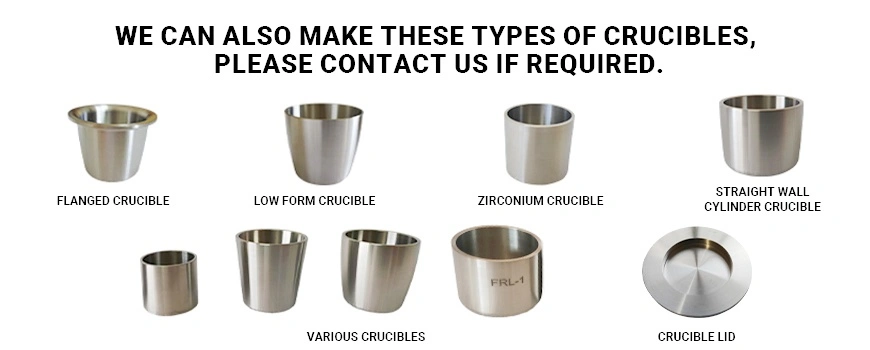
Some of the ways that reputable manufacturers can customize their products are by offering non-standard sizes, lip forms that are especially made for pouring, and different wall thickness distributions. People in certain businesses can set up their own surface treatments or quality standards to meet their needs. These custom specs have different minimum order amounts based on how hard they are to make. For instance, there may be tooling charges for forms that aren't used very often. When specs are being made, getting technical advice helps make designs better for their intended uses while still being easy to make and cheap.
Partner With Freelong for Premium High-Density Zirconium Crucibles
The Titanium Valley in China is home to Baoji Freelong New Material Technology Development Co., Ltd. This puts us in the middle of the most advanced hard metal production. Because we only sell High-density Zirconium Crucibles, we have customers all over the world who work in aircraft, chemicals, electronics, and research. We do this by using our many years of experience in metalworking, along with strict quality control. Our production runs from standard lab sizes to industrial configurations that are made just for you. Our goods are all made to meet ASTM standards, and we can find out where the ingredients we use come from. We know that people who work in buying need more than just things. But they also need partners they can rely on to give them consistent quality, quick technical help, and flexible terms of business that can support activities around the world. To do alkaline fusion research, melt superalloys, or work with platinum group metals, we can help you find High-density Zirconium Crucibles. And we do this by making sure that the thing we give you fits your specific wants. If you email jenny@bjfreelong.com, you can tell them exactly what you need, get full technical specs, or get low prices for both small batches for trials and large batches for production.
References
1. Davis, J.R. (2000). Nickel, Cobalt, and Their Alloys. ASM International, Materials Park, Ohio.
2. Hampel, C.A. (1968). Rare Metals Handbook, 2nd Edition. Reinhold Publishing Corporation, New York.
3. Lide, D.R. (2004). CRC Handbook of Chemistry and Physics, 85th Edition. CRC Press, Boca Raton, Florida.
4. Pourbaix, M. (1974). Atlas of Electrochemical Equilibria in Aqueous Solutions. National Association of Corrosion Engineers, Houston, Texas.

_1745485686742.webp)
_1749017121145.webp)
_1772096443577.png)
_1776411558453.png)
Learn about our latest products and discounts through SMS or email