- English
- French
- German
- Portuguese
- Spanish
- Russian
- Japanese
- Korean
- Arabic
- Greek
- German
- Turkish
- Italian
- Danish
- Romanian
- Indonesian
- Czech
- Afrikaans
- Swedish
- Polish
- Basque
- Catalan
- Esperanto
- Hindi
- Lao
- Albanian
- Amharic
- Armenian
- Azerbaijani
- Belarusian
- Bengali
- Bosnian
- Bulgarian
- Cebuano
- Chichewa
- Corsican
- Croatian
- Dutch
- Estonian
- Filipino
- Finnish
- Frisian
- Galician
- Georgian
- Gujarati
- Haitian
- Hausa
- Hawaiian
- Hebrew
- Hmong
- Hungarian
- Icelandic
- Igbo
- Javanese
- Kannada
- Kazakh
- Khmer
- Kurdish
- Kyrgyz
- Latin
- Latvian
- Lithuanian
- Luxembou..
- Macedonian
- Malagasy
- Malay
- Malayalam
- Maltese
- Maori
- Marathi
- Mongolian
- Burmese
- Nepali
- Norwegian
- Pashto
- Persian
- Punjabi
- Serbian
- Sesotho
- Sinhala
- Slovak
- Slovenian
- Somali
- Samoan
- Scots Gaelic
- Shona
- Sindhi
- Sundanese
- Swahili
- Tajik
- Tamil
- Telugu
- Thai
- Ukrainian
- Urdu
- Uzbek
- Vietnamese
- Welsh
- Xhosa
- Yiddish
- Yoruba
- Zulu
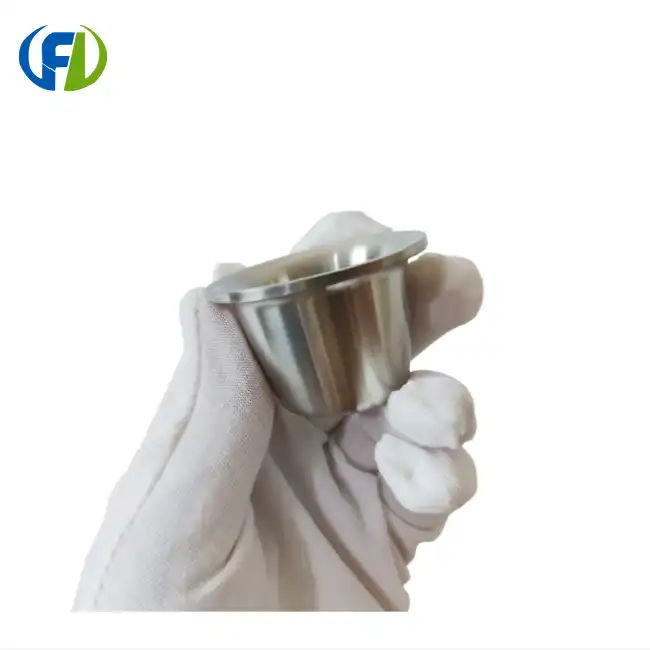
What Is a Zirconium Crucible With Flanged Used For?
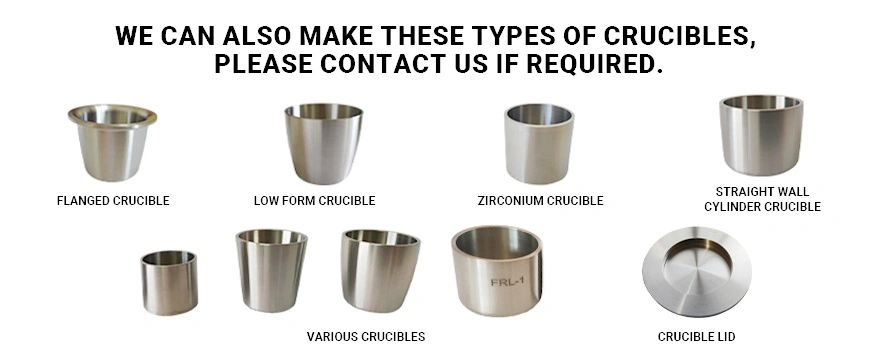
A Zirconium Crucible With Flange is a high-performance lab jar made from commercially pure zirconium (usually Grade Zr 702). It can be identified by the rim that projects outwards from the top. This flanged design is made to keep the sample in place in automated fusion machines used for XRF and ICP sample processing. It does this by removing the chance of slippage during high-temperature fluxing operations. The flange provides structural stiffness to keep the part from deforming during rapid thermal cycles and also serves as a mechanical locking point for automatic grippers. This crucible solves important problems in the lab by stopping cross-contamination from bottom-contact heating and providing a sturdy, cost-effective option to platinum for strong alkaline fusions, especially when using sodium peroxide or other strong oxidizing agents.
Understanding Zirconium Crucibles With Flanged: Characteristics and Benefits
Material Composition and Standards Compliance
High-purity zirconium crucibles with flanged metal that meet ASTM B550 and B493 standards are used to make zirconium crucibles. The material usually has more than 99.2% Zr and Hf, and the amount of hafnium is kept below 4.5%. In harsh analytical conditions, this composition provides excellent chemical stability and thermal efficiency. The material is about 6.51 g/cm³ dense, which makes it much lighter than platinum options while still being just as resistant to chemical attack. It melts at about 1855°C, but in real life, the temperature range for useful use in air is usually between 450°C and 1200°C, based on the task.
The Flanged Design Advantage
The flanged lip is an important engineering trait that sets these crucibles apart from regular ones with straight walls. The flange is precisely made to within ±0.1mm specs, which allows hermetic closing with zirconium lids that match and ensure it works with robotic handling systems. This design feature solves several practical problems at the same time. It gives automated equipment a safe place to grip, so it doesn't fall over or get out of line while being moved. The flange also spreads heat stress around the crucible rim more evenly, which makes it less likely to bend when temperatures change quickly. When working with liquid fluxes or harsh chemical solutions, the flange keeps the material inside and reduces the chance of spills during swirling or pouring.
Chemical and Thermal Properties
The special way that zirconium crucibles protect comes from the way Zirconium Crucible With Flange their surfaces oxidize. When heated for the first time, the metal creates a thick, stick-together oxide layer, also known as a black zirconia coating, that protects the base material from further rusting. This ability to fix itself makes sure that the performance stays the same even after many heat cycles. Silver doesn't have any memory effects as platinum does, and heavy metals can damage it, but zirconium stays chemically neutral. The substance is very strong against weak sulfuric acid, hydrochloric acid, and most importantly, strong alkali flows like sodium carbonate, sodium hydroxide, and sodium peroxide. Because of their high strength, these crucibles are essential for geological testing, metal testing, and advanced materials research that must maintain sample purity.
Applications and Use Cases of Zirconium Crucibles With Flanged
Automated XRF Fusion Sample Preparation
For making fusion beads used in X-ray fluorescence spectroscopy, mining and geological labs need these unique Zirconium Crucibles with flanges. Powdered rock pieces are mixed with lithium tetraborate or lithium metaborate flux, and then the mixture is heated to 1000–1100°C until it melts fully. The crucible with the flange fits right into automatic fusion equipment, and the flange acts as a support point. The machine can then stir the liquid mixture to make sure it is all the same before putting it into molds to cool and form glass discs. This technology gets rid of mistakes made by people handling samples and greatly speeds up the work that commercial assay labs do, which processes hundreds of samples every day. Material scientists like that zirconium is chemically neutral, so it doesn't get contaminated with minor elements like iron, nickel, or chromium, which would change the results of an analysis. Precision flange production ensures that each beaker fits exactly the same in the fusion equipment, so the heating profiles can be used over and over again for each batch.
Refractory Ore Digestion and Sodium Peroxide Fusions
Because they are solid or chemically complex, some mineral samples don't dissolve in acid the way other samples do. To fully break down chromite, zircon sand, rutile, and other similar hard materials, alkaline fusing methods are needed. Sodium peroxide (Na2O) fusion is the most active method. It creates temperatures between 600 and 700°C and very strong oxidation conditions. Because platinum crucibles fail so badly in these situations, zirconium is the only metal that can be used instead. During these dangerous tasks, the flanged shape becomes very important. Technicians can safely move the crucible by using special tools that grip the flange and keep their hands away from the explosive melt. The lip provides structural support, which keeps the crucible from collapsing even when it is full of liquid oxidizers. Metallurgical labs that study steel slags, cement clinker, or coal fly ash depend on this ability to get full chemical profiles, even for refractory oxides that are hard to analyze with other methods.
Semiconductor and Advanced Materials Research
Flanged zirconium crucibles are used as evaporation sources by research groups that work with thin-film deposition and materials synthesis. The lip fits perfectly with electron beam hearths or resistance heating baskets, which ensures that everything is placed correctly inside the vacuum tanks. This accuracy in placement is very important when putting down regular coatings on semiconductor surfaces or making new alloy compositions. Zirconium is thermally stable, so it doesn't outgas in places that need to be very clean, and its low air pressure keeps formed films from getting dirty themselves. When university labs do isotope research or work on making new high-temperature alloys, they can order small batches of handmade crucibles with specific flange sizes. Customized tanks make it possible to set up experiments that wouldn't work with standard tools, which speeds up the time it takes to find new materials.
Comparing Zirconium Crucibles With Flanged to Other Crucible Types
Zirconium Versus Platinum
Platinum has long been thought to be the best material for Zirconium Crucible With Flange for analysis crucibles because it doesn't react with chemicals and stays stable at high temperatures. Zirconium Crucible With Flanged, on the other hand, is better than platinum in many important ways. There is a big difference in price—similar platinum vessels usually cost 30–40% more than zirconium vessels. Platinum is attacked by alkalis, especially when sodium peroxide, sodium hydroxide, or potassium hydroxide is used as a flux. This causes alloying and eventually failure. Zirconium works especially well in these alkaline conditions. Platinum also has memory effects, which means it can hold on to traces of past samples that can mess up later tests. This problem can't happen at all because zirconium forms an oxide layer. The weight advantage of zirconium (density 6.51 g/cm³ vs. 21.45 g/cm³ for platinum) makes handling easier and reduces strain on automated equipment. Zirconium crucibles with flanged designs have better mechanical gripping surfaces than platinum crucibles with smooth walls.
Zirconium Versus Ceramic Alternatives
Ceramic crucibles made of alumina, silicon carbide, and other materials are cheap and very good at withstanding temperature shock. They do, however, make it much harder to do critical work. Ceramics are microscopically porous, which means that flux can get through and contaminate the sample. At high temperatures, they can combine with alkaline fluxes and release aluminum, silicon, or other elements into samples. This pollution lowers the precision of analyses, especially when figuring out minor elements. Zirconium is also stronger mechanically than ceramic, so ceramic crucibles are more likely to break when they are heated or hit. Because flanges can't be precisely machined from ceramic materials, they can't work well with automatic fusion systems. Ceramics that are porous are harder to clean up after use than zirconium, which has a smooth, thick surface.
Flanged Versus Non-Flanged Zirconium Crucibles
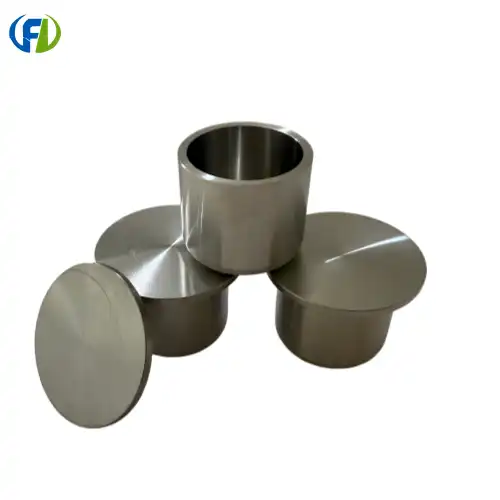
Standard zirconium crucibles with a straight wall and no flanges work well for hand tasks where techs can move the jars with tongs. But they don't have the safety gaps or automation compatibility that flanged systems do. By making a strong mechanical stop, the flange keeps the crucibles from moving through the holding mechanisms. When working with liquid materials at temperatures above 1000°C, this safety function is very important. When matching lids are used, the lip also makes it easier to close, which lowers the loss of sample components or flux materials through volatilization. The flanged design is necessary for laboratories that want to reduce the amount of time operators spend working with high temperatures and increase the number of samples they process.
Ensuring Optimal Use and Maintenance of Zirconium Crucibles With Flanged
Initial Conditioning and Pre-Use Preparation
Before they are used for the first time in important analytical tasks, new Zirconium Crucible With Flanged units should be "conditioned." Slowly heat the empty crucible up to about 500°C in air, and then hold it there for 30 minutes. This process, before rusting, creates a uniform layer of protective oxide that keeps the surface stable. Once it has cooled, check to see if the crucible has a constant color. A dark gray or black finish means that the oxide is forming correctly. Before adding samples or flux materials, rinse the conditioned crucible with deionized water and let it dry completely. Before each use, check the flange for signs of warping or breaking. Run the tip of your finger along the edge to see if there are any rough spots or chips that could make it harder to seal or grip. Use diluted nitric acid or hydrochloric acid to get rid of any leftover material from earlier fusions. Then, rinse the area well. Do not use wire brushes or rough pads on the oxide layer because they could scratch it.
Operational Best Practices
The life of a crucible is greatly increased by using the right heating and cooling processes. To avoid thermal shock, raise the temperature of the heater slowly. For most uses, a heating rate of 200–300°C per hour works well. When taking crucibles out of ovens, put them on protective fiber boards instead of metal surfaces to keep them from cooling unevenly, which can cause stress to build up in certain areas. The ring makes it easy to hold on to, but make sure the tongs only touch the edge and not the rim, as that could cause the metal to bend. Don't fill crucibles more than two-thirds of the way to the top so that they don't overflow during strong reactions or when liquid materials expand at high temperatures. If you want to spin molten fluxes, use gentle circle motions instead of a Zirconium Crucible With Flange, which could push material over the edge. The flanged shape helps keep things inside, but using the right amount of filling gives you an extra safety cushion.
Long-Term Care and Storage
Crucibles should be left to cool down to almost room temperature after use before they are cleaned. If you need to, you can gently remove the hardened flux by mechanical means. However, most materials come off smoothly after thermal cycling. To keep them from getting damaged by touching other units, store cleaned crucibles in cases with separate sections. If you stack crucibles on top of each other, the flanges may bend over time. A thin layer of mineral oil on the outside helps protect against rust caused by air and moisture during long storage times. However, this layer must be taken off before the next use. Implement a way to keep track of how many temperature cycles each crucible goes through and what kinds of materials are worked in each one. This working information helps figure out when something needs to be replaced. If you take good care of your zirconium crucibles, they can last between 100 and 300 fusion cycles in alkaline flux use. The main way they break is by gradually losing their wall thickness. Throw away crucibles when the wall thickness drops by more than 20% of what it was supposed to be or when cracks can be seen.
Conclusion
Zirconium crucibles with flanged shapes are specialized analytical tools made to meet the high standards of modern chemical processing and materials analysis. Their special mix of chemical inertness, thermal stability, and mechanical design features solves important problems in automatic fusion systems and harsh chemical conditions where other materials fail. The flanged geometry provides important safety gaps and automation compatibility that make the investment worth it for labs that handle large sample amounts. When bought from respected companies and kept up according to best practices, a Zirconium Crucible With Flanged offers great value because it lasts longer and is more reliable for analysis. By knowing the different features and when to use them, procurement professionals can choose the best crucible setup for their specific analytical needs. This improves the speed of the lab and the quality of the data collected.
FAQ
1. What temperature range can zirconium crucibles with flanged edges handle?
Zirconium Crucible With Flanged units usually work well between 450°C and 1200°C, but this depends on the temperature and length of contact. Zirconium has a freezing point higher than 1855°C, but it can't be used in most situations because it oxidizes quickly in air. Operations that happen below 600°C keep chemical resistance high while limiting the growth of metal layers. For short-lived fusions, higher temperatures up to 1200°C are possible, but they speed up surface damage.
2. Can I customize dimensions for specific automated equipment?
Customization choices are easy to find from well-known makers. Important factors like flange diameter, internal capacity, wall thickness, and total height can be changed to fit the needs of particular equipment. When you ask for quotes, you should include full technical drawings with acceptable ranges for sizes. Custom orders usually take between 4 and 8 weeks to make, but this depends on how complicated they are and how busy the production line is.
3. How do I verify supplier quality before bulk purchasing?
Ask for test results on the material that show makeup analyses that meet ASTM B550 standards. Ask current customers in the same line of work for recommendations. Before committing to bulk sales, order sample numbers first to make sure the dimensions are correct, the surface finish is good, and the product works well in your application. Reliable providers give full paperwork, like records of analysis, for every batch of production.
Partner With Freelong for Premium Zirconium Crucibles With Flanged
Baoji Freelong New Material Technology Development Co., Ltd. is based in China's Titanium Valley, which is a great place for business. They make high-performance Zirconium Crucible With Flanged designs that meet the strict needs of aircraft, chemical processing, and advanced materials research. Our precisely made crucibles meet ASTM B550 standards and can be customized to meet the specific needs of equipment integration. As a reliable zirconium crucible with flanged provider, we follow strict quality control procedures during production to make sure that the dimensions are accurate to within ±0.1mm and the material purity is higher than the industry standard. Our engineering team works directly with lab directors and sourcing managers to make sure that the crucible specs are perfect for each fusion system and analytical process. We offer dependable supply chain performance backed by full expert help through partnerships in Australia, Korea, Germany, the United States, and the United Kingdom. You can talk about your analytical crucible needs at jenny@bjfreelong.com and get full specs as well as reasonable quotes for both standard and custom setups.
References
1. Davis, J.R. (2000). Nickel, Cobalt, and Their Alloys: Properties and Selection. ASM International Handbook Committee. Materials Park, OH: ASM International.
2. Lide, D.R. (2008). CRC Handbook of Chemistry and Physics, 89th Edition. Boca Raton, FL: CRC Press.
3. Reed, T.B. (1971). Induction Melting of Reactive and Refractory Metals. Cambridge, MA: MIT Press.
4. ASTM International (2019). ASTM B550-18: Standard Specification for Zirconium and Zirconium Alloy Bar, Rod, and Wire for Nuclear Application. West Conshohocken, PA: ASTM International.
5. Jenkins, I. and Wood, J.V. (1991). Powder Metallurgy: An Overview. London: Institute of Materials.
6. Habashi, F. (1997). Handbook of Extractive Metallurgy, Volume II. Weinheim: Wiley-VCH.

_1773113661373.png)
_1763520346907.png)
_1744964988808.webp)
Learn about our latest products and discounts through SMS or email