What is a zirconium rod and how is it used in nuclear power? People who work with tough materials need to know. Because Zr rods are mostly used to protect nuclear fuel, this is very important. They should be stable and chemically strong, and they shouldn't rust. People inside the reactor are in danger, but these rods keep them safe. This makes the fuel work better and last longer.
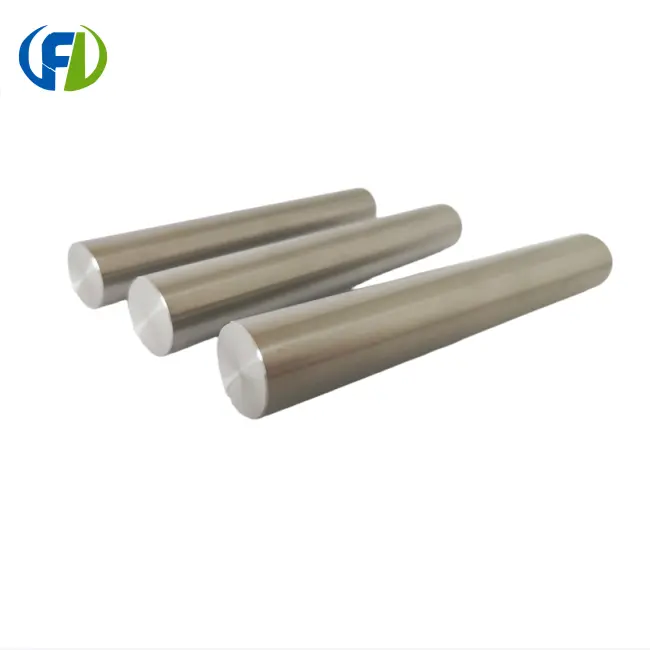
Simply explain what "Zirconium Rod" means
Zirconium rods are round metal pieces made from zirconium or a metal mixed with it. It's very valuable since it doesn't rust and keeps its shape even when it's hot. One thing about zinc is that it doesn't melt easily, and neutrons can't go through it very easily. It is often used in engineering projects that use atomic energy because of this. Care is taken to make these rods, and they are often mixed with small amounts of other types of metal to make them work better.
Zr2+ rods make up a big part of nuclear reactors. A lot of the time, they are made by working with metal. These keep the building strong and the heat moving well. They help keep nuclear fuel safe and are very important. Heavy chemicals can touch them in heat exchangers and other places. Since they don't change when chemicals do, they can be used there. Because it doesn't rust and stays strong even when heated to very high temperatures, it's used a lot in fields that need strong metals.
Why it's important and what it does?
Atomic power plants have to work in tough conditions, like places that are very hot and have a lot of radiation. They also have to use weak coolants that break down quickly. The coolant in these reactors is usually water or heavy water with a lot of chemicals in it. It is hard to keep the fuel rods in good shape and make sure that it doesn't hurt them too much. Zirconium rods can fix these problems because they do two very important things: they protect the fuel and keep the reactor safe from damage from radiation and corrosion while it is running.
If there is no zirconium cladding, the uranium or plutonium fuel is more likely to oxidize and get dirty. This would make the reactor less safe and make it work faster. Zirconium alloys help protect the structure of the reactor by keeping the fuel rods from breaking or warping when they are exposed to radiation and changes in temperature. That's because core parts that are this strong last longer and need less maintenance. This makes the process of making electricity more reliable.
Zinc rods aren't just used in nuclear power. They are used in a lot of different fields to deal with corrosion and high-wear areas. They are used for many things, like making chemicals and going to space. This is proof of how important these high-tech things are in lots of places.
The main parts and how they work Go in-depth
Zirconium rods are special and work really well because of a few main things. In the first place, they don't rust because stable layers of zirconium oxide form on the surface. In a nuclear reactor, for instance, where high-temperature steam is present, this oxide forms a shield that stops further oxidation and chemical attack.
The ability to move heat around is another important property. A lot of heat is moved away from nuclear fuel by zirconium and its alloys. This keeps the temperatures stable enough for safe reactor operation. This feature helps keep hotspots from happening, which could hurt the fuel.
Because they are strong, flexible, and don't creep, zirconium rods can handle the mechanical stresses that come up when a reactor starts up and stops down. To be used for a long time, they need to be able to keep their shape when they are exposed to irradiation.
Zirconium doesn't absorb neutrons very well, which makes nuclear fuel last longer by not losing as many neutrons. This makes it possible for reactors to work more efficiently and cost-effectively. The rods' metallurgical properties also make them simple to weld and make in different ways. This means that they can be precisely shaped and joined for complex reactor designs.
Zirconium rods are the only ones that can do what they need to do in nuclear reactors and other tough work environments because of these qualities. A great example of how far material engineering has come is how they balance chemical stability, mechanical strength, and thermal properties.
The technical side of how zirconium rods are used in nuclear applications
Atomic power plants use zirconium rods that are made of an alloy that was made to make them stronger and less likely to rust. Some important alloying elements are iron, niobium, and tin. They are added in very small amounts to make the metal more resistant to corrosion without hurting neutron economy. These are the main types of materials used for fuel cladding. They are zirconium alloys, such as Zircaloy.
As an atom, zirconium can handle radiation damage and oxygen diffusion because of its crystalline structure and the way it forms oxides. The rate of zirconium oxidation (the making of zirconium oxide) is slowed down by this mechanism. This is very important because oxidation can weaken the rods and break them if it is not stopped.
Metal phases and grain sizes must be carefully controlled when zirconium rods are being made. This makes the best mechanical properties work, such as how well it resists creep and how strong it is at high temperatures. Some surface treatments and manufacturing controls make them even better at stopping corrosion from coolants and stress corrosion cracking, which is made better by irradiation.
When the fuel is being made, it is closely watched for thermal conductivity and dimensional stability under radiation. These properties affect how well heat moves through the reactor core and how well the fuel pellets stay together. Using cutting edge quality control methods, each rod is made to meet strict international standards for nuclear safety.
Important Pros of Zirconium Rods
When it comes to their benefits, resistance to corrosion stands out. Zirconium can create a passive oxide layer that protects it in highly reactive environments and helps it last for a long time. This benefit is very important in nuclear reactors, where the chemicals in the coolant and the radiation are very hard on materials.
Low neutron cross-section is another important benefit. Neutrons can pass through zirconium rods with little resistance, which keeps the fission process working well. Zirconium is an important metal for fuel cladding because it is the only metal that can be used with nuclear power.
The rods can withstand the mechanical and thermal stresses that happen during reactor operation cycles without deforming or cracking because they are mechanically reliable. This means they are strong and flexible at the same time. This strength lowers the frequency of maintenance and raises the plant's availability.
Because the material has a high melting point and is chemically stable, it can work safely at high temperatures inside a pressurized water reactor. It will keep its shape and the chance of failure is low.
Zirconium rods can also be used in a variety of ways, which helps engineering firms that need to make custom parts for uses in aerospace, industrial manufacturing, and other fields.
The Zirconium Rod vs. the Others
In the nuclear and industrial worlds, zirconium rods mostly compete with other refractory metals like titanium and stainless steel. Zirconium is better for nuclear fuel cladding applications than titanium because it absorbs neutrons much less. Titanium is very good at resisting corrosion, but zirconium is better at working with nuclear power in reactors.
Stainless steel is stronger and cheaper than other metals, but it absorbs more neutrons and rusts more easily in high-temperature nuclear coolant environments. Because of this, stainless steel is not as popular in nuclear reactor cores but is still used in other places.
Because they are resistant to corrosion, have high mechanical integrity, and use few neutrons, zirconium rods are the best choice for demanding industrial uses and important nuclear applications. When it comes to radiation and heat stress, they simply do better than their competitors.
Applications and Advantages of Zirconium Rods in High-Performance Industries
Zirconium rods are best used by international distributors and original equipment manufacturers who work in nuclear power plants, aerospace engineering, chemical processing, and manufacturing. High-performance systems need metal parts that can work in harsh conditions. Zirconium rods are very useful for engineering firms that make these systems.
Because they block radiation well and keep chemicals stable, zirconium rods are often used to cover fuel pellets in nuclear reactors. Space companies like to use zirconium for important structural parts that are exposed to high temperatures and reactive conditions because it is strong and doesn't rust.
In the chemical and offshore engineering fields, zirconium rods are used to make heat exchangers and other parts that don't rust and need to be able to handle harsh chemicals or salty environments. Zr2O3 parts that are precisely machined may also be used by medical device makers to make sure their products are biocompatible and last a long time.
People want materials in these places that behave like refractory metals and keep their mechanical and chemical properties. Zirconium rods are often used to make new building materials because of this.
Conclusion
Only zirconium rods can work with nuclear power, be strong, and not rust. This makes them very important in nuclear power plants and many other tough industrial settings. As fuel cladding, they keep the reactor safe, work well, and last a long time. The material has many benefits that make it a good base for engineering materials, even though it can be pricey and difficult to work with.
As alloys get better and making techniques get better, it keeps growing in potential. There will be a greater need for safe nuclear materials like zirconium rods as efforts to use clean energy surge. Freelong is a company that makes precision metal goods and is committed to quality and new ideas. Customers from all over the world can buy high-quality zirconium rods from them. This makes it safer and more efficient to make electricity and run factories.
Frequently Asked Questions
Q1: What makes zirconium rods suitable for nuclear reactors?
A: Zirconium rods have low neutron absorption, excellent corrosion resistance in reactor coolant environments, and strong mechanical properties at high temperatures, making them ideal for fuel cladding.
Q2: Can zirconium rods be used outside of nuclear power?
A: Yes, industries like aerospace, chemical processing, and medical devices utilize zirconium rods for corrosion resistance and structural integrity under extreme conditions.
Q3: What are the common alloys used in zirconium rods?
A: Zircaloy alloys containing tin, niobium, and iron are standard to enhance corrosion resistance and mechanical strength in nuclear applications.
Q4: What precautions exist regarding zirconium rods in operation?
A: Although generally stable, zirconium can react with water at very high temperatures to produce hydrogen, requiring appropriate safety measures in reactor design.
Q5: How does Freelong ensure the quality of zirconium rods?
A: Freelong employs rigorous quality control, advanced fabrication techniques, and adherence to industry standards to deliver reliable and consistent zirconium rods.
Find Out Where to Get Zirconium Rod
If you are looking for high-quality zirconium rods, Freelong stands out because it has a global supply chain that you can trust. We are an alloy metals company in Baoji City, China's Titanium Valley. We work with zirconium, titanium, nickel, niobium, tantalum, and other metals. Our careful production and quality control make sure that the properties of our materials meet or go beyond what customers in the nuclear, aerospace, and industrial sectors expect.
Talk to our team about OEM services and export-grade zirconium rods that are made just the way you want them. Freelong guarantees consistent performance and service you can count on, whether it's for nuclear fuel cladding or high-tech engineering materials. If you have questions about zirconium rods, please email us at jenny@bjfreelong.com. Please visit our website at frlmetal.com for more information.
References
1. Schubert, A. F., & Weller, A. (2006). Zirconium alloys in nuclear technology: Properties, applications, and future developments. Materials Science and Engineering: A, 423(1-2), 1-11.
2. Peres, O. S., & Sato, H. (2019). The use of zirconium in nuclear reactors: A review of its properties and applications. Journal of Nuclear Materials, 515, 151-162.
3. Kullberg, C. J., & Möller, P. (2014). The role of zirconium in nuclear fuel technology. Nuclear Engineering and Design, 271, 265-275.
4. Sinha, A. K., & Zeng, L. (2018). Advances in zirconium-based materials for nuclear applications. Journal of Alloys and Compounds, 735, 1395-1407.
5. Ebrahimi, F., & Khosravi, H. (2015). Zirconium-based materials in nuclear power engineering: Properties, corrosion resistance, and performance. Corrosion Reviews, 33(4), 231-245.
6. Karam, A. A., & Mench, M. M. (2011). Functional properties of zirconium as a cladding material in nuclear reactors. Journal of Nuclear Materials, 417(1), 168-174.

_1744882333435.webp)
_1744773799510.webp)
_1745892581245.webp)