- English
- French
- German
- Portuguese
- Spanish
- Russian
- Japanese
- Korean
- Arabic
- Greek
- German
- Turkish
- Italian
- Danish
- Romanian
- Indonesian
- Czech
- Afrikaans
- Swedish
- Polish
- Basque
- Catalan
- Esperanto
- Hindi
- Lao
- Albanian
- Amharic
- Armenian
- Azerbaijani
- Belarusian
- Bengali
- Bosnian
- Bulgarian
- Cebuano
- Chichewa
- Corsican
- Croatian
- Dutch
- Estonian
- Filipino
- Finnish
- Frisian
- Galician
- Georgian
- Gujarati
- Haitian
- Hausa
- Hawaiian
- Hebrew
- Hmong
- Hungarian
- Icelandic
- Igbo
- Javanese
- Kannada
- Kazakh
- Khmer
- Kurdish
- Kyrgyz
- Latin
- Latvian
- Lithuanian
- Luxembou..
- Macedonian
- Malagasy
- Malay
- Malayalam
- Maltese
- Maori
- Marathi
- Mongolian
- Burmese
- Nepali
- Norwegian
- Pashto
- Persian
- Punjabi
- Serbian
- Sesotho
- Sinhala
- Slovak
- Slovenian
- Somali
- Samoan
- Scots Gaelic
- Shona
- Sindhi
- Sundanese
- Swahili
- Tajik
- Tamil
- Telugu
- Thai
- Ukrainian
- Urdu
- Uzbek
- Vietnamese
- Welsh
- Xhosa
- Yiddish
- Yoruba
- Zulu
Where to Source High Quality NO2200 Nickel Rod Products
More and more, procurement professionals are realising that they need to work with certified manufacturers who know both the precision needs of metalworking and the needs of industrial applications when they are looking for reliable suppliers of high-quality commercially pure nickel alloy products. When looking for NO2200 Nickel Rod, you need to make sure that the chemical composition is correct, that the mechanical properties are always the same, and that the seller can meet foreign standards such as ASTM B160. For aerospace manufacturers, chemical processors, battery makers, and research institutions, this piece gives useful advice on how to choose and get high-quality nickel bars that are very resistant to corrosion and stable at high temperatures.
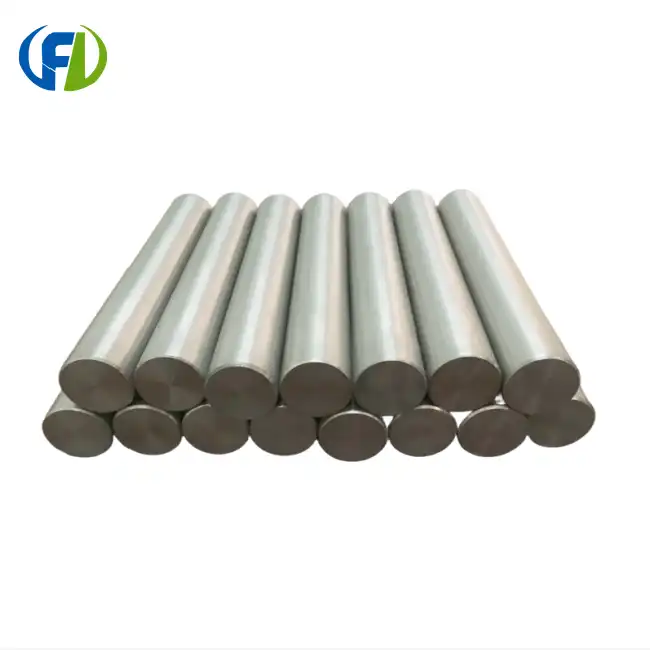
Understanding NO2200 Nickel Rod: Properties, Composition, and Applications
What Makes NO2200 Nickel Rod Unique in Industrial Manufacturing
NO2200 is a commercially pure wrought nickel alloy that is made up of at least 99.0% nickel and cobalt. The material's composition makes it a solution-strengthened alloy that is very flexible and doesn't harden quickly. Nickel plus cobalt ≥ 99.0%, iron ≤ 0.40%, manganese ≤ 0.35%, carbon ≤ 0.15%, and copper ≤ 0.25% are some of the chemical parameters. The density of this alloy is 8.89 g/cm³, and its melting point is between 1435°C and 1446°C. This makes it very useful for a wide range of temperatures.
At room temperature, the material is ferromagnetic, but it loses its magnetic properties above 360°C, which is its Curie temperature. In magnetostrictive transducers and other specialised electrical parts, this trait comes in handy. When the metal is annealed, its tensile strength is usually between 380 and 550 MPa, its yield strength is at least 105 MPa, and its stretch is at least 40%. This means that it can be easily shaped for cutting operations.
Critical Industrial Applications Across Multiple Sectors
Caustic evaporator systems in chlor-alkali factories depend on available pure nickel bars for a lot of their structural parts. Unlike most stainless steels, this metal doesn't crack when it comes into contact with high-temperature sodium hydroxide liquids. The non-reactive surface keeps the product from getting dirty, which is very important for making synthetic fibres and food handling tools.
This material is used in aerospace applications for missile parts and magnetostrictive devices, where its magnetic saturation properties and ability to remove heat work together. Chemical processing plants use these rods for pump shafts, electrode assemblies, and tie rods that work in reducing acid environments, such as those with sulphuric and hydrochloric acid. Because it is so resistant to anhydrous ammonia, it is an essential part of the equipment used to make fertiliser.
Making batteries is a new field of use for high-purity NO2200 Nickel Rod, which is used as electrode connectors and needs to be very good at conducting electricity and staying stable in an electrochemical environment. Small batches are bought by research labs for materials science studies that focus on studying how things behave at cryogenic temperatures and how they resist oxidation at high temperatures.
Comparing NO2200 Nickel Rod with Alternative Nickel Alloys and Stainless Steels
Performance Benchmarking Against Industry Alternatives
To choose the right material, you need to know how commercially pure nickel works compared to other options. Above 650°C, Inconel metals are stronger at high temperatures, but they are much more expensive and don't conduct heat as well. Even though monel metals are very strong in saltwater and hydrofluoric acid, they do contain a lot of copper, which can make them unsuitable for use in food-grade applications.
Series 304 and 316 stainless steels are resistant to corrosion well in oxidising environments, but they fail horribly in hot caustic solutions where intergranular attack takes place. Nickel is replaced with manganese in the 200-series stainless steels. This lowers the cost of the materials but makes the steel less resistant to rust and less flexible. Pure nickel types, such as NO2200, keep their mechanical integrity in alkaline conditions that quickly wear down austenitic stainless steels.
Cost-Performance Trade-offs for Strategic Procurement
When it comes to buying, commercially pure nickel rods usually cost 30 to 50 percent more than 316L stainless steel, but they last 5 to 10 times longer in harsh settings. When repair costs and production breaks are taken into account, this means a lower total cost of ownership. NO2200 is about 40% cheaper than Hastelloy C-276 and has the same level of resistance to alkaline solutions. However, Hastelloy is better at oxidising acid mixtures.
Its mechanical qualities show that speciality alloys like Inconel 625 have higher tensile strengths of over 800 MPa. However, NO2200 is better for heat exchanger uses because it is more flexible and conducts heat better than Inconel (10 W/mK vs. 70 W/mK). The alloy can be easily welded using standard TIG and MIG methods with Nickel 61 filler metal. This makes the fabrication process simpler than with precipitation-hardened alternatives that need a special heat treatment after the weld.
Where and How to Source NO2200 Nickel Rod Products for Your Business Needs
Identifying Certified Manufacturers and Direct Supply Channels
For buying to go well, producers must first show that they meet the requirements set out in ASTM B160 and ASME SB-160. When you buy directly from metallic production centers, you skip the markups at the middlemen and can be sure that your products are traceable thanks to mill test certificates that meet EN 10204 3.1 standards. Optical emission spectroscopy and tensile tests are used to check the chemical makeup and mechanical qualities of these certificates.
Geographical factors affect how well the supply chain works for NO2200 Nickel Rod. Because of economies of scale, manufacturing hubs in places where nickel processing is already well-established usually have shorter lead times and lower prices. Buyers should make sure that suppliers have quality management systems that are certified to ISO 9001:2015 and standards specific to the industry, such as AS9100 for aerospace applications or ISO 13485 for medical device parts.
When you buy in bulk through wholesale outlets, you can get better prices. Depending on the width, the minimum order quantity is usually between 500 kg and 2000 kg. When compared to local wholesalers, direct import strategies save 15–25% on costs. However, they require handling customs paperwork, freight operations, and longer purchase cycles that last 8–12 weeks. Distributor networks offer faster delivery (within 2 to 4 weeks) and get rid of the hassles of importing, which makes the higher price worth it for projects that need to be done quickly.
Critical Procurement Considerations and Quality Verification
Before approving buy orders, procurement experts need to make sure they understand a few technical details. Tolerances in dimensions that meet ISO h9 or h11 classes make sure that the part can be machined precisely. Specifications for the surface finish are important for situations where the surface only needs to be lightly prepared before welding or coating. When rods are hot-rolled versus cold-drawn, the substructure and mechanical traits change. Cold-drawn rods are stronger but less flexible.
For rods wider than 25 mm, non-destructive testing is needed to find internal holes or problems with the pipe through ultrasonic examination. Visual analysis and dye-penetrant tests check the quality of the surface by finding laps, gaps, or other flaws that make it less resistant to corrosion. Grain size study according to ASTM E112 shows how easy the material is to work with and how well the finished part works under cyclic loading conditions.
When negotiating lead times, custom-sized needs should be taken into account, since normal stock sizes might not match up with design specs. Setting up framework agreements with qualified suppliers locks in good pricing terms and makes sure that priority is given during times when the market is short on supplies. International shipments usually require a 30% to 50% payment, with the rest due against the bill of lading. However, if you have a long-term relationship with the seller, you may be able to negotiate net-60 terms.
Making the Right Decision: Selecting NO2200 Nickel Rod for Your Project
Aligning Material Specifications with Application Requirements
Specific metallurgical properties are needed for the project. For uses that involve thermal cycles above 315°C, a low-carbon NO2201 grade should be chosen so that intergranular graphite doesn't form, which reduces NO2200 over time. NO2200 forms a passive oxide layer that stops progressive corrosion in caustic soda evaporators that work at temperatures up to 450°C and NaOH concentrations of 10 to 50 percent.
For battery electrodes that need to have good electrical conductivity, it's important to make sure that impurity levels stay below certain limits for the NO2200 Nickel Rod. This is especially important for elements like sulphur and phosphorus that lower conductivity. For cryogenic uses below -196°C (liquid nitrogen temperature), impact toughness approval is needed to keep the metal from breaking easily. However, commercially pure nickel stays very flexible at these temperatures.
Engineers should check to see if common rod lengths ranging from 6mm to 200mm meet the needs of the design or if they need to be made to order. Standard production runs can only go as long as 6 meters at a time. For greater continuous lengths, special manufacturing setups and higher prices are needed. The choice of surface finish (pickled, ground, or polished) affects the next steps in the fabrication process and should be made clear from the start.
Evaluating Supplier Capabilities Beyond Price Quotations
Assessing a supplier involves more than just looking at unit prices; it also involves assessing their expert help skills. Premier suppliers offer metallurgical consulting services that help choose the best materials for environments that are prone to corrosion. Engineering analysis is made easier by having access to large databases of material properties, such as creep rupture data, fatigue curves, and corrosion rate tables in a variety of media.
Some things that show how good the after-sales service is are how quickly the company responds to quality problems, how willing they are to let a third party test the product, and how flexible they are with delivery times. Suppliers who keep large inventory gaps show that they care about customer happiness by meeting pressing needs without charging too much for expediting. Having access to technical paperwork, such as instructions for welding procedures and suggestions for heat treatment, lowers the risk of a project during the fabrication stages.
At Baoji Freelong New Material Technology Development, we're known for providing commercially pure nickel goods that meet the strict requirements of the aerospace, chemical processing, and battery production industries. Our factory is in China's Titanium Valley, and we can do everything from processing raw materials to checking the final quality, so you can always see where your products come from. Our partnerships cover Australia, Germany, Malaysia, and all of North America. They are backed up by full mill test certificates and customisation services that meet the specific needs of each project.
Conclusion
To get commercially pure nickel alloy rods of high quality, you need to work with key suppliers to find partnerships that balance material performance, certification compliance, and supply chain stability. Manufacturers of aerospace parts, chemicals, and batteries can benefit from knowing how this alloy's corrosion resistance and thermal properties make it different from other options. To make a good purchase, you need to check the chemical makeup with mill test certificates, make sure the mechanical properties match the needs of the product, and build relationships with makers who can show consistent quality control. Because the choice will have an effect on working efficiency, equipment life, and product quality over the long term, it is important to carefully evaluate suppliers in order to protect the organization's interests and ensure project success.
FAQ
1. What distinguishes NO2200 from NO2201 grade specifications?
The biggest difference between them is the amount of carbon they hold. NO2200 has up to 0.15% carbon, while NO2201 has no more than 0.02% carbon. Low-carbon NO2201 stops intergranular graphite precipitation from happening after long-term exposure above 315°C. This makes it better for high-temperature service uses where NO2200 loses power over time.
2. Does this material exhibit magnetic properties affecting electronic applications?
Yes, nickel that is sold in stores is ferromagnetic at room temperature and has magnetic permeability values that are good for some transducer uses. When heated above about 360°C (Curie temperature), the material loses its magnetism. This makes it useful in temperature-dependent magnetic switches and actuators.
3. Which types of welding work well with this metal?
Using Nickel 61 filler metal that matches the corrosion resistance of the base material gives good results with TIG, MIG, and SMAW welding. When you properly prepare the joint and clean it after the welding process, you avoid contamination that could hurt the corrosion performance in harsh work settings.
4. What approvals make sure that the quality and safety of the material?
Mill test papers that meet the requirements of EN 10204 3.1 show that the chemical make-up and mechanical qualities have been checked by a third party. Compliance with ASTM B160 confirms the accuracy of measurements and the high quality of production. For sour service applications, specific industry certifications like NACE MR0175 may be needed.
Partner with Freelong for Reliable NO2200 Nickel Rod Supply
Dealing with the tricky parts of getting commercially pure nickel is easy when you work with seasoned sources who care about quality and customer satisfaction. Freelong is an expert at making precise nickel alloy products that meet ASTM B160 standards. They offer full mill test certificates and professional help for the whole project lifecycle. Our factory in Baoji follows strict quality control procedures to make sure that the dimensions are correct, the chemicals used are legal, and the surface quality meets standards. Whether you need standard sizes or custom sizes for specific uses, our engineering team is here to help you from the first time you ask for help until the product is delivered. Get in touch with jenny@bjfreelong.com right away to talk about your NO2200 Nickel Rod source needs, get product datasheets, or set up a sample review for your next project. We give aerospace, chemical processing, and battery manufacturing companies the consistent materials and reliable supply chains they need.
References
1. Davis, J.R. (2000). Nickel, Cobalt, and Their Alloys. ASM International Materials Park, Ohio.
2. American Society for Testing and Materials. (2019). ASTM B160-19: Standard Specification for Nickel Rod and Bar. ASTM International, West Conshohocken, PA.
3. Lai, G.Y. (2007). High-Temperature Corrosion and Materials Applications. ASM International, Materials Park, Ohio.
4. Schweitzer, P.A. (2010). Fundamentals of Metallic Corrosion: Atmospheric and Media Corrosion of Metals. CRC Press, Boca Raton, Florida.
5. Special Metals Corporation. (2020). Nickel 200 and 201 Technical Bulletin. Special Metals Corporation, New Hartford, New York.
6. Kainer, K.U. (2006). Metal Matrix Composites: Custom-made Materials for Automotive and Aerospace Engineering. Wiley-VCH, Weinheim, Germany.

_1744601338161.webp)
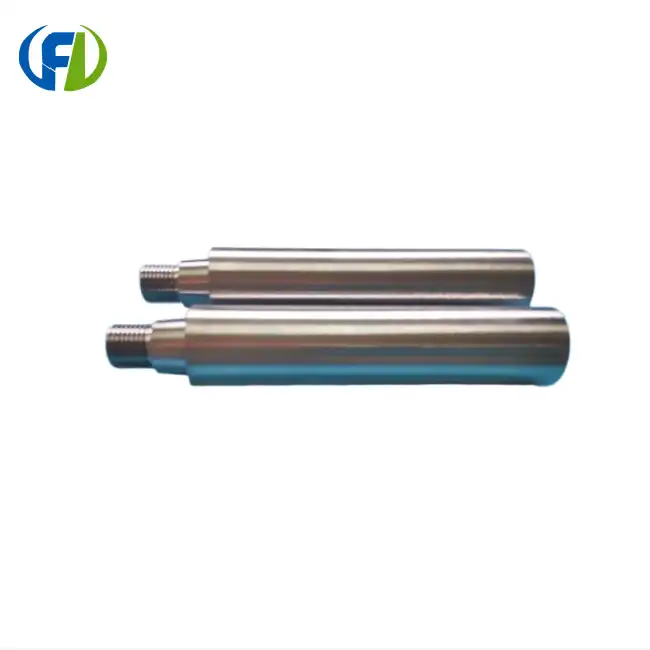
_1772435519769.png)
_1744356622811.webp)
Learn about our latest products and discounts through SMS or email