- English
- French
- German
- Portuguese
- Spanish
- Russian
- Japanese
- Korean
- Arabic
- Greek
- German
- Turkish
- Italian
- Danish
- Romanian
- Indonesian
- Czech
- Afrikaans
- Swedish
- Polish
- Basque
- Catalan
- Esperanto
- Hindi
- Lao
- Albanian
- Amharic
- Armenian
- Azerbaijani
- Belarusian
- Bengali
- Bosnian
- Bulgarian
- Cebuano
- Chichewa
- Corsican
- Croatian
- Dutch
- Estonian
- Filipino
- Finnish
- Frisian
- Galician
- Georgian
- Gujarati
- Haitian
- Hausa
- Hawaiian
- Hebrew
- Hmong
- Hungarian
- Icelandic
- Igbo
- Javanese
- Kannada
- Kazakh
- Khmer
- Kurdish
- Kyrgyz
- Latin
- Latvian
- Lithuanian
- Luxembou..
- Macedonian
- Malagasy
- Malay
- Malayalam
- Maltese
- Maori
- Marathi
- Mongolian
- Burmese
- Nepali
- Norwegian
- Pashto
- Persian
- Punjabi
- Serbian
- Sesotho
- Sinhala
- Slovak
- Slovenian
- Somali
- Samoan
- Scots Gaelic
- Shona
- Sindhi
- Sundanese
- Swahili
- Tajik
- Tamil
- Telugu
- Thai
- Ukrainian
- Urdu
- Uzbek
- Vietnamese
- Welsh
- Xhosa
- Yiddish
- Yoruba
- Zulu
Why Grade 2 Titanium Rod is the Best Choice for Surgical Implants: Benefits and Applications
When looking at materials for medical implants, picking the right titanium grade is one of the most important choices that can have a direct effect on how well the patient does and how long the implant lasts. It is clear that Gr2 Titanium Rod is the best material for surgical uses because it is biocompatible, doesn't rust, and has perfect mechanical qualities. This economically pure titanium alloy is the right mix of strength and flexibility, which is why it is essential for making current medical devices where patient safety and implant reliability are still the most important things.
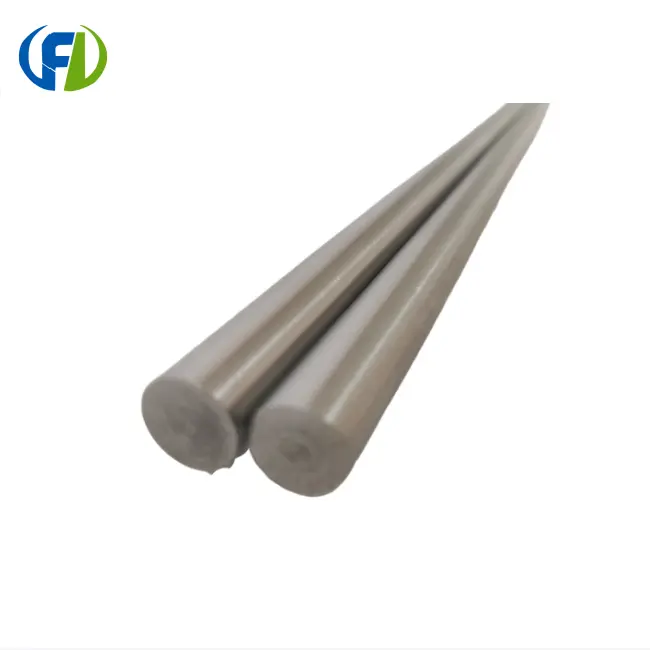
Understanding Grade 2 Titanium Rod and Its Key Properties
Grade 2 titanium is a commercially pure titanium metal that has changed the medical implant business because of the unique properties of the material. This safe metal combination is made up of at least 99.2% pure titanium and carefully controlled minor elements that make it work better without changing how well it works with living things.
Chemical Composition and Certification Standards
Grade 2 titanium is very pure and meets strict worldwide standards like ASTM B348, ASTM F136, ASTM F67, and AMS4928. For making medical goods, it is very important that the quality of the material stay the same from one batch to the next. These guidelines make sure of that. The fixed amount of oxygen, which is usually between 0.15% and 0.25%, makes the material strong while also making it easy to shape and bend.
Mechanical Properties and Performance Characteristics
Grade 2 titanium rods are great for medical implants because they are very strong and durable. With a density of 4.51 g/cm³, these bars are very strong for how heavy they are. Their density is very close to that of bone. When making implants, the material can be stretched very easily because it has a very high tensile strength (345 to 450 MPa) and a very good ability to stretch.
Manufacturing Process and Quality Assurance
Grade 2 titanium rods are made using advanced techniques that make sure they meet the strict requirements of medical uses. Vacuum arc remelting and electron beam melting are technologies that are used in modern factories to make materials more uniform and get rid of flaws. To make sure that all production batches work the same, quality control measures like thorough chemistry analysis, mechanical testing, and microstructural examination are used.
Benefits of Using Grade 2 Titanium Rod in Surgical Implants
Using Grade 2 titanium plates in the production of medical implants has many benefits that lead to better results for patients and better implant performance. These perks include being biologically compatible, lasting a long time, and being reliable in the harsh climate of the human body.
Superior Biocompatibility and Tissue Integration
Grade 2 titanium rods are very biocompatible, which means they can be used with human skin without any issues. The material is chemically neutral and doesn't harm the cells around it, so it doesn't let harmful ions in. Inflammatory responses or refusal of the implant are much less likely to happen. Over fifty years of clinical studies have shown that Grade 2 titanium has great osseointegration qualities, which means that bone tissue naturally joins with the implant surface.
Outstanding Corrosion Resistance in Biological Environments
Screws made of Gr2 titanium rod don't rust as easily as those made of stainless steel or cobalt-chromium metals. This better protection comes from a solid oxide layer that forms. This layer heals itself and stops body fluids, blood, and different cleaners from reaching the metal below. It's important to remember that this layer of safety stays in place even when the body goes through normal stresses.
Optimal Strength-to-Weight Ratio for Patient Comfort
Combining the fact that Grade 2 titanium rods are very light with their amazing strength makes them perfect for surgical implants. Because the material is similar to real bone, it makes patients feel less pain and improves their movement. This connection reduces stress buffering effects, which happen when the elastic moduli of the implant and bone are not the same. This can cause bone to break down and the implant to become free over time.
Comparison: Grade 2 Titanium Rod vs. Other Metals and Titanium Grades for Surgical Implants
Medical device makers and buying workers can make better choices about which materials to use when they know the relative benefits of Grade 2 titanium bars. This study looks at how the performance of different implant materials and types of titanium that are widely used in surgery is different.
Grade 2 vs. Grade 5 Titanium for Medical Applications
It is stronger than Grade 2 titanium (Ti-6Al-4V), but Grade 2 titanium doesn't rust and works better with live things, which makes it better for many implant uses. Aluminum and vanadium are alloying elements that make Grade 5 stronger, but they may be bad for your health in the long run. The commercially pure makeup of grade 2 titanium gets rid of these worries while still being strong enough for most joint and oral implant uses.
Performance Comparison with Stainless Steel and Other Alloys
Grade 2 titanium bars are better than 316L stainless steel because they don't rust and are better for living things. Things made of stainless steel may give off nickel and chromium ions over time, which could make some people allergic. There are metals called cobalt, chromium, and molybdenum that are very strong, but they aren't shear stiff enough to work with bone like Grade 2 titanium is.
Material Selection Guidelines for Different Implant Types
Which type of titanium to use depends on the needs of the device and how it will be loaded. Grade 1 titanium is the most flexible and can be used for a lot of different shapes. Grades 3 and 4 offer slightly better amounts of strength. When reasonable strength and good biocompatibility are both important, Grade 2 titanium is the best choice. It can be used for tooth implants, orthodontic pins, spinal plates, and heart stents.
Procurement Guide for Grade 2 Titanium Rods in Surgical Applications
To successfully buy Grade 2 titanium rods for making medical implants, you need to pay close attention to the qualifications of the seller, the certifications of the materials, and the quality control procedures. This detailed guide helps people who work in buying find high-quality titanium materials for medical uses, even when it's not easy.
Supplier Qualification and Certification Requirements
Companies that make medical devices have to get Grade 2 titanium bars from wholesalers that are ISO 9001 certified and follow the rules for medical device quality management. Suppliers who are qualified should give you all the information you need to keep track of your materials. For example, they should give you mill test records that show the chemicals, mechanical properties, and size limits. These permissions make sure that the material meets the strict rules set by the government groups that oversee medical equipment.
Specification Requirements and Custom Sizing Options
People who want to buy something should be able to see exactly what sizes are needed, how the surface should be finished, and if there are any other processing needs. There are different lengths and widths of Gr2 titanium rods to fit different implant shapes. When makers make things to order, they can get the most out of their supplies and avoid having to do the same work twice. This saves them time and money in the long run.
Logistics and Supply Chain Considerations
Building strong delivery plans that fit the needs of production is a big part of handling the supply chain well. Shipping takes between 7 and 15 days for most items with average specs. Custom orders may need more time, though. When materials are properly packed in wooden boxes, they are protected during transport, and their surfaces stay clean, which is important for medical uses.
Trusted Supplier of Grade 2 Titanium Rods for the Medical Industry
Baoji Freelong New Material Technology Development Co., Ltd. stands as a premier manufacturer and supplier of high-quality Grade 2 titanium rods specifically designed for surgical implant applications. Located in Baoji City, known as China's Titanium Valley, Freelong leverages decades of metallurgical expertise and advanced manufacturing capabilities to serve the global medical device industry.
Manufacturing Excellence and Quality Standards
Freelong's manufacturing facility operates under strict quality management systems, maintaining ISO 9001 certification and adhering to international medical device standards. The company's comprehensive quality control processes encompass raw material inspection, in-process monitoring, and final product testing to ensure consistent material properties. Each shipment includes detailed mill test certificates that provide complete traceability and compliance documentation.
Product Specifications and Technical Capabilities
The company's Grade 2 titanium rods (Gr2 TA2) meet stringent international standards, including ASTM B348, ASTM F136, ASTM F67, and AMS4928. With a precise density of 4.51 g/cm³ and exceptional high strength and corrosion resistance properties, these rods provide the reliability and performance demanded by surgical implant manufacturers. Freelong's technical team provides comprehensive support throughout the procurement process, ensuring that material specifications align perfectly with application requirements.
Global Supply Chain and Customer Support
Freelance has established strong relationships with clients across Australia, Korea, Germany, the United States, the United Kingdom, Malaysia, and the Middle East. The company's commitment to quality and service excellence has earned the trust of leading medical device manufacturers worldwide. With efficient delivery capabilities and responsive customer support, Freelong ensures seamless supply chain integration for international clients seeking reliable Gr2 titanium rod solutions.
Conclusion
Grade 2 titanium rods (Gr2 Titanium Rod) represent the gold standard for surgical implant materials, combining exceptional biocompatibility with outstanding mechanical properties that ensure long-term implant success. The material's proven track record in medical applications, superior corrosion resistance, and optimal strength-to-weight ratio make it the preferred choice for discriminating medical device manufacturers. As the surgical implant industry continues to evolve, Grade 2 titanium rods (Gr2 Titanium Rod) will remain essential for developing innovative implant solutions that improve patient outcomes and quality of life.
FAQ
1. What makes Grade 2 titanium rods superior to other titanium grades for surgical implants?
Grade 2 titanium rods offer an optimal combination of biocompatibility, corrosion resistance, and mechanical properties for surgical implants. Unlike Grade 5 titanium, which contains alloying elements that may pose long-term biological concerns, Grade 2 titanium is commercially pure with minimal impurities. This composition provides excellent tissue integration while maintaining adequate strength for most implant applications.
2. How does the biocompatibility of Grade 2 titanium compare to other implant materials?
Grade 2 titanium demonstrates superior biocompatibility compared to stainless steel and cobalt-chromium alloys. The material's chemical inertness prevents ion release into surrounding tissues, significantly reducing the risk of allergic reactions or inflammatory responses. Clinical experience spanning over 50 years has consistently proven the excellent osseointegration properties of Gr2 Titanium Rod in various surgical applications.
3. What are the typical delivery timeframes for Grade 2 titanium rod orders?
Standard delivery timeframes for Grade 2 titanium rods typically range from 7 to 15 days for conventional specifications. Custom orders requiring specific dimensions or special processing may require additional lead time. Reputable suppliers like Freelong maintain inventory levels and production capabilities that ensure reliable delivery schedules to support medical device manufacturing timelines.
Partner with Freelong for Superior Gr2 Titanium Rod Solutions
Medical device manufacturers seeking reliable Gr2 Titanium Rod supplier partnerships will find exceptional value in Freelong's comprehensive material solutions and technical expertise. Our ISO 9001 certified manufacturing processes ensure consistent quality and regulatory compliance for surgical implant applications. With proven experience serving aerospace, medical device, and precision manufacturing industries globally, Freelong delivers the material reliability and technical support essential for successful implant development programs. Contact jenny@bjfreelong.com to discuss your specific Grade 2 titanium rod requirements and experience the quality advantages that have made Freelong a trusted partner for leading medical device manufacturers worldwide.
References
1. Brunette, D.M., Tengvall, P., Textor, M., & Thomsen, P. (2012). Titanium in Medicine: Material Science, Surface Science, Engineering, Biological Responses and Medical Applications. Berlin: Springer-Verlag.
2. Geetha, M., Singh, A.K., Asokamani, R., & Gogia, A.K. (2009). Ti based biomaterials, the ultimate choice for orthopedic implants - A review. Progress in Materials Science, 54(3), 397-425.
3. Liu, X., Chu, P.K., & Ding, C. (2004). Surface modification of titanium, titanium alloys, and related materials for biomedical applications. Materials Science and Engineering: R: Reports, 47(3-4), 49-121.
4. Niinomi, M. (2008). Mechanical biocompatibilities of titanium alloys for biomedical applications. Journal of the Mechanical Behavior of Biomedical Materials, 1(1), 30-42.
5. Ryan, G., Pandit, A., & Apatsidis, D.P. (2006). Fabrication methods of porous metals for use in orthopedic applications. Biomaterials, 27(13), 2651-2670.
6. Williams, D.F. (2008). On the mechanisms of biocompatibility. Biomaterials, 29(20), 2941-2953.

_1748228752065.webp)
_1777443170043.png)
_1769764373718.png)
Learn about our latest products and discounts through SMS or email