- English
- French
- German
- Portuguese
- Spanish
- Russian
- Japanese
- Korean
- Arabic
- Greek
- German
- Turkish
- Italian
- Danish
- Romanian
- Indonesian
- Czech
- Afrikaans
- Swedish
- Polish
- Basque
- Catalan
- Esperanto
- Hindi
- Lao
- Albanian
- Amharic
- Armenian
- Azerbaijani
- Belarusian
- Bengali
- Bosnian
- Bulgarian
- Cebuano
- Chichewa
- Corsican
- Croatian
- Dutch
- Estonian
- Filipino
- Finnish
- Frisian
- Galician
- Georgian
- Gujarati
- Haitian
- Hausa
- Hawaiian
- Hebrew
- Hmong
- Hungarian
- Icelandic
- Igbo
- Javanese
- Kannada
- Kazakh
- Khmer
- Kurdish
- Kyrgyz
- Latin
- Latvian
- Lithuanian
- Luxembou..
- Macedonian
- Malagasy
- Malay
- Malayalam
- Maltese
- Maori
- Marathi
- Mongolian
- Burmese
- Nepali
- Norwegian
- Pashto
- Persian
- Punjabi
- Serbian
- Sesotho
- Sinhala
- Slovak
- Slovenian
- Somali
- Samoan
- Scots Gaelic
- Shona
- Sindhi
- Sundanese
- Swahili
- Tajik
- Tamil
- Telugu
- Thai
- Ukrainian
- Urdu
- Uzbek
- Vietnamese
- Welsh
- Xhosa
- Yiddish
- Yoruba
- Zulu
Why Titanium Rings Are the Best Hypoallergenic Choice for Sensitive Skin?
Titanium rings are the best choice for people with sensitive skin who want safe jewelry. They are made of the best materials and are biocompatible. Unlike most metals, which contain nickel or other allergens, pure titanium has a surface that doesn't react with skin very often. Titanium is highly biocompatible because it can blend in with human flesh without any problems. This makes it the best metal for jewelry, medical implants, and surgery tools.
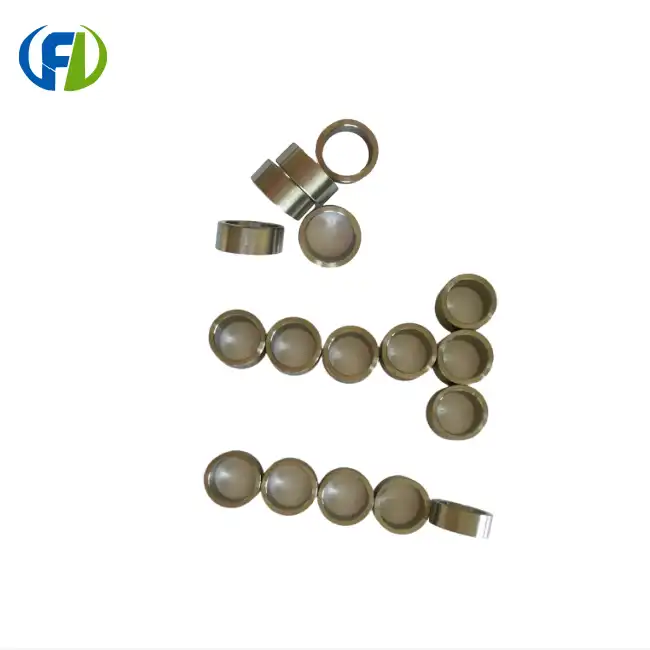
Introduction
Titanium rings are very popular in business-to-business buying because they are very durable, don't bother people with allergies, and look modern. As companies put more emphasis on customer safety and happiness, using nontoxic materials like titanium makes sure that goods can meet the needs of people with sensitive skin. When titanium rings are made, aerospace-grade materials are used because they have great strength-to-weight ratios and are completely biocompatible.
This in-depth guide will explain why titanium rings are the best choice for procurement workers looking for safe options. We'll look at their unique benefits, how long they last compared to other products, and the best ways to get them. The goal of the study is to help buying workers around the world make smart choices that will improve product lines with reliable, high-quality titanium rings that offer value and customer comfort in a wide range of workplace settings.
Understanding Titanium Rings and Their Hypoallergenic Properties
Composition and Manufacturing Excellence
Titanium rings can be made from pure titanium grades (Gr1, Gr2) or titanium alloys (Gr5, which is made up of titanium, aluminum, and vanadium in small amounts). Advanced metallurgy methods are used in the production process to make sure that the grain structure is uniform and that any flaws that could cause allergic reactions are removed. Forging and grinding are done with great accuracy in modern factories, and the metal's biocompatibility is maintained while specific dimensions are met.
There are rules called ASTM B381 and GB/T 3621 that say the same things must always be used to make good titanium rings. Keeps the level of cleanliness the same. Titanium makes up more than 99% of pure titanium. Gr5 metal, on the other hand, is mostly titanium with some vanadium and aluminum added to make it stronger without changing how safe it is.
Historical Evolution and Market Adoption
For titanium to go from being used in factories to being used in jewelry is a big step forward in the science of materials. Titanium was first created to be used in spaceships and medical equipment. However, jewelry makers looking for alternatives to precious metals were drawn to its unique properties. The metal was great for tender skin because it didn't rust, was light, and didn't react with living things in any way.
In the 1990s, titanium jewelry started to become popular in niche markets. This was especially true among healthcare and military workers who already knew how great the material was. More people are learning about metal allergies and wanting safe options, which has sped up the use of the titanium ring in popular jewelry markets.
Biocompatibility and Skin Safety
Tin is safe because it doesn't mix with chemicals, and its surface is made in a way that keeps it that way. Titanium quickly forms a thin, solid oxide layer when it comes in touch with air. The metal can't touch the skin directly because of this layer. As long as this oxide layer doesn't give off any ions that could irritate the skin or cause allergic reactions, it is safe for all living things.
Titanium has better safety ratings than metals that are often linked to skin issues. Nickel, which is found in a lot of stainless steel metals and white gold mixtures, makes about 10–15 percent of people sensitive. Copper, which is found in brass and some gold metals, can stain and irritate the skin. Because titanium's surface is harmless, these worries are gone, and it can be used by people with the most sensitive skin.
Key Benefits of Titanium Rings for B2B Procurement Clients
Superior Durability and Longevity
In terms of how well they hold up over time, titanium rings are much better than rings made of other metals. With tensile strengths between 350 MPa for pure titanium and over 900 MPa for titanium alloys, these rings don't bend or wear down when they're used every day. Because the material is so resistant to wear, rings keep their shape even after being stressed over and over again.
Another important benefit for buying workers is corrosion protection. Titanium is totally safe from chlorine, saltwater, and common household chemicals because it has a natural metal layer covering it. When you buy in bulk, it's especially important to keep this resistance in mind because it means fewer damage claims and happy customers.
Gold, silver, and platinum are much more likely to scratch than titanium. Tin rings don't need much care to keep their look, but rings made of precious metals do need to be cleaned and cared for regularly. And because of this, the item lasts longer, needs less maintenance over time, and keeps its good looks.
Cost-Effectiveness and Value Proposition
When it comes to value, titanium rings are the best. They help both buying managers and end buyers. Because the material is easy to find and can be processed quickly, it has a price that is comparable to valuable metals while still performing better. Because of its low cost compared to its long life, titanium is a great choice for big sales and business purchasing needs.
Titanium rings save you a lot of money over time because they don't need to be replaced as often. Titanium rings last for decades, while gold or silver rings may need to be replaced because they get worn down, tarnished, or damaged. This makes the products last longer, which lowers the number of times they need to be replaced and the costs of handling long-term supply ties for buying teams.
Buying a titanium ring is also a good idea because of the warranty. Because the material is naturally long-lasting, guarantee claims about structural failure, tarnishing, or early wear are less common. When procurement workers make decisions about big orders or long-term supply deals, they can be sure that the standards will be met.
Minimal Maintenance Requirements
Because titanium rings are easier to keep up, buying clients don't have to pay as much for support. Titanium bands only need to be cleaned with soap and water. This is in contrast to valuable metals, which need special cleaning products and regular professional upkeep. This ease of use cuts down on customer service calls and gets rid of the need for complicated care directions.
Titanium rings will always be nontoxic because their surfaces are stable. The biocompatible oxide layer is self-renewing, which means that small scratches on the surface create new protected layers on their own when they come into contact with oxygen. This ability to fix itself means that the skin stays safe without needing any special treatments or repair processes.
Titanium Rings vs. Competitors: Making the Best Choice
Material Performance Comparison
Titanium is better for sensitive uses than other jewelry metals because of a few key differences. Gold alloys are very expensive, but they often have metals in them, like nickel, that can make people angry. To make it last longer, even high-karat gold has to be mixed with other metals, which could damage how sensitive it is. Silver is naturally safe, but it is more expensive and heavier than gold, so it is not as useful for daily usage.
A lot of people choose stainless steel, but the chromium and nickel that are in it can make some people sick. The fact that stainless steel is magnetic also makes it hard to use in some work settings. While tungsten is very resistant to scratches, titanium is better for uses where sensitive skin is needed because it is biocompatible and comfortable.
The fact that silver tarnishes easily and can change the color of skin makes it unsuitable for sensitive needs. Silver jewelry needs a lot of upkeep, which goes against what modern customers want, especially in B2B settings where dependability and simplicity are very important.
Customization and Application Versatility
Titanium rings can be changed in a lot of ways to fit the needs of different market groups and purchasing needs. Different surface treatments, such as shiny, matte, and rough finishes, give the product a variety of looks while keeping its sensitive qualities. Anodizing methods can change colors without affecting biocompatibility. This means that designers can use more materials and create more designs for business gifts and other uses.
Because the material works with modern production methods, it is possible to control the dimensions of the titanium ring very precisely and make it with complicated shapes. The ability of CNC machines to make complex designs and unique sizes for the titanium ring that meet specific buying needs is possible. These benefits in making the titanium ring help OEM users that need to meet exact specs and maintain high quality.
There are different ways to set gemstones than the standard pin settings. These settings give you more design choices. Titanium's strength is used in tension bands and channel mounting methods to make safe and beautiful jewel displays. These different ways of putting stones give you unique visual choices that set titanium jewelry apart in a market full of similar items.
Procurement Guide: Sourcing Quality Titanium Rings
Supplier Evaluation and Quality Assurance
Successful titanium ring procurement begins with thorough supplier evaluation focusing on manufacturing capabilities and quality certifications. ISO 9001 certification indicates established quality management systems, while specific titanium processing certifications demonstrate material expertise. Suppliers with aerospace or medical industry experience typically maintain higher quality standards due to the stringent requirements of these sectors.
Material verification represents a critical procurement consideration. Authentic titanium suppliers provide detailed certificates of analysis (COA) documenting chemical composition, mechanical properties, and processing parameters. These documents enable procurement professionals to verify compliance with specified grades and ensure consistency across production batches.
Production capacity and scalability affect long-term procurement strategies. Suppliers with adequate manufacturing infrastructure can accommodate volume fluctuations and growth requirements without compromising quality or delivery schedules. Evaluating production capabilities helps ensure reliable supply relationships that support business growth objectives.
Pricing Dynamics and Volume Considerations
Titanium ring pricing varies based on several factors that procurement professionals must understand for effective budgeting and negotiation. Grade selection significantly impacts cost, with pure titanium grades typically commanding premium pricing compared to alloy grades. However, the performance characteristics of Gr5 alloy often provide optimal cost-to-performance ratios for most applications.
Customization levels directly influence pricing structures. Standard designs and finishes offer the most competitive pricing, while complex geometries, specialized surface treatments, and custom sizing requirements increase costs proportionally. Understanding these relationships helps procurement teams balance customization requirements with budget constraints.
Volume pricing tiers provide opportunities for significant cost savings in large-scale procurement scenarios. Many manufacturers offer substantial discounts for orders exceeding specific quantity thresholds. Long-term contracts and advance ordering commitments can further reduce unit costs while ensuring supply security for ongoing programs.
International Sourcing and Logistics
Global sourcing strategies can optimize cost and quality outcomes for titanium ring procurement. China's Shaanxi Province, particularly the Baoji region known as "China's Titanium Valley," hosts numerous specialized manufacturers with advanced production capabilities and competitive pricing. Understanding regional manufacturing strengths helps procurement teams identify optimal sourcing partners.
Shipping logistics require careful consideration due to titanium's density and value characteristics. Proper packaging in plywood cases ensures product protection during international transit, while appropriate insurance coverage protects against potential losses. Delivery timelines typically range from 5 to 7 days for standard products, with customized orders requiring additional lead time for manufacturing.
Import regulations and certification requirements vary by destination country and application. Medical device applications may require additional certifications and documentation, while jewelry applications typically have fewer regulatory requirements. Understanding these distinctions helps ensure smooth customs clearance and regulatory compliance.
Company Introduction and Product Service Overview
Baoji Freelong New Material Technology Development Co., Ltd. stands as a premier manufacturer of high-quality titanium rings, leveraging over a decade of expertise in advanced materials processing. Located in Baoji City, China's renowned Titanium Valley, our facility combines state-of-the-art manufacturing equipment with specialized knowledge of titanium metallurgy. Our comprehensive production capabilities encompass pure titanium and titanium alloy processing, ensuring consistent quality and reliable delivery for global procurement requirements.
Our titanium ring portfolio features Gr5 titanium alloy construction with precise density control at 4.51 g/cm³, delivering optimal strength-to-weight characteristics for demanding applications. The manufacturing process incorporates advanced surface treatments, including polished and pickled finishes, while maintaining strict adherence to ISO9001 quality standards. Customizable dimensions accommodate diverse application requirements, with technical specifications supporting both standard and specialized procurement needs.
Customer-centric service approaches define our business relationships with procurement professionals worldwide. Our technical consulting team provides detailed material specifications, such as for the titanium ring, application guidance, and customization support to ensure optimal product selection. Flexible manufacturing capabilities accommodate both small-batch prototyping and large-volume production requirements, while reliable delivery schedules support just-in-time procurement strategies. This comprehensive service approach fosters long-term partnerships with distributors and end-users across aerospace, medical device, and industrial markets.
FAQ
1. Are titanium rings safe for all skin types?
Titanium rings demonstrate exceptional biocompatibility that makes them suitable for virtually all skin types, including individuals with severe metal sensitivities. The material's inert surface characteristics prevent ion release that typically triggers allergic reactions, while the self-renewing oxide layer maintains protective properties throughout the ring's lifespan. Medical-grade titanium used in our rings meets the same biocompatibility standards required for surgical implants, providing the highest level of skin safety assurance.
2. How do titanium rings compare to tungsten for durability?
While tungsten offers superior scratch resistance, titanium provides better overall durability through its combination of strength and flexibility. Tungsten's brittleness can lead to cracking or shattering under impact, whereas titanium's ductility allows deformation without failure. The fatigue resistance of titanium significantly exceeds that of tungsten, making it more suitable for daily wear applications where repeated stress cycles occur.
3. What sizing considerations apply to international orders?
International sizing standardization requires careful attention to measurement systems and regional preferences. Our manufacturing capabilities accommodate both US and international sizing standards, with precise conversion tables ensuring accurate fitment. Custom sizing options support specific requirements, while comprehensive measurement guidelines help procurement teams specify appropriate dimensions for target markets.
Partner with Freelong for Premium Hypoallergenic Solutions
Discover the exceptional advantages of partnering with Freelong for your titanium ring supplier needs, where cutting-edge manufacturing meets uncompromising quality standards. Our Baoji facility delivers Gr5 titanium rings with guaranteed hypoallergenic properties, backed by ISO9001 certification and rapid 5-7 day delivery schedules. Connect with our technical team at jenny@bjfreelong.com to explore customization options, volume pricing, and comprehensive material specifications tailored to your procurement requirements.
Conclusion
Titanium rings represent the superior choice for hypoallergenic jewelry applications, combining exceptional biocompatibility with unmatched durability and cost-effectiveness. The material's inert surface properties, self-renewing protective oxide layer, and complete absence of common allergens make it ideal for individuals with sensitive skin. For procurement professionals, titanium rings offer compelling advantages including reduced warranty claims, minimal maintenance requirements, and superior long-term value propositions compared to traditional jewelry metals. The comprehensive benefits of titanium ring procurement extend beyond individual comfort to encompass operational efficiency and customer satisfaction across diverse market segments.
References
1. Journal of Biomedical Materials Research: "Titanium Biocompatibility and Surface Oxide Formation in Jewelry Applications"
2. Materials Science and Engineering Review: "Comparative Analysis of Hypoallergenic Properties in Modern Jewelry Alloys"
3. International Journal of Dermatology: "Metal Hypersensitivity Reactions and Titanium Safety in Consumer Products"
4. Aerospace Materials Handbook: "Titanium Alloy Properties and Applications in Consumer Goods Manufacturing"
5. Metallurgical Society Transactions: "Surface Treatment Effects on Titanium Biocompatibility and Corrosion Resistance"
6. American Academy of Dermatology Guidelines: "Recommendations for Hypoallergenic Jewelry Materials in Sensitive Populations"

_1745723689174.webp)
_1774405059438.png)
_1744790696079.webp)
Learn about our latest products and discounts through SMS or email