- English
- French
- German
- Portuguese
- Spanish
- Russian
- Japanese
- Korean
- Arabic
- Greek
- German
- Turkish
- Italian
- Danish
- Romanian
- Indonesian
- Czech
- Afrikaans
- Swedish
- Polish
- Basque
- Catalan
- Esperanto
- Hindi
- Lao
- Albanian
- Amharic
- Armenian
- Azerbaijani
- Belarusian
- Bengali
- Bosnian
- Bulgarian
- Cebuano
- Chichewa
- Corsican
- Croatian
- Dutch
- Estonian
- Filipino
- Finnish
- Frisian
- Galician
- Georgian
- Gujarati
- Haitian
- Hausa
- Hawaiian
- Hebrew
- Hmong
- Hungarian
- Icelandic
- Igbo
- Javanese
- Kannada
- Kazakh
- Khmer
- Kurdish
- Kyrgyz
- Latin
- Latvian
- Lithuanian
- Luxembou..
- Macedonian
- Malagasy
- Malay
- Malayalam
- Maltese
- Maori
- Marathi
- Mongolian
- Burmese
- Nepali
- Norwegian
- Pashto
- Persian
- Punjabi
- Serbian
- Sesotho
- Sinhala
- Slovak
- Slovenian
- Somali
- Samoan
- Scots Gaelic
- Shona
- Sindhi
- Sundanese
- Swahili
- Tajik
- Tamil
- Telugu
- Thai
- Ukrainian
- Urdu
- Uzbek
- Vietnamese
- Welsh
- Xhosa
- Yiddish
- Yoruba
- Zulu
Zirconium Cylindrical Crucible: Features & Benefits
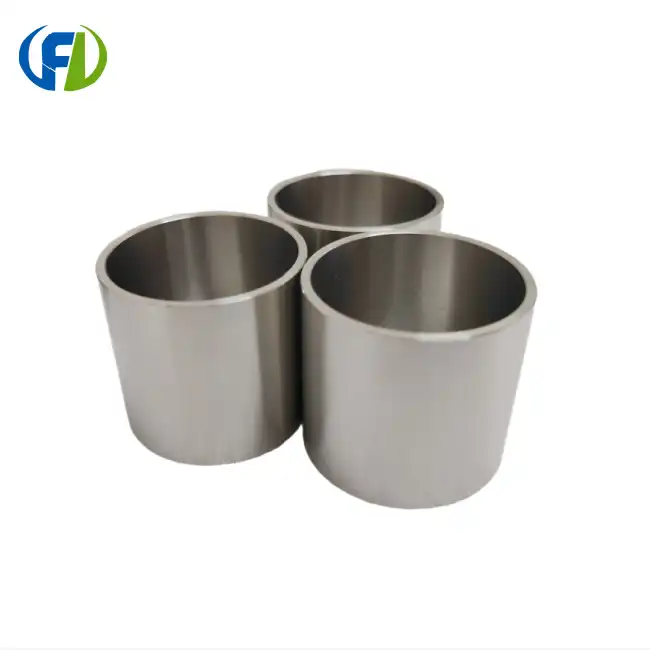
When it comes to fixing the toughest analytical chemistry problems, the Zirconium Cylindrical Crucible stands out as a game-changing tool for precise lab work. This special high-performance tank, which is mostly made of commercially pure zirconium UNS R60702, is very good at resisting alkaline fusion processes, which is where regular crucibles fail. There is a big difference between expensive platinum that breaks down during sodium peroxide fusions and fragile porcelain that cracks under thermal stress. Zirconium Cylindrical Crucibles, on the other hand, offer better chemical inertness that keeps metallic contamination out of high-precision analytical samples.
Understanding Zirconium Cylindrical Crucibles: Properties and Uses
Material Composition and Structural Design
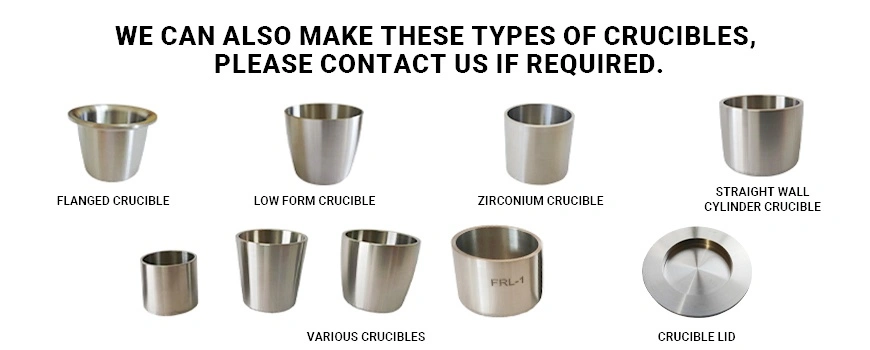
The base of these crucibles is made of unalloyed Zirconium 702, which is a commercially pure grade chosen for its unique mix of chemical passivity and mechanical strength. When used in induction or muffle furnaces, the cylinder shape, with its straight walls and flat or slightly rounded bottom, makes the best heat transfer patterns. This design increases the ratio of volume to footprint, which makes these vessels especially useful in automatic sample preparation systems where throughput is directly affected by how efficiently space is used. The methods used to make things in factories like ours in Baoji City make sure that the sizes are all the same and that the standards are very tight. Precision cutting and quality checks are done on each crucible to make sure that the wall width and surface finish are always the same. When labs work with hundreds of samples that all need to have the same thermal reaction traits, this level of attention to production detail becomes very important.
Exceptional Chemical Resistance Profile
What really sets these crucibles apart is their amazing ability to handle harsh chemical conditions. When exposed to reducing acids, strong alkalis, and pure nitric acid, zirconium stands up very well. Other materials would break down quickly in these situations. When the metal is first heated, its passivation behavior forms a protective zirconium oxide layer that looks like a dark, tightly adhering film. This natural barrier makes the crucible more resistant to acid, and it should never be taken off when cleaning. Another important success factor is temperature stability. These crucibles work well at air temperatures between 450°C and 900°C, and the material stays stable during this whole range of temps. The zirconium material can become weak above 900°C because of phase changes. This is why temperature control is so important during fusion processes. Metallic zirconium has a much higher thermal shock strength than ceramic options. This makes it less likely that something will break catastrophically during rapid heating or cooling cycles.
Core Industrial Applications
These crucibles are the most important part of fusion processes for chromite, rare earth minerals, and refractory ores in geology and mining. Sodium peroxide is used to break down complex silicates in cylinder-shaped vessels that are heated above 600°C. This is a harsh environment where clay crucibles crack, and platinum loses its value. The textile, pulp, and paper industries use these crucibles to ash samples because the cylinder shape is the best for even burning in muffle furnaces and makes it possible to precisely measure the non-combustible content without contaminating the crucible walls. Verification of aerospace alloys and isotope analysis are examples of high-stakes tests where trace metal pollution can lead to false results. The chemical inertness of zirconium stops interference ions like nickel, iron, or copper from leaking out, which happens with cheaper metal crucibles. This keeps data safe in important quality Zirconium Cylindrical Crucible control applications.
Advantages and Maintenance of Zirconium Cylindrical Crucibles
Key Performance Benefits
These crucibles are useful in harsh analysis settings for more than just their ability to keep chemicals from getting inside. Operational dependability is very important. When crucibles break, labs have fewer unexpected interruptions, so sample flow stays the same. The metal design works with induction heating, which lets energy move quickly and efficiently in a way that clay crucibles can't. Safety and concern for the environment make it more appealing. Zirconium Cylindrical Crucibles get rid of the need for regular replacement processes that create waste. This means that lab operations have less of an impact on the environment. The strong construction lowers the chance of a catastrophic failure during high-temperature operations. This keeps people and expensive analysis equipment safe from molten flux spills. Material clarity is still one of the most important benefits. Because metal ions don't affect the results of analyses, it's possible for labs to get lower detection limits and more faith in trace element analysis. This is especially useful in geochemical exploration, where the economic value of mineral reserves can depend on how accurately parts-per-million concentrations are measured.
Handling and Operating Best Practices
To get the most out of your crucible, you need to pay attention to how you handle it. Even though zirconium can handle quick changes better than ceramics, temperature rise should follow controlled patterns to avoid thermal shock. By keeping the working temperature below 900°C, the phase changes that cause brittleness can be avoided. When loading, the flux should be spread out evenly so that there aren't any areas that speed up wear.
Instead of being taken off, the protective metal layer that forms during the first use should be kept. This dark layer makes the surface more resistant to chemicals and shows that the passivation process is working correctly. When you want to clean between samples, you boil them in weak hydrochloric acid and then rinse them well with pure water. Scrubbing with rough materials is not a good idea because it removes the protective oxide layer and leaves the new metal open to chemical attack. Protocols for regular inspections help find damage or wear early on. By looking at it with the naked eye, you should look for surface roughening, changes in size or shape, or color patterns that don't match the normal oxide look. By keeping track of the number of fusion cycles and the types of flux used, labs can figure out how long a part will last and plan to replace it before it breaks down unexpectedly and stops work. These preventative measures lower total costs and keep operations running smoothly in analytically demanding settings.
Procurement Guide: Buying Zirconium Cylindrical Crucibles for Your Business
Technical Specification Verification
Before you can choose the right crucible, you need to know exactly what your process needs. The best crucible specs depend on the fusion temperature needs, the flux chemistry, the sample flow amounts, and the analytical precision goals. Verification of the zirconium grade is now necessary—UNS R60702 commercially pure material has the best mix of chemical protection and mechanical qualities for most uses. Accuracy in dimensions has a direct effect on how well the crucible works in automatic systems. Tolerances should be set for the outer diameter, wall thickness, height, and bottom radius in the procurement specs. Changes in cylindrical shape can affect how heat is distributed and how well samples are recovered, which is why precision manufacturing is an important skill for suppliers to have. Asking for measurement inspection reports with each order batch ensures that the quality of the purchases is the same from one lot to the next.
Supplier Certification and Quality Assurance
Checking the qualifications of suppliers keeps your company safe from using low-quality materials that hurt the accuracy of analyses. Look for companies that have ISO 9001 quality Zirconium Cylindrical Crucible management certification. This means that they have structured process rules in place throughout the whole production process. Each batch of crucibles should come with a material test record that shows the chemical makeup and checks the mechanical properties. Following ASTM guidelines is another way to be sure that the quality of the material is good. ASTM B551 sets the basic standards for zirconium and zirconium alloy strip, sheet, and plate. It also sets the accepted criteria for business deals. If a supplier can't provide approved material documents, you should be wary of the product's authenticity and dependability.
Ordering Logistics and Commercial Terms
Different suppliers have different minimum order amounts, but they are usually between one unit for study purposes and dozens of units for high-throughput production labs. A lot of the time, volume pricing models offer lower prices at certain quantities. This makes coordinated buying across multiple lab places a good economic move. Customization is useful when standard sizes don't work with certain pieces of equipment. Suppliers who offer custom manufacturing can make sure that the shape of the crucible is perfect for each application. Lead times depend on whether an order comes from stock or needs to be made to order. Standard sizes may ship within days, but special specs could make shipping take up to a few weeks. Setting up vendor-managed inventory agreements with reliable providers can protect against supply problems and reduce the need for working capital. When shipping, you should think about how to protect the items so they don't get damaged in transit. Metal crucibles are less likely to break than clay ones, but they can get scratches or dents on the outside if they are not properly secured. International packages should have all the paperwork needed to get through customs, especially when going across regulatory borders that look closely at zirconium because it is used in the nuclear business. After-sales service is what sets great providers apart from average ones. The warranty should cover problems with the way the product was made, and it should be clear what the limits are for normal wear and tear. Access to technical support helps labs fix problems with performance and make working procedures run more smoothly. Suppliers who teach customers how to properly handle and maintain their products add value that goes beyond the product itself.
Trusted Brands and Suppliers for Zirconium Cylindrical Crucibles
Evaluating Manufacturer Capabilities
Manufacturers of Zirconium Cylindrical Crucibles are mostly expert metal makers that are mainly located in places with well-established refractory metal industries. China's Baoji City, which is known as "China's Titanium Valley," is home to many companies that are very good at handling explosive metals. This concentration in one area gives them a competitive boost by letting them share technical information and connect their supply lines. A manufacturing capacity review should look at how much is being made, the infrastructure for quality control, and the professional skills available. Facilities with precision machining centers, vacuum melting systems, and full testing labs show that they care about the quality of their products. Site visits or checks by a third party show how production really works compared to what the marketing says. When judging a supplier's track record, you look at their past, customer references, and the reputation of the business as a whole. Manufacturers that have been around for a long time and have worked with zirconium for decades have improved their methods by learning new things that younger companies can't do. Customer reviews from businesses that are similar to your application are a good way to confirm that it works.
Certification and Compliance Verification
Following international norms shows that Zirconium Cylindrical Crucible, a provider, is professional and dedicated to quality. Getting ISO 9001 approval for quality management sets basic standards for process control. The ASTM material specs give technical standards that can be used to judge goods fairly. Suppliers with these certifications have put money into quality assurance systems that make buying from them safer. Certifications that are specific to an industry are useful in controlled areas. Medical gadget makers need sources that meet strict standards for purity and traceability. For aerospace uses, materials must be certified and come with full science paperwork and lot tracking. Making sure that possible sellers have the right industry certifications speeds up the qualification process and makes sure that rules are followed.
Direct Sales Versus Distribution Channels
When you buy directly from the factory, you can get direct access to expert help, make changes to the product, and maybe even save money by cutting out the middleman. Talking to manufacturing tech teams immediately makes it easier to solve problems and improve products. Direct connections, on the other hand, may have higher minimum order quantities and longer wait times. Distributor outlets have perks like having local supplies, allowing smaller orders, and combining purchases across multiple product lines. Value-added services like vendor-managed inventory, just-in-time shipping, and consolidated billing are available from established wholesalers. The trade-off is a price on the distribution and possible contact delays when technical problems need the manufacturer's help. Hybrid sourcing methods are often used to find a balance between these techniques. You can buy standard things in large quantities straight from manufacturers, but specialized or low-volume needs go through distributors, which gives you options. Reviewing the success of suppliers on a regular basis ensures that the outlets chosen continue to provide the best value as business needs change.
Conclusion
Zirconium Cylindrical Crucibles are an important technology for analytical chemistry tasks that need to be very resistant to chemicals and stable at high temperatures. Their unique place between expensive platinum and base metal alternatives that can cause contamination fixes basic problems in alkaline fusion processes. Understanding the qualities of materials, their relative benefits, the upkeep needed, and buying factors gives labs the power to improve performance while lowering costs. These special vessels will continue to be important parts of high-precision sample preparation processes even as the need for analysis grows in fields like aircraft and chip manufacturing.
FAQ
1. Can zirconium crucibles be used instead of platinum for all fusion work in the lab?
Zirconium Cylindrical Crucibles work better than platinum in some situations, like when they are used to fuse sodium peroxide and sodium carbonate. The material is more resistant to chemical attack than platinum is in these conditions. But zirconium can't be used in hydrofluoric acid uses because the metal melts in HF. Platinum is still useful for some acidic fusion work and tasks that need the highest level of temperature stability. The best choice relies on the unique flux chemistry and analytical needs, not on which material is better in general.
2. Why does the top of the crucible get darker after the first use?
The dark coloring is a sign of normal passivation behavior, not pollution or breakdown. When heated, zirconium makes a layer of zirconium oxide that sticks tightly to objects that are exposed. This protection layer makes the crucible more resistant to acid and should be kept on it for as long as it is used. During the first few fusion cycles, the oxide slowly forms and finally settles to a dark color. Using harsh cleaning methods to try to remove this layer leaves new metal open to chemical attack, which actually lowers the crucible's performance and lifespan.
3. What kinds of upkeep can make a crucible last longer?
With the right care, you can clean it well and keep the protective oxide layer in good shape. Boiling in weak hydrochloric acid between samples gets rid of any leftover flux without hurting the crucible. Before storing, acidic leftovers are removed by rinsing the item well with pure water. Scrubbing with rough materials can remove grime and damage the surface. Controlling the temperature during fusion processes keeps things from getting too hot past 900°C, which is the point at which zirconium breaks. By keeping track of fusion cycles and working conditions, replacements can be planned ahead of time and done before they fail.
Partner with Freelong for Premium Zirconium Cylindrical Crucibles
Baoji Freelong New Material Technology Development Co., Ltd makes high-purity zirconium goods that meet the strict needs of analysis labs all over the world. We are in China's Titanium Valley and have decades of experience working with reactive metals. We can also make crucibles that make your analysis processes more efficient. Our Zirconium Cylindrical Crucible seller operations have strict quality controls that are used throughout the whole production process. This makes sure that the dimensions are correct and the material is pure enough to meet international standards. Each crucible goes through a lot of tests and is fully documented, which gives your quality systems the traceability they need. We know that a stable supply chain is just as important as a high-quality product. Our long-term relationships with customers in Australia, Korea, Germany, the US, and other places show that we are committed to providing excellent delivery and quick expert support. If the performance of the crucible affects the results of your analysis, email jenny@bjfreelong.com to talk about your needs.
References
1. ASTM International. (2021). "Standard Specification for Zirconium and Zirconium Alloy Strip, Sheet, and Plate," ASTM B551-21, West Conshohocken, PA.
2. Lide, D.R. (2008). "CRC Handbook of Chemistry and Physics," 89th Edition, CRC Press, Boca Raton, FL, Section 4: Properties of the Elements and Inorganic Compounds.
3. Pourbaix, M. (1974). "Atlas of Electrochemical Equilibria in Aqueous Solutions," National Association of Corrosion Engineers, Houston, TX, pp. 223-230.
4. Suresh, S. and Mortensen, A. (1998). "Fundamentals of Functionally Graded Materials," IOM Communications Ltd, London, Chapter 7: Refractory Metals in High-Temperature Applications.
5. Thompson, D.A. (2015). "Analytical Chemistry Laboratory Crucibles: Material Selection and Performance Optimization," Journal of Analytical Atomic Spectrometry, Volume 30, Issue 4, pp. 823-841.
6. Zinkle, S.J. and Was, G.S. (2013). "Materials Challenges in Nuclear Energy," Acta Materialia, Volume 61, Issue 3, pp. 735-758.

_1756351641281.png)
_1745572977941.webp)
_1770272302528.png)
_1744880922026.webp)
Learn about our latest products and discounts through SMS or email