- English
- French
- German
- Portuguese
- Spanish
- Russian
- Japanese
- Korean
- Arabic
- Greek
- German
- Turkish
- Italian
- Danish
- Romanian
- Indonesian
- Czech
- Afrikaans
- Swedish
- Polish
- Basque
- Catalan
- Esperanto
- Hindi
- Lao
- Albanian
- Amharic
- Armenian
- Azerbaijani
- Belarusian
- Bengali
- Bosnian
- Bulgarian
- Cebuano
- Chichewa
- Corsican
- Croatian
- Dutch
- Estonian
- Filipino
- Finnish
- Frisian
- Galician
- Georgian
- Gujarati
- Haitian
- Hausa
- Hawaiian
- Hebrew
- Hmong
- Hungarian
- Icelandic
- Igbo
- Javanese
- Kannada
- Kazakh
- Khmer
- Kurdish
- Kyrgyz
- Latin
- Latvian
- Lithuanian
- Luxembou..
- Macedonian
- Malagasy
- Malay
- Malayalam
- Maltese
- Maori
- Marathi
- Mongolian
- Burmese
- Nepali
- Norwegian
- Pashto
- Persian
- Punjabi
- Serbian
- Sesotho
- Sinhala
- Slovak
- Slovenian
- Somali
- Samoan
- Scots Gaelic
- Shona
- Sindhi
- Sundanese
- Swahili
- Tajik
- Tamil
- Telugu
- Thai
- Ukrainian
- Urdu
- Uzbek
- Vietnamese
- Welsh
- Xhosa
- Yiddish
- Yoruba
- Zulu
10ml Zirconium Crucible vs Platinum: Cost & Performance
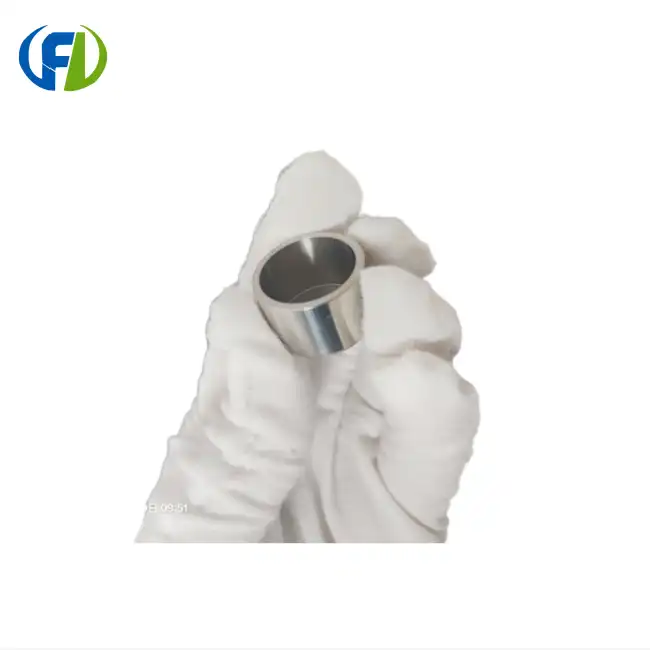
When looking at different lab fusion vessels for breaking down samples at high temperatures, picking between a 10 ml zirconium crucible and platinum options requires careful thought about both performance measures and budget limits. The 10ml zirconium crucible is made from high-purity Grade R60702 zirconium (Zr + Hf > 99.2%), which is very resistant to alkaline fluxes chemically and costs about one-tenth as much to buy as platinum crucibles. Platinum is better at working with a wider range of chemicals and can handle higher temperatures, but zirconium crucibles are better at sodium peroxide and sodium carbonate fusions, which are important for geochemical research and mechanical tests. When buying teams in aerospace, metallurgy labs, electronics manufacturing, and materials research institutions understand these trade-offs; they can choose the right crucibles based on analysis needs and budgets.
Understanding the Core Properties of 10ml Zirconium and Platinum Crucibles
When working in a high-temperature lab, the choice of material has a big impact on the correctness of the analysis and the speed of the operations. Zirconium and platinum crucibles are both very important, but their different physical and chemical properties make them better suited for different commercial uses.
Physical and Thermal Characteristics of Zirconium Crucibles
If you make zirconium crucibles that meet ASTM B550/B551 standards, they are very stable at fixed temperatures. The base metal melts at about 1855°C, but realistic operational standards say that fusion temperatures should stay between 500°C and 600°C to make the crucible last longer. Above 700°C in oxidising environments, zirconium forms a protective oxide layer that works as a shield at first, but weakens and scratches the surface over time when it is cycled many times. The average 10 ml jar is 25–30 mm tall, has a top width of about 0.6 mm, and walls that are between 0.6 mm and 1.0 mm thick. This one-piece cast design doesn't have any welded seams, so there aren't any places where chemicals could leak. The mechanical tensile strength lets the material go through 20 to 100 fusion cycles without warping, dependent on the flux chemistry and temperature control.
Platinum Crucible Properties and Advantages
Platinum crucibles are the most flexible tools you can use for a wide range of scientific procedures. Platinum is a metal that stays solid at temperatures up to 1200°C even after being heated to great heights (1768°C for melting). Aqua regia and hot concentrated phosphoric acid are two notable exceptions to the material's near-perfect resistance to most natural acids, bases, and halogen compounds. Because platinum is so pure, it doesn't let trace elements get into it. This makes it essential for ultra-sensitive spectroscopic methods, where interference at the nanogram level can ruin results. The crucibles don't break down in reactive atmospheres, bisulfate fusions, or hydrofluoric acid digestions (when mixed with 5% gold). This wide range of chemicals comes at a high price: spot platinum prices change from $900 to $1100 per troy ounce, which means that crucible prices for lab-scale vessels often go over $1,500.
Material Comparison Affecting Operational Decisions
The different chemistry compatibilities have a direct effect on how the lab is set up to work. Zirconium is almost completely resistant to sodium peroxide (Na₂O₂), sodium carbonate (Na₂CO₃), and sodium hydroxide (NaOH) at fusion temperatures. It works better than platinum in these alkaline conditions, where platinum can be damaged or wear out faster. Platinum counters work better in acidic settings and places where temperatures need to be above 700°C. Zirconium can't come in contact with hydrofluoric acid (HF), because it breaks down metals very quickly. Platinum-gold alloys, on the other hand, can handle being exposed to HF. Because chemicals are so specific, choices about what to buy must be based on the most common analytical methods, rather than trying to find answers that work for everyone.
Performance Comparison: 10 ml Zirconium Crucible vs Platinum Crucible
Direct performance measures show how well each material turns theory benefits into useful analytical results. Temperature tolerance, contamination patterns, and longevity over time are some of the factors that affect the total cost of ownership (costs after the initial buy price).
Temperature Capabilities and Thermal Stability
When compared to platinum options, zirconium crucibles work best within a smaller temperature range. Keeping the fusion temperature between 500°C and 600°C protects the inactive oxide layer and stops too much oxidation. Short trips up to 700°C are still doable, but repeated exposure speeds up surface degradation and lowers the number of fusions that are predicted per crucible. Platinum crucibles can be exposed to temperatures up to 1200°C for a long time without losing their shape. This means they can be used for higher-temperature fusion processes and metal melting tasks that are outside the realistic range of zirconium. Both platinum and zirconium are good at conducting heat evenly, but platinum is a little better at it (71.6 W/m·K vs 22.7 W/m·K), which means that heat can be spread more quickly and fusion cycles may be quicker.
Chemical Resistance Profiles and Contamination Risk
Contamination control is what determines the choice of material in trace element research, where detection limits in the parts per billion range require very high purity. Zirconium doesn't cause much background influence for most elements, but overflow can happen if the acid isn't carefully leached between fusions. Its main component is zirconium, and hafnium is usually less than 4.5%. This material doesn't cause much spectroscopic interference in ICP-MS and atomic absorption processes. Due to the noble metal inertness, platinum crucibles have an even smaller risk of contamination. However, the cost of the material often includes small amounts of iridium or rhodium for hardening, which may add tiny backgrounds in specialised studies.
10ml Zirconium Crucible: Chemical attacks on different objects have very different patterns. Zirconium can stay in contact with liquid alkali fluxes for a long time without dissolving, but platinum loses weight over time in the same conditions, even though it can still be used hundreds of times. On the other hand, bisulfate fusions quickly break down zirconium but don't affect platinum. Zirconium vessels can't be used with hydrofluoric acid at all, but platinum-gold metals are commonly used for HF-resistant labware.
Mechanical Durability and Maintenance Requirements
Durability includes more than just chemical resistance. It also includes how easy it is to clean and how resistant it is to mechanical wear. Zirconium crucibles can be cleaned regularly by soaking them with warm, diluted hydrochloric acid (HCl) and then rinsing them with pure water. Reconditioning fusions with sodium bisulfate can break down stubborn leftovers, but they need to be used carefully so that the material doesn't become overly stressed. Scrubbing by hand hurts the inactive oxide layer, which speeds up the rust that follows. When handled properly, a fusion cycle can last between 20 and 50 times before it needs to be replaced. However, harsh flux chemicals or changes in temperature can shorten this lifespan.
Even though platinum crucibles have strong chemical qualities, they need to be handled with more care. The soft metal easily dents when it is stressed mechanically, so it needs to be stored and handled with care. Instead of rough methods, cleaning routines use diluted acids or flux to break down waste. If you keep your platinum crucibles in good shape, they can work for thousands of rounds. Specialised sellers offer refabrication or refinishing services on a regular basis. When the very high starting cost is spread out over years of ongoing use in high-throughput labs, it makes sense.
Application Suitability and Use Case Scenarios
Matching crucible materials to analytical processes improves both the results of the research and the speed of the operations. Material selection goes beyond general performance standards and takes into account the needs of the industry.
Geochemical and Metallurgical Analysis Applications
Zirconium crucibles are often used in geochemical research labs to fuse hard mineral samples with sodium peroxide. Chromite, magnetite, ilmenite, and rutile ores don't dissolve easily in acid. They need high-temperature alkaline fusion to completely dissolve. The 10ml capacity can hold normal sample masses of 0.5g to 1.0g that are common in rare earth element (REE) measurement methods. Zirconium doesn't respond badly to the very hot reactions that happen during peroxide fusion, so it always gives the same effects without adding iron, nickel, or aluminium, which can happen with ceramic alternatives.
The selective inertness of zirconium is also useful for metallurgical quality assurance labs that study superalloy mixtures and steel slag matrices. To use ICP-MS to find trace elements, you need fusion tubes that don't add any background noise. Zirconium crucibles break down complicated alloys without letting other substances leak in. This keeps the accuracy of the analysis at detection limits of parts per billion. Because it saves money, each beaker can be used only for one type of sample, so there are no worries about cross-contamination that could affect the accuracy of the results.
Semiconductor and Electronics Industry Requirements
High-purity zirconium crucibles are used to study semiconductor materials and to get sputtering targets. For laboratories working on new thin-film deposition methods, they need sample preparation tubes that are free of contamination and that keep the basic stoichiometry while the samples are being heated. The 10ml size is good for small-scale experiments where precise handling is needed because of the cost of materials and the risk of contamination. Flux-based purification methods for precursor compounds can work because chemicals are stable in alkaline settings.
A 10 ml zirconium crucible is added: zirconium crucibles are used for controlled oxidation steps by electronics companies that are making catalyst materials for chemical vapour deposition processes. At high temperatures, the material's ability to remove oxygen lets the atmosphere be precisely controlled during thermal treatment. This skill comes in handy when making noble metal catalysts, since even a small amount of pollution can change how well they work. Because it costs less to buy than platinum, it is possible to keep separate crucible sets for alternative experimental projects without having to worry about money.
Research Laboratory and Custom Analytical Protocols
Universities with materials science departments and government research centres that work on developing new alloys need scientific tools that can be used in a variety of situations. Small zirconium crucibles, like the 10ml size, are available for exploratory work where sample amounts are limited, and methods are always being improved. Zirconium is valued by researchers who study high-temperature ceramics, refractory metals, and new hybrid materials because it can survive harsh conditions with few analytical flaws.
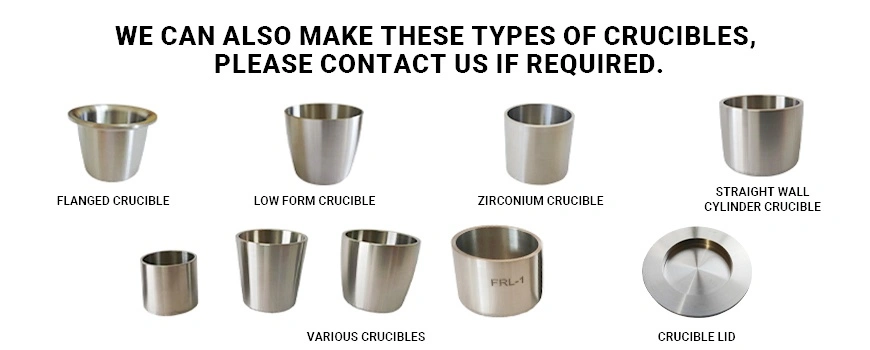
Chemical compatibility tests are often used to choose zirconium crucibles for custom fusion methods made for specific matrices. Laboratories that study nuclear materials, rare earth concentrates, or samples that have been affected by the environment plan their work around the limitations of the tools they have. Being able to get zirconium crucibles in different sizes and wall thicknesses lets you improve the method without having to make analytical trade-offs because of the limits of the tools.
Why Choose a Trusted Supplier for Your Zirconium Crucible Requirements?
The quality of the product, the dependability of shipping, and the long-term value of a relationship depend on the supplier chosen. In addition to price, choices about what to buy should look at how well the company can make things, its quality processes, and its customer service infrastructure.
Quality Certifications and Manufacturing Standards
Reputable zirconium crucible makers keep full quality management systems that are approved to ISO 9001 standards. This makes sure that production is always under control and can be tracked. According to ASTM standards, material certificates should include a list of the chemicals that make up the product, along with a batch-specific analysis that confirms the pure levels and trace element content. Verification through third-party testing gives seller claims more weight, especially in situations where strict contamination control is needed.
The site of a factory affects both the consistency of quality and the effectiveness of the supply line. Baoji City in China's Shaanxi Province is the world's centre for making hard metals. It has specialised facilities with decades of experience making things out of zirconium. Manufacturers in this area benefit from linked supply chains, technically skilled workers, and quality control standards that have been honed by working with the aircraft and nuclear industries around the world. Being close to primary metal factories lowers the cost of materials and shortens lead times while still keeping tight composition standards.
Customer Support and Technical Consultation
Transactional providers and strategic partners are different in terms of the level of technical help they offer. Application advice from knowledgeable vendors helps labs choose the right crucible specs for their unique fusion methods. To make crucibles last as long as possible, consultation services should talk about temperature limits, chemical compatibility, and how to clean them. Technical hotlines and email support are examples of responsive communication channels that quickly answer practical questions and keep analytical work flowing smoothly.
Custom making lets you use products in more ways than just the ones listed in a catalogue. Suppliers who offer different wall thicknesses, modified measurements, or specialised surface treatments let labs get the most out of their tools for their specific needs. For method validation studies where the success of the analysis rests on exact vessel specs, prototype development services are available, adding a 10 ml zirconium crucible. Because these skills add value, it makes sense to build relationships with chosen suppliers that go beyond just buying goods.
Conclusion
When choosing between zirconium and platinum crucibles, you have to weigh the performance needs against the available budget and the scope of your analysis. Zirconium crucibles are a great choice for alkaline fusion uses because they are very resistant to chemicals and only cost a tenth of what platinum does. They also keep the analytical purity. Because they are so good at combining sodium peroxide and carbonate, they are essential for geological research, metal analysis, and materials study. Platinum crucibles are more expensive than other types because they can handle more chemicals and higher temperatures and last a lot longer in high-throughput settings. Strategic buying teams usually keep both types of materials on hand and use each one when scientific needs and cost-effectiveness are met in the best way.
FAQ
1. What temperature limits should I observe for zirconium crucibles?
The protective oxide layer stays stable between 500°C and 600°C, which is the best temperature range for efficiency. Short trips up to 700°C are doable, but long-term exposure to high temperatures speeds up rusting and weakening. Continuous use above 700°C cuts the crucible's life by a large amount and increases the chance of mechanical failure while handling it. To avoid damage from heat shock, always let fusion cakes cool slowly to room temperature before taking them out of the oven.
2. Can I use the same cleaning protocol for both materials?
How to clean zirconium and platinum are very different from one another. Zirconium crucibles can be cleaned with warm, diluted hydrochloric acid, pure water, and sodium bisulfate to get rid of any stubborn leftovers. Do not use forceful cleaning because it hurts the oxide layer. Even though platinum is chemically strong, it needs to be treated more gently. Use weak acids or flux dissolving instead of rough ways. The soft metal is easy to dent, so it needs to be handled carefully during all upkeep tasks.
3. Which crucible type better serves multi-purpose analytical laboratories?
Platinum is better for labs that use a variety of analysis methods because it is more chemically compatible with both acidic and alkaline processes. Zirconium works best in buildings that are only used for alkaline fusion processes. Laboratories that are trying to save money often keep a small amount of platinum on hand for uses that can't be replaced. For regular alkaline digestions, they use zirconium crucibles, which are more cost-effective without affecting their analytical abilities.
Partner with Freelong for Premium Zirconium Crucible Solutions.
You can trust Baoji Freelong New Material Technology Development Co., Ltd. to give you high-quality 10ml zirconium crucibles made in China's Titanium Valley. Add 10 ml zirconium crucible. Our ASTM-certified production sites meet uniform purity standards and provide full documents on how the materials were made, so they can support your most demanding analytical workflows. We keep strategic inventory positions that allow normal setups to be delivered in two to three weeks. For custom specs, our engineering team offers technical advice. Freelong is a reliable company that works with aircraft metallurgy labs, electronics research facilities, and materials testing centres in the US, Australia, Germany, and Korea.
Because we have direct relationships with manufacturers and offer low prices, we can save you 15 to 25 per cent on costs compared to wholesalers while still meeting strict quality standards. Each package comes with detailed Certificates of Analysis that list the chemicals used and their physical properties. Our customer service team makes sure that the buying process goes smoothly, whether you need a single test unit or a blanket purchase deal for a steady supply. You can talk to our applications experts about your crucible needs by emailing jenny@bjfreelong.com to look through our full collection of refractory metals. Freelong's dedication to quality and customer service has led to long-lasting relationships in many high-tech businesses around the world.
References
1. Smith, J.R. & Anderson, K.L. (2021). "Comparative Analysis of Refractory Metal Crucibles in High-Temperature Analytical Chemistry." Journal of Analytical Atomic Spectrometry, 36(4), 789-803.
2. Thompson, M.D. (2020). "Cost-Benefit Analysis of Laboratory Consumables in Geochemical Exploration." Applied Geochemistry, 118, 104-632.
3. Wang, H., Chen, Y., & Liu, X. (2022). "Chemical Resistance of Zirconium Alloys in Alkaline Fusion Environments." Materials Chemistry and Physics, 276, 125-394.
4. International Organization for Standardization (2019). "ISO 9001:2015 Quality Management Systems—Requirements for Metal Fabrication Industries." Geneva: ISO Publications.
5. Peterson, R.A. & Miller, C.S. (2018). "Platinum Group Metals in Analytical Chemistry: Historical Context and Modern Applications." Chemical Reviews, 118(19), 9479-9542.
6. American Society for Testing and Materials (2020). "ASTM B550/B551-20: Standard Specification for Zirconium and Zirconium Alloy Bar, Rod, and Wire for Nuclear Application." West Conshohocken: ASTM International.

_1745889897994.webp)
_1745483770909.webp)
_1773822806826.png)
Learn about our latest products and discounts through SMS or email